
Waterfront Land for Sale in BaliPremium waterfront land for ownership and growth

Popular
cities and regions in Bali
Best offers
in Bali
Land Plots in Bali

Village fit
In Bali, a parcel becomes useful when lane access, settlement pattern, drainage behavior, and the intended villa or house align, so buyers should test daily build function before paying for scenery or tourism buzz
Water lines
Bali often rewards buyers who read slope, runoff, rice field context, and servicing together, because an open tropical plot can still become a demanding project if grading, access, and site balance are weak
Targeted review
VelesClub Int. helps buyers compare Bali land through village context, plot width, approach quality, and project fit, so catalog browsing becomes a disciplined shortlist rather than a search driven by image alone
Village fit
In Bali, a parcel becomes useful when lane access, settlement pattern, drainage behavior, and the intended villa or house align, so buyers should test daily build function before paying for scenery or tourism buzz
Water lines
Bali often rewards buyers who read slope, runoff, rice field context, and servicing together, because an open tropical plot can still become a demanding project if grading, access, and site balance are weak
Targeted review
VelesClub Int. helps buyers compare Bali land through village context, plot width, approach quality, and project fit, so catalog browsing becomes a disciplined shortlist rather than a search driven by image alone


Useful articles
and recommendations from experts
Land plots in Bali between island appeal and site reality
Bali land decisions start with local pattern not island image
Bali attracts land buyers through villas, tropical architecture, surf districts, rice field views, and the idea of indoor outdoor living. That image is strong, but it can distort the search from the very beginning. Buyers often start with atmosphere, beach distance, or a well known area name, then assume the right parcel will reveal itself inside that choice. In Bali, the stronger method is the opposite. The parcel has to be read first through access, settlement form, drainage, road hierarchy, and how the site will actually function once a house or villa is placed on it.
This matters because Bali is not a broad and uniform island market. Land behaves differently across dense southern tourism belts, village edge areas, central uplands, cliffside zones, and quieter coastal or inland districts. A plot that looks attractive in a photo set may be weak for daily use if it depends on a narrow lane, a difficult slope transition, or a site shape that forces too much compromise into the build. The better parcel is usually not the one with the loudest image. It is the one that can support the intended house with fewer contradictions.
That is why land for sale in Bali should be screened through practical use before mood and scenery. The question is not whether the location feels desirable. The question is whether the land behaves well enough to support the project without becoming an overcomplicated site exercise.
Village growth in Bali creates opportunity but also uneven parcel quality
Much of Bali develops through village based patterns rather than through a single uniform urban grid. This gives the island character, but it also means parcels within the same broader area can perform very differently. One plot may sit naturally within an established lane network and a clear residential or villa pattern. Another may be only a short distance away and still feel much more awkward because access, frontage, or site organization are weaker.
This is one of the reasons buyers should be cautious with broad area labels. Saying that a parcel sits in Canggu, Ubud, Uluwatu, or another well known zone does not tell enough about the land itself. In Bali, the micro pattern matters. How the parcel meets the lane, how the site opens or narrows, and how it relates to nearby built form often decide whether it is comfortable or compromised. A buyer who wants to buy land in Bali should therefore judge the plot as a specific site within a local pattern, not as a generic piece of a famous district.
Rice field context in Bali changes how a plot should be judged
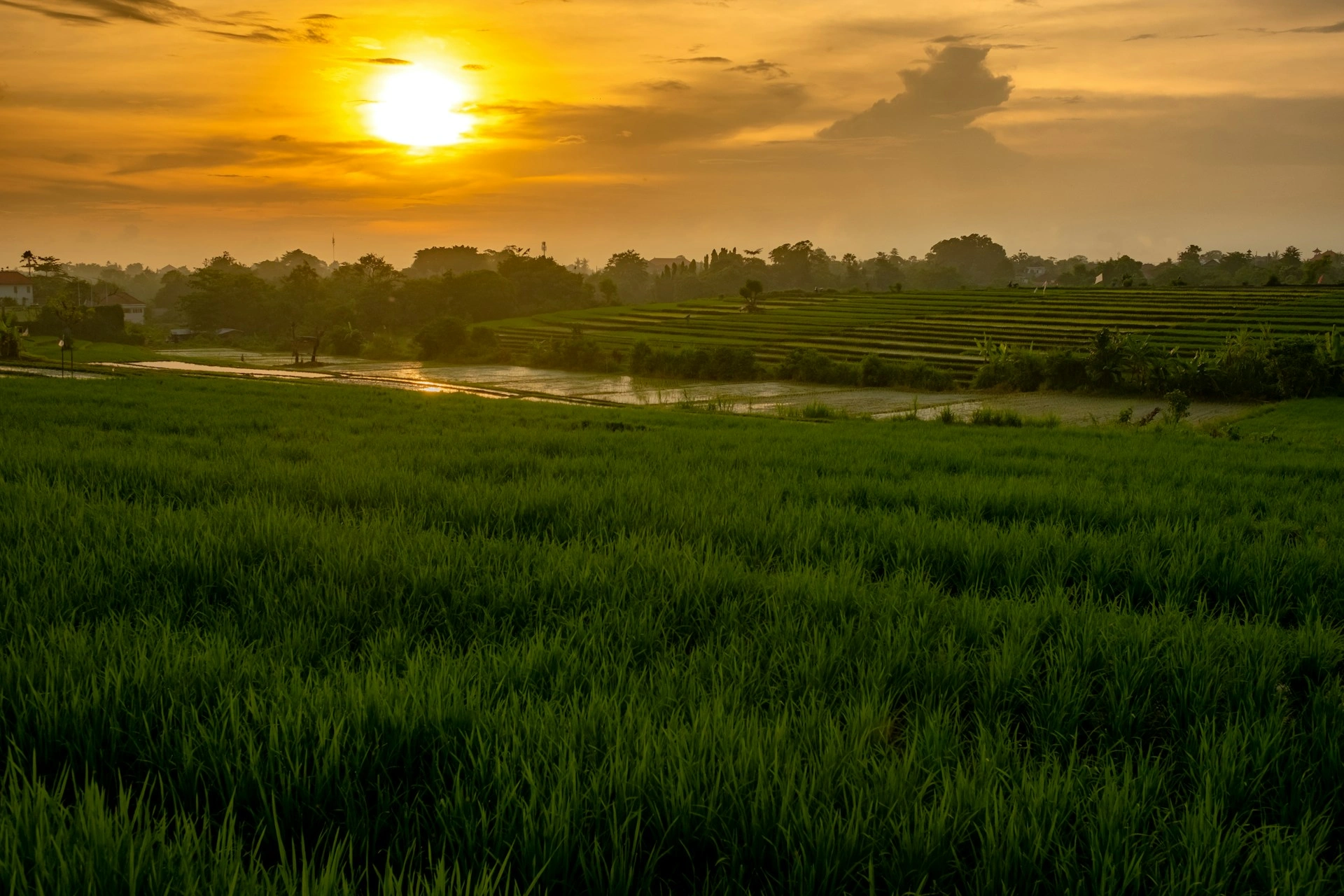
Bali is shaped by terraced agricultural landscapes and long established water systems, especially in areas where rice fields remain part of the visual and spatial identity of the island. Land beside or near paddy landscapes can be beautiful, but that beauty should not be read as a simple building advantage. A rice field edge creates a different site logic from a compact settlement edge. The parcel may feel open and calm, yet the practical behavior of water, access, surrounding land use, and future area change can be more demanding than buyers first expect.
This is where many people overvalue openness. A plot next to a green landscape may seem more premium than a site closer to a denser built pattern. Yet in Bali, open agricultural surroundings can create a more delicate build decision because the parcel has to be read through drainage, visual exposure, neighboring land behavior, and how the area may change over time. By contrast, a less dramatic parcel inside a clearer village or residential fabric can be easier to organize and more predictable for actual use.
For land plots in Bali, the key is not whether the setting is photogenic. It is whether the site can handle the intended project with enough structure and enough stability in its surroundings.
South Bali and upland Bali reward different land choices
The strongest contrast on the island is often between the dense tourism driven south and the more layered inland and upland zones. In the south, buyers often face pressure from popularity, compact plots, stronger competition for known pockets, and more intense demand for villa style land. This can make a weak parcel look stronger than it really is because the area name itself carries so much weight. In the uplands or less compressed districts, the search often becomes less about hype and more about topography, village fit, and daily livability.
Neither side of Bali is automatically better. Southern areas can support strong location value and easier guest oriented logic, but they often demand stricter screening of access, plot width, and surrounding density. Inland areas can offer more breathing room and a calmer land to house ratio, but the buyer must read slope, drainage, and road quality with more discipline. The right choice depends on whether the buyer values tourism adjacency, private residential rhythm, open landscape, or a more balanced build environment.
Lane access in Bali is not a detail and should be screened early
One of the clearest ways Bali differs from more spacious land markets is the importance of lane hierarchy. Many parcels are reached through local roads and narrower approach lanes that shape everything from construction movement to daily comfort. Buyers often underestimate this because a site may look perfectly accessible on a simple map. The real question is whether the approach is strong enough for the intended build and the kind of use the finished property will require.
A parcel with weak lane access may still look attractive in plan view, but it can become difficult in practice. Site servicing, material delivery, guest arrival, parking logic, and even the scale of the design may be shaped by the access line. In Bali, access is not just about reaching the property. It influences whether the whole project feels calm and coherent or tight and improvised. That is why the access review should happen before emotional attachment to the site grows.
Drainage and cut fill logic in Bali can quietly define project quality
Bali is an island of wet and dry contrasts, and land should be read through water movement rather than surface appearance alone. A parcel that looks easy in dry weather may behave differently once runoff, slope response, and ground shaping are considered. This matters on hillside sites, on land near terraced fields, and in areas where surface water has to move through or around a more fragmented local pattern.
The practical difference between a comfortable parcel and a difficult one often comes down to grading discipline. If too much of the site must be corrected through cut and fill, retaining work, or heavy reshaping, the land may still be usable but far less elegant as a project. Buyers searching buildable land in Bali should therefore look for parcels where the house can sit naturally on the land form instead of fighting it. The more the site works with the project, the better the long term result usually becomes.
Plot width and frontage matter because Bali houses are not only buildings
In Bali, the house or villa is rarely the whole idea. Outdoor circulation, pool position, shade, privacy, planting, and arrival experience matter almost as much as the structure itself. That makes plot width and frontage more important than some buyers first realize. A narrow or awkward parcel may technically hold a building, yet still fail to produce the kind of indoor outdoor balance that makes the property feel natural on the island.
This is why a larger but badly proportioned site can lose to a smaller, cleaner plot. If the frontage is weak, the entry sequence suffers. If the site narrows too much, privacy and open space become harder to organize. If the building is forced into an awkward footprint, the project loses the relaxed spatial quality that buyers often want from Bali in the first place. Good parcels on the island usually feel balanced, not just large.
Catalog review in Bali works best when buyers filter by project type
The VelesClub Int. catalog is most useful in Bali when it is treated as a comparison framework rather than a stream of attractive land images. Buyers should first define the intended outcome. Is the site meant for a private villa, a family house, a quiet retreat, or a more guest oriented property. Once that is clear, the comparison becomes sharper. Plot width, lane access, slope response, surrounding density, and daily comfort can all be reviewed through the correct use case.
This matters because Bali invites emotional browsing. A parcel can look exciting because it sits near surf, rice fields, or a popular food and retail strip. Yet those signals do not guarantee that the land is right for the project. VelesClub Int. helps turn that broad attraction into a structured shortlist by comparing plots through fit, not only through image. The strongest catalog use in Bali comes from rejecting the wrong romance early and focusing on the parcels that can actually support the intended build.
Why the best Bali parcel is often the one with the fewest contradictions
Many buyers search Bali as though the perfect site must feel dramatic. In practice, the most useful parcel is often the one that simply works well on several fronts at once. It has enough access for the project, enough width for the intended layout, enough site balance to avoid excessive reshaping, and enough connection to the local pattern to make daily use feel stable. That kind of parcel may look quieter in a first pass, but it usually produces a more disciplined build and a better finished property.
This is the real island logic. In Bali, contradiction costs more than modesty. A plot with a famous address but weak access, hard grading, and a forced footprint can become a frustrating project. A less theatrical plot with stronger fundamentals can outperform it in daily function, design freedom, and construction clarity.
Questions buyers ask about land in Bali
Why do two attractive plots in the same Bali area create very different project outcomes
Because local pattern matters more than the area name alone. Two nearby parcels can differ sharply in lane access, width, drainage behavior, and how naturally they connect to the surrounding village or villa fabric.
What usually makes a Bali parcel more realistic for a villa or house
A stronger parcel in Bali usually combines workable access, balanced shape, manageable grading, and a site layout that leaves enough room for outdoor use without forcing the building into an awkward compromise.
Why should buyers be careful with land beside rice fields in Bali
Because open agricultural surroundings may look premium while creating a more sensitive site condition. Water behavior, visual exposure, access quality, and the way the area may evolve can all shape project comfort.
What do buyers underestimate most on hillside land in Bali
They often underestimate how much grading and retaining can reshape the whole budget and design. A hillside site can still be excellent, but only when the house can sit on the terrain with enough natural balance.
Why can a simpler village edge parcel in Bali outperform a famous tourism zone plot
Because the simpler parcel may offer better width, easier arrival, calmer surroundings, and cleaner daily use. The tourism zone plot may carry stronger image value while quietly forcing a narrower and more compromised project.
How should buyers use the VelesClub Int. catalog for Bali
They should compare fewer options with clearer filters. Start from the intended property type, then screen each parcel for lane hierarchy, site balance, frontage, and local pattern. A structured request helps narrow the shortlist when several plots still look viable.
Choosing land in Bali with a clearer project mindset
The strongest land decisions in Bali come from discipline rather than atmosphere. Buyers who begin with image, area hype, or broad tropical appeal often create noise. Buyers who begin with lane access, site balance, drainage response, plot width, and local pattern usually move toward a parcel that can actually support the intended result with fewer surprises.
That is where VelesClub Int. adds real value in Bali. The catalog helps buyers review relevant plots through a practical lens, and a request can be shaped around what the land must do in daily use, not only how it looks in a first impression. When the shortlist is built around fit, the final land choice becomes calmer and much more credible.