
Cost of Land in EssexRegional pricing insight for acquisition planning
Best offers
in Essex
Land Plots in Essex


Commuter Space
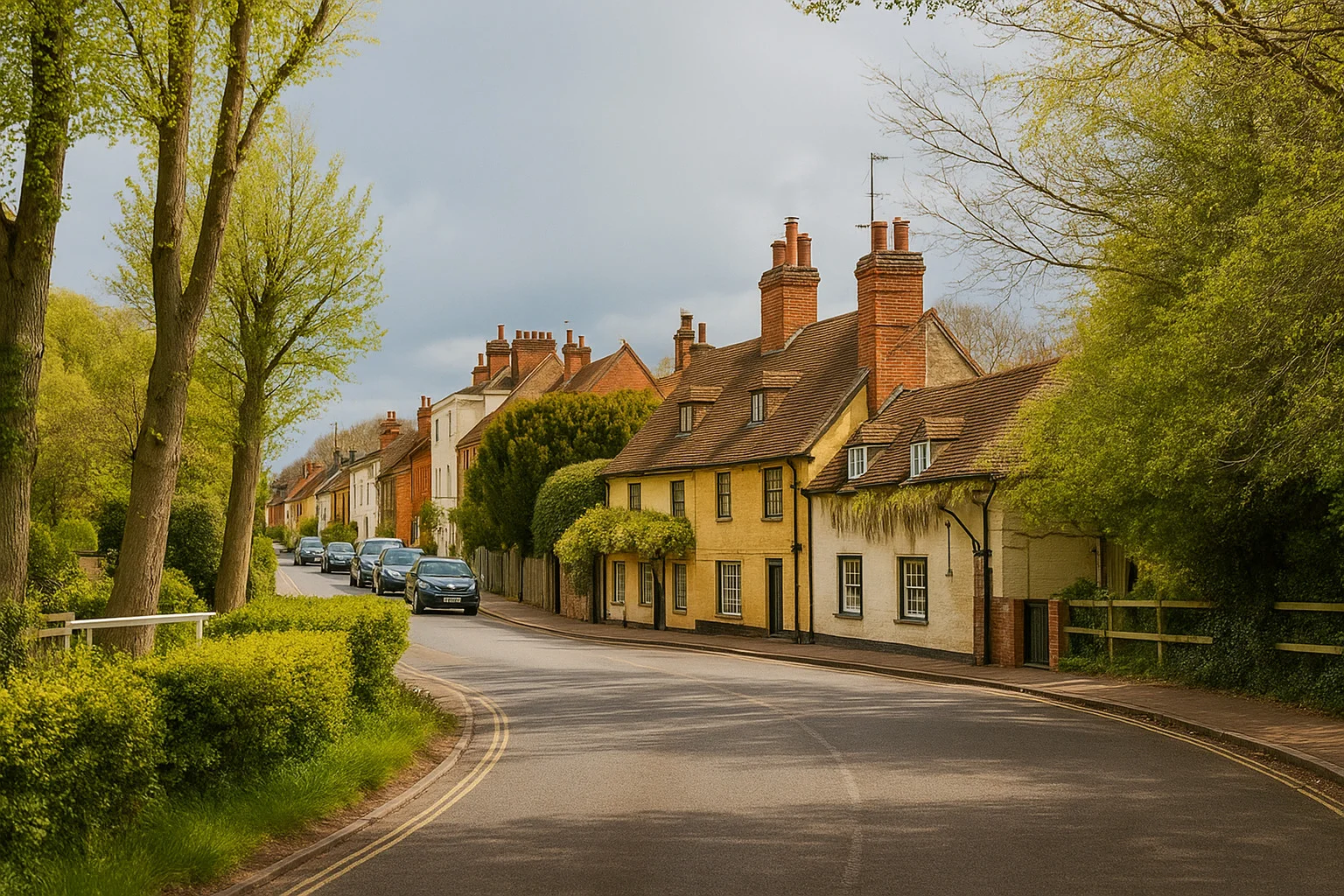
In Essex land is naturally considered for residential building, low-density schemes, and edge-of-town expansion because the county combines London-facing demand with a wider supply of plots beyond the tighter constraints of inner metropolitan areas
Estuary Range
The spatial appeal of land here comes from its unusual range, where commuter towns, coastal belts, and estuary-facing growth areas create several distinct plot environments instead of one uniform suburban landscape
Growth Corridor
Strategic value in this market is shaped by London spillover, transport-led settlement growth, and the steady importance of well-positioned outer-belt land that can serve immediate use while retaining longer development relevance
Commuter Space
In Essex land is naturally considered for residential building, low-density schemes, and edge-of-town expansion because the county combines London-facing demand with a wider supply of plots beyond the tighter constraints of inner metropolitan areas
Estuary Range
The spatial appeal of land here comes from its unusual range, where commuter towns, coastal belts, and estuary-facing growth areas create several distinct plot environments instead of one uniform suburban landscape
Growth Corridor
Strategic value in this market is shaped by London spillover, transport-led settlement growth, and the steady importance of well-positioned outer-belt land that can serve immediate use while retaining longer development relevance








Useful articles
and recommendations from experts
Buying land in Essex and understanding where plots make sense
Why land plays a strong role across Essex
Essex is a land market defined by proximity, spread, and contrast. It sits close enough to London to absorb commuter demand, yet wide enough to offer very different plot environments across its towns, outer belts, and coastal edges. That makes land relevant here not as a niche format, but as a practical route for buyers who want more control over location, scale, and use than a fixed property can provide.
The appeal of land in Essex usually starts with flexibility. Buyers often look here when they want a residential plot, a low-density development site, or a parcel that can sit between suburban living and longer-term strategic value. Unlike tighter inner-city markets, Essex gives land a broader functional role because the county contains multiple growth patterns rather than one single urban model.
How land fits the structure of Essex rather than one central city
Essex does not work through one dominant centre. It operates through a chain of commuter towns, suburban extensions, market-town edges, estuary-facing settlements, and transport-linked growth zones. That means land selection here depends less on centrality and more on which part of the county a buyer is entering. A plot near a London-facing corridor serves a different purpose from one in a deeper residential district or a coastal setting.
This is one of the main reasons land plots in Essex need to be read spatially. Some areas are shaped by daily movement toward London, where residential demand and town-edge development logic are stronger. Other areas are more self-contained, with land working through local housing need, mixed suburban growth, or town-based service activity. The county is broad enough that two plots can both be in Essex and still belong to completely different market stories.
That structure creates opportunity for buyers willing to compare land by context instead of by county name alone. A site on a clear suburban edge often tells a more useful story than one with a stronger headline location but weaker practical fit inside its surrounding area.
Which land-use clusters are most relevant in Essex
The dominant cluster in Essex is residential and personal-use land. Buyers regularly consider plots for detached homes, small compounds, townhouse-style concepts, or phased low-density development. This suits a county where suburban expansion, commuter demand, and family-oriented housing patterns remain strong. Buildable land in Essex is often attractive when it allows a buyer to create a housing format that the ready-built market does not easily deliver.
The secondary cluster is mixed-use or commercial edge positioning. This is especially relevant in areas touched by major roads, estuary-side activity, or outer urban growth where land can serve not only housing but also service functions, storage-linked use, or flexible commercial concepts. These are not the dominant use cases across the whole county, but they matter enough to shape how some plots should be judged.
Other uses can exist, but they should not be treated as equal on every site. In Essex, the more disciplined approach is to begin with the strongest residential logic and then ask whether a particular location supports something broader.
What types of land plots in Essex usually make practical sense
Several plot types appear naturally in this market. Residential edge plots near established towns are among the clearest to understand because they already sit within known housing patterns. These often appeal to buyers who want direct personal use or a smaller-scale development route. Then there are transition plots in places where suburban land meets more open territory, which can feel less obvious at first glance but may offer stronger flexibility if the surrounding pattern supports them.
Essex also contains land environments influenced by the estuary, by coastal settlement form, and by road-led growth. In these cases, a plot may matter not because it feels purely suburban, but because it occupies a structurally useful position between settlement, access, and future relevance. The key is not to assume all land in Essex behaves like commuter-belt land. Some of it does. Some of it belongs to a different logic entirely.
What makes one Essex plot more practical than another
In this county, practical value usually comes from fit. A plot is stronger when its size, shape, surroundings, and position within the local pattern all point in the same direction. Buyers should look for a parcel that already belongs to a visible use environment rather than one that sounds attractive but feels disconnected from how the area actually works.
Access matters, but so does relationship to settlement. A site close to an established residential belt may be more useful than a larger parcel with weaker continuity. Terrain matters, but so does clarity of role. A clean, rational site on the edge of a town can often outperform a more dramatic parcel in a more fragmented location. This is why comparing land for sale in Essex should never stop at price, size, or distance from London.
Land in Essex versus apartments and ready houses
Ready-built property gives certainty. Land gives control. In Essex, that distinction is especially meaningful because many buyers come to the county looking for a housing format that sits between metropolitan convenience and more flexible living. A completed house solves immediate occupation, but a plot may solve the deeper question of how the property should actually be shaped.
That does not make land automatically preferable. It simply means that in a market with broad suburban demand and multiple growth belts, land can become the better match when the buyer wants more say over density, design, layout, or longer-term positioning. The strongest land decisions are the ones where that extra freedom clearly improves on the fixed market rather than duplicating it.
How to read actual plot options in Essex through the VelesClub Int. catalog
When reviewing land plots in Essex, the first step is to define the use case with discipline. Is the goal a private residential build, a low-density development concept, or a more flexible site with mixed-use edge potential? Only after that should the buyer compare specific parcels. Without that order, the county can feel broader and less consistent than it really is.
The next step is to read the spatial role of each plot. Is it part of a commuter-facing suburban belt, a deeper town-edge location, a coastal settlement environment, or a corridor influenced by wider movement and service demand? This is where the VelesClub Int. catalog becomes useful. It helps turn Essex from a large geographic label into a set of comparable plot environments with clearer decision logic.
VelesClub Int. also helps buyers narrow land interest into a structured selection process. Some plots look attractive because they borrow the right keywords. Others become attractive because they actually match the buyer's aim and the county's spatial pattern. That distinction matters in Essex more than in simpler markets, because the county contains several overlapping land stories at once.
What buyers often ask about land in Essex
Why does land in Essex feel so varied from one area to another? Because the county combines commuter pressure, suburban town growth, coastal settlement logic, and estuary-linked positioning rather than one uniform land pattern.
Where does buy land in Essex usually make the most sense? Usually in clear town-edge belts, suburban extensions, and structurally coherent outer zones where residential use already fits the surrounding pattern.
Why do similarly priced plots differ so much in Essex? Because one parcel may sit inside a strong residential or mixed-use context while another has less useful shape, weaker continuity, or a less convincing spatial role.
Is buildable land in Essex mainly about London spillover? London influence is important, but it is not the only driver. Many plots work through local settlement growth and county-level housing logic rather than direct commuter branding alone.
How should buyers compare land plots in Essex more intelligently? Start by identifying the intended use, then compare only the sites that match that use and belong to the right part of the county structure.
What makes a plot more flexible in Essex? A clear footprint, workable access, and a position inside a land-use pattern that supports today's plan while leaving room for a stronger future use if needed.
Land in Essex becomes easier to judge when the county is read as a set of distinct plot environments instead of one broad commuter label. Once that is clear, reviewing relevant options in the VelesClub Int. catalog or submitting a structured request becomes the most practical next step.