
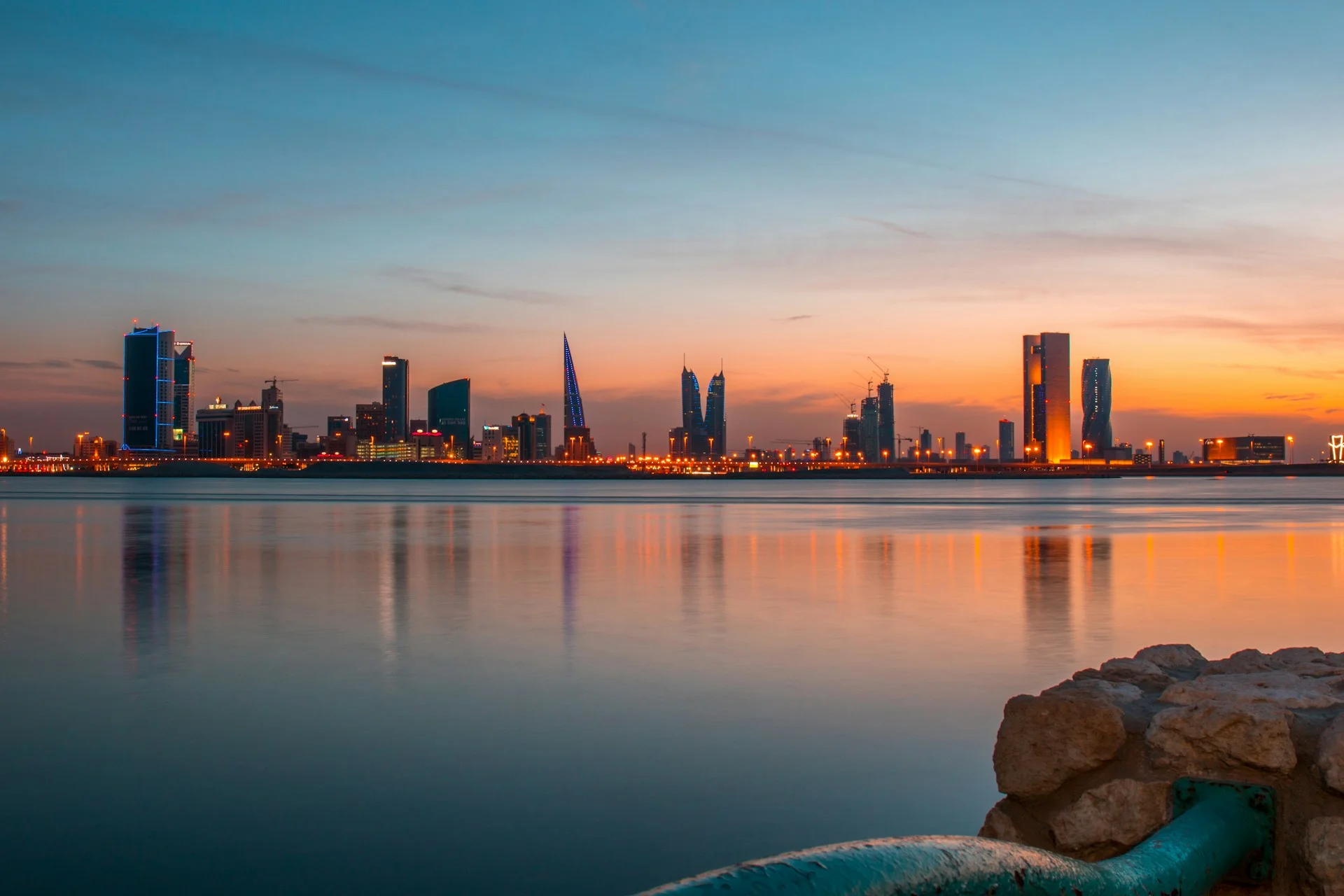
Commercial Building in BahrainBusiness assets enabling portfolio growth
Best offers
in Bahrain
Benefits of investing in commercial real estate in Bahrain

Cross border demand
Bahrain combines Manama business activity, Saudi linked visitor spending, financial services depth, and compact logistics infrastructure, giving commercial property a demand base that is small in scale but unusually concentrated and commercially readable
Function fit
The strongest commercial strategies in Bahrain usually come from matching offices to Manama, retail and hospitality to city and causeway driven turnover, and warehouses to port, airport, and logistics zone connections
Sharper screening
VelesClub Int. helps read Bahrain by separating financial district assets, trade linked operational property, and service formats supported by local and regional demand, so buyers compare commercial role and territory before narrowing toward specific opportunities
Cross border demand
Bahrain combines Manama business activity, Saudi linked visitor spending, financial services depth, and compact logistics infrastructure, giving commercial property a demand base that is small in scale but unusually concentrated and commercially readable
Function fit
The strongest commercial strategies in Bahrain usually come from matching offices to Manama, retail and hospitality to city and causeway driven turnover, and warehouses to port, airport, and logistics zone connections
Sharper screening
VelesClub Int. helps read Bahrain by separating financial district assets, trade linked operational property, and service formats supported by local and regional demand, so buyers compare commercial role and territory before narrowing toward specific opportunities
Useful articles
and recommendations from experts


How commercial property in Bahrain fits strategy
Why commercial property in Bahrain stays relevant
Commercial property in Bahrain matters because the country combines several demand engines inside a market that is physically compact but commercially layered. Manama remains the main office and financial centre. The wider capital area supports retail, mixed service property, hospitality, and business related commercial use. Khalifa Bin Salman Port, Bahrain Logistics Zone, Bahrain International Airport, and the King Fahd Causeway add another layer through trade movement, warehousing, re export activity, and cross border access to Saudi demand.
That combination makes commercial real estate in Bahrain more interesting than a simple small Gulf market label suggests. It is not only a financial services market and not only a retail or hospitality market. Offices, service retail, mixed commercial premises, selected warehouses, and hospitality linked assets can all make sense, but only when they are matched to the right territorial logic. A Manama office, a Seef retail asset, and a warehouse near the port or logistics zone should never be screened as versions of the same idea.
Commercial demand in Bahrain is concentrated but highly readable
The first commercial rule in Bahrain is concentration. The market is not spread across a large territory with several equal urban centres. Most office, service, and business demand sits in and around Manama, the Diplomatic Area, Seef, and the wider capital corridor. In practical terms, that gives buyers a clearer market structure than in many larger countries. The strongest office logic, a large part of premium service activity, and much of the visible urban commercial turnover are all concentrated inside a relatively compact geography.
But Bahrain should not be reduced to one office district. The country has another defining feature: cross border and transit relevance. The causeway connection to Saudi Arabia influences retail, hospitality, food and beverage, and weekend leisure demand in ways that are unusual for a market of this size. The port, airport, and logistics infrastructure then create a separate operational layer. This means Bahrain works through two strong patterns at once: concentrated urban business demand and compact cross border commercial flow.
Office space in Bahrain starts with Manama
Office space in Bahrain is led by Manama because that is where financial services, administration, professional firms, and the broadest business occupier base are concentrated. The city is not simply the capital. It is the place where office demand has the clearest hierarchy and the strongest commercial meaning. For this reason, country level office strategy in Bahrain usually begins with Manama and only then widens to nearby business locations.
Inside the capital area, the office story is not uniform. The Diplomatic Area has a stronger institutional and financial tone. Bahrain Bay and nearby premium locations fit newer corporate and high specification office logic. Seef carries a more mixed business and service character, where office property can overlap with retail and hospitality ecosystems more directly. That difference matters. In Bahrain, a good office is not defined only by building quality. It is also defined by how clearly the district matches the likely tenant or owner occupier.
This is one of the countrys advantages. Because the market is compact, district selection becomes more important and easier to compare. Buyers can separate prestige and financial services oriented offices from practical service based workspace much more quickly than in markets where the commercial map is dispersed.
Retail space in Bahrain works through local spending and Saudi flow
Retail space in Bahrain is one of the clearest commercial categories because it benefits from both domestic urban consumption and regional visitor spending. Manama and Seef provide recurring demand through residents, workers, and city based service activity. Malls, high visibility service strips, dining clusters, and mixed retail districts all benefit from this year round local base. That already gives Bahrain a workable retail market before visitor demand is added.
The second layer comes from regional flow, especially through the Saudi connection. Bahrain is one of the few markets in the region where a nearby cross border leisure and shopping audience meaningfully shapes commercial rhythm. This does not make every retail unit attractive by default, but it does give the country a distinct demand feature that many small markets do not have. The stronger retail assets are usually those that combine local routine with regional weekend or leisure turnover rather than relying on one source alone.
This is why retail space in Bahrain should be read through catchment and rhythm, not just visibility. A service unit in a proven city or Seef location may be easier to understand than a more prominent looking asset in a thinner micro market. The clearer the repeat spending base, the stronger the retail logic usually becomes.
Hospitality linked property in Bahrain has a service role
Hospitality linked commercial property deserves serious attention in Bahrain because tourism and business travel both matter, but the segment should be read through service logic rather than through a resort only narrative. Manama supports hotels, food and beverage units, entertainment linked premises, and mixed service assets through business visitors, events, and urban leisure demand. Weekend travel from the wider Gulf adds another layer, especially where hospitality overlaps with dining, waterfront, or shopping environments.
This makes hospitality in Bahrain commercially relevant in a very specific way. It is not mainly about large destination resort geography. It is about service density in a compact urban and coastal setting. The stronger hospitality linked assets are usually those that sit inside a fuller ecosystem of restaurants, retail, business travel, and local activity. A hotel or service premise that benefits from multiple demand streams is often easier to assess than one tied to a single narrow concept.
Warehouse property in Bahrain follows port airport and causeway logic
Warehouse property in Bahrain deserves more weight than many country overviews give it because the market has a very practical logistics identity. Khalifa Bin Salman Port, Bahrain Logistics Zone, Bahrain International Airport, and the causeway connection create a compact but effective movement system. This is not a huge land mass logistics story. It is a high efficiency and proximity story. That distinction is important because it shapes how operational assets should be screened.
A warehouse in Bahrain becomes commercially strong when it supports re export, customs handling, local distribution, trade support, or direct business operations linked to this infrastructure. The market usually rewards functional premises close to the right logistics nodes more than generic industrial scale alone. A smaller but better connected operational asset can be easier to justify than a larger building without strong route logic behind it.
For many buyers, this is one of the most distinctive parts of Bahrain. In a physically small country, logistics property can still matter because connectivity and turnaround efficiency matter more than distance. That gives selective warehouse and operational assets real commercial relevance.
What asset types in Bahrain usually fit best
At country level, the strongest commercial formats in Bahrain are usually offices in Manama and nearby business districts, retail and service premises in proven city and leisure locations, hospitality linked assets supported by urban and regional demand, and selective warehouse or trade support property linked to the port, airport, and logistics infrastructure. Mixed use commercial buildings also deserve attention because many parts of Bahrain reward premises that combine office, service, retail, and hospitality functions in one readable urban setting.
What matters less is trying to give equal importance to every segment everywhere. Office logic is strongest where financial and service concentration is real. Retail belongs where local and regional spending overlap. Hospitality becomes central where business travel, leisure, and service density reinforce one another. Warehouse logic becomes stronger near real movement infrastructure. Bahrain rewards weighting and territorial discipline more than category completeness.
Pricing commercial property in Bahrain depends on role
Pricing commercial property in Bahrain only makes sense when the role of the asset is clear. In offices, value is shaped by district quality, tenant depth, and how closely the property fits financial services, professional firms, or practical business use. In retail and hospitality linked assets, value depends more on catchment strength, repeat spending, and the quality of the surrounding service environment. In warehouses and trade support premises, pricing is driven more directly by connectivity, operating relevance, and the asset's place in a logistics chain.
That is why buyers who want to buy commercial property in Bahrain should avoid broad comparisons between unlike assets. A cheaper retail unit in a weak location may still be less practical than a stronger service premise in Seef or central Manama. A large warehouse without good access can be less meaningful than a smaller operational asset near the right node. The most useful comparison in Bahrain is not cheap against expensive. It is clear demand against unclear demand.
How VelesClub Int. structures commercial property in Bahrain
Bahrain becomes easier to navigate when it is divided into three practical commercial readings. The first is Manama and the nearby capital corridor as the office, finance, and urban service core. The second is the retail and hospitality layer, strongest where local city activity overlaps with Saudi linked leisure and shopping demand. The third is the logistics and operational layer, where the port, airport, logistics zone, and causeway create a compact but meaningful trade support environment.
VelesClub Int. helps structure commercial property in Bahrain along these lines so buyers can compare assets by function, territory, and likely occupier base rather than by broad category labels alone. That matters in a market where small scale can create a false sense of simplicity. With a more disciplined screen, Bahrain becomes easier to shortlist and much easier to compare with confidence.
Questions that clarify commercial property in Bahrain
Why does Manama dominate office space in Bahrain more than other locations
Because Manama concentrates financial services, administration, and the broadest year round business occupancy, which gives office assets there a clearer tenant base and a more recognisable market role than elsewhere in Bahrain
Is Bahrain mainly a retail and hospitality market or a broader one
It is broader. Retail and hospitality are important because of local and Saudi linked demand, but Bahrain also has a real office and financial services core as well as selective logistics and trade support property
What makes warehouse property in Bahrain practical despite the countrys small size
The key advantage is connectivity. Port, airport, logistics zone, and causeway links create a compact operational map where warehouses can support trade, re export, and local distribution without needing a very large national territory
Can retail space in Bahrain be judged mainly by visibility
Usually no. The stronger retail assets often combine repeat local spending with regional leisure or shopping flow, so catchment quality and spending rhythm usually matter more than simple exposure on their own
What usually makes one commercial strategy in Bahrain more practical than another
The strongest strategy is usually the one that matches the main demand engine behind the location, whether that is Manama office depth, Seef and city service turnover, or logistics property linked to port and causeway movement
Choosing commercial property in Bahrain with better focus
Bahrain belongs on a commercial shortlist when the buyer wants a market that is compact, readable, and commercially varied without being difficult to map. Offices, retail, hospitality linked assets, and selective operational property can all make sense, but only when they are matched to the part of Bahrain that actually supports them.
Seen that way, commercial property in Bahrain becomes less general and more actionable. VelesClub Int. helps turn country level interest into a clearer strategy, a tighter territorial screen, and a more confident next step in commercial asset selection