
Best offers
in Serbia
Land Plots in Belgrade


River Capital Expansion
Belgrade land is naturally relevant for residential growth, mixed urban development, and selective commercial positioning because the city combines capital-city demand, visible expansion corridors, and multiple urban edges where plot choice still shapes the final outcome
Confluence City Layers
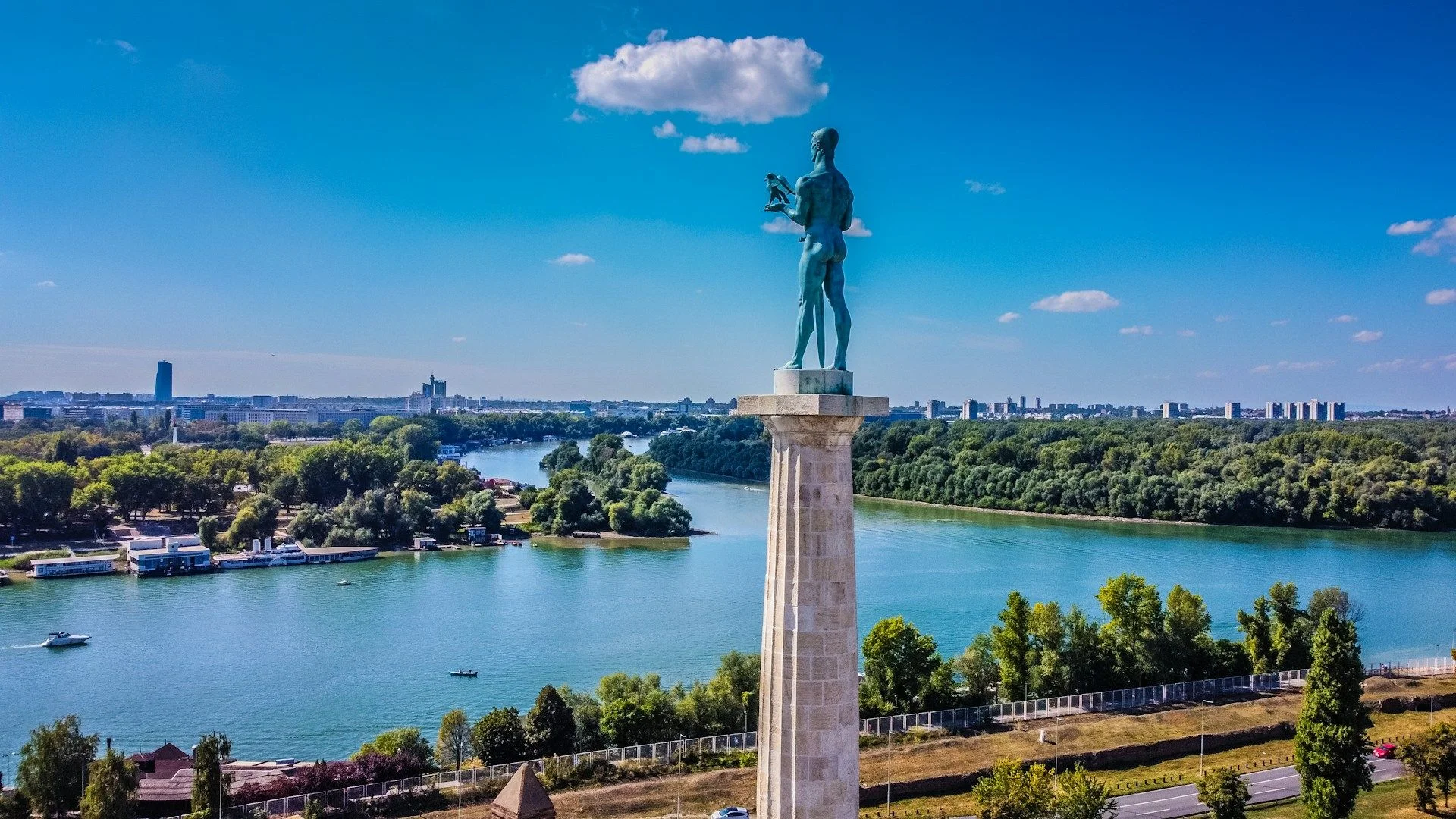
Land in Belgrade is shaped by river confluence, established inner districts, hillside residential belts, and outward suburban zones, so plot quality depends heavily on access, urban role, and how each site fits the city’s layered metropolitan structure
Long Horizon Relevance
The strategic appeal of land in Belgrade comes from steady capital growth and limited central flexibility, allowing well-positioned plots to remain useful for housing and disciplined mixed-use development across a long planning horizon
River Capital Expansion
Belgrade land is naturally relevant for residential growth, mixed urban development, and selective commercial positioning because the city combines capital-city demand, visible expansion corridors, and multiple urban edges where plot choice still shapes the final outcome
Confluence City Layers
Land in Belgrade is shaped by river confluence, established inner districts, hillside residential belts, and outward suburban zones, so plot quality depends heavily on access, urban role, and how each site fits the city’s layered metropolitan structure
Long Horizon Relevance
The strategic appeal of land in Belgrade comes from steady capital growth and limited central flexibility, allowing well-positioned plots to remain useful for housing and disciplined mixed-use development across a long planning horizon








Useful articles
and recommendations from experts
Land for sale in Belgrade and how city plot logic works
Why land has strong practical relevance in Belgrade
Belgrade is a capital city where land matters because the market is not fully locked into finished urban form. The city combines strong residential demand, visible outward growth, and a structure where the right plot can still shape a better result than ready-built property. Buyers look at land here because site choice affects not only what can be built, but how well that project fits the real movement and density pattern of the capital.
That gives land in Belgrade a strategic role from the start. A parcel may suit private housing, a residential scheme, or a more selective mixed urban concept depending on where it sits inside the metropolitan system. In this market, the strongest plots are not simply empty spaces inside a major city. They are sites that align clearly with how Belgrade expands, how its districts connect, and where different forms of demand remain practical.
How land fits the spatial structure of Belgrade
Belgrade should be read through its river confluence, inner urban districts, hillside residential areas, and outward suburban belts rather than through a simple center-versus-suburb split. The city is shaped by the relationship between established central zones and newer edges where land can function at more meaningful scale. This means land plots in Belgrade should be compared through urban role, not through district familiarity alone.
Some plots make the most sense in outer residential belts where larger site formats and steady housing demand align naturally. Others gain relevance in urban-edge areas where density, access, and city movement create stronger mixed-use potential. There are also more selective sites near stronger inner belts where land matters precisely because flexibility is more limited and good positioning becomes more valuable.
Because the capital has both a strong urban core and expanding outer structure, the strongest parcel is usually the one that belongs naturally to its belt. A site with better access, cleaner geometry, and stronger integration into the surrounding pattern can be more useful than a more famous location that offers weaker project logic. In Belgrade, spatial fit matters more than broad prestige language.
Which land-use clusters matter most in Belgrade
The dominant cluster in Belgrade is residential and development-led urban use. Buyers often search for plots that can support apartment-led formats, townhouse concepts, low-rise housing, or broader residential schemes in areas where the city continues to absorb growth. This reflects the main city-level story: capital-city housing demand remains the strongest and most practical driver of land relevance.
The secondary cluster is mixed-use and corridor-linked development. Certain plots gain value because they sit near stronger movement routes, service activity, or urban belts where residential and commercial logic can overlap in a measured way. This does not mean every attractive site should be treated as a broad commercial opportunity. It means some locations naturally support more than housing when surrounding structure clearly justifies it.
Pure industrial logic exists in parts of the wider metropolitan system, but it is not the main city-page story here. At buyer level, Belgrade works first as a residential and mixed urban land market shaped by capital demand, access, and the layered structure of a growing city.
What kinds of land plots usually make sense in Belgrade
Buyers who want to buy land in Belgrade often compare three broad categories. The first is outer-belt residential land, where the goal is housing development or private residential use with stronger spatial freedom. The second is urban-edge development land, where a parcel may support denser residential or mixed urban formats. The third is corridor-linked land, where access and surrounding activity create broader long-term flexibility.
These categories solve different problems. Outer-belt plots are usually chosen for scale, cleaner geometry, and stronger housing fit. Urban-edge parcels may suit broader development ideas where surrounding density already supports greater intensity. Corridor-linked sites can offer stronger long-term flexibility, but only when access and nearby use patterns make that flexibility practical rather than abstract. In Belgrade, the best category depends on whether the buyer is prioritizing housing demand, project breadth, or structural position inside the capital.
What makes one Belgrade plot more practical than another
In Belgrade, practicality starts with urban fit and connectivity. A strong plot is one that belongs naturally to the belt it sits in. Because the city is shaped by river structure, layered density, and outward movement, road access and relation to daily infrastructure often matter more than a familiar district name. Parcel shape matters because development efficiency often depends more on geometry than on location branding.
Buyers should also compare how clearly the site supports the intended use. A parcel may sound attractive because it is inside a known part of the capital, but if it is weaker in access, scale, or surrounding fit, it may be less practical than an outer-belt option with stronger development logic. In Belgrade, similarly sized plots can differ sharply when one already reads clearly through its urban role and the other depends too heavily on image.
The most useful comparison method is direct: does the parcel make the intended project easier, clearer, and more disciplined. If the answer relies on too many assumptions, the site is usually weaker than a plot whose position inside the city structure is already easy to understand.
Land in Belgrade versus fixed property formats
Completed property offers speed and immediate use. Land offers control over scale, layout, and final positioning. In Belgrade, that distinction matters because the city includes both mature built districts and broader outer belts where the right parcel can create a result that standard inventory does not solve as well. This may mean a more tailored housing concept, a better-positioned low-rise project, or a mixed urban format in a stronger growth corridor.
That does not mean land is always the better choice. It becomes compelling when the selected parcel can produce a stronger outcome than the ready-built market already offers. If fixed property already meets the buyer’s need cleanly, completed inventory may remain the more efficient route. Land becomes attractive when control over the site materially improves the quality of the decision.
How to read actual plot options in Belgrade through the VelesClub Int. catalog
When reviewing land for sale in Belgrade, buyers should begin with the use case. Is the target a residential scheme, a private low-rise project, or a mixed-use concept. Once that is clear, the next step is to define the parcel’s role inside the city structure. Is it part of an outer residential belt, an urban-edge zone, or a corridor where broader urban use may be realistic.
After that, comparison becomes more disciplined. Buyers should assess parcel shape, access quality, surrounding density, usable scale, and how naturally the site supports the intended outcome. This is where the VelesClub Int. catalog becomes useful. It helps narrow land plots in Belgrade according to how the city actually functions rather than through generic capital-city language.
VelesClub Int. also helps turn broad interest into structured selection. Some buyers begin by focusing only on centrality and later find that outer residential belts offer stronger logic. Others start with raw size and later realize that access and geometry matter more. In a city as layered as Belgrade, the right plot usually becomes visible when the search is filtered through real metropolitan structure rather than through image alone.
Questions buyers ask about land in Belgrade
Why does land in Belgrade behave differently from land in smaller regional cities? Because the city is shaped by capital demand, river confluence, layered urban belts, and outward housing growth, so plot value depends heavily on spatial fit and metropolitan role.
Where does land usually make the most sense in Belgrade? Most often in outer residential belts, urban-edge development zones, and selected corridors where housing or mixed urban use clearly matches the surrounding city pattern.
Why can similarly sized plots in Belgrade feel so different in value? Because access, parcel geometry, surrounding density, and fit with real city structure often matter more than raw area or a broad district label.
Is land closer to the center always the stronger option in Belgrade? Not necessarily. Some outer-belt plots can offer better scale, cleaner development logic, and a more practical residential or mixed-use outcome than a more symbolic but constrained central site.
What makes a plot more flexible in Belgrade? Rational shape, strong connectivity, clear fit with nearby urban use, and a position inside a belt where one practical use works well now without limiting a better option later.
How should buyers compare buildable land in Belgrade without getting lost in city scale? Start with the intended use, then review the relevant plots in the VelesClub Int. catalog or submit a structured request based on how each parcel fits the city’s actual land logic.