
Buy Land in Leningrad OblastLocal land for construction and ownership
Best offers
in Leningrad Oblast
Land Plots in Leningrad Oblast

Capital Ring Spillover
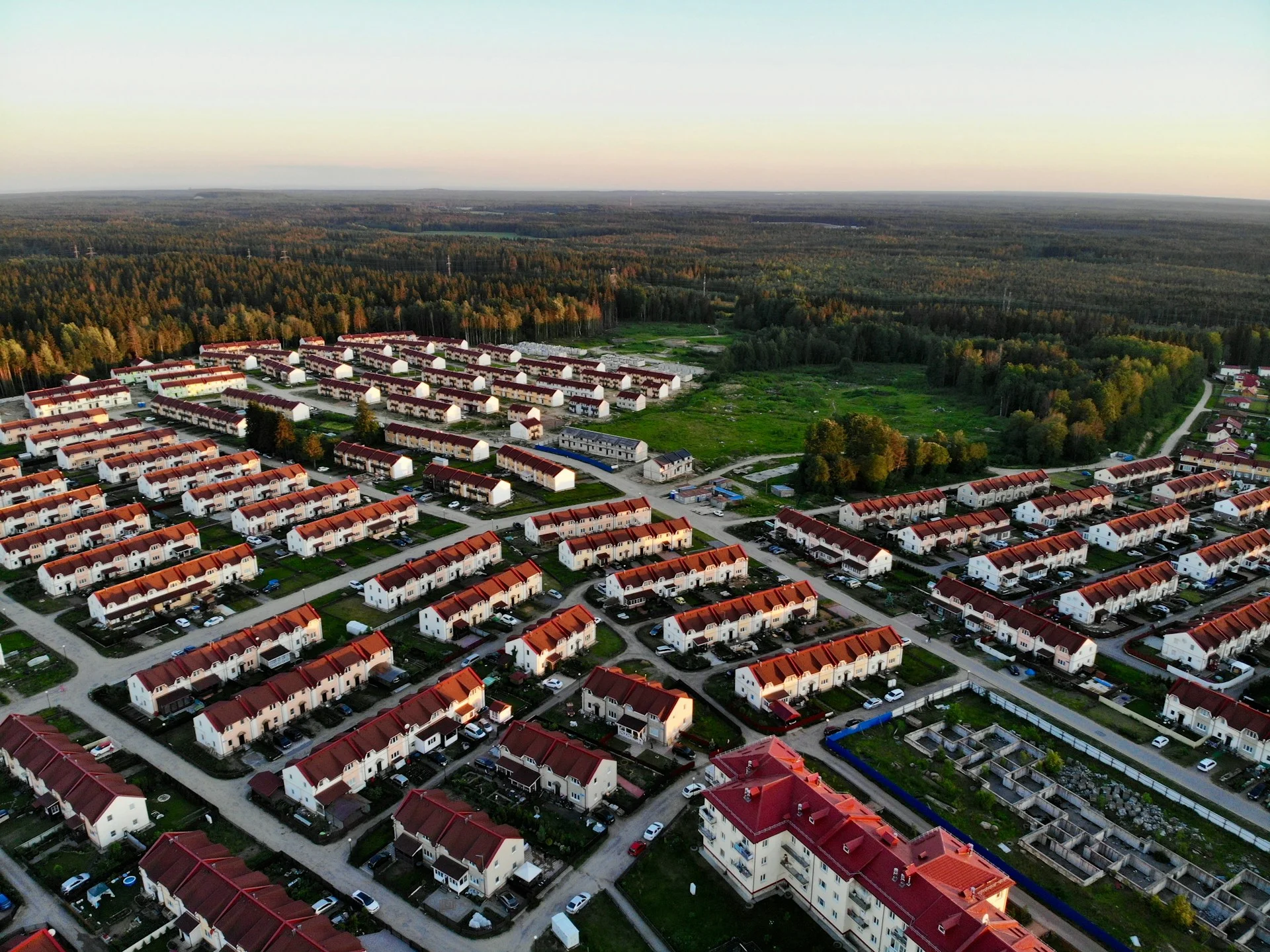
Leningrad Oblast land is naturally relevant for suburban housing, resort-adjacent residential projects, and corridor-linked development because the region combines demand spillover from Saint Petersburg with broad territory where access and local context sharply shape value
Coast Forest Corridor
Land in Leningrad Oblast is shaped by forest belts, lake and gulf directions, satellite-town growth, and major transport routes, so plot quality depends heavily on connectivity, setting, and how each site fits the region's layered metropolitan pattern
Long Horizon Suburban
The strategic appeal of land in Leningrad Oblast comes from steady metropolitan overflow and diversified regional geography, allowing well-positioned plots to remain useful for housing and selective mixed-use development over a long planning horizon
Capital Ring Spillover
Leningrad Oblast land is naturally relevant for suburban housing, resort-adjacent residential projects, and corridor-linked development because the region combines demand spillover from Saint Petersburg with broad territory where access and local context sharply shape value
Coast Forest Corridor
Land in Leningrad Oblast is shaped by forest belts, lake and gulf directions, satellite-town growth, and major transport routes, so plot quality depends heavily on connectivity, setting, and how each site fits the region's layered metropolitan pattern
Long Horizon Suburban
The strategic appeal of land in Leningrad Oblast comes from steady metropolitan overflow and diversified regional geography, allowing well-positioned plots to remain useful for housing and selective mixed-use development over a long planning horizon
Property highlights
in Leningrad Oblast, from our specialists
Found: 0


Useful articles
and recommendations from experts
Land for sale in Leningrad Oblast and how regional plot logic works
Why land has strong practical relevance in Leningrad Oblast
Leningrad Oblast is not a single urban market. It is a broad regional belt shaped by Saint Petersburg, satellite towns, transport corridors, forested residential zones, and coastal or lake-oriented directions that influence how land is used. Buyers consider plots here because the region supports several strong land logics at once. Some locations work through suburban housing demand, others through second-home or low-density residential appeal, and others through corridor-linked development tied to metropolitan movement.
That gives land in Leningrad Oblast a more complex role than in a compact inland region. A parcel may suit private housing, a cottage-format residential project, a low-rise suburban scheme, or a selective mixed-use concept depending on where it sits in relation to Saint Petersburg and the surrounding regional structure. In this market, the value of land depends less on the name of the district and more on whether the plot converts regional positioning into a practical use case.
How land fits the spatial structure of Leningrad Oblast
Leningrad Oblast should be read through belts and directions. There is the immediate suburban ring around Saint Petersburg, then the stronger satellite-town and transport-linked zones, then wider residential and landscape-driven areas where lower-density living becomes the main logic. This means land plots in Leningrad Oblast cannot be compared through distance from the city alone. Two parcels located at a similar range from Saint Petersburg may behave very differently if one sits in a coherent access corridor and the other does not.
Some plots make the most sense in suburban housing belts where everyday residential demand, road access, and settlement structure are already established. Others gain value in landscape-oriented belts where forests, lakes, or gulf-facing directions support a calmer private housing format. There are also more functional corridors where a plot may carry broader mixed-use relevance if the surrounding pattern supports it. This layered regional structure is why land comparison must begin with corridor and setting, not only geography on the map.
The strongest parcel is usually not the one with the most familiar regional label. It is the one that belongs naturally to a real movement pattern, residential belt, or suburban environment with the least friction. In Leningrad Oblast, regional fit matters more than simple proximity language.
Which land-use clusters matter most in Leningrad Oblast
The dominant cluster in Leningrad Oblast is suburban residential and low-density development use. Buyers often search for plots that can support private homes, townhouse concepts, cottage-style projects, or low-rise residential schemes in areas where demand from the Saint Petersburg metropolitan system remains strong. This is the clearest land story of the region: outward housing demand translated into structured suburban growth.
The secondary cluster is selective mixed-use and corridor-linked development. Certain parcels matter because they sit near stronger roads, service activity, or satellite-town environments where residential and commercial logic can overlap in a disciplined way. This does not mean every attractive plot should be treated as a broad commercial opportunity. It means some locations naturally support more than housing when surrounding density and movement justify it.
Recreational and second-home logic can also influence parts of the region, but at buyer level the strongest narrative remains suburban housing first and wider flexibility second. Leningrad Oblast works best as a metropolitan-edge land market shaped by Saint Petersburg demand, setting quality, and transport access.
What kinds of land plots usually make sense in Leningrad Oblast
Buyers who want to buy land in Leningrad Oblast often compare three broad categories. The first is suburban residential land, where the goal is a private home or a small residential scheme with practical access to the wider metropolitan system. The second is satellite-town or corridor-edge development land, where a plot may support broader residential or mixed-use formats in a stronger settlement environment. The third is landscape-oriented residential land, where lower-density living and setting quality become the main value drivers.
These categories solve different problems. Suburban residential plots are usually chosen for everyday practicality and stable housing logic. Satellite-town parcels may suit broader development because local density and infrastructure already exist. Landscape-oriented sites can offer a stronger residential atmosphere, but only when access and long-term usability remain realistic. In Leningrad Oblast, the right category depends on whether the buyer prioritizes daily connectivity, broader project scale, or setting-led private housing value.
What makes one Leningrad Oblast plot more practical than another
In Leningrad Oblast, practicality starts with connectivity. A site that connects well to the relevant regional route or suburban belt is usually more valuable than one that appears attractive by label alone. Parcel shape matters because development efficiency often depends more on geometry than on district familiarity. Surrounding pattern matters because a plot inside a coherent settlement environment is easier to evaluate than a parcel in a weak or fragmented area with uncertain residential logic.
Buyers should also compare how clearly the site supports the intended use. A parcel may sound appealing because it is near Saint Petersburg or near a desirable regional direction, but if access is inconsistent, surrounding density is weak, or the settlement structure is thin, it may be less practical than a site farther away in a stronger corridor. In this region, similarly sized plots can differ sharply when one already belongs to a real suburban pattern and the other depends too heavily on image.
The most useful comparison method is direct: does the parcel make the intended use easier, clearer, and more disciplined today. If the answer depends on too many assumptions about future transformation, the site is usually weaker than a plot whose regional role is already visible in the current structure.
Land in Leningrad Oblast versus fixed property formats
Completed property offers speed and immediate use. Land offers control over scale, layout, and long-term positioning. In Leningrad Oblast, that distinction matters because the region includes many belts where the right parcel can create something that standard inventory does not solve as well. This may mean a more tailored private housing concept, a better-positioned suburban project, or a low-rise residential format in a stronger settlement environment.
That does not mean land is always the better choice. It becomes compelling when the selected parcel can produce a stronger outcome than ready-built property already offers. If fixed inventory already solves the buyer's need cleanly, completed options may remain the more efficient route. Land becomes attractive when control over the site materially improves the quality of the final decision.
How to read actual plot options in Leningrad Oblast through the VelesClub Int. catalog
When reviewing land for sale in Leningrad Oblast, buyers should begin with the use case. Is the target a private house, a low-rise residential scheme, a suburban project, or a corridor-linked mixed-use format. Once that is clear, the next step is to define the parcel's role inside the region. Is it part of an immediate suburban belt, a satellite-town environment, or a more landscape-oriented residential zone where access remains the critical filter.
After that, comparison becomes more disciplined. Buyers should assess parcel shape, road connection, surrounding density, usable scale, and how naturally the site supports the intended project. This is where the VelesClub Int. catalog becomes useful. It helps narrow land plots in Leningrad Oblast according to how the region actually functions rather than through generic capital-adjacent language.
VelesClub Int. also helps turn broad interest into structured selection. Some buyers begin by focusing only on closeness to Saint Petersburg and later realize that corridor quality matters more. Others start with a landscape-first idea and later see that settlement continuity and daily usability are stronger filters than scenery alone. In a region as varied as Leningrad Oblast, the right plot usually becomes visible when the search is filtered through real suburban and regional logic instead of simple proximity.
Questions buyers ask about land in Leningrad Oblast
Why does land in Leningrad Oblast behave differently from land in ordinary regional areas? Because the region is shaped by Saint Petersburg spillover, satellite towns, uneven corridor growth, forest and water geography, and suburban housing demand, so plot value depends heavily on metropolitan fit and access.
Where does land usually make the most sense in Leningrad Oblast? Most often in suburban residential belts, active satellite-town zones, and selected residential directions where housing or low-rise development clearly matches the surrounding regional pattern.
Why can similarly sized plots in Leningrad Oblast feel so different in value? Because access, parcel geometry, surrounding density, and fit with real suburban structure often matter more than raw area or a broad district label.
Is land closer to Saint Petersburg always the stronger option in Leningrad Oblast? Not necessarily. Some plots farther out can offer better scale, cleaner development logic, and a more practical residential outcome than a more symbolic but less efficient near-city site.
What makes a plot more flexible in Leningrad Oblast? Rational shape, strong road access, clear fit with nearby settlement use, and a position inside a belt where one practical use works well now without limiting a better option later.
How should buyers compare buildable land in Leningrad Oblast without getting lost in regional scale? Start with the intended use, then review the relevant plots in the VelesClub Int. catalog or submit a structured request based on how each parcel fits the region's actual land logic.