
Plots for Sale in Bremen regionStructured regional land opportunities for ownership and growth
Best offers
in Bremen Region
Land Plots in Bremen region


Port Corridor Value
Land in the Bremen region is most naturally considered for residential expansion, logistics-linked positioning, and mixed urban-edge development because port activity, industrial continuity, and a compact regional network keep practical plot demand closely tied to movement and access
Waterfront Structure
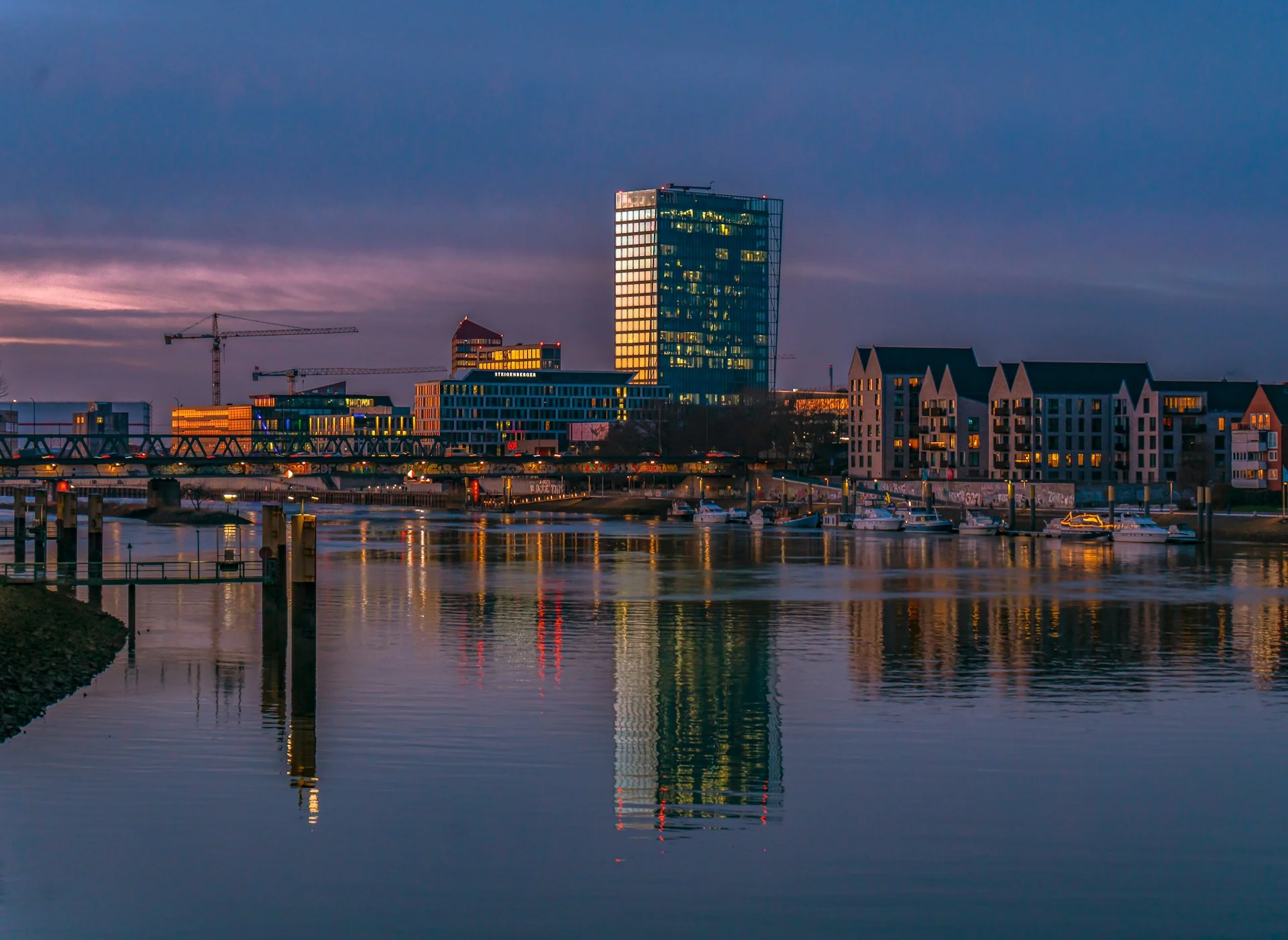
Few German regions shape land as clearly as the Bremen area, where the Weser, port infrastructure, industrial belts, and suburban municipalities create plot conditions that depend on connectivity, settlement fit, and realistic everyday use
Regional Resilience
Strategic land value in the Bremen region comes from maritime relevance, dependable transport links, and stable local demand, which keep well-positioned plots important for residential growth, mixed-use formats, and corridor-based development decisions
Port Corridor Value
Land in the Bremen region is most naturally considered for residential expansion, logistics-linked positioning, and mixed urban-edge development because port activity, industrial continuity, and a compact regional network keep practical plot demand closely tied to movement and access
Waterfront Structure
Few German regions shape land as clearly as the Bremen area, where the Weser, port infrastructure, industrial belts, and suburban municipalities create plot conditions that depend on connectivity, settlement fit, and realistic everyday use
Regional Resilience
Strategic land value in the Bremen region comes from maritime relevance, dependable transport links, and stable local demand, which keep well-positioned plots important for residential growth, mixed-use formats, and corridor-based development decisions








Useful articles
and recommendations from experts
Land plots in the Bremen region and how to compare them
Why land remains highly relevant across the Bremen region
The Bremen region is not a market driven by simple metropolitan scale. It is shaped by a compact city core, a port-oriented economy, industrial belts, suburban municipalities, and a wider surrounding area where land still plays a practical role in real building decisions. Buyers usually consider plots here when they want more flexibility than fixed property formats can offer, especially for residential building, mixed-use edge development, or land connected to movement and business activity.
That makes land relevant in a very specific way. Central Bremen offers limited straightforward plot choice, so much of the real land story begins in the wider regional structure. The key question is not only whether a parcel sits near Bremen, but whether it belongs to the working system of commuter flows, industrial continuity, port-related movement, and existing settlement belts.
How land fits the internal structure of the Bremen region
The region should be read through corridors, river geography, and municipal edges. The city itself anchors demand, but much of the practical plot logic sits in connected suburban areas, industrial transition zones, and local growth belts where people already live, work, and move. This creates a market where a site can perform well outside the core if it still fits the regional structure clearly.
The Weser and the port economy are part of that logic. In the Bremen area, land often gains meaning not only from urban access but also from how it sits in relation to freight routes, business zones, river-linked infrastructure, and suburban daily life. Some parcels behave as residential extensions of the city, while others make more sense through mixed-use or logistics-oriented positioning. In this region, territorial role matters more than simple geographic closeness.
Which land-use clusters matter most in the Bremen region
The dominant cluster is residential and development-led land use. Buyers often search for plots suited to detached homes, townhouse rows, compact residential schemes, and suburban building in municipalities where Bremen still shapes demand and everyday movement. This is the clearest pattern because the region supports practical housing growth beyond the central city without losing connection to jobs and services.
The secondary cluster is logistics-linked and mixed-use positioning. The Bremen region carries a stronger maritime and industrial identity than many similarly sized German regions, so some plots matter because they sit near roads, rail links, warehouse environments, service zones, or business-oriented corridors. These sites are defined less by prestige and more by access, functionality, and integration into an active regional economy.
What kinds of land plots in the Bremen region usually make sense
Suburban residential plots are one of the clearest categories. These parcels appeal to buyers who want direct building control while staying tied to jobs, schools, and services through the wider Bremen system. Their strength usually comes from fitting an existing residential belt rather than sitting too far outside the daily rhythm of the region.
Town-edge and corridor-linked plots form another important category. These sites can offer a good balance between access, scale, and future flexibility, especially where local growth already follows roads, rail connections, or service nodes. Their practical value often depends on how well they extend an existing settlement pattern rather than trying to create one from nothing.
There are also mixed-use and logistics-oriented plots where the logic is more functional than residential. These sites matter because port-related activity, goods movement, and regional service infrastructure create real demand for land that supports storage-linked use, work-oriented formats, or hybrid urban-edge functions.
What makes one plot more practical than another in the Bremen region
In this region, practicality begins with connection. A plot that sits inside a real commuter pattern, suburban belt, or corridor of everyday movement is usually easier to evaluate than a site that looks spacious or inexpensive but lies outside the actual working structure of the area. Buyers should read the parcel as part of a network rather than as an isolated location on a map.
Settlement fit matters just as much. Land that clearly belongs to a neighborhood edge, municipal extension, or active local center usually has stronger real-world relevance than a parcel with weak surroundings. In the Bremen region, the best plots tend to feel like natural parts of where people already live, move, or work.
Approach, footprint, and surrounding use pattern complete the comparison. In a compact region shaped by both urban and industrial logic, a well-positioned parcel with cleaner fit can outperform a more dramatic or larger site if the latter is awkwardly placed or poorly integrated into the local structure. Practical land reading matters more here than symbolic proximity alone.
Land in the Bremen region versus apartments and completed property
Apartments and completed houses offer immediate occupation. Land offers control over format, density, and long-term use. In the Bremen region, that difference matters because buyers are often choosing between established city stock and the possibility of creating something more tailored in a connected outer zone or corridor environment.
Land becomes attractive when the buyer wants a result that fixed property cannot easily provide. That may mean more private space in a strong residential belt, a staged development concept in an expanding municipality, or a mixed-use site tied to movement and business activity. It is not automatically the better option, but it becomes compelling when the parcel clearly improves on what ready stock already offers.
How to compare land plots in the Bremen region through the VelesClub Int. catalog
When reviewing land for sale in the Bremen region, buyers should first decide what role the parcel is meant to play. Is it a suburban residential site, a town-edge development plot, or a logistics-linked mixed-use position? Without that first filter, comparisons quickly become confusing because the region contains several different land markets under one compact economic umbrella.
Once the role is clear, comparison becomes more disciplined. Buyers can assess settlement fit, connection to commuter flows, parcel shape, approach quality, and whether the surrounding environment supports the intended use. This is where the VelesClub Int. catalog becomes useful. It helps organize land plots in the Bremen region by practical context rather than by isolated description.
VelesClub Int. also helps narrow broad search intent into a more realistic shortlist. Some buyers begin with the idea to buy land in the Bremen region for a private home and discover that only certain suburban belts support the right balance of access and space. Others start by looking for buildable land in the Bremen region and realize that corridor-linked plots offer stronger long-term flexibility. Structured comparison helps those differences become clearer before moving toward a request.
Questions buyers ask about land in the Bremen region
Why does land in the Bremen region behave differently from land in larger German metro areas? Because the territory is shaped by a compact city, maritime infrastructure, industrial continuity, and a tight commuter network, so plots are judged through a more corridor-based regional logic.
What usually makes a Bremen-region plot more practical? Strong integration into a real settlement pattern, useful transport connection, a clear footprint, and a location that matches the intended residential, development, or mixed-use role.
Why can a plot outside central Bremen still be stronger than a closer one? Because connectivity and fit within the regional system often matter more than simple geographic closeness to the core.
Where does land usually make the most sense in the Bremen region? Often in connected suburban municipalities, town edges, rail-linked growth belts, and selected industrially influenced corridors where regional pull still supports practical building decisions.
Is land in the Bremen region mainly for private homes? Private residential use is the strongest pattern, but many plots also suit compact development, logistics-linked positioning, or mixed-use decisions in the right context.
How should buyers compare actual plot options in the Bremen region? By sorting them first by regional role, then checking access, settlement fit, shape, and surrounding use before focusing on Bremen proximity alone.
A strong land decision in the Bremen region usually comes from understanding how the compact port-regional field actually works rather than chasing the nearest available parcel. Reviewing relevant plots in the VelesClub Int. catalog or sending a structured request is the practical next step once the right regional logic becomes clear.