
Land for Sale in ChileStructured land opportunities for acquisition and growth
Best offers
in Chile
Land Plots in Chile


Geographic range
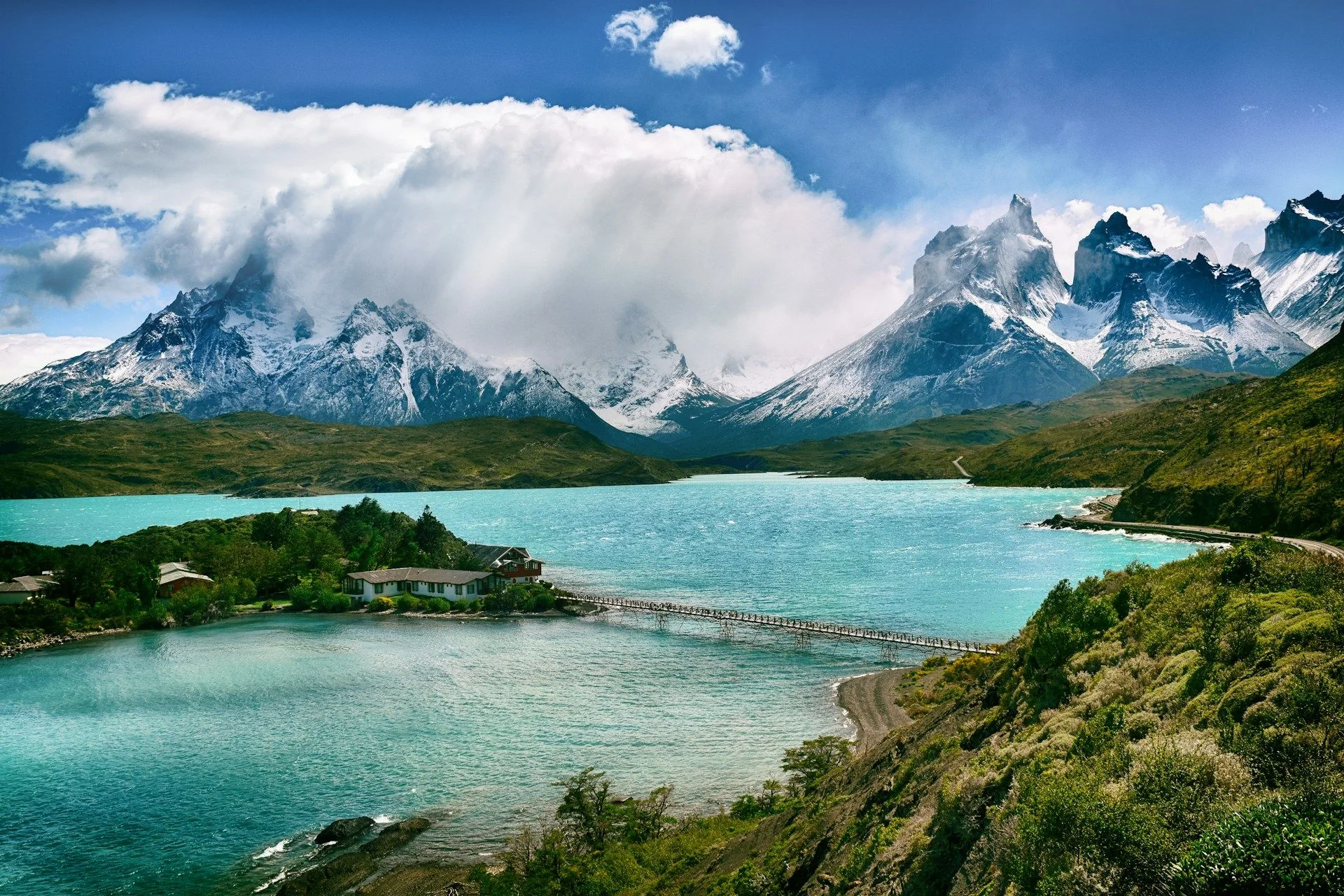
Chile appeals to land buyers because one country supports very different goals: vineyard and farming land in the central belt, coastal plots for private projects, southern land for retreat concepts, and urban-edge sites for structured development
Terrain logic
What makes Chile distinctive is how strongly geography shapes land quality. Climate, slope, water feasibility, road connection, and settlement pattern vary so much that the right plot depends less on size and more on exact territorial fit
Long view
Land stays compelling in Chile because steady urban demand, export-oriented agriculture, tourism interest, and the enduring scarcity of well-positioned plots in practical corridors can strengthen the long-term relevance of carefully selected land
Geographic range
Chile appeals to land buyers because one country supports very different goals: vineyard and farming land in the central belt, coastal plots for private projects, southern land for retreat concepts, and urban-edge sites for structured development
Terrain logic
What makes Chile distinctive is how strongly geography shapes land quality. Climate, slope, water feasibility, road connection, and settlement pattern vary so much that the right plot depends less on size and more on exact territorial fit
Long view
Land stays compelling in Chile because steady urban demand, export-oriented agriculture, tourism interest, and the enduring scarcity of well-positioned plots in practical corridors can strengthen the long-term relevance of carefully selected land








Useful articles
and recommendations from experts
Land for sale in Chile with practical buyer selection logic
Chile attracts land buyers because it offers unusual geographic breadth inside one market. A buyer can look at a plot near Santiago for future residential or mixed-use planning, a coastal site for private building, productive land in the central agricultural belt, vineyard-oriented terrain, southern land for second-home or hospitality concepts, or larger rural plots where privacy and scale matter more than dense settlement. The appeal is not only that land exists in many forms. It is that the country creates very different land decisions depending on climate, topography, access, water feasibility, and the density of local activity.
That is why land in Chile cannot be read as a single national story. Northern territory, central productive regions, coastal belts, metropolitan edges, lake districts, and Patagonia all behave differently. A plot that makes sense for a family build in one part of the country may make very little sense for the same purpose elsewhere. The buyer needs to understand what the land is for before judging whether it is attractive. In Chile, suitability is often driven less by headline size and more by whether the plot fits the physical and territorial realities of the intended use.
Why buyers consider land in Chile for very different goals
Buyers are drawn to Chile because land can serve several clear purposes without feeling forced into one standard pattern. Some buyers want residential plots near strong cities or expanding outer zones where they can build to their own layout. Some want agricultural or vineyard land in areas where productive use has a long-established logic. Some focus on coastal or southern territory where the priority is retreat, hospitality, or long-term holding tied to scenery and spatial privacy rather than dense urban function.
This range matters because it creates a more selective market. When buyers look to buy land in Chile, they are often not asking only whether the plot is available. They are asking whether the land supports the exact life or business use they have in mind. That is a stronger question, and it is the right one for a country where geography changes value so sharply.
What types of land buyers usually consider across Chile
Residential land tends to matter most around major urban systems and their outer rings. In these areas, the main questions are access, neighborhood direction, utility feasibility, and whether the land supports practical building rather than only broad ambition. A smaller, better-positioned plot near established daily infrastructure can be more useful than a much larger site that still feels disconnected from real activity.
Agricultural land has a different logic entirely. In the central belt, buyers may focus on productive suitability, parcel usability, road reach, and the relationship between the land and established farming or vineyard patterns. Coastal land often attracts private-use or hospitality-oriented interest, but exposure, slope, service connection, and seasonal movement all matter. Southern plots may attract second-home, retreat, or tourism concepts, yet their appeal depends heavily on ground conditions, access quality, and the balance between isolation and usability.
Commercial, industrial, or mixed-use land becomes more relevant near active corridors, urban expansion zones, or places where movement and service demand support those uses. In Chile, the category itself is not enough. The practical logic of the exact area decides whether the land is merely interesting or actually useful.
What buildable land means in Chile beyond empty space
Buildable land in Chile should be understood in practical terms. A plot is not truly buildable just because it is undeveloped. It has to support the intended structure or use with workable dimensions, manageable topography, realistic access, and a surrounding pattern that does not weaken the project. In a country marked by mountains, valleys, coastlines, river zones, and varied settlement density, physical conditions can transform the meaning of a plot very quickly.
That is why buildability is never only a visual question. A scenic site may still require difficult preparation, major grading, or more patience before it becomes straightforward to use. A less dramatic site may prove stronger because it is flatter, easier to approach, simpler to service, and better matched to nearby infrastructure. In Chile, practical buildability often separates emotional interest from disciplined land selection.
How ownership realities feel on the ground in Chile
For land buyers, ownership reality is less about abstract control and more about how the plot works day to day. Boundaries need to make sense on the ground, not only in description. Access needs to be clear enough to support future use. Easement reality, entry routes, utility extension, fencing, drainage, and ongoing maintenance all affect how quickly a plot becomes functional after acquisition.
This matters strongly in Chile because the same size plot can create very different obligations depending on terrain and location. A gently usable parcel in an established area behaves very differently from a steep coastal site, a remote southern property, or a larger rural tract with longer approach conditions. Buyers should think in terms of future usability and operational effort, not only legal possession in principle.
Where land value and usability change inside Chile
Chile is one of the clearest examples of a country where internal geography reshapes land logic. Around Santiago and other strong urban zones, land value often reflects proximity to population, employment, services, and future residential pressure. In the central valley, productive use and agricultural logic can dominate. In coastal areas, the pull may come from private enjoyment, hospitality concepts, or second-home demand, but not every coastal plot has equal practicality.
Further south, lake and forest environments can be highly attractive, yet land quality depends heavily on road access, seasonality, slope, drainage, and service reach. In Patagonia, vastness itself can be part of the appeal, but scale does not automatically create usability. Meanwhile, in the north, certain plots may matter more for corridor logic, industrial relevance, or strategic positioning than for residential comfort. The key lesson is simple: Chile should be read as several land realities inside one country, not as one generic market.
How terrain and water feasibility influence land decisions in Chile
Terrain is one of the first serious filters in Chile. A plot may look appealing by location or views, but if slope, soil behavior, or site shape complicate the intended use, the buyer may face a very different project than expected. Water feasibility also changes land quality sharply, especially when the planned use depends on regular servicing, productive land management, or a comfortable residential outcome.
Even where a plot appears spacious and well positioned, the distance between raw land and usable land can be large. Preparation work, site access, utility strategy, and drainage all affect the total logic of the acquisition. The best land choices in Chile are often those where the physical conditions quietly support the project instead of asking the buyer to overcome the site at every stage.
How buyers should think about use and timing in Chile
Land choices improve when buyers decide early whether they need immediate usability, phased construction, or long-term positioning. A family planning to build soon should usually prioritize practical access, manageable terrain, and a setting where utilities and daily movement already feel realistic. A buyer holding for future use may accept more distance or more preparation, but only where the area logic supports patience.
This is where land plots in Chile need to be read through timing as much as category. Productive land should be evaluated through operating suitability from the start. Retreat or hospitality land may tolerate slower execution if the location quality is strong enough. Urban-edge development land may be attractive because it sits ahead of full build-out, but only when the growth pattern is credible in practical terms. Timing changes which plot is truly right.
Feasibility checks matter before choosing a plot in Chile
Before commitment, the buyer should test the plot against its intended real-world use. Can construction or operations reach the site easily? Does the shape waste useful area? Does the topography add significant cost or delay? Is the surrounding pattern supportive or isolating? Are utility and maintenance expectations proportionate to the planned use, or will the site remain more demanding than it first appeared?
In Chile, feasibility also means checking whether the land is attractive for the same reason the buyer wants it. A residential buyer should not choose a plot whose main strength is scenic remoteness if daily functionality matters more. A productive buyer should not choose purely by beauty if the ground has to work operationally. A hospitality buyer should not ignore access in favor of atmosphere alone. Good land selection comes from matching the plot to the real purpose without compromise in the wrong direction.
How to read actual plot options in the VelesClub Int. catalog
When reviewing actual plots in the VelesClub Int. catalog, begin with category discipline. Separate residential, agricultural, commercial, retreat, and mixed-use intentions before comparing size or price. Then compare plots by terrain behavior, access logic, utility feasibility, shape efficiency, and the surrounding territorial pattern. This reveals more than headline presentation ever can.
A strong comparison usually asks simple but decisive questions. Is the land easy to use for the intended purpose? Does the area support near-term action or only patient positioning? Does the plot offer real practical flexibility or only apparent scale? Once those filters are clear, the catalog becomes more useful because the buyer is no longer browsing land in general. The buyer is evaluating fit.
Land versus finished property in Chile is a question of control
Finished property offers speed and a clearer visible outcome. Land offers control over layout, timing, density, and future use. In Chile that difference is important because local conditions vary so much. A finished asset may solve the construction phase, but it may also fix a format that is less suitable than a custom-built response to the exact area.
Land is often more attractive where buyers want design freedom, productive logic, a private compound format, or a site that responds directly to terrain and place. Finished property is often easier when immediate occupation is the priority. The right choice depends on whether the buyer values immediate visibility more than control. In many parts of Chile, land remains appealing precisely because control is the more valuable asset.
How VelesClub Int. supports disciplined land selection in Chile
VelesClub Int. helps move the decision from broad interest toward structured selection. The practical path is to define the intended use, focus on the right territory type, compare real plot characteristics that affect execution, and then review relevant options through that lens. That approach matters in Chile because the strongest land decisions come from filtering by physical fit and local logic, not from surface impressions alone.
Once the buyer understands which combination of terrain, access, timing, and area profile actually suits the goal, the next step becomes clearer. Reviewing relevant plots in the VelesClub Int. catalog is no longer casual browsing. It becomes part of a disciplined process that helps turn broad land interest into a more confident and practical request.
Key land questions in Chile
Why do similarly priced plots in Chile often differ so much in real usefulness?
Because terrain, access, water feasibility, and surrounding land pattern can change the practical value of a plot far more than area alone. Price may reflect size, while usability depends on what the land can actually support.
What do buyers most often underestimate when choosing land in Chile?
They often underestimate how strongly geography changes land logic. A plot that works in the central belt may be a weak choice in the south or on the coast because slope, access, and servicing conditions are completely different.
Why does access matter so much for land selection in Chile?
Access affects construction logistics, daily operation, long-term maintenance, and the flexibility of future use. A beautiful plot with weak approach conditions may be far less practical than a simpler site with stronger everyday reach.
What usually makes land less usable than it first appears in Chile?
Steep topography, difficult preparation, weak utility feasibility, or a mismatch between the intended use and the surrounding area can all reduce the value of an otherwise attractive-looking parcel.
How should buyers compare plots in Chile inside the catalog?
They should compare by purpose first, then by terrain, access, utility outlook, shape, and area logic. That method reveals which plots are truly aligned with the plan and which are only broadly appealing.
When is land a stronger choice than finished property in Chile?
Land is often stronger when the buyer wants layout control, phased execution, productive use, or a custom response to local terrain. Finished property is usually stronger when immediate occupation matters more than flexibility.
What is the most practical next step after understanding land logic in Chile?
Review the available options with a sharper filter. Once the intended use and core selection criteria are defined, it becomes much easier to focus on relevant plots in the VelesClub Int. catalog and submit a request with real direction.