
Commercial Real Estate in San MarinoVerified assets for strategic acquisition

Popular
cities and regions in San Marino

Best offers
in San Marino
Benefits of investing in commercial real estate in San Marino


Border gravity
San Marino looks tiny, but its commercial weight is not evenly spread. Dogana and Serravalle handle border-facing business and dense services, while the historic upper centers follow tourism, institutions, and smaller-scale premium trade.
Use mismatch
Readers often treat all San Marino premises as compact mixed-use stock, yet warehouse, showroom, office, and hospitality logic separate sharply here. Border-access sites suit trade and distribution better, while hill locations suit visitor spending.
Tourism bias
The usual mistake is comparing a hilltop asset with a border asset by charm, image, or price alone. In San Marino, access, parking, truckability, tourist flow, and cross-border convenience change value more.
Border gravity
San Marino looks tiny, but its commercial weight is not evenly spread. Dogana and Serravalle handle border-facing business and dense services, while the historic upper centers follow tourism, institutions, and smaller-scale premium trade.
Use mismatch
Readers often treat all San Marino premises as compact mixed-use stock, yet warehouse, showroom, office, and hospitality logic separate sharply here. Border-access sites suit trade and distribution better, while hill locations suit visitor spending.
Tourism bias
The usual mistake is comparing a hilltop asset with a border asset by charm, image, or price alone. In San Marino, access, parking, truckability, tourist flow, and cross-border convenience change value more.








Useful articles
and recommendations from experts
Commercial real estate in San Marino by border access and hilltop function
Commercial real estate in San Marino has to be read through a very compact but very uneven geography. This is not a country with several equal business cities, long freight corridors, or a broad national spread of office, warehouse, retail, hospitality, and mixed-use demand. It is a microstate inside Italy, and that changes everything. The strongest commercial logic runs from the low border-facing belt around Dogana and Serravalle upward through Borgo Maggiore to the historic core of the City of San Marino on Monte Titano. That short vertical system matters more than abstract national language because each part of it supports a different commercial function.
This is why San Marino is easy to misread. Some readers flatten it into a tourism market because the historic center is internationally visible. Others treat it as a generic small business jurisdiction and assume office, light industrial, warehouse, retail, and hospitality uses can be compared across the whole territory without much internal filtering. Both readings miss the commercial map. San Marino works through border access, manufacturing and wholesale activity, service concentration, tourism, and a layered set of urban roles packed into a very small space. A building in Dogana is not answering the same demand as a property in the historic center. A trade-support unit in Rovereta is not comparable to a hospitality or premium retail asset near the towers. The country is small, but the internal commercial split is real.
How the San Marino commercial map actually works
The most practical way to read San Marino is to divide it into four commercial layers. The first is the lower northern belt, especially Serravalle and Dogana, where border access, denser population, retail, service businesses, and daily cross-border movement create the broadest commercial base. The second is the industrial and business belt around areas such as Rovereta, Galazzano, and nearby parts of Serravalle, where manufacturing, trade-support premises, workshops, showrooms, and practical commercial buildings make more sense than tourism-led formats. The third is Borgo Maggiore, which acts as a transitional market and service node between the lower belt and the historic upper center. The fourth is the City of San Marino itself, where institutions, tourism, hospitality, heritage retail, and prestige-oriented commercial uses matter more than broad logistics or standard office stock.
Other castelli such as Domagnano, Fiorentino, Faetano, Acquaviva, Montegiardino, and Chiesanuova fit around these core layers in more limited ways. They support local services, selected light business activity, and residential-commercial overlap, but they do not reset the national hierarchy. In a country this compact, the key commercial question is not which municipality sounds important on paper. The key question is whether the asset sits in the border-service belt, the industrial-business belt, the market connector zone, the tourism-institutional hilltop, or a more local service environment.
Serravalle and Dogana as the main commercial entry belt
Serravalle and Dogana form the clearest commercial entry belt because they sit at the edge of the state, closest to the Italian urban and road system, and carry much of the country's everyday business movement. This is where border convenience, visibility, denser settlement, commuting patterns, and routine services matter most. For commercial property, that usually makes the area stronger for mainstream retail, daily service property, offices with practical accessibility, showrooms, trade-related premises, and commercial buildings that benefit from easy approach rather than from symbolic location.
Dogana is especially important in this reading because it works as a threshold between San Marino and the surrounding Italian economy. That gives it a commercial rhythm different from the historic center. Consumer-facing businesses, branches, practical offices, convenience retail, and urban commercial space tend to fit more naturally here because the area supports repeated local and cross-border use. In a compact state, convenience is not a secondary factor. It is one of the main drivers of commercial value.
This also means readers should be careful not to evaluate Serravalle and Dogana with tourism criteria. Their strength is not medieval atmosphere or destination appeal. Their strength comes from access, density, proximity to Italian catchment, and their role in everyday circulation. A commercial building here is often stronger when it is easy to reach, easy to park, and easy to use than when it carries scenic or prestige value.
Rovereta, Galazzano, and the industrial business belt
San Marino has an economic profile that gives manufacturing, wholesale trade, and business production more weight than many people expect from a microstate. That is why the industrial and business belt matters so much in the commercial map. Areas such as Rovereta and Galazzano are more relevant for industrial buildings, workshops, light manufacturing premises, support warehousing, trade compounds, supplier space, and practical business property than the heritage-focused upper part of the republic.
The logic here is straightforward. If the asset depends on loading access, operational efficiency, goods handling, production, technical staff movement, or trade-support activity, the lower industrial belt usually provides a clearer fit. These are not logistics assets in the sense of a major port or airport market. San Marino has neither. The commercial case is instead built around short-haul regional connectivity, integration with nearby Italian routes, and the practicality of doing business from a compact jurisdiction with a real production base.
This distinction matters because warehouse and industrial property in San Marino are often misunderstood. Buyers sometimes assume the country is too small for that format to matter, then overcorrect by treating any large unit as automatically special. The better reading is narrower. A stronger industrial or warehouse asset is one that serves actual manufacturing, wholesale, service distribution, or supplier networks. A weaker one is simply large without clear functional relevance. In San Marino, use case matters more than size.
Borgo Maggiore as the market connector
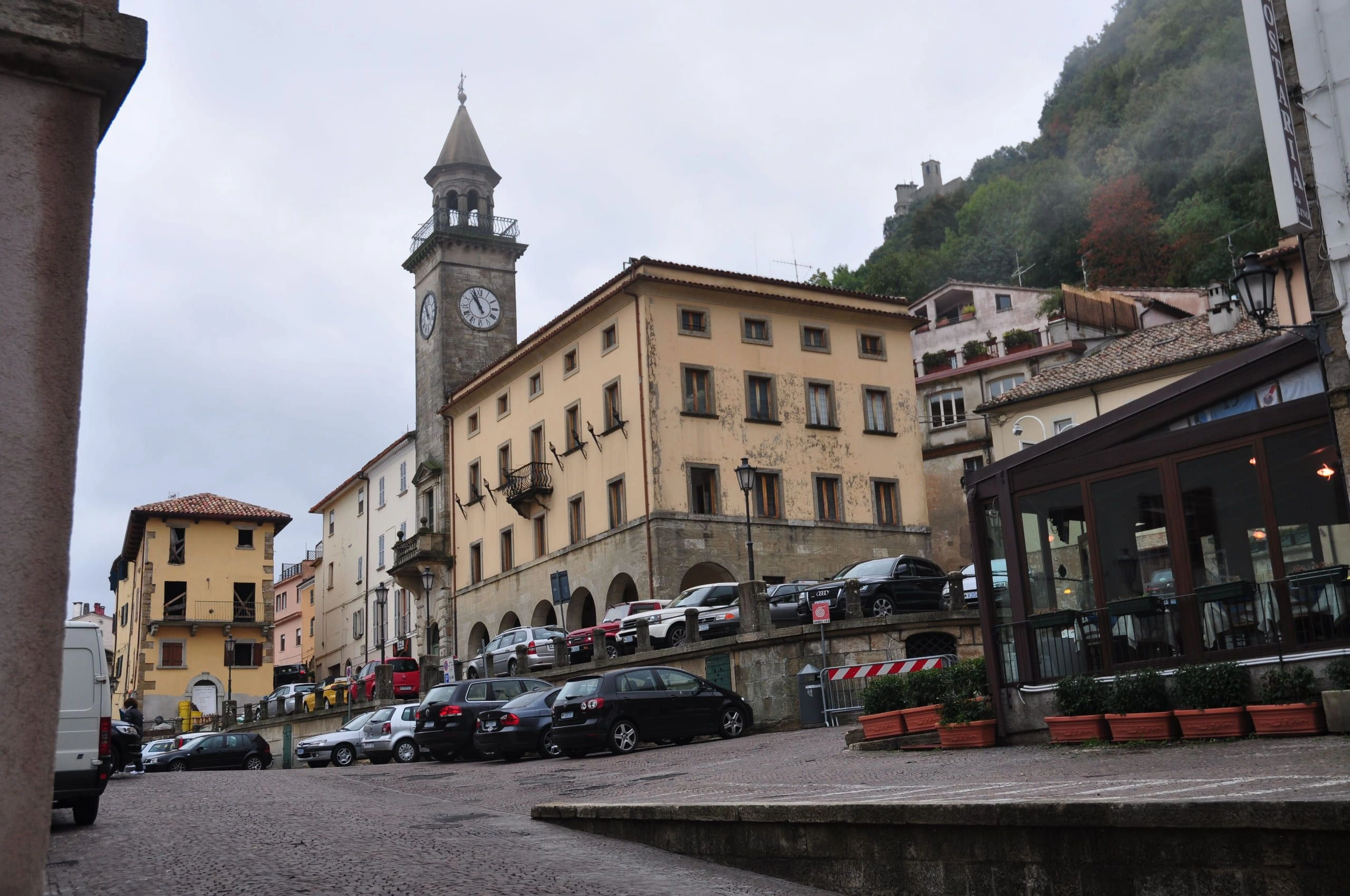
Borgo Maggiore has a different commercial identity. Historically a market town, it still works as an intermediate commercial zone between the lower belt and the upper historic center. It is not just a scenic stop between two better-known points. It matters because it links parking, movement, local services, shopping activity, and the ascent toward the City of San Marino. The cable car connection reinforces that role by making Borgo Maggiore part of the movement system that carries visitors and users toward the upper center.
For commercial real estate, Borgo Maggiore is best understood as a connector market. Retail, local services, food and beverage, selected offices, practical mixed-use property, and properties that benefit from both resident use and visitor movement can all make sense here. The area has more everyday commercial depth than the historic summit and more urban character than purely local outer zones, but it does not function like a border business belt either. This makes it one of the more nuanced screening environments in the country.
The mistake here is to treat Borgo Maggiore as either a small copy of the City of San Marino or a weaker version of Dogana. It is neither. Its commercial strength comes from mediation. It captures transition, market tradition, parking logic, and service flow. That often makes it suitable for business premises that need accessibility but still benefit from the tourist and institutional gravity of the upper city.
The City of San Marino as the tourism and prestige layer
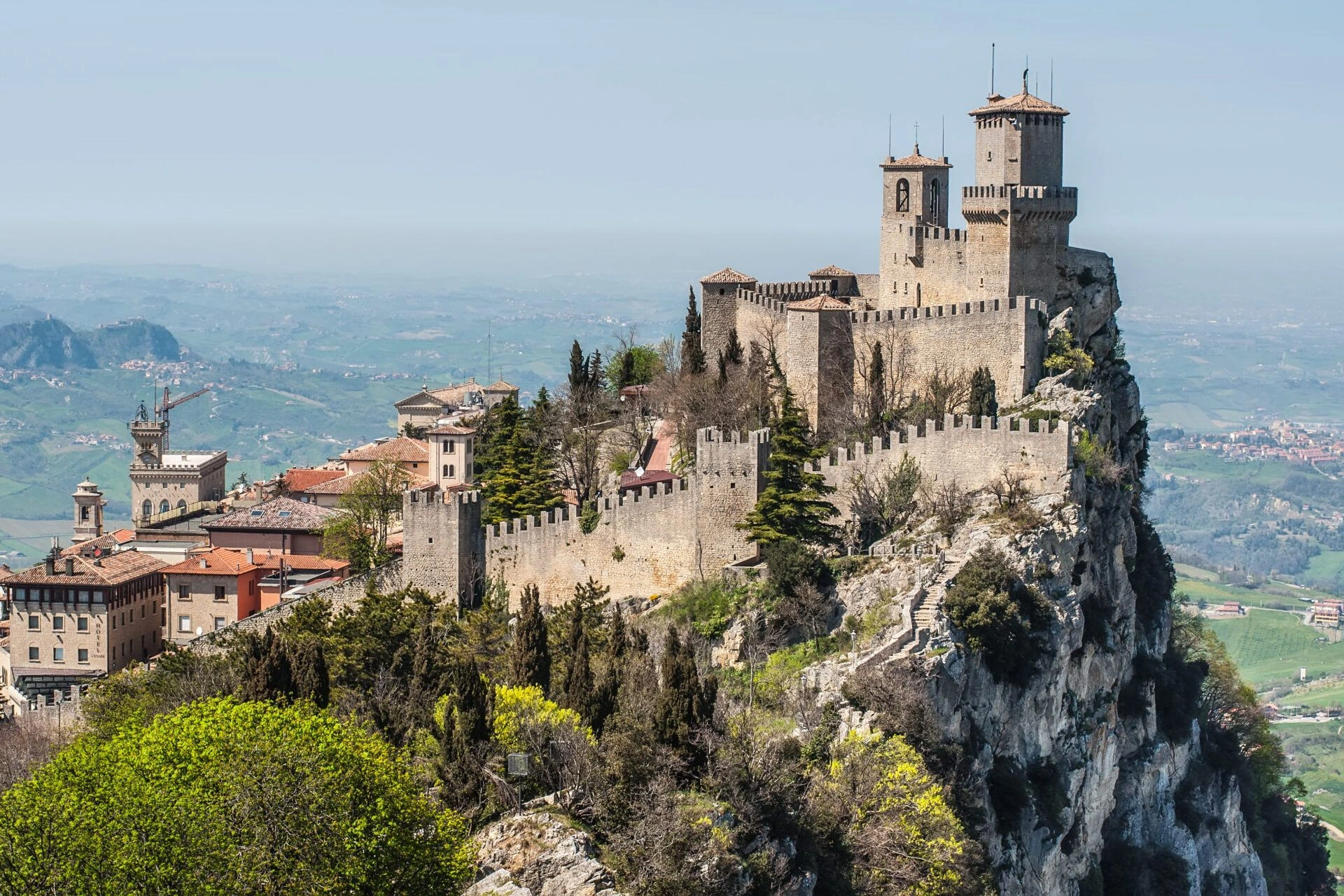
The City of San Marino should be screened with a different commercial filter from every lower zone. This is the country's symbolic and historic core, and its commercial property logic is driven primarily by tourism, hospitality, institutions, heritage retail, food service, cultural activity, and selected offices linked to public functions or prestige presence. That makes it strong for some formats and structurally weak for others.
A hospitality asset here can make sense because visitor flow, heritage value, and destination spending support that use. Premium gift retail, food and beverage, boutique commercial space, and service property tied to the old town environment can also make sense. But broad office logic is thinner here than in the lower, more accessible belt, and warehouse or industrial logic is clearly misplaced. The practical limitations of the hilltop setting matter. Access, loading, parking, and daily operational convenience are not the same as in Dogana, Serravalle, or the industrial belt.
This is one of the most important corrections in San Marino. The most famous part of the country is not the most universal commercial zone. It is the most specialized one. A property in the historic center is stronger when it is matched to visitor economy, institutional symbolism, or a premium niche rather than to broad mass-market functionality.
Secondary castelli and what local service demand can really support
The rest of the republic should be read more modestly. Castelli outside the main border-to-hill axis can support local retail, neighborhood services, selected offices, workshops, and small business premises, but usually on a more local scale. Their commercial relevance comes from resident demand, niche business activity, and spillover from the main belt rather than from independent national centrality.
This does not make them unimportant. In a microstate, even local service nodes can matter if they serve clear daily needs. But the right filter is narrower. A pharmacy, clinic, food service unit, training space, workshop, or compact mixed-use building may fit. A broad office concept that depends on heavy client traffic may fit less well. A visitor-led hospitality concept may only work when tied to a specific destination logic. This is another reason San Marino rewards precise matching. Small markets do not absorb generalized commercial ideas as easily as large ones do.
What makes one commercial asset stronger than another in San Marino
The stronger commercial asset in San Marino is usually the one aligned with its exact layer of demand. In the lower belt, strength comes from border access, convenience, parking, density, and integration with daily service and trade patterns. In the industrial belt, it comes from operational practicality, loading logic, production relevance, and regional business connectivity. In Borgo Maggiore, it comes from transition, market tradition, and mixed local and visitor circulation. In the City of San Marino, it comes from tourism, heritage value, institutional presence, and premium niche positioning.
This is why common shortcuts fail. Scenic value alone is not enough. A central historic address alone is not enough. A border location alone is not enough. Even a larger floorplate alone is not enough. In San Marino, value shifts with use. A smaller but accessible trade-support property may be commercially stronger than a more beautiful but operationally difficult building. A modest service building in Serravalle may read more clearly than a picturesque hilltop unit if the business depends on routine daily access. A hospitality property in the old city may be stronger than a generic retail unit lower down if the user base is clearly visitor-driven. Functional fit explains more than image.
FAQ on commercial property in San Marino
Why are Serravalle and Dogana so important for commercial property
Because they combine border access, denser settlement, practical road connectivity, and everyday business use. That makes them the clearest area for broad service, retail, office, and trade-facing premises.
Why is the historic center not the best location for every commercial format
Because it is strongest for tourism, hospitality, heritage retail, and institutional presence. It is less suited to operations that depend on loading ease, parking, or routine high-volume access.
What makes industrial property in San Marino work
It works best when it supports real manufacturing, supplier activity, wholesale, workshops, or business distribution tied to nearby Italian routes rather than when it is judged as a stand-alone speculative format.
How should Borgo Maggiore be read commercially
As a connector market. It sits between lower-border practicality and upper-city tourism, which makes it useful for mixed service, retail, food, and selected office uses.
Are the smaller castelli major commercial markets
No. They are better understood as local service zones or selective spillover locations. Their assets should be screened by concrete neighborhood demand, not by national-level expectations.
How to shortlist San Marino more accurately
A practical shortlist in San Marino starts with one question: what kind of movement keeps this property active. If the answer is daily trade, cross-border convenience, dense service use, and straightforward access, the lower belt around Serravalle and Dogana deserves priority. If the answer is production, supplier work, trade-support storage, or technical operations, the industrial business belt is a better fit. If the answer is mixed local and visitor circulation with easier access to the upper city, Borgo Maggiore becomes more relevant. If the answer is tourism, heritage spending, hospitality, or symbolic presence, the City of San Marino belongs at the top of the list.
That method works because San Marino is small but not commercially flat. Its assets need to be matched to border logic, industrial logic, market-connector logic, or hilltop tourism logic. Once that distinction is made, comparison becomes cleaner and weaker assumptions fall away. The stronger shortlist is usually the one that respects the country's compact geography instead of pretending that every part of San Marino can support the same commercial function.