
Commercial buildings for sale in LodzVerified buildings for city expansion
Best offers
in Poland
Benefits of investing in commercial real estate in Lodz


Local demand drivers
Lodz's central location, large manufacturing base, growing logistics corridors and university-driven services support steady demand for industrial, office and retail space, implying a mix of long-term industrial leases and flexible commercial lease profiles
Asset types and strategies
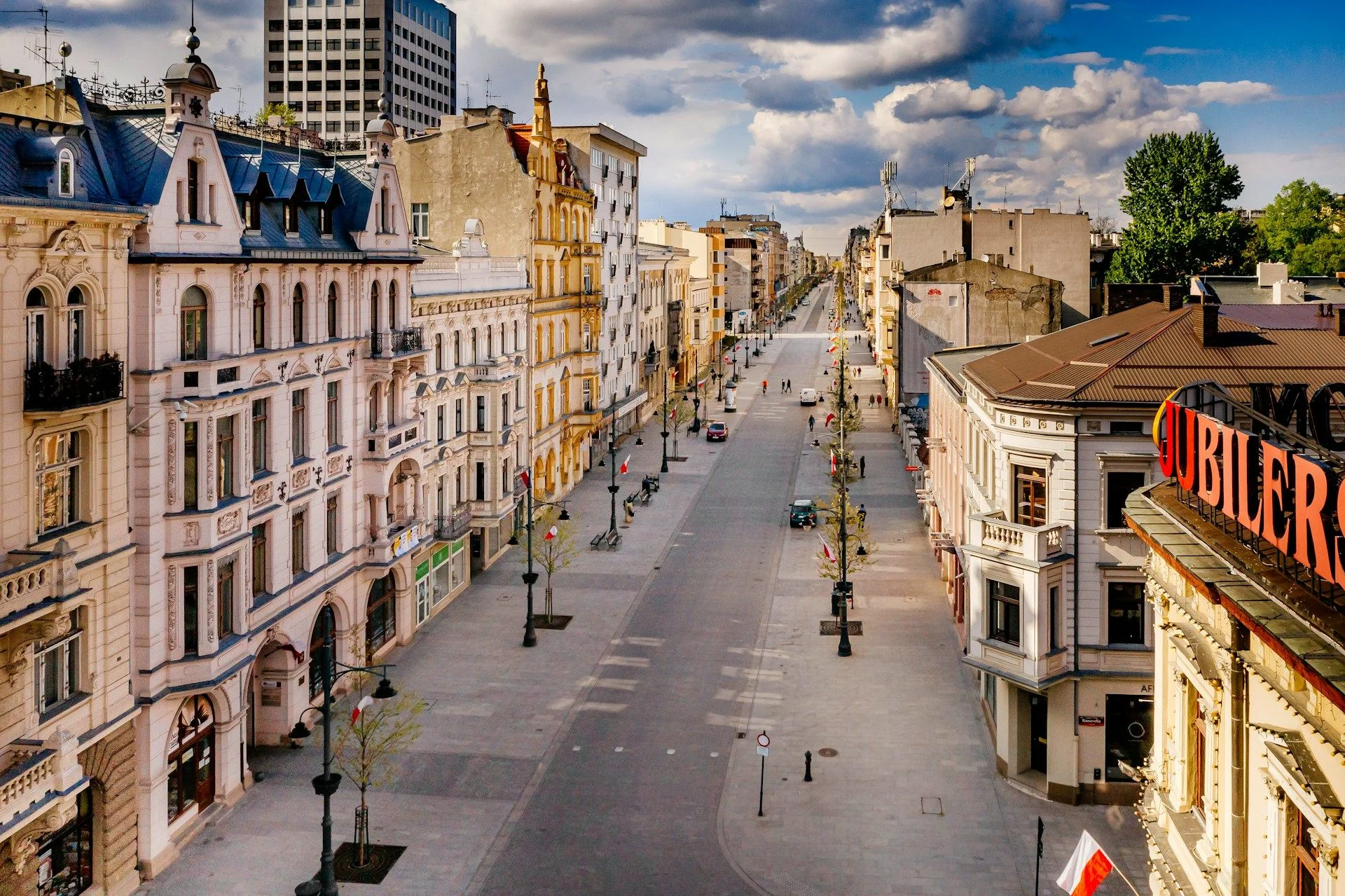
Warehouse and light manufacturing units dominate near logistics routes, central and secondary office stock suits refurbishment plays, high-street retail around Piotrkowska and mixed-use conversions enable single-tenant or multi-tenant strategies across core and value-add profiles
Expert selection support
VelesClub Int. experts define investment strategy, shortlist Lodz assets and run systematic screening including tenant quality checks, lease structure review, yield logic assessment, capex and fit-out assumptions, vacancy risk analysis and due diligence checklist
Local demand drivers
Lodz's central location, large manufacturing base, growing logistics corridors and university-driven services support steady demand for industrial, office and retail space, implying a mix of long-term industrial leases and flexible commercial lease profiles
Asset types and strategies
Warehouse and light manufacturing units dominate near logistics routes, central and secondary office stock suits refurbishment plays, high-street retail around Piotrkowska and mixed-use conversions enable single-tenant or multi-tenant strategies across core and value-add profiles
Expert selection support
VelesClub Int. experts define investment strategy, shortlist Lodz assets and run systematic screening including tenant quality checks, lease structure review, yield logic assessment, capex and fit-out assumptions, vacancy risk analysis and due diligence checklist








Useful articles
and recommendations from experts
Commercial property in Lodz market overview
Why commercial property matters in Lodz
Commercial property in Lodz plays a distinct role in the city economy by translating local demand patterns into investable cash flows and occupational decisions. Lodz hosts a diversified economic base that includes manufacturing conversion to light industry and logistics, growing service sectors that support regional administration and education, and retail and hospitality activity tied to both resident consumption and business travel. Demand for office space in Lodz comes from local professional services, regional corporate back offices and shared-service operators. Retail space in Lodz is required to serve dense residential catchments and arterial high streets. Industrial and warehouse property in Lodz supports both legacy manufacturing supply chains and increasing e-commerce distribution. Buyers in this market typically include owner-occupiers seeking premises for operations, institutional and private investors targeting rental income or capital appreciation, and operators who acquire to run hotels, managed offices or retail portfolios.
Understanding how these buyer types intersect with sectoral demand is essential. Owner-occupiers evaluate long-run location needs and capex, investors price in lease security and tenant credit, and operators look at operational margins and local regulatory factors. For commercial real estate in Lodz, this differentiation shapes transaction structures, asset management intensity and holding period expectations.
The commercial landscape – what is traded and leased
The traded and leased stock in Lodz reflects an urban centre with layered commercial typologies. Core business districts contain multitenant office buildings and administrative premises that trade on lease length and tenant mix, while high street corridors and neighborhood retail nodes provide small-unit retail and service locations oriented to footfall and local demand. Business parks and logistics zones at the city periphery host light industrial units and warehouses that are leased on a size-and-access basis to distribution and manufacturing support functions. Hospitality clusters concentrate near transport nodes and cultural attractions, and educational and healthcare campuses generate long-term lettings to institutional occupiers.
A useful analytical distinction in Lodz is between lease-driven value and asset-driven value. Lease-driven value depends primarily on contracted cash flows, tenant quality, indexation mechanisms and remaining lease term; assets of this kind are often priced as pass-through income plays. Asset-driven value relies more on physical improvement, repositioning or alternative use potential; examples include underutilized industrial sites that can be refurbished or buildings near regeneration corridors that can be upgraded to attract higher rents. Both logics coexist in Lodz and influence how properties are marketed, underwritten and financed.
Asset types that investors and buyers target in Lodz
Investors and buyers evaluate a typical set of asset classes in Lodz with sector-specific criteria. Retail space in Lodz ranges from compact high street units that depend on pedestrian flows to larger neighborhood retail centres that serve a stable catchment. High street retail is valued for visibility and turnover potential, while neighborhood retail is analysed for tenant mix, lease length and local demographics. Office space in Lodz is assessed on accessibility, floorplate efficiency, ceiling heights and building services; prime vs non-prime distinctions hinge on location relative to the central business area and the quality of building management and fit-out.
Hospitality and restaurant-cafe-bar premises are underwritten primarily on revenue per available room or seat, seasonality and operational cost structures. Warehouse property in Lodz is driven by last-mile access, ceiling clearances, yard and docking efficiency, and proximity to arterial roads; e-commerce growth has increased demand for medium-bay logistics and cross-dock facilities. Revenue houses and mixed-use assets that combine residential upper floors with ground-floor retail or offices offer diversification of cash flows but require more active asset management to balance different tenant regulation and service charge regimes. Across these segments investors weigh trade-offs between rental yield stability, vacancy risk and potential for value-add intervention.
Strategy selection – income, value-add, or owner-occupier
Choosing a strategy in Lodz depends on investor risk tolerance, time horizon and operational capability. An income-focused strategy targets stable leases with strong covenants and longer remaining terms; in Lodz this is common for institutional buyers who prioritise low leasing risk and predictable cash flow from creditworthy tenants. Local factors that support this approach include sectors with stable demand such as healthcare and certain educational occupiers, and the presence of multi-year logistics contracts.
Value-add strategies in Lodz involve refurbishment, re-leasing, or partial redevelopment to capture rental growth. These play well where building stock is older and technical upgrading can attract higher-quality tenants, or where zoning and market trends allow conversion between uses. Value-add is sensitive to construction cost inflation and tenant churn norms in Lodz, so underwriting must include realistic capex schedules and leasing timelines. Owner-occupier purchase logic focuses on operational control, control over fit-out and long-term occupancy cost predictability; manufacturers, large chain operators and regional headquarters often pursue this route. Mixed-use optimisation strategies attempt to combine elements of income stability with upsides from active management, but they require more complex leasing and service governance in the Lodz context.
Areas and districts – where commercial demand concentrates in Lodz
Commercial demand in Lodz concentrates along a set of district types rather than uniform geography. The central district around the historic core and administrative centre serves as the primary office and professional services cluster, attracting corporate bureaux, legal and financial occupiers. Srodmiescie functions as the main CBD-equivalent where accessibility, public transport links and proximity to civic services drive office and premium retail demand. Polesie and Baluty contain a mix of residential catchments and secondary retail corridors that support neighborhood retail and small-scale offices. Gorna and Widzew include larger industrial and logistics parcels at the urban edge, where warehouse property in Lodz benefits from better road access and lower land costs.
When comparing districts in Lodz, assess four dimensions: transport connectivity and commuter flows, tenant catchment and local demand density, supply pipeline and planning constraints, and competition from similar districts. Emerging business areas around transport nodes can offer lower entry pricing but carry leasing and market acceptance risk. Central districts command higher rents but also present limited upside without active asset improvements. Industrial and logistics demand is concentrated near arterial routes that serve the wider region rather than in the historic core, creating distinct micro-markets within the city.
Deal structure – leases, due diligence, and operating risks
Typical deal structures in Lodz require careful review of lease documentation and operational assumptions. Buyers commonly review lease term and remaining duration, break options and tenant rights, indexation clauses linked to inflation or local indices, service charge apportionment and responsibilities for fit-out and ongoing maintenance. Vacancy and reletting risk is a central underwriting variable; short average lease terms in certain retail or small office segments raise turnover expectations and require active leasing budgets. Capex planning must account for building systems, energy efficiency retrofits and compliance upgrades, which can materially affect short-term cash flows and long-term residual value.
Operating risks in Lodz include tenant concentration where a single large tenant represents a disproportionate share of income, market cycles that affect rental demand in specific sectors, and regulatory or permitting timelines for refurbishment or change of use. Due diligence typically covers leases and rent rolls, technical building surveys, environmental and planning constraints, and verification of service charge accounting. Credit assessment of tenants and stress-testing of vacancy scenarios are common practice when underwriting commercial real estate in Lodz.
Pricing logic and exit options in Lodz
Pricing drivers for commercial property in Lodz follow established investment principles adapted to local market characteristics. Location and pedestrian or vehicle footfall matter for retail and hospitality, while access to labour pools and transport nodes drives office and industrial valuation. Tenant quality and lease length are primary determinants of yield expectations; long, indexed leases with creditworthy tenants command pricing premia compared with short, market-dependent leases. Building quality and required capex influence both initial price and the investor’s holding cost assumptions. Alternative use potential, such as conversion opportunities for underperforming office or industrial buildings, increases optionality and can be reflected in pricing when planning and zoning permit.
Exit options in Lodz include hold-and-refinance strategies where investors stabilise income and then refinance to extract capital, re-lease-then-exit approaches that improve let-up and uplift value prior to sale, and reposition-then-exit scenarios that rely on active asset management to create transactional value. The feasibility of each exit path depends on local demand cycles and the investor’s ability to execute operational plans. Pricing sensitivity is higher where market liquidity is lower, so timing and market-readiness of the asset are important considerations.
How VelesClub Int. helps with commercial property in Lodz
VelesClub Int. provides an analytical approach to screening and selecting commercial property in Lodz. The process begins with clarifying client objectives, whether the priority is income generation, capital appreciation or owner-occupation. From that foundation VelesClub Int. defines target segments and district parameters aligned with those objectives and the client’s operational capabilities. Shortlisting emphasises lease profile, tenant credit, remaining term and capex exposure to ensure that assets match the stated risk-return profile.
For selected assets VelesClub Int. coordinates comprehensive due diligence workflows and documentation review, liaising with technical advisors and market specialists to validate assumptions. The firm supports negotiation and transaction steps by preparing comparable market analyses, cash-flow models and sensitivity tests that reflect Lodz-specific market drivers. Advice is tailored to the client’s strategy and capability, with clear delineation between commercial recommendations and the need for independent legal or tax counsel when applicable.
Conclusion – choosing the right commercial strategy in Lodz
Choosing the right commercial strategy in Lodz requires aligning asset type, district selection and deal structure with the investor’s objectives and operational bandwidth. Income-focused buyers will prioritise long leases and tenant quality, value-add investors need detailed capex and leasing plans, and owner-occupiers must balance operational fit with purchase economics. District choice between Srodmiescie, Polesie, Baluty, Gorna and Widzew should reflect the sector focus—office, retail, hospitality or logistics—and the specific risks of vacancy and oversupply. For those seeking to buy commercial property in Lodz or to evaluate opportunities across office space in Lodz, retail space in Lodz and warehouse property in Lodz, engaging a specialist advisor reduces execution risk and clarifies market trade-offs. Consult VelesClub Int. experts for a tailored assessment, asset screening and strategy that match your investment criteria and capability set.