
Tourism in Montenegro: Flights, Accommodation & Best ActivitiesAdriatic coast gems, rugged mountainsmedieval towns, pristine nature
Advantages of traveling
to Montenegro


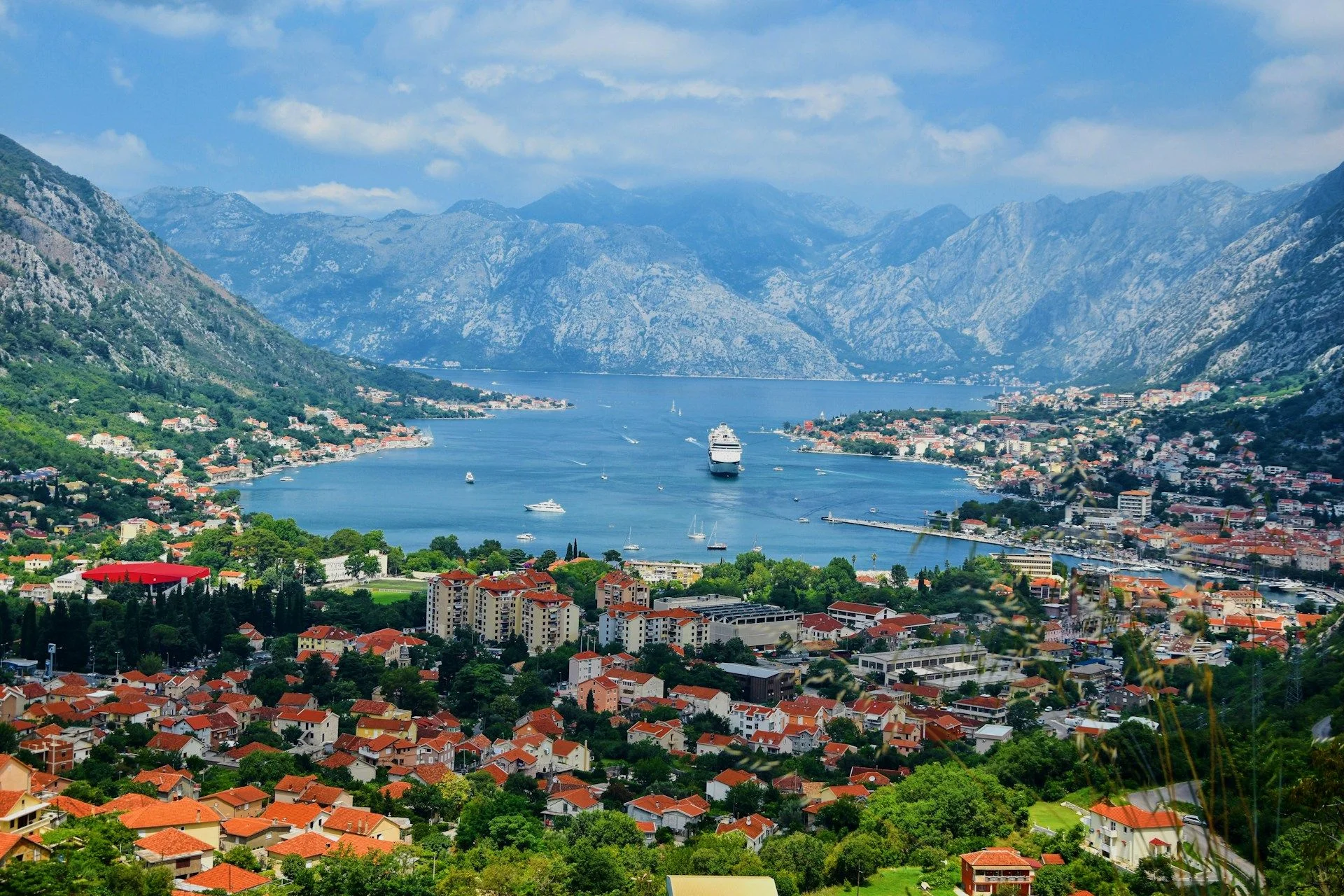
Bay of Kotor Splendor
Cruise glacial fjords framed by limestone cliffs, disembark in UNESCO-listed Kotor Old Town, and wander winding alleys past centuries-old cathedrals and fortified walls.
Durmitor Mountain Adventures
Trek glacial peaks, descend into Tara Canyon on zip-lines, raft turquoise rivers, then unwind by glacial lakes amid primeval pine forests and soaring summits.
Coastal & Island Retreats
Relax on Budva’s sandy beaches, explore the islets of Sveti Nikola, and sample fresh seafood in fishing villages, all set against a backdrop of sun-drenched Adriatic waters.
Bay of Kotor Splendor
Cruise glacial fjords framed by limestone cliffs, disembark in UNESCO-listed Kotor Old Town, and wander winding alleys past centuries-old cathedrals and fortified walls.
Durmitor Mountain Adventures
Trek glacial peaks, descend into Tara Canyon on zip-lines, raft turquoise rivers, then unwind by glacial lakes amid primeval pine forests and soaring summits.
Coastal & Island Retreats
Relax on Budva’s sandy beaches, explore the islets of Sveti Nikola, and sample fresh seafood in fishing villages, all set against a backdrop of sun-drenched Adriatic waters.









Useful articles
and recommendations from experts
Tourism in Montenegro: Explore the Best Experiences
Montenegro, perched between the Adriatic Sea and the rugged Dinaric Alps, offers an extraordinary diversity of landscapes within a compact area of just 13,812 square kilometers. Tourism in Montenegro invites visitors to sail glacial fjords, wander medieval city walls, and ascend limestone peaks—all in a single day’s journey. From the UNESCO-listed Bay of Kotor, with its Venetian fortresses and oyster farms, to the silent heights of Durmitor National Park, home to Europe’s deepest canyon and glacial lakes, travel experiences in Montenegro blend history, adventure, and coastal leisure. With two international airports at Podgorica and Tivat, plus efficient highways linking coastal towns and mountain villages, how to visit Montenegro has never been more straightforward, whether arriving by plane, ferry from Italy, or road from neighboring Croatia and Serbia.
Why Montenegro is a Top Tourist Destination
Montenegro’s enduring appeal stems from its dramatic contrasts and authentic charm. Along the Adriatic Coast, fortified towns like Kotor and Budva preserve layers of Illyrian, Roman, Byzantine, Venetian, and Ottoman history in stone walls, palazzi, and baroque churches. The Bay of Kotor’s entrance resembles a fjord, carved by ancient glaciers into a labyrinth of sheltered inlets—perfect for yachting, kayaking, and cliffside hiking. Inland, the Dinaric Alps rise abruptly, creating alpine plateaus and deep canyons. Durmitor National Park’s dense pine forests, fauna-rich moorlands, and the Tara Canyon—at nearly 1,300 meters deep Europe’s most dramatic gorge—draw mountaineers, white-water rafters, and nature photographers. Skadar Lake National Park spans the border with Albania, Asia’s largest bird habitat in temperate Europe, where fishermen ply reed-lined bays for carp and eel. This interplay of sea, mountains, and lakes, combined with a millennia-long cultural mosaic, explains why travel experiences in Montenegro resonate with both adventure seekers and history enthusiasts.
Main Types of Tourism in Montenegro
Montenegro supports a broad spectrum of tourism styles. Coastal Tourism thrives along the Budva Riviera—Mogren, Jaz, and Sveti Stefan beaches—where beach clubs and wellness resorts cater to sunbathers, party-goers, and families. Heritage Tourism unfolds in the stone alleys of Kotor Old Town, Cetinje’s royal palaces, and the hilltop fortress of Žabljak overlooking Skadar Lake, each offering guided walking tours that delve into Balkan history. Adventure Tourism centers on Durmitor’s hiking trails—such as the ascent of Bobotov Kuk—and off-road excursions into Prokletije National Park across the Albanian border. Eco and Wildlife Tourism flourishes around Skadar Lake’s bird-watching hides, delta boat safaris, and visits to watermill villages. Wellness and Outdoor Retreats leverage the healing properties of herbal spas in Bjelasica and alp lake retreats in Biograd. Finally, Wine and Culinary Tourism emerges in the sunny vineyards of Plantaže near Podgorica and centuries-old olive groves along the coast, offering cellar tours and degustation menus that highlight organic Montenegrin olive oil, cheese, and prosciutto. By selecting from these best tours in Montenegro, travelers craft personalized itineraries that reflect their interests and pace.
Unique Attractions and Experiences
Among Montenegro’s unique draws is the scenic train ride from Bar to Podgorica that traverses 254 tunnels and crosses 435 bridges, earning a spot among the world’s most picturesque rail journeys. At Lovćen National Park, visitors climb nearly 460 stone steps carved into the mountain to reach the mausoleum of Petar II Petrović-Njegoš, Montenegro’s revered poet-prince, for panoramic vistas of the Bay of Kotor and Adriatic beyond. The remote village of Njeguši—birthplace of Njeguški pršut (smoked ham)—beckons gastronomes for authentic mountain-top feasts under ancient chestnut trees. In autumn, the biannual Horse-plough Festival in Virpazar revives medieval agricultural traditions with draft-horse competitions and folk music. Underwater, divers explore sunken amphorae at Ada Bojana’s delta, a rare blend of Adriatic and Danube ecosystems. These distinctive experiences ensure that travel experiences in Montenegro extend far beyond typical seaside vacations.
Practical Tips for Travelers
When planning how to visit Montenegro, consider these Montenegro travel tips. The country operates on Central European Time (UTC+1; UTC+2 in summer). Transport: Rent a car with GPS for maximum flexibility—highways link Kotor, Budva, and Podgorica, while coastal roads offer scenic detours. Public buses run frequent services, and seasonal ferries connect the Bay of Kotor towns. Visa & Entry: Citizens of EU, UK, US, Canada, Australia, and many others enjoy visa-free entry for up to 90 days. Others should consult Montenegrin consulates. Currency: The euro (EUR) is Montenegro’s de facto currency; ATMs and credit cards are widely accepted in urban and coastal centers but carry cash for mountain villages. Health & Safety: The tap water is generally safe in cities; bottled water is advisable in remote areas. Pack sunscreen, a reusable water bottle, and a basic first-aid kit for hikes. Clothing: Lightweight layers for coastal days and warm outer layers for mountain nights; sturdy hiking boots for national parks; modest attire when visiting Orthodox monasteries such as Ostrog. Language: Montenegrin (Serbo-Croatian) is official, but English is commonly spoken in tourism hubs—learning basic greetings (e.g., “Dobar dan” for hello) is appreciated.
Seasonal Demand and Visitor Flows
Montenegro’s tourism peaks in summer (June–August), when coastal resorts brim with sunseekers and yachting enthusiasts. Beach clubs in Budva and Sveti Stefan fill quickly; book accommodation and boat charters at least three months in advance. Shoulder seasons (May–June and September–October) offer milder weather, fewer crowds, and ideal conditions for hiking in Durmitor and rafting the Tara River. Winter (December–March) draws outdoor adventurers to ski resorts in Kolašin and Žabljak, with snowfall enabling cross-country skiing and snowshoeing. Weekend tourism surges on Friday–Sunday as visitors flock from nearby Croatia and Bosnia; weekdays offer more tranquil exploration. Major events such as Kotor Carnival (February–March) and Sea Dance Festival (July) shape visitor flows—align your itinerary with local calendars to experience Montenegro’s vibrant cultural scene without missing must-see attractions.
Travel Planning Recommendations
To craft an optimal Montenegro itinerary, follow these travel planning recommendations. First, allocate at least two days on the coast: one for Kotor Old Town and Perast boat excursions to Our Lady of the Rocks, another for Budva, Sveti Stefan, and coastal beach clubs. Second, dedicate two days to Durmitor National Park: dawn rafting on the Tara River, midday hikes to Škrčka and Crno jezero lakes, and evening stargazing at Black Lake’s shore. Third, reserve one day for Skadar Lake National Park: morning delta boat safari, afternoon wine tasting in Virpazar, and sunset photography at the Belvedere overlook. Fourth, schedule a half-day cultural excursion in Podgorica—visit the Millennium Bridge and Ribnica Fortress. Fifth, pack layered clothing, sturdy footwear, and a lightweight rain jacket for mountain micro-climates. Sixth, pre-book car rental and national park entrance tickets during high season and festival weekends. Finally, download offline maps and secure travel insurance covering adventure sports. By integrating these strategies on how to visit Montenegro, you’ll ensure a seamless, enriching journey through this jewel of the Adriatic and Dinaric landscapes.