






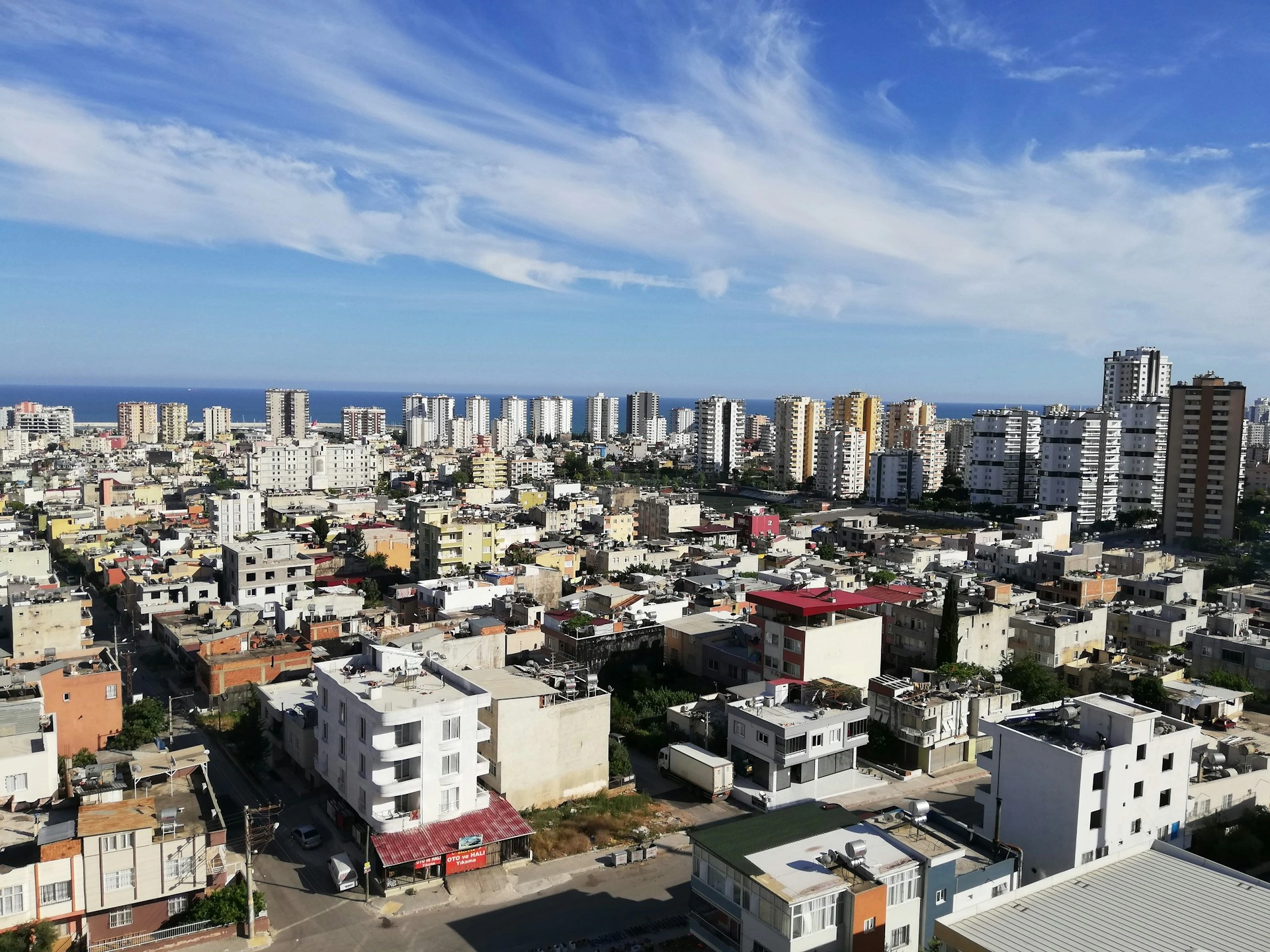




Benefits of a residence permit in Turkey

Route fit
In Turkiye, the most used routes are short term, family, and student permits. Eligibility depends on provable purpose and stable address. VelesClub Int. maps your profile to the most defensible ground and evidence set
Document pack
Prepare passport copy, photos, valid health insurance, financial proof, and a Turkiye address file. Rental contracts are notarized and registered to an address. VelesClub Int. cross checks names, dates, and document alignment before submission
Refusal triggers
Refusals in Turkiye often follow weak purpose proof, address problems, or gaps in insurance coverage. Extensions must be filed before expiry within the window. VelesClub Int. reviews risk points early and plans renewals and compliance
Route fit
In Turkiye, the most used routes are short term, family, and student permits. Eligibility depends on provable purpose and stable address. VelesClub Int. maps your profile to the most defensible ground and evidence set
Document pack
Prepare passport copy, photos, valid health insurance, financial proof, and a Turkiye address file. Rental contracts are notarized and registered to an address. VelesClub Int. cross checks names, dates, and document alignment before submission
Refusal triggers
Refusals in Turkiye often follow weak purpose proof, address problems, or gaps in insurance coverage. Extensions must be filed before expiry within the window. VelesClub Int. reviews risk points early and plans renewals and compliance


Useful articles
and recommendations from experts
Residence permit in Turkiye – routes, filing, and compliance
Turkiye residence permits – what the status is and why the ground matters
A residence permit in Turkiye is a lawful status for a foreign national to stay beyond the visitor allowance and to live in the country under a defined legal ground. The ground is not a formality. It controls what evidence is required, what the authority checks, how renewal is assessed, and what changes are permitted later. Planning starts with choosing a ground you can prove consistently, not the ground you prefer on paper.
In practice, many problems appear when applicants treat a residence permit as a generic right to remain. In Turkiye, the file is evaluated against the declared purpose and the supporting documents must match that purpose without contradictions. If the declared ground is weak, the address is not accepted for registration, or the insurance period does not cover the requested stay, the application can fail even when the person is otherwise compliant.
Turkiye legal grounds – the routes most applicants can actually use
Turkiye has several residence permit categories. For most applicants, the common planning routes are short term residence, family residence, and student residence. Employment based lawful stay is typically tied to a work authorization framework, and the correct planning step is to confirm which status applies to your situation and whether a separate residence card is required for your category. The aim is to avoid filing the wrong permit type and then having to restart the process under time pressure.
Short term residence in Turkiye is used for defined purposes that the authority recognizes, such as property ownership, certain commercial or professional activities, or other lawful reasons accepted in practice. In 2026, applicants should expect closer review of purpose evidence for short term permits that are presented as open ended lifestyle stay. If the ground is not supported by documents that show a stable and realistic plan, the risk of refusal increases.
Family residence in Turkiye is relevant when the sponsor and relationship meet the legal conditions. The file is evidence heavy and focuses on relationship proof, sponsor status, and household stability. Student residence in Turkiye is linked to enrollment and attendance, and the compliance logic is different from short term permits. Choosing a student route without a real study plan creates avoidable risk because the authority can check continuity and institution records.
Long term residence in Turkiye exists as a distinct legal status, but it is not an entry route. It depends on sustained lawful residence and continuity criteria over time. For most readers, it is relevant only as a long range compliance target that affects how strictly you manage renewals, address rules, and travel patterns.
Turkiye filing logic – online initiation, appointment flow, and what gets checked
Residence permit filing in Turkiye typically starts with an online initiation step and then moves to an in person appointment where documents are presented and biometrics can be collected. The operational reality is that timing matters as much as eligibility. You must plan the sequence between entry to Turkiye, securing an address, arranging insurance, preparing translations, and obtaining appointment availability.
The review is not only about whether each document exists. It is also about whether the set is internally consistent. Dates, names, passport details, and declared purpose must align across forms, insurance, address evidence, and financial proof. A frequent cause of problems is a pack that looks assembled from different scenarios, such as one document implying tourism, another implying study, and a third implying business activity.
Another practical check in Turkiye is whether the address can be registered for the intended permit type. Address acceptance is not uniform across all neighborhoods and can change based on administrative decisions. This is why address planning is not a purely housing question. It is a core compliance step that affects whether the authority will accept the application as filed.
Turkiye documents and proofs – what is typically required and how to keep it consistent
While the exact checklist depends on the permit ground, a typical residence permit pack in Turkiye includes identification documents, application forms, photos, valid health insurance for the requested duration, and evidence of financial capacity. Some routes also require route specific proofs such as enrollment confirmation for students or relationship and sponsor evidence for family residence.
Address evidence is a central element in Turkiye. Applicants often rely on a rental contract or a property ownership document, and the operational nuance is that the contract format and confirmation steps must fit local practice. Many applicants need notarization steps for rental contracts before they are treated as acceptable for residence permit purposes. A second layer is address registration. If the address cannot be registered for foreigners for the specific permit type, the file may fail even when the contract is valid as a private agreement.
Translations and document formalities are another frequent pain point. If you use documents issued outside Turkiye, you may need certified translation and, depending on the document, legalization steps that make it acceptable in a Turkish administrative context. The safest approach is to prepare a route specific list early and keep a single naming standard across all documents so that spelling variants do not create mismatch during verification.
Turkiye health insurance and financial proof – common compliance pitfalls
Health insurance is typically treated as a mandatory element for residence permit applications in Turkiye for many categories. The policy period should cover the requested permit duration, and the name and identity data must match the passport and application form. A frequent issue is a policy that starts after the intended filing date, ends earlier than the requested residence period, or includes personal data that differs from the passport spelling.
Financial proof in Turkiye is evaluated in a practical way. The authority expects to see that the applicant can support the intended stay without relying on inconsistent explanations. For some profiles, stable income evidence is more persuasive than a single account snapshot. For others, documented support from a sponsor may be relevant if the route allows it. The key is to keep the story coherent and document based, because inconsistencies can trigger additional checks or a negative assessment.
Turkiye address rules and closed areas – what to verify before you sign a lease
Turkiye applies address registration controls for certain areas, and in 2026 some neighborhoods and districts are treated as closed for new foreign address registrations for specific residence permit categories. This is a high impact operational risk because it can invalidate an otherwise correct application. The list can change, and the practical requirement is to verify address acceptability through official channels or through a validated local check before you commit to housing.
Address management continues after approval. If you move within Turkiye, you may have notification obligations and you may need to update address registration within the required timeframe. Applicants who treat address as a private matter can unintentionally create a compliance gap that affects renewal. For residence planning, the address is not only where you sleep. It is a key administrative anchor that the authority uses to assess continuity and contactability.
Turkiye renewal mechanics – timing windows, continuity, and avoiding status gaps
Renewal in Turkiye is not a simple repeat of the first filing. The authority often reviews whether the declared purpose remained true in the prior period, whether the address remained valid and registered, and whether insurance and financial proof stayed consistent. A common rule in practice is that extension filing is allowed within a pre expiry window and must be completed before the permit expires. Late filing can create unlawful stay exposure and complicate future applications.
Continuity also matters for people who travel. If you spend long periods outside Turkiye, you should understand how absence affects your permit category and your longer term plans. For certain statuses, prolonged absence can create renewal risk or affect eligibility for long term residence later. The practical way to manage this is to align travel patterns with the obligations of your permit ground and keep evidence that supports continuity of purpose.
Turkiye applicants outside the country – what to prepare before travel and what requires presence
Many applicants start planning from abroad and intend to move to Turkiye after approval or shortly before filing. The main risk is timing mismatch between entry, document readiness, and appointment availability. Before travel, you can usually prepare core civil documents, obtain official copies where needed, and arrange legalization or certification steps required for use in Turkiye. You can also prepare a consistent naming standard for translations and decide which permit ground you will file under so you do not assemble conflicting proofs.
Some steps often require presence in Turkiye, such as signing and notarizing a local rental contract, obtaining local insurance in an acceptable format, completing biometrics, and attending the appointment for document submission. If you enter Turkiye close to the end of your visitor allowance and then cannot secure an appointment in time, you may face an avoidable gap. The correct planning approach is to sequence entry and filing so you have buffer time for address registration and document corrections.
VelesClub Int. supports cross border residence planning for Turkiye by confirming route logic, building a route specific checklist, reviewing document form and consistency, coordinating translations and certifications as a process step, and planning submission timing and renewals. The goal is to reduce preventable errors and to keep the file aligned with the declared ground.
Turkiye 2026 position – what is changing and what to treat as stable
In 2026, the core residence permit framework in Turkiye remains structured around defined legal grounds and administrative verification of purpose, address, insurance, and financial capacity. Applicants should assume a more evidence driven review environment rather than a permissive one, especially for short term permits presented without clear purpose documentation. Where public guidance or administrative practice changes, it often appears as stricter document checks, updated online forms, and expanded address control in specific neighborhoods.
If you do not see a confirmed major legislative change for your exact permit type, do not rely on informal advice that a new program exists. The safer approach is to verify the current filing rules through the migration authority guidance and to treat local administrative practice as a variable that must be checked at the time of filing.
Turkiye common mistakes – country specific errors that lead to refusals or renewal problems
A frequent mistake in Turkiye is choosing a short term permit ground that is not supported by strong evidence, then submitting a pack that looks generic. Another is signing a lease without confirming that the address can be registered for foreigners for the intended permit type, which can cause a downstream failure at the address stage. A third is insurance misalignment, such as coverage dates not matching the requested duration or personal data mismatch, which can be treated as a material deficiency.
Procedural timing is another recurring issue. Applicants sometimes wait to prepare documents until after they arrive, then lose time on notarization, translation, or appointment availability. This increases the risk of missing the renewal window later because the person does not build a repeatable compliance routine. The practical fix is to plan renewals early, keep a calendar of key dates, and maintain a clean record of address and insurance continuity.
How VelesClub Int. helps with residence permits in Turkiye
VelesClub Int. provides residence permit assistance for Turkiye in a process oriented format. Support typically includes eligibility assessment and route comparison, a checklist built around the selected ground, document preparation and review with consistency controls, coordination of translations and certifications when required, and submission guidance with case navigation through the appointment stage.
After issuance, VelesClub Int. can support renewal planning and change of grounds analysis where a person’s circumstances change, such as switching from a short term route to a student or family route when the legal conditions are met. The focus remains on lawful stay continuity, compliance discipline, and evidence quality, without promising outcomes.
Turkiye residence permit FAQ
Can I apply for a residence permit in Turkiye after entering as a visitor
Many applicants start after entry, but the key is timing. You must align entry date, address setup, insurance purchase, and appointment availability so you can submit within your lawful stay and avoid a gap.
Does a rental contract in Turkiye need notarization for a residence permit
In many cases, the authority expects a rental contract in a format that is confirmed locally, often involving notarization steps. Verify the current accepted contract format and the related address registration requirement before submission.
What does it mean if an area is closed for foreign address registration in Turkiye
It means the address may not be accepted for new foreign registrations for certain permit categories. If your address cannot be registered, the residence permit application can fail even if other documents are correct.
When should I file an extension for a Turkiye residence permit
Extension filing is typically allowed within a pre expiry window and must be completed before the permit expires. Plan early, because appointment availability and document corrections can take time and late filing can create unlawful stay.
Can I leave Turkiye while my residence permit application is pending
Leaving during processing can create re entry and timing complications depending on your status and the stage of the file. Confirm the safe travel rules for your category before departure and keep evidence of your pending application.
What happens if my health insurance does not cover the full requested period in Turkiye
The application can be treated as incomplete or inconsistent. The policy dates should match the requested permit duration and personal data should align with the passport and application form to avoid a deficiency finding.
Turkiye conclusion – practical next step for lawful residency planning
Residence permits in Turkiye are workable when the ground is realistic, the address is acceptable for registration, and the document set is consistent and timed correctly. Most negative outcomes are caused by preventable issues such as weak purpose proof, address restrictions, insurance mismatch, or late renewal planning. A disciplined route selection and checklist driven process is the most reliable way to support a stable residency plan and to move without compliance gaps.
For a route assessment and a filing checklist tailored to your profile, request a free consultation with VelesClub Int.