
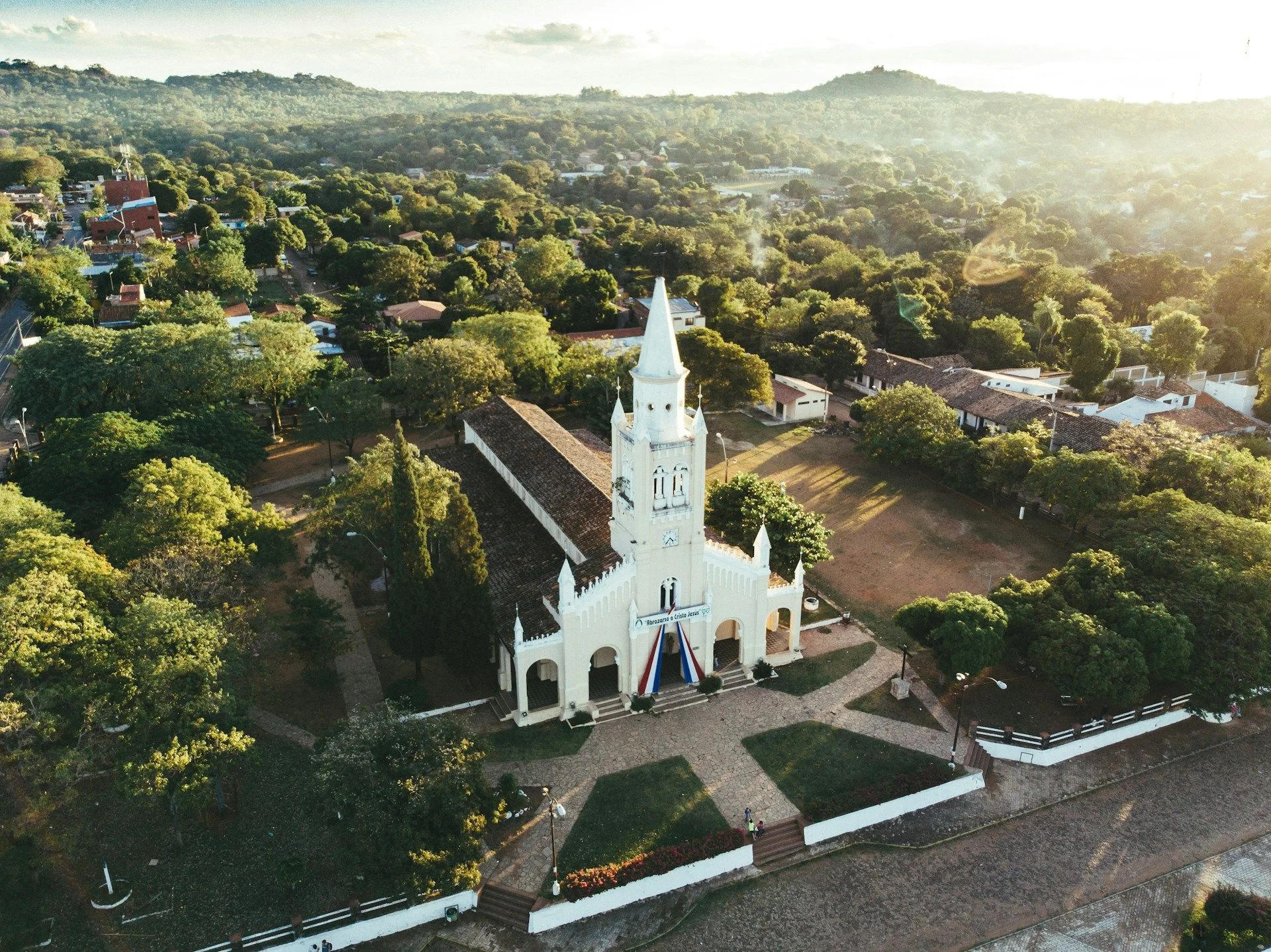
Benefits of a residence permit in Paraguay


Mercosur Window
Paraguay changes route logic by nationality. Mercosur nationals use a treaty-based temporary residence with a strict conversion window, while other foreigners usually start under the general temporary regime and build permanent status later
Paper Chain
Paraguayan residence files often fail on document chain, not intent. Birth and civil-status records, foreign police certificates, Interpol and local antecedents, translations, apostilles, and entry proof must all be filing-ready together
Deadline Risk
In Paraguay, timing can decide the entire strategy. Temporary residents who miss the conversion window may face fines, lose the Mercosur track, or have to extend temporary status instead of moving cleanly to permanent
Mercosur Window
Paraguay changes route logic by nationality. Mercosur nationals use a treaty-based temporary residence with a strict conversion window, while other foreigners usually start under the general temporary regime and build permanent status later
Paper Chain
Paraguayan residence files often fail on document chain, not intent. Birth and civil-status records, foreign police certificates, Interpol and local antecedents, translations, apostilles, and entry proof must all be filing-ready together
Deadline Risk
In Paraguay, timing can decide the entire strategy. Temporary residents who miss the conversion window may face fines, lose the Mercosur track, or have to extend temporary status instead of moving cleanly to permanent








Useful articles
and recommendations from experts
Residence permit in Paraguay - how lawful long-stay status actually works
Paraguay is often discussed as if residence there were simple because the country is relatively open to foreign applicants. That description is only partly true. The real system is not casual. It is structured, document-heavy, and strongly affected by timing. In practice, Paraguay is not the kind of country where a foreigner should think only in broad terms like move first and finish the papers later. The more useful question is which residence route actually applies, what document chain supports it, and when each stage must be filed so the person does not lose the cleaner path to permanence.
This matters because Paraguay does not really operate through one generic residence-permit idea. Under the current migration framework, there is a general temporary residence route, a temporary residence route under the MERCOSUR Residence Agreement, a permanent-residence stage after temporary residence, and a permanent MERCOSUR stage with its own filing window. Those routes overlap in everyday conversation, but they do not function the same way legally. The strongest Paraguay cases begin with identifying which lane the applicant is actually in. The weaker ones begin with the assumption that all temporary cards can be treated the same and all permanent filings can wait until later.
The first real question in Paraguay is which residence model applies
Paraguay is one of those countries where nationality can change the residence strategy from the start. If the applicant is from a country currently covered by the MERCOSUR residence framework used by Paraguay, the temporary-residence route is not the same as the general one. The MERCOSUR version is treaty-based, narrower in timing, and designed around a two-year temporary stage that is not extendable. If the applicant is not in that treaty lane, the general temporary residence route becomes the practical starting point.
This is the first place many cases become confused. People hear that Paraguay offers temporary residence and assume there is only one temporary card with one future path. That is not how the country works. In Paraguay, route fit is not only about what the person wants to do in the country. It is also about what legal framework the person enters under. Once that is understood early, the later permanent-residence strategy becomes much easier to build correctly.
The general temporary route is broad, but it is still formal
The general temporary residence route is one of the most important long-stay tools in Paraguay. It is granted for a limited period, with a card that can be valid for up to two years and can be extended for an equal period. In practical terms, this is the main route for foreigners who want to establish themselves in Paraguay lawfully to carry out a lawful activity and who do not fall into the MERCOSUR temporary category. The fact that it is relatively open should not be confused with informality. Paraguay still expects a full legal file.
One of the most useful features of this route is that while the case is being processed, the applicant can obtain precario resident status. That is not a small detail. In practice, it allows the person to exit and re-enter Paraguay and to work and study while the temporary-residence procedure is pending. Paraguay also allows access to the Paraguayan identity card with the same validity period as the temporary residence. These are real practical benefits, and they are one reason Paraguay is attractive for long-stay planning. But they do not make the route light. They simply make a properly filed route livable while it is being completed.
The MERCOSUR route is easier in some ways, but harsher on timing
For nationals of the countries currently using the MERCOSUR residence framework recognized by Paraguay, the temporary-residence path looks simpler at first glance. It is designed specifically for nationals of the covered states who want to reside in Paraguay while carrying out the activities that led to their decision to settle there temporarily. The temporary MERCOSUR residence is valid for two years, but unlike the general temporary route it is not extendable.
This is where the strategic difference becomes important. The MERCOSUR route can be attractive because it is treaty-based and not built around the same kind of long explanatory narrative that some other residence systems require. But the price of that simplicity is that the clock matters much more. Once the temporary MERCOSUR card approaches expiry, the person must move correctly into the permanent MERCOSUR stage. If that filing window is missed, the person can lose the right to keep using the treaty route that would otherwise have made the transition cleaner.
That is why Paraguay is not a country where all temporary residents should behave the same way. A person in the general temporary lane can think in terms of extension or later conversion. A person in the MERCOSUR lane has to think much more precisely about the permanent filing window.
Paraguay is document-driven from the beginning
Another reason Paraguay is often misunderstood is that people focus on the reputation of the country and forget the file itself. In reality, the system is very document-heavy. For general temporary residence, the official requirement set includes identity documents, entry proof, birth certificate, civil-status evidence where relevant, criminal or police records from the country of origin or last residence, an Interpol certificate, a local certificate for foreigners from the National Police, and sworn statements regarding legal compliance, profession or activity, and domicile in Paraguay. That is not a casual file.
The same practical principle runs through the rest of the system. Even where the MERCOSUR route is narrower, the authorities still expect identity documents, birth records, police or criminal records from the country of origin, local police certificates, civil-status records where relevant, and proof of lawful entry or presence. This means a Paraguay case usually becomes weak not because the person lacks a possible route, but because the document chain is not filing-ready in one coherent package.
This is exactly where avoidable problems begin. A birth certificate is real but not apostilled. A civil-status document exists but was not prepared for Paraguayan use. A foreign criminal record is correct but not the right one for the applicant's last years of residence. A document was translated, but not in the form Paraguay will accept. The country is not unusually suspicious. It is simply formal, and form matters.
Translations and apostilles are not side issues in Paraguay
Paraguay is particularly clear about foreign-document treatment. Documents issued abroad generally need apostille or legalization, and documents in a foreign language must be translated into Spanish in a way the authorities recognize. This sounds like a routine technical point, but in practice it is one of the most common reasons long-stay plans slow down. The applicant may have every real-life fact needed for residence and still be unable to file properly because the supporting papers are not yet legally usable in Paraguay.
This matters even more because Paraguay asks for several civil and identity records together, not only one headline document. Once a file contains birth records, marital-status records, criminal records, local police papers, and entry proof, even one weak link can interrupt the whole application. The safest way to think about Paraguay is not as a destination where the documents will somehow sort themselves out later. It is better understood as a country where the route only becomes strong when the file is complete before the filing window matters.
Permanent residence is a timing problem as much as a legal one
Paraguay does allow permanent residence, but here again the filing logic matters more than many applicants expect. Under the general system, permanent residence is the status that allows a foreigner to reside indefinitely in Paraguay after completing the temporary-residence phase. The card itself is permanent, although the physical card still has to be renewed every ten years. That sounds straightforward, but the window for filing is critical.
For the general temporary route, the change from temporary to permanent residence should be filed within the three months before the temporary card expires. If the temporary card has already expired, the person can still request the category change for up to one month after expiry, but must pay the applicable overstay fine. After that one-month post-expiry window, the person can no longer move cleanly to permanent through that step and is pushed instead toward extending temporary residence, again with fines, within the broader later limit allowed for temporary extension.
This is one of the most practical country-specific points in Paraguay. Permanent residence is not only about eligibility. It is about calendar control. A person can be perfectly eligible in substance and still weaken the case badly by missing the filing window.
The MERCOSUR permanent stage is even less forgiving
The MERCOSUR track in Paraguay is stricter still. The current official rule is that a MERCOSUR temporary resident should submit the permanent MERCOSUR residence application starting ninety days before the temporary MERCOSUR card expires. If that window is missed, the person can lose the right to continue the migration process under the MERCOSUR agreement. That is one of the sharpest timing rules in Paraguay's residence system.
This is exactly why the MERCOSUR route should not be treated as permanently easier just because the first stage may feel cleaner. It is easier only for applicants who manage the second stage well. If they do not, the route can become more difficult precisely because the treaty advantage is tied to a narrow conversion period.
There is another practical layer here. Permanent MERCOSUR residence also requires economic solvency. That means the applicant cannot think only about the expiry date. The person also needs to be ready with the supporting proof that permanent residence demands. In Paraguay, the deadline and the evidence have to be ready at the same time.
Family and minors create their own paperwork pressures
Paraguay is also a good example of a country where family-linked residence issues are often less about a special family route and more about how civil and parental documents fit the residence file. For minors, the official system requires identity documents of the parents or legal guardians, proof of the parent-child link, and in the absence of one or both parents, a special power authorizing travel and the immigration procedure with the designated parent or tutor. This is a very practical rule. It means minors do not simply ride along on a family story. Their paperwork has to be built properly too.
Marital status matters as well. Paraguay expects current civil-status records when relevant, including marriage certificates, divorce judgments, or death certificates depending on the applicant's situation. This is important because many residence cases in Paraguay break on civil-record inconsistency rather than on immigration law itself. A person may clearly qualify, but the file can still weaken if the marital status reflected in identity papers, birth records, and immigration forms does not align cleanly.
Paraguay rewards lawful presence, but it does not ignore overstay
Another practical point often overlooked is that Paraguay's system is relatively open to legalizing stay, but it still uses fines and timing consequences when deadlines are missed. The migration authority itself lists fines for exceeding the authorized transitory stay and for residence deadlines tied to category change or extension. This matters because some applicants assume Paraguay's reputation for openness means dates do not matter very much. In practice, they do.
The country is not impossible when a deadline slips, but the solution changes. Once the clean permanent window is lost, the person may be pushed into a different filing step, may need to extend temporary residence instead, or may have to pay fines before moving forward. That changes both cost and strategy. A case that could have moved neatly to permanence can become slower and less elegant simply because the filing calendar was ignored.
What usually weakens a Paraguay case
The most common problem is treating Paraguay like a casual move rather than an administrative process. The second is confusing the general temporary route with the MERCOSUR route and assuming the permanent step works the same way for both. The third is document-chain weakness: foreign records without apostille, translations that are not valid for Paraguayan filing, criminal records from the wrong jurisdiction, or civil records that do not match the applicant's current legal situation. The fourth is timing. Paraguay is much less forgiving about category-change windows than many applicants realize.
There is also a softer mistake that appears often. Applicants focus only on getting the first card and do not plan the next stage at the same time. In Paraguay, that is risky. The first temporary card is not only permission to stay. It is the clock that determines when the permanent strategy has to be activated. Strong files treat the temporary stage and the permanent stage as one continuous plan.
How VelesClub Int. helps with Paraguay residence planning
For Paraguay, useful support begins with route diagnosis. The first task is to identify whether the person should be in the general temporary system or in the MERCOSUR treaty system. That single distinction often determines the entire later strategy. Once that is clear, the next priority is to build the file as a real document chain, not as a loose collection of papers.
VelesClub Int. helps structure the timing as well as the paperwork. In Paraguay, the strongest residence planning is not only about whether the person can file today. It is also about whether the next stage has already been anticipated. That means checking the card-validity period, the permanent-conversion window, the need for solvency at permanent stage, and the readiness of civil, police, and identity documents before the deadline becomes urgent.
FAQ
Is Paraguay a simple one-step residence country?
No. In practice, Paraguay is a staged residence system. Most applicants begin with temporary residence and then move to permanent residence later, with strict timing rules between those stages
Does nationality really change the residence strategy in Paraguay?
Yes. That is one of the country's most important practical points. MERCOSUR nationals follow a treaty-based temporary route with its own rules and a stricter permanent-conversion window than the general route
What usually causes delays in Paraguay?
Most delays come from document usability and timing. Apostilles, translations, criminal records, civil-status records, and entry proof all need to be ready together, and the permanent filing window should not be missed
Can I work while my temporary residence is being processed?
In many cases, yes, once precario resident status is granted during the temporary-residence process. That is one of the practical advantages of filing correctly instead of staying in an uncertain position
What is the biggest strategic mistake in Paraguay?
The biggest mistake is thinking only about the first card. In Paraguay, the temporary stage and the permanent stage should be planned together from the beginning, especially if the applicant is in the MERCOSUR route
Final practical view
Paraguay is workable for lawful long stay, but it is not casual. The strongest cases begin by choosing the correct route, preparing the document chain properly, and treating the calendar as part of the legal strategy. The weaker cases usually begin with the idea that temporary residence is easy and permanent residence can be sorted out later without much planning.
The practical rule is simple. In Paraguay, decide early whether the case belongs in the general or MERCOSUR lane, prepare every foreign document for Paraguayan use before filing, and track the permanent-conversion window from the day the temporary card is issued. That is usually the difference between a clean Paraguay residence strategy and a file that becomes harder than it needed to be