
Residency by Investment in LatviaGuidance for investor residency pathways
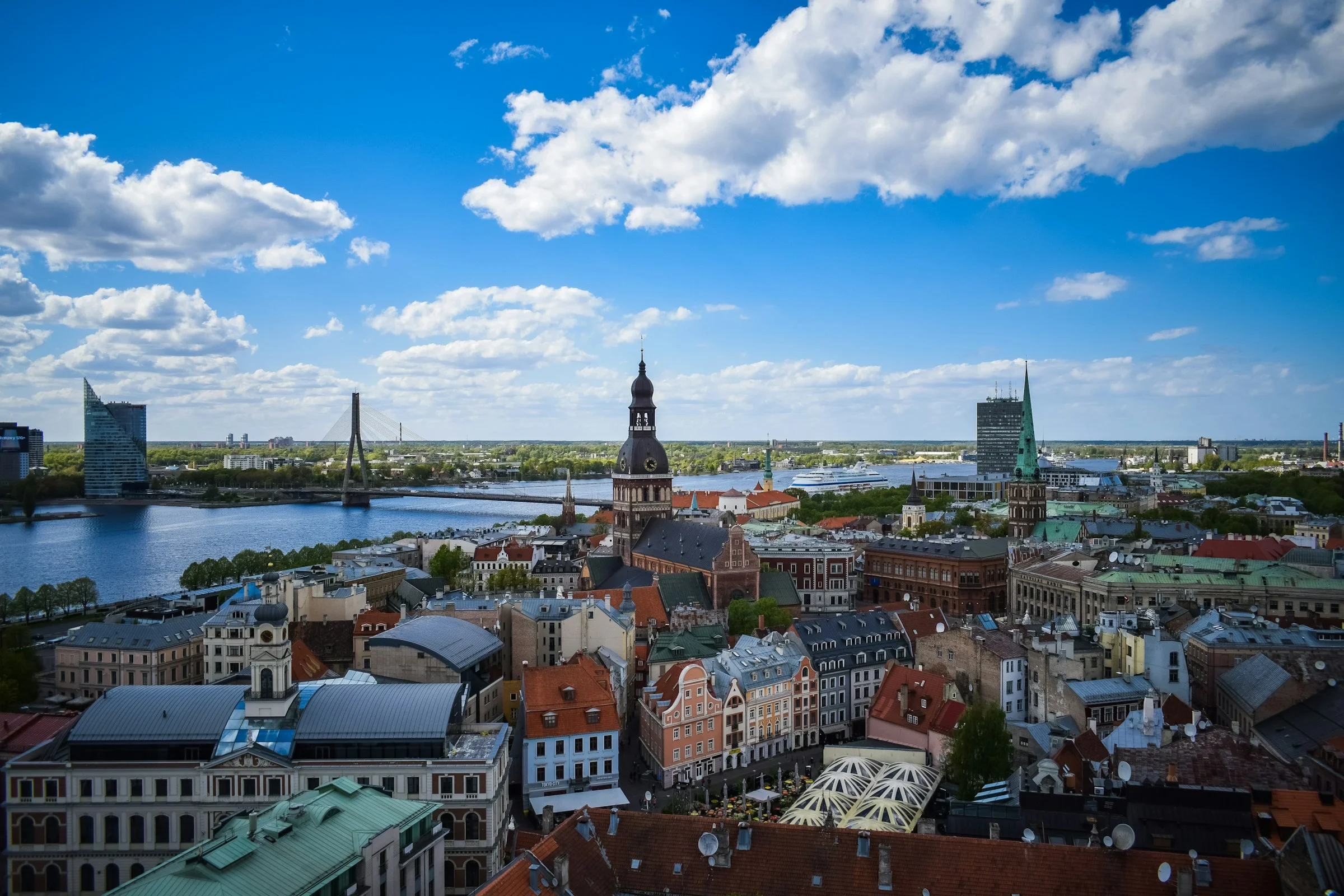
Benefits of a residence permit in Latvia

Right Ground
Latvia does not reward generic relocation logic. Employment, studies, family reunion, Blue Card, start-up, investment, and self-supported stay have different evidence rules, so weak files usually begin under the wrong legal ground
Family Timing
In Latvia, spouse and parent routes can become more stable over time, but the sequence matters: first permit is often shorter, later filings may lengthen, and linked dependants rise or fall together
Renewal Window
A Latvian permit should be planned well before expiry. Repeated applications can usually be filed during validity or shortly after expiry during lawful stay, and late renewals often expose missing salary, address, or insurance proof
Right Ground
Latvia does not reward generic relocation logic. Employment, studies, family reunion, Blue Card, start-up, investment, and self-supported stay have different evidence rules, so weak files usually begin under the wrong legal ground
Family Timing
In Latvia, spouse and parent routes can become more stable over time, but the sequence matters: first permit is often shorter, later filings may lengthen, and linked dependants rise or fall together
Renewal Window
A Latvian permit should be planned well before expiry. Repeated applications can usually be filed during validity or shortly after expiry during lawful stay, and late renewals often expose missing salary, address, or insurance proof


Useful articles
and recommendations from experts
Residence permit in Latvia - how lawful long-stay status actually works
Latvia is not a country where long stay should be planned through a vague idea of arriving first and sorting out the legal basis later. The system is more structured than that. In practice, the first useful question is not simply whether a foreign national can stay in Latvia for work, studies, family life, business, or a longer private move. The better question is which residence ground actually fits that life from the beginning. In Latvia, that matters because the route you choose early usually shapes everything that follows: which documents are needed, whether the employer or family sponsor becomes central, how long the first permit can be issued for, and what later renewal or permanent-status path remains realistic.
This is exactly why Latvia should not be treated as a one-route residence country. The current system clearly separates temporary residence permits from permanent residence permits, and it also treats employment, studies, self-employment, family reunification, start-up founders, investors, and private means cases as different legal stories. A worker should not be planned like a student. A spouse of a Latvian citizen should not be planned like an investor. A self-supported person should not be pushed into a work story simply because employment sounds more stable. The strongest Latvia file is almost always the one where the reason for residence is identified honestly and early.
Latvia is document-driven from the start
One of the most practical features of the Latvian system is that it expects the file to be built properly before the person begins living there on a longer basis. For third-country nationals, a residence permit is required when the intended stay exceeds 90 days within a six-month period. That sounds simple, but it has major strategic consequences. A person should not think of long stay as only an extension of a short visit. In Latvia, once the planned life goes beyond short presence, the person is expected to move into the residence-permit framework rather than remain in a vague visitor mindset.
This is especially important because many first applications are still built around pre-arrival or embassy-based filing logic, particularly when the person is abroad and the ground for residence already exists before travel. Latvia does allow document submission in different ways depending on where the person is located and what stage of the process they are in, but the practical lesson remains the same: the stronger the file is before relocation, the calmer the process usually becomes after arrival. Weak files often begin with the hope that details can be repaired later. Latvia tends to punish that approach at review stage.
Employment in Latvia is highly structured
For many foreigners, the most practical long-stay route in Latvia is work. But Latvia does not treat employment as a loose explanation. The labour side is real, and the sponsor side matters much more than many applicants expect. Public guidance from the Office of Citizenship and Migration Affairs makes clear that, for third-country nationals employed under an employment contract, the vacancy generally has to be registered with the State Employment Agency and remain open for at least 10 working days before the employer moves further with the immigration process. That tells you immediately that a work case is not only about the foreign employee. It is also about whether the employer has handled the labour-market side correctly.
Latvia is also clear that long-term employment usually moves through sponsorship rather than casual invitation logic. For short-term work, an approved invitation may be enough. For longer employment, the employer usually needs to submit a sponsorship request that becomes the basis for the visa for entry, the residence permit, and the right to employment. This is one of the most practical points in the whole system. It means a weak employer file creates a weak residence file. A company that has not prepared the vacancy, the contract, the role description, or the educational-qualification side properly often makes the foreign employee's residence strategy much more fragile than it needs to be.
There is another rule that matters a great deal later. Latvia ties the right to employment to a particular employer and profession. Public guidance states that if the employer changes or the profession changes, the foreigner usually needs new rights to employment. Even if the employer stays the same, a significant change in profession or conditions can trigger a new step. This is exactly why the strongest employment file is not the one that only secures first approval. It is the one that remains coherent if the person is still in the same job six months or a year later.
The Blue Card is not just a stronger work permit
The European Union Blue Card route in Latvia deserves separate attention because many applicants assume it is simply the same employment route with a better label. In practice, it solves a different problem. It is aimed at higher-skilled employment and is closely tied to salary thresholds, qualifications, and in some cases shortage occupations. Public guidance on necessary subsistence and salary requirements shows that Blue Card cases are still pegged to Latvia's wage rules and current threshold calculations. That means the file should not be built casually. The salary offer, the academic or professional qualifications, and the role itself all need to support the Blue Card logic from the beginning.
This is where many files weaken. A person may be highly qualified in reality, but the salary offer is too low, the employer has misread the shortage-list rules, or the educational proof is not prepared for Latvian review. Latvia can work very well for a strong Blue Card case, but it is not a rescue route for an ordinary weak work file. The stronger the high-skill logic is before filing, the better the Blue Card route usually performs later.
Family reunification is often more stable than people expect
Family reunification in Latvia is one of the most useful routes in the whole system, but it should not be misunderstood. It is not just a softer version of general residence. It has its own legal sequence and can become more stable over time. Public guidance on permit duration shows that the spouse of a Latvian citizen, Latvian non-citizen, or a foreigner holding a permanent residence permit usually receives a temporary permit for one year on the first filing, then a temporary permit for four years on the second filing, and a permanent residence permit on the third filing. That is a highly practical roadmap.
This matters because family routes are often stronger than applicants think when the relationship and sponsor side are clean. The common problem is not that family reunification is weak in law. The problem is usually that the file is weak in practice. Marriage records, housing, income, insurance, and the status of the sponsoring family member all need to align. A genuine relationship can still produce a weak immigration file if the document chain is sloppy or if the sponsor's own residence basis is unstable.
There is also a dependency risk here that applicants should understand early. Public guidance says that if a temporary residence permit of the main foreigner is annulled, the related temporary permits of spouse, minor children, and other linked dependants are also annulled. This is one of the clearest practical warnings in the family route. A dependant file is only as strong as the principal file behind it. Latvia therefore rewards households that treat the sponsor's status and the family's status as one legal structure, not as separate problems.
Study routes work well, but only while the academic basis is real
The study route in Latvia is straightforward when it is genuine. A residence permit for studies is generally issued for the period of the studies. That makes Latvia workable for serious students, but it also means the academic basis needs to remain real throughout the stay. A person should not think of the study route as a soft bridge into general residence. Latvia is much more comfortable with a real student case than with a file that begins as study only because another category looked harder.
This matters even more because the education route behaves differently later. If the person eventually moves toward the status of long-term resident of the EU in Latvia, time spent studying does not count in the same way as work or family residence. Public guidance states that only half of the study period counts toward the five-year period when someone later switches into work or family reunification and then aims for EU long-term resident status. That is a very practical strategic point. A student who intends to stay in Latvia longer should understand early that study is lawful and workable, but it does not build the same long-term residence history as work or family residence.
Latvia also has a post-graduation route for certain graduates who have completed a full-time master's or doctoral programme and apply within three months after obtaining the diploma. This is another reason the study route should be planned carefully. For the right applicant, the end of studies is not necessarily the end of lawful stay. But the transition must be deliberate and timely.
Self-employment, start-up, and investment routes are real, but they are not easy substitutes
Another common mistake is assuming that business-related routes are simpler than work routes. In Latvia, they solve different problems. A self-employed route is built around a real self-employed activity and sufficient monthly means. Public guidance shows that the subsistence threshold for self-employed applicants is high, which already tells you this route is not meant for someone with only a loose idea of freelancing. The stronger file is one where the business model, resources, and documentation are already strong enough to support the legal lane chosen.
The same is true for investment and start-up routes. Latvia does have investor and share-capital-based residence options, and it has a dedicated start-up founder route that has recently remained active in official guidance. But none of these should be treated as generic relocation shortcuts. Investment routes depend on corporate form, capital, state payments, and company metrics. Start-up founder cases depend on the credibility of the company-building plan, not only on enthusiasm. A person who really belongs in one of these routes should use it. A person who is really just seeking a work or private-reasons route should not try to force a business label onto the file for convenience.
Address, declaration, and local life matter after the card is issued
Another practical point in Latvia is that the residence permit is not just an approval letter. It becomes a real local-status document, and the address side matters. Public services on declaration of residence make clear that a third-country national who has received a residence permit issued in Latvia has a duty to declare or designate a place of residence. This is not a side issue. It is part of the legal life of the residence permit itself.
That means a long-stay file in Latvia should not be planned as if everything ends with approval. The person still has to function properly inside the local administrative system. A weak address trail, late declaration, or a sponsor arrangement that does not hold up in practice can create problems later even if the first decision looked positive. Latvia is therefore more administrative than many applicants expect. The residence permit is only the opening of lawful residence, not the end of the process.
Renewal and repeated permits should be planned before expiry
One of the most useful practical rules in the Latvian system is that repeated applications can usually be filed during the validity of the previous permit or within 90 days after its expiry, during lawful stay. This sounds generous, but it should not create false confidence. The same official guidance reminds applicants to consider the examination period and production time. In practice, that means waiting until the last moment is still a bad strategy.
The reason is simple. Latvia often exposes weak files at renewal, not at the beginning. A job offer that once looked strong may no longer meet salary rules. A sponsor company may no longer look as solid. A family sponsor may have moved, changed status, or lost the document coherence that made the first file easy. A student may no longer have a clean academic basis. The strongest Latvia file is therefore not only the one that gets approved once. It is the one that still makes sense months later under the same legal category.
Permanent residence and EU long-term status are not the same thing
Another practical misunderstanding appears later in the process. Latvia has both permanent residence permits and the special status of long-term resident of the EU in Latvia. These are related, but they are not identical. The long-term resident of the EU route has its own criteria. Public guidance says the person must have resided lawfully and continuously in Latvia for the last five years, usually with absences not exceeding six consecutive months or ten months in total, must prove stable and regular income, and must demonstrate Latvian language knowledge at least at A2 level.
This is important for planning because not every five-year stay in Latvia leads cleanly into the same long-term status. Study time behaves differently. Blue Card holders get some special flexibility on absences. Family routes may lead to permanent residence through their own sequence earlier than the general long-term EU route. A foreign spouse, for example, may reach permanent residence through the family-reunification ladder, while another foreigner may instead be building toward EU long-term resident status. The strongest strategy is to know which later status actually fits the current permit history instead of assuming all long stays end in the same way.
FAQ
Can I move to Latvia first and sort out residence later?
Sometimes there are lawful in-country filing possibilities, but for many serious employment and family routes the strongest strategy is still to prepare the file early and often from abroad. In Latvia, weak pre-entry planning usually creates a weaker residence case later.
Is a work permit in Latvia just a personal application?
No. In practice it is heavily sponsor-driven. The labour-market step, sponsorship, contract, and right to employment are all tied closely to the employer side. A weak company file usually creates a weak work-based residence file.
Does family reunification eventually become more stable?
Often yes. For spouses of Latvian citizens, Latvian non-citizens, and permanent residents, the route is staged: first a shorter temporary permit, then a longer temporary permit, and later permanent residence if the sequence remains clean.
Do studies build the same long-term residence history as work?
No. Studies are a real and lawful route, but they do not behave the same way later. If a person later applies for EU long-term resident status after switching into work or family residence, only half of the study time counts toward the required period.
What is the biggest practical mistake in a Latvia file?
The biggest mistake is choosing the route that sounds convenient instead of the route that matches the real life being planned. Latvia is much easier when the category, documents, sponsor logic, and later renewal path all support the same story from the start.
Final practical view
Latvia is workable for lawful long stay, but it rewards route accuracy more than improvisation. The strongest files begin by identifying whether the real life in Latvia is employment, high-skilled work, family reunion, studies, self-employment, start-up activity, investment, or private means residence. Once that legal ground is right, the rest of the file usually becomes much easier to build and maintain.
The practical rule is simple. In Latvia, do not start with how to stay somehow. Start with which legal ground actually fits your life there, whether the sponsor or school or family side can support it properly, and whether the same story will still be strong when the next permit stage arrives