
Top Real Estate Business Advisory Firm in GeorgiaAlign with freehold laws, investor rightsand rapid market cycles


Business advising for developers
brokers in Georgia


Open real estate market, but fragmented legal norms
Georgia welcomes foreign investors with open ownership rules, yet land title systems differ by region and can be poorly digitized. VelesClub Int. provides title verification and clarity across urban and resort areas.
High demand in tourism hubs, but permits lack uniformity
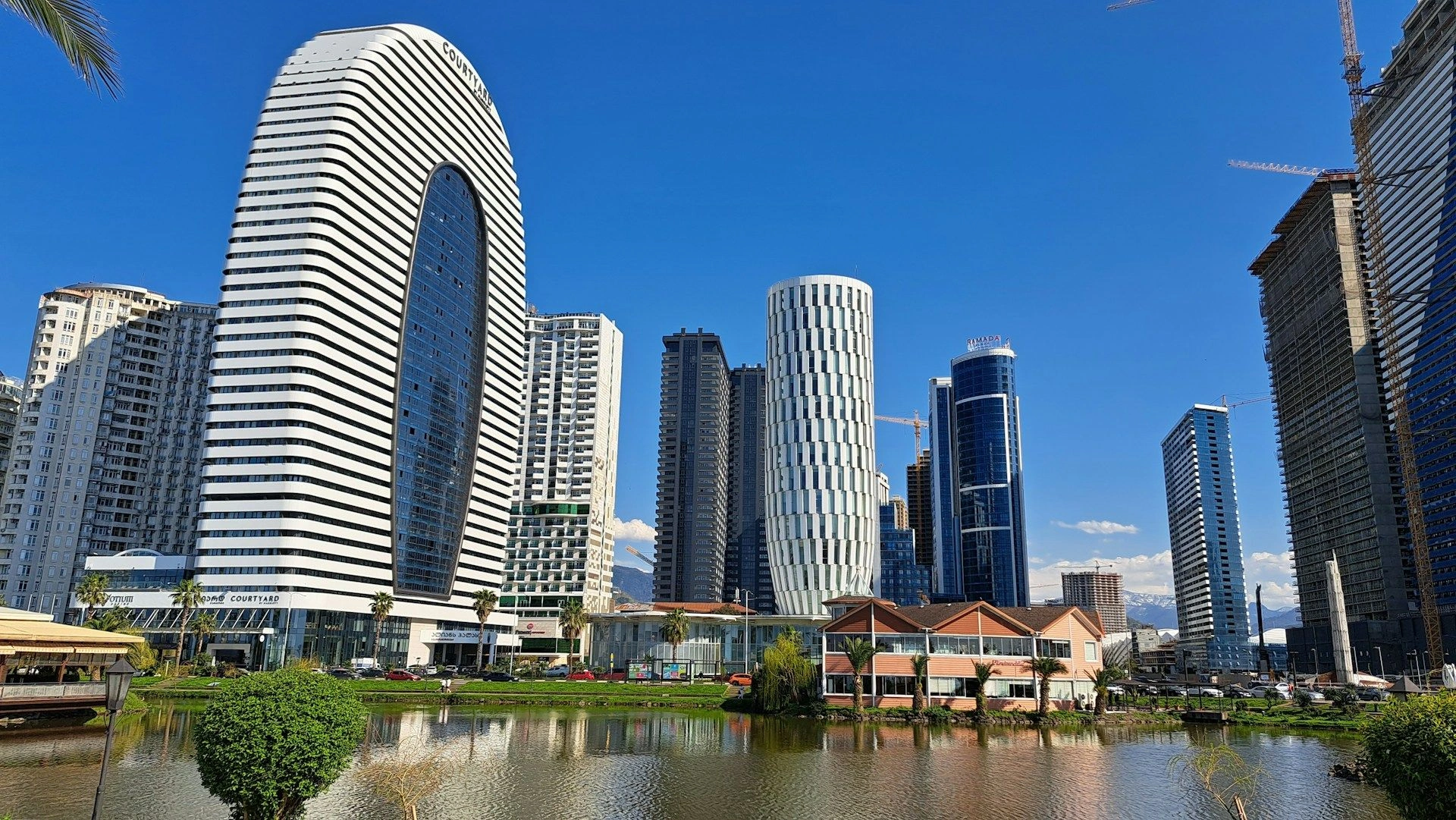
Cities like Tbilisi and Batumi offer strong demand, but construction and usage permits are interpreted inconsistently across municipalities. We navigate local interpretations and standardize processes for developers and brokers.
Simple taxation, but inheritance and exit laws unclear
Georgia’s tax regime is investor-friendly, but inheritance procedures and exit strategies lack precision in court practice. We structure secure ownership formats and support cross-border succession planning.
Open real estate market, but fragmented legal norms
Georgia welcomes foreign investors with open ownership rules, yet land title systems differ by region and can be poorly digitized. VelesClub Int. provides title verification and clarity across urban and resort areas.
High demand in tourism hubs, but permits lack uniformity
Cities like Tbilisi and Batumi offer strong demand, but construction and usage permits are interpreted inconsistently across municipalities. We navigate local interpretations and standardize processes for developers and brokers.
Simple taxation, but inheritance and exit laws unclear
Georgia’s tax regime is investor-friendly, but inheritance procedures and exit strategies lack precision in court practice. We structure secure ownership formats and support cross-border succession planning.









Useful articles
and recommendations from experts
Real Estate Advising in Georgia
Why Georgia attracts international real estate players
Georgia has emerged as one of the most accessible real estate markets in the post-Soviet space. Foreigners can own land and property outright, including agricultural and residential assets. A simple tax regime, visa-free stays for many nationalities, and strategic links to both Europe and Asia make Georgia appealing for brokers, developers, and asset managers.
Yet despite its openness, the country’s legal infrastructure remains uneven. Documentation standards, land titling, and permitting systems differ by region and can cause friction without local guidance. VelesClub Int. supports professionals entering the Georgian market with structured legal advising, permitting support, and asset lifecycle guidance.
Legal ownership structures and foreign access
Georgia allows full property ownership for foreigners without residency or special status. Both individuals and legal entities may acquire land, apartments, buildings, and commercial assets. Exceptions exist for border zone properties and certain strategic parcels, which require approval from national security bodies.
VelesClub Int. assists in verifying eligibility, structuring corporate purchases when needed, and documenting compliance with strategic zone regulations to avoid retroactive annulment risks.
Land title systems and municipal variation
Georgia uses a national cadastre and electronic registry, but quality of records varies by region. In rural or resort areas, title clarity may be limited due to paper-based archives or unregistered subdivisions. Survey errors or undocumented changes are not uncommon, especially for assets transacted before 2010.
We perform layered due diligence — combining digital extract reviews with on-site surveys and municipal approvals — to ensure asset integrity before commitment.
Construction permitting and licensing inconsistencies
Building permits are issued by municipalities under a national framework, yet local practice differs significantly. In Tbilisi and Batumi, developers face delays tied to zoning compliance and architectural approvals. In smaller cities, officials may lack clarity on usage categories or project classes.
VelesClub Int. helps standardize permit packages across cities, coordinates technical assessments, and bridges gaps between urban planning laws and local office expectations.
Taxation of property transactions and rentals
Georgia applies a flat income tax on property sales and rental income. Individuals pay 5% tax on rental revenue, while corporate vehicles follow the Estonian model — taxing only distributed profits. VAT applies to new commercial projects over a certain size. Transfer taxes are minimal, and annual property tax rates are low by regional standards.
We help optimize tax routes — choosing between individual and corporate ownership — and manage declarations, filings, and withholding where required.
Key real estate submarkets across Georgia
Georgia’s real estate activity concentrates around three key zones: Tbilisi, Batumi, and resort regions like Gudauri and Bakuriani. Tbilisi leads in office, residential, and mixed-use development, while Batumi focuses on coastal hospitality and holiday apartments. Each market has distinct legal and infrastructure traits — for instance, Batumi often faces seasonal overregulation during tourist peaks, while Tbilisi zoning maps are in flux.
VelesClub Int. performs comparative feasibility analysis and legal risk mapping to help investors choose submarkets that align with their capital, compliance threshold, and yield objectives.
Investment strategies and legal design
Common models include buying rental apartments for income, land banking for resale, commercial fit-outs for tenants, and hotel development. In all cases, investors must choose the right ownership vehicle and obtain local operational approvals. Long-term gains depend not just on location, but on clean legal formation, local acceptance, and structured rights to operate or lease.
VelesClub Int. helps design investment strategies with legal durability — covering profit repatriation, inheritance logic, and eventual resale frameworks.
Digital access and remote management
While Georgia has made strides in digitalizing its property registry and notary services, gaps remain in permitting and municipal record-keeping. Foreign investors may find local systems opaque or inconsistently translated. Delays and errors can occur without regular presence or direct representation.
We digitize all property documents and filings into client dashboards — from extracts to permits and contracts — and track expirations, renewals, and enforcement risks remotely.
Legal recourse and contract enforcement
Georgia’s courts generally uphold property rights, but civil procedures may be delayed outside major cities. Land disputes, co-ownership disagreements, and legacy boundaries require proactive documentation and defense. Mediation is encouraged but not always final. Public registries are often relied on in litigation, but not always up to date.
VelesClub Int. preemptively secures enforceable contracts, documents, and boundary markers — and offers legal representation in disputes, inheritance, or forced resale scenarios.
ESG frameworks and construction sustainability
International investors increasingly apply ESG criteria to property development. In Georgia, this includes choosing energy-efficient building methods, sourcing materials locally, and ensuring public access or utility benefit. While ESG is not yet codified in law, projects with green credentials or social alignment receive better press, smoother municipal approval, and broader financing options.
We support clients in incorporating ESG logic into land use, design, and operations — including green certification and stakeholder reporting.
Corruption mitigation and municipal alignment
Though Georgia ranks high for anti-corruption efforts in the region, local irregularities still affect permitting speed, zoning flexibility, and infrastructure promises. Investors unfamiliar with local dynamics may face invisible costs, informal practices, or unexpected revisions during execution.
VelesClub Int. helps maintain fully documented, above-board pathways — verifying all permit steps, ensuring audit-traceable communication, and aligning with current municipal policies to avoid retroactive enforcement.
Currency registration and repatriation
Georgia has a liberal currency regime, allowing free inflow and outflow of capital. However, investors must document incoming wires for future repatriation. Currency controls apply only to suspicious transactions or sanctioned entities. Rental and sale income in foreign currencies must be reported correctly.
We ensure bank channeling, legal currency declaration, and repatriation support for capital or dividends — safeguarding foreign rights to exit cleanly.
Short-term vs. long-term rental regulations
Georgia allows flexible rental activity, but distinctions between short- and long-term leases affect tax status and licensing. Daily rentals (e.g., via booking platforms) may require hospitality classification or registration with tourism boards. Long-term residential leases require standard notarized contracts but offer more stability and lower tax exposure.
VelesClub Int. structures lease agreements to match your business model and ensures all documentation complies with tenant law and tax codes — minimizing risk while maximizing legal protections.
Conclusion: Legal architecture for growth
Georgia’s real estate market is one of the most open in Eurasia — with favorable taxation, low barriers to entry, and investor-friendly legal norms. Yet this openness coexists with inconsistencies in enforcement, fragmented local practices, and evolving compliance standards. For brokers, developers, and institutional buyers, legal structuring is essential to avoid hidden barriers and long-term risk.
VelesClub Int. provides full-spectrum real estate advising in Georgia — covering ownership design, risk mapping, licensing, ESG adaptation, and remote oversight. We empower professional investors to operate confidently and grow assets securely in a fast-changing regional market.