
Commercial real estate in FloridaStrategic assets across active submarkets
Best offers
in Florida
Benefits of investing in commercial real estate in Florida


Multi node demand
Florida matters because demand is not trapped in one metro. South Florida, the I-4 belt, Tampa Bay, and Northeast Florida support different occupier profiles, giving buyers a region where asset relevance changes by business function
Format alignment
The best fit depends on submarket role. Trophy office and hospitality read differently from small bay industrial, medical office, daily needs retail, or mixed use assets, and Florida rewards buyers who match format to demand
False comparisons
Buyers often compare Florida assets only by headline yield or price per foot. A better reading asks whether the site serves finance, tourism, neighborhood spending, healthcare, or freight movement, because those functions drive resilience
Multi node demand
Florida matters because demand is not trapped in one metro. South Florida, the I-4 belt, Tampa Bay, and Northeast Florida support different occupier profiles, giving buyers a region where asset relevance changes by business function
Format alignment
The best fit depends on submarket role. Trophy office and hospitality read differently from small bay industrial, medical office, daily needs retail, or mixed use assets, and Florida rewards buyers who match format to demand
False comparisons
Buyers often compare Florida assets only by headline yield or price per foot. A better reading asks whether the site serves finance, tourism, neighborhood spending, healthcare, or freight movement, because those functions drive resilience








Useful articles
and recommendations from experts
Commercial property in Florida by submarket function
Commercial property in Florida matters because the state operates through several strong business systems rather than one single center. South Florida carries premium office, international business, hospitality, and high value consumer demand. Central Florida converts tourism, convention traffic, and population growth into service space, mixed use, and distribution need. Tampa Bay combines finance, healthcare, corporate operations, and port linked activity. Northeast Florida gives the state a different layer again, with freight movement, warehousing, light industrial, and regional distribution. That spread creates opportunity, but it also means buyers cannot read the whole state with one asset filter.
A practical reading starts with commercial function. One building may look strong on rent or price, yet sit in a weak match for local occupier demand. Another may appear less impressive on headline metrics but fit its submarket far better. This is why commercial real estate in Florida needs regional interpretation, not broad statewide assumptions. VelesClub Int. helps make that wider map more readable by separating where the state behaves like a gateway market, where it behaves like a service economy, and where it behaves like a freight and operational platform.
Why Florida needs a regional commercial reading
Florida is not a single commercial story. It is a state where business demand comes from different engines at the same time: international capital and trade in the south, visitor and convention intensity in the center, diversified professional and healthcare use in the west, and distribution logic in the northeast. That makes commercial property in Florida highly relevant for buyers who want more than one use case, but it also raises the cost of shallow analysis.
The practical advantage is range. A buyer can target premium office, hospitality, retail, warehouse property in Florida, or mixed service assets without leaving the same regional market. The challenge is that each segment performs best in a different internal geography. Florida rewards correct matching more than broad optimism.
South Florida inside Florida remains the premium commercial core
South Florida is the part of the state where pricing, tenant expectations, and asset presentation usually move upward first. It is the strongest office and hospitality layer in Florida, and it also carries some of the most demanding consumer and business facing retail. This is where buyers look for assets tied to finance, international business, wealth services, higher end retail streets, and hospitality formats that depend on strong visitor and spending depth.
That does not mean every asset in the south is automatically stronger. It means the bar is higher. Office space in Florida is most selective here because occupiers pay for address logic, building quality, and business ecosystem fit, not just square footage. Retail also needs correct placement. Tourist heavy flow, residential affluence, and professional daytime population create different retail winners, and mixing those demand patterns leads to weak underwriting.
Central Florida gives Florida its service and hospitality engine
Central Florida, led by the Orlando area and the I-4 belt, produces a different commercial reading. Here the most useful lens is not prestige but flow. Visitor traffic, entertainment demand, convention use, residential growth, and regional services combine to support hospitality assets, food and beverage space, daily needs retail, entertainment linked formats, and selected warehouse and last mile locations.
This is one of the clearest places where buy commercial property in Florida only makes sense when the buyer knows whether the asset depends on tourists, workers, residents, or logistics. A retail box near residential growth can be stronger than a more visible but less repeatable visitor oriented location. A warehouse facility can outperform a flashier mixed use proposition if it sits in a better operational path. Central Florida works best when the asset is read through actual movement patterns.
Tampa Bay gives Florida a mixed business centre with wider occupier depth
Tampa Bay is one of the most useful balancing zones in Florida because it supports several occupier groups at once. Professional services, finance, healthcare, corporate back office demand, port related business, and regional consumer activity all contribute to the market. This gives Tampa Bay a broader commercial base than a pure tourism submarket and a more diversified tenant story than a single function logistics area.
For buyers, that matters because the region supports different asset strategies without relying on one narrow demand driver. Office assets can work where business services cluster. Medical office and healthcare linked premises can hold a separate role. Industrial and warehouse property in Florida also read well here when connected to freight movement, manufacturing support, or regional distribution rather than distant land alone. Tampa Bay is often strongest when an asset serves both local economic depth and wider state connectivity.
Northeast Florida adds the freight and industrial layer to Florida
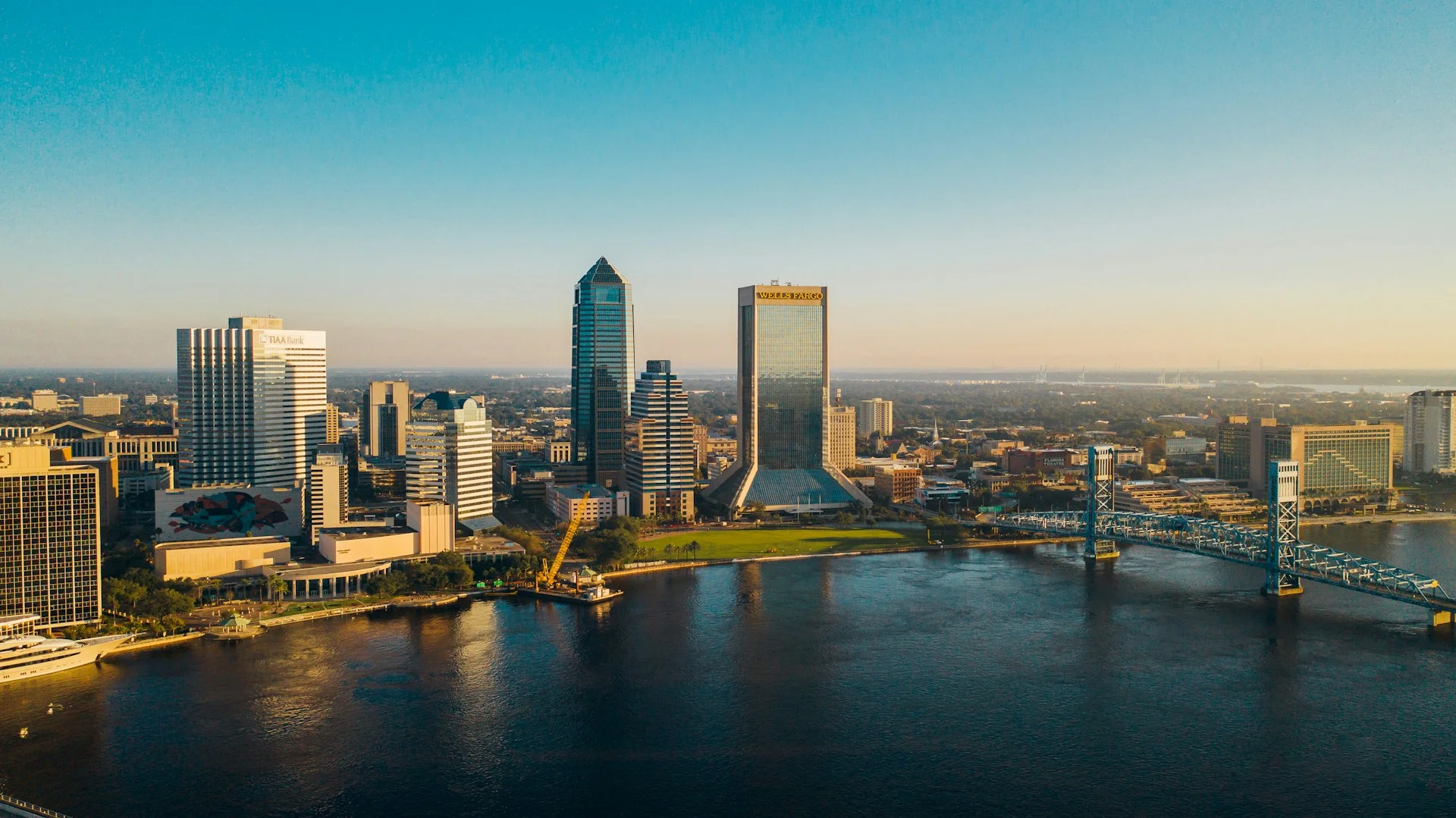
Northeast Florida, centered on Jacksonville and its surrounding business territory, changes the state level picture again. This is where logistics, distribution, port linked movement, transport adjacency, and light industrial functionality become central to commercial value. Buyers looking at warehouse property in Florida usually need to take this part of the state seriously because it provides one of the clearest operational use cases.
The attraction here is not image pricing. It is movement efficiency, land practicality, truck access, and the ability to serve both Florida demand and wider southeastern routes. Retail and office exist here as well, but they are not the main reading lens. Assets are usually stronger when they support operations, local service growth, or business expansion tied to freight and population spread.
Which commercial formats fit Florida best
The strongest commercial formats in Florida are not identical across the state. In South Florida, premium office, hospitality, destination retail, and mixed use assets with strong business or visitor positioning tend to matter most. In Central Florida, hospitality, entertainment facing retail, neighborhood retail, service premises, and selected industrial tied to the I-4 flow usually deserve more attention. In Tampa Bay, the most practical mix often includes office, medical office, industrial, service retail, and mixed business space. In Northeast Florida, logistics, light industrial, flex, and distribution assets carry more natural weight.
There is also a useful hospitality and service layer along parts of the Gulf Coast and Southwest Florida, but the asset logic there is different from Miami or Orlando. Those locations often reward buyers who focus on seasonal demand, resident spending, healthcare linked occupancy, and practical retail rather than trying to force a finance or big city office model onto the wrong submarket.
This is why retail space in Florida must be divided by customer base. Tourist retail, commuter retail, neighborhood retail, and affluent destination retail are not interchangeable. The same is true for office. Finance facing towers, suburban professional suites, medical office, and operational back office space may all sit under one broad asset label, but they should not be priced or compared as if they serve the same market role.
What makes one asset more practical than another in Florida
A practical Florida asset usually has a clean relationship between location, tenant type, and daily use pattern. In South Florida, that may mean strong address quality, proven tenant demand, and clear business or visitor capture. In Central Florida, it may mean dependable local spending or service demand rather than overreliance on seasonal spikes. In Tampa Bay, it may mean multi sector tenant depth. In Northeast Florida, it may mean direct operational usefulness and access efficiency.
Weaker assets often fail on that relationship. They may be over positioned for the local tenant pool, too dependent on one narrow traffic pattern, or placed in a submarket where the surrounding demand base does not support the intended use. VelesClub Int. helps buyers screen beyond marketing language by asking whether the asset fits the true commercial role of its part of Florida.
That matters even more in mixed use and repositioning cases. A building with several possible uses is not automatically flexible in a valuable way. Real flexibility means the surrounding submarket can support more than one income path without forcing a full identity change. Florida has many locations where that works well, but it also has many where only one realistic use actually carries durable demand.
Pricing and positioning in Florida depend on function before size
Pricing in Florida usually reflects business function, not just square footage, frontage, or headline rent. South Florida commands stronger pricing where address value, tenant prestige, and international connectivity shape the market. Central Florida can justify strong values where visitor flow, daily traffic, or logistics relevance is repeatable. Tampa Bay often rewards balanced assets with broad occupier appeal. Northeast Florida tends to favor practical industrial and distribution logic over cosmetic positioning.
This means buyers should be cautious with direct statewide comparisons. A cheaper asset is not automatically a better entry point if it sits in a weaker demand structure. A more expensive asset is not automatically overpriced if it captures a stronger commercial role. VelesClub Int. brings discipline to this comparison by focusing on why the asset exists in that location, who actually uses that submarket, and what type of demand is most likely to hold through changing conditions.
Practical questions buyers raise on commercial property in Florida
Is South Florida always the strongest place to buy commercial property in Florida?
Not always. It is often the premium pricing core, but that does not make it the best fit for every strategy. Buyers seeking operational industrial, practical yield, or broader tenant affordability may find stronger alignment elsewhere in Florida.
Where does warehouse property in Florida read most naturally?
Northeast Florida and parts of the Tampa Bay to Central Florida corridor usually make the clearest industrial and distribution case. The stronger question is whether the building serves freight movement, regional delivery, or local business operations.
Why can similar retail assets behave differently across Florida?
Because the spending base changes. Some locations depend on residents, others on commuters, others on visitors, and some on affluent discretionary spending. Similar unit size does not mean similar demand quality.
Is office space in Florida still a practical target?
Yes, but only in the right form. Premium business districts, medical office clusters, and well positioned professional space can read well. Generic office without a clear tenant ecosystem is far weaker.
Should buyers treat Orlando and Tampa Bay as interchangeable Florida markets?
No. Orlando is more flow driven, with stronger hospitality and visitor linked service logic. Tampa Bay is more diversified across professional services, healthcare, consumer demand, and port related business activity.
A more disciplined Florida acquisition view with VelesClub Int
The most useful way to approach Florida is not as one statewide commercial market, but as a linked set of submarkets with different jobs. South Florida is the premium gateway and business core. Central Florida converts movement and service demand into occupier depth. Tampa Bay offers diversified business use. Northeast Florida anchors the freight and industrial layer. Gulf Coast markets add another hospitality and service dimension where relevant.
That structure gives buyers real choice, but only if each asset is read through the right local function. A stronger acquisition in Florida is usually the one that matches its submarket clearly, serves a durable demand base, and avoids forced comparisons with assets built for another part of the state. VelesClub Int. supports that reading by turning broad regional interest into a calmer, more practical commercial view of what actually fits Florida and what does not.