
Commercial property in SharjahVerified assets for business expansion
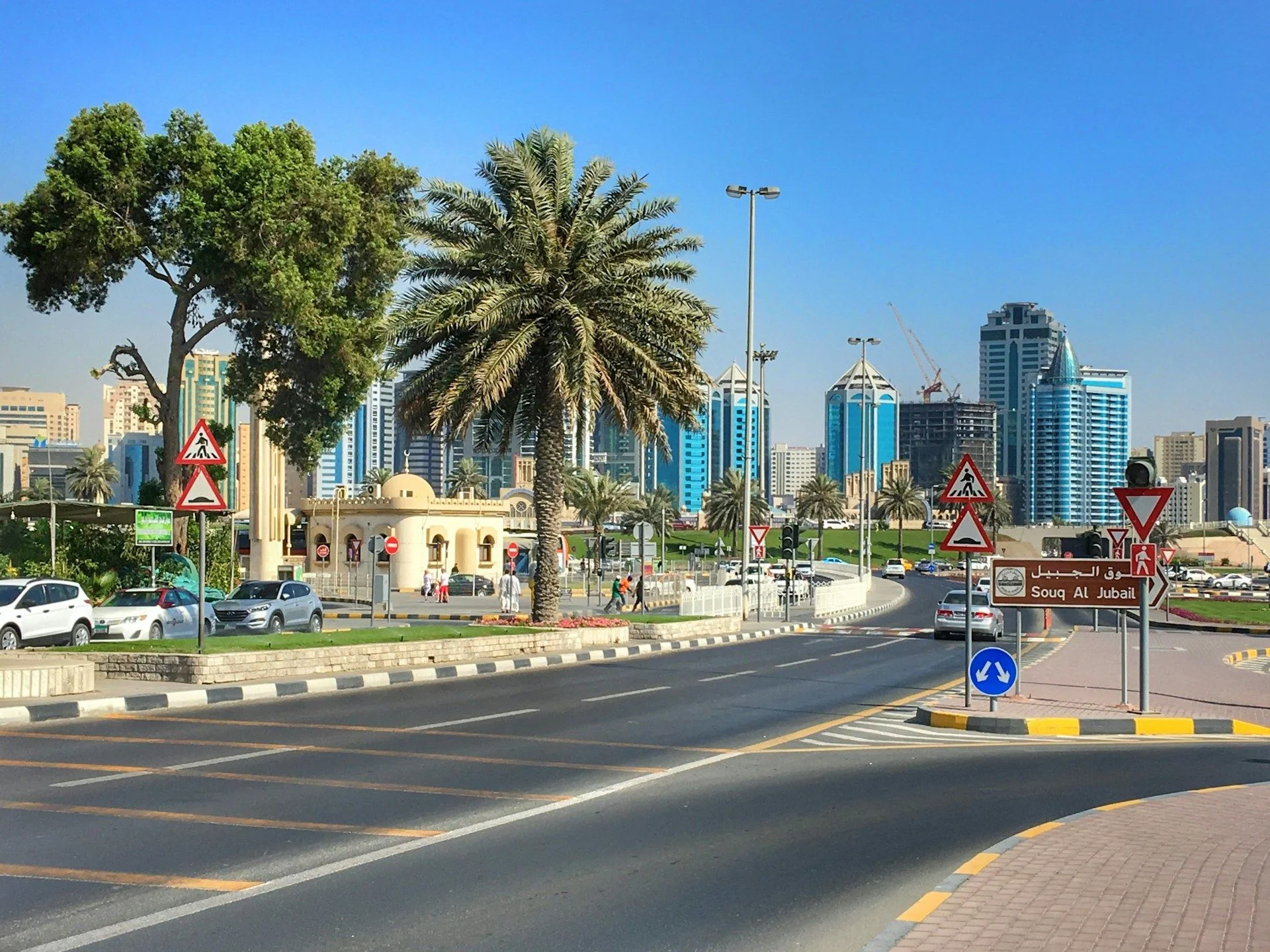
Best offers
in United Arab Emirates
Benefits of investing in commercial real estate in Sharjah


Sharjah demand drivers
Sharjah's economy combines manufacturing clusters, port and free zone logistics, public sector offices, universities and growing healthcare and tourism sectors, creating stable demand characterised by long industrial leases, mixed-duration office tenancies and retail seasonality
Relevant asset types
Core logistics and industrial warehouses in Sharjah's free zones, mid-market offices serving local SMEs, high-street retail near central Sharjah and hospitality supporting cultural tourism support strategies from core long-term leases to value-add repositioning
Expert selection support
VelesClub Int. experts help define strategy, shortlist assets and run screening including tenant quality checks, lease structure review, yield logic modelling, capex and fit-out assumptions, vacancy risk assessment and a tailored due diligence checklist
Sharjah demand drivers
Sharjah's economy combines manufacturing clusters, port and free zone logistics, public sector offices, universities and growing healthcare and tourism sectors, creating stable demand characterised by long industrial leases, mixed-duration office tenancies and retail seasonality
Relevant asset types
Core logistics and industrial warehouses in Sharjah's free zones, mid-market offices serving local SMEs, high-street retail near central Sharjah and hospitality supporting cultural tourism support strategies from core long-term leases to value-add repositioning
Expert selection support
VelesClub Int. experts help define strategy, shortlist assets and run screening including tenant quality checks, lease structure review, yield logic modelling, capex and fit-out assumptions, vacancy risk assessment and a tailored due diligence checklist








Useful articles
and recommendations from experts
Practical guide to commercial property in Sharjah
Why commercial property matters in Sharjah
Sharjah’s economy supports a diversified demand base for commercial real estate in Sharjah driven by trade, light industry, education, healthcare and domestic retail. Public sector employment and a growing private services sector anchor demand for office space in Sharjah, while manufacturing and logistics activity support warehouse property in Sharjah and light industrial yards. Tourism and hospitality demand is secondary but seasonal, creating opportunities for hotel and leisure-related commercial leases near coastal and cultural corridors. Buyers include owner-occupiers seeking headquarter or regional premises, yield-focused investors acquiring leased assets for income, and operators who lease property to run services or facilities. Each buyer profile translates to different lease expectations, fit-out standards and risk tolerances specific to the Sharjah market.
Understanding these sector drivers is essential when investors evaluate a portfolio or when occupiers decide to relocate. Commercial property in Sharjah therefore functions both as an operational input for local businesses and as an investment vehicle where income stability depends on sector composition and lease structure.
The commercial landscape – what is traded and leased
The traded and leased stock in Sharjah ranges from formal business districts and high street corridors to neighborhood retail nodes, business parks and dedicated logistics zones. High street corridors typically host retail space in Sharjah and small offices with short- to medium-term leases. Business parks and purpose-built office blocks cater to professional and administrative tenants with longer leases and higher service charge expectations. Logistics zones and industrial estates concentrate warehousing and distribution facilities optimized for last-mile delivery and regional freight, where ceiling heights, yard access and loading configurations drive value more than street frontage.
Lease-driven value predominates in parts of Sharjah where tenant income and contractual terms determine asset pricing. In those locations the remaining lease term, indexation clauses and tenant covenants are the primary determinants of price. By contrast, asset-driven value is more relevant where physical repositioning, change of use or redevelopment potential can unlock higher rents or alternative uses. Distinguishing between these two logics is critical when assessing a specific acquisition or when deciding whether to buy for immediate income or for a later repositioning.
Asset types that investors and buyers target in Sharjah
Main commercial segments in Sharjah include high street retail, neighborhood retail, conventional offices, serviced office suites, hotels and hospitality premises, restaurants and cafes with fixed fit-outs, warehouses and light industrial units, and mixed-use revenue properties. Retail space in Sharjah divides into high visibility corridors that benefit from pedestrian and vehicular flow, and neighborhood retail that relies on resident catchment. High street retail commands premium rents for visibility and window display, while neighborhood retail trades on convenience and stable local demand.
Office space in Sharjah has a prime-versus-non-prime split largely determined by access to business services, parking and public transport links. Prime offices typically sustain longer-term corporates and professional services, while non-prime stock serves SMEs and flexible workspace operators. The serviced office angle is relevant where occupiers prefer short commitments; such schemes can increase rent per square metre but also raise management complexity and turnover risk.
Warehouse property in Sharjah is influenced by road connectivity, clearance and proximity to major freight routes. Light industrial stock is suited to small manufacturers and cold-chain operators supporting regional supply chains and e-commerce fulfilment. Hospitality and restaurant premises require attention to seasonality and event-driven peaks, while mixed-use revenue houses can combine residential yield with ground-floor commercial leases to diversify income streams.
Strategy selection – income, value-add, or owner-occupier
Income-focused investors prioritise long-term, index-linked leases with strong covenant tenants. In Sharjah this strategy works well in stable retail corridors, established office blocks and leased warehouse units with minimal capex needs. Local factors that support income strategies include steady public sector employment and predictable industrial demand, but investors should monitor tenant concentration and sector exposure to avoid revenue volatility.
Value-add strategies in Sharjah target assets with short leases, operational inefficiencies or outdated fit-outs where refurbishment, re-leasing or partial redevelopment can increase net operating income. These plays are sensitive to construction costs, permit timelines and local planning norms. Investors pursuing value-add must assess market absorption for upgraded office space or repositioned retail to ensure demand exists for the higher rent profile.
Owner-occupiers buy commercial property in Sharjah to secure control over premises, reduce long-term occupancy costs and customize facilities. Owner-occupier decisions are influenced by business growth forecasts, logistics needs and proximity to workforce. Mixed-use optimisation combines elements of income and value-add by stabilising cash flow with leased components while developing higher-yield parts of the asset.
Choice among these strategies depends on the local business cycle, tenant churn norms and regulatory intensity. Sharjah’s development approvals and permitting processes, as well as seasonal variations in tourism-driven sectors, should inform the timing and scope of any strategy.
Areas and districts – where commercial demand concentrates in Sharjah
Commercial demand in Sharjah concentrates around central business districts, coastal and cultural corridors, transport nodes and industrial access routes. For city-specific orientation, districts such as Al Majaz and Al Qasba attract leisure and retail flows and support hospitality-linked commercial uses. Al Khan has mixed coastal activity that affects small retail and café leases. Muwaileh functions as a commercial and light industrial corridor with demand for warehouses and logistics-oriented premises. Al Nahda, on the city edge, supports cross-border commuter and retail patterns. When comparing districts, investors should evaluate central business district stability versus emerging areas in terms of replacement supply, catchment demographics and transport connectivity.
A district framework for Sharjah should weigh CBD concentration against emerging business areas, transportation nodes with commuter flows, tourism corridors with seasonal peaks, and industrial zones that provide last-mile routing. Competition and oversupply risk are higher where multiple large-scale developments are active; monitoring pipeline completions and vacancy trends at the district level is essential for accurate pricing and positioning.
Deal structure – leases, due diligence, and operating risks
Buyers in Sharjah typically review lease term, break options, indexation method, service charge arrangements and fit-out responsibilities as primary deal components. Lease expiry profile and tenant concentration risk affect both immediate cash flow and medium-term re-letting exposure. Due diligence should include verification of lease documents, confirmation of tenant payment history, assessment of service charge reconciliation and an independent inspection to identify deferred maintenance and capex liabilities.
Operating risks include vacancy and reletting risk, capex planning for building systems and façades, compliance costs for health and safety or sector-specific permits, and the impact of market seasonality on hospitality and retail turnovers. Where warehouses are involved, technical due diligence must cover floor loading, clear height, dock access and utility adequacy. Financial modelling should incorporate realistic downtime, refurbishment windows and tenant incentive expectations. VelesClub Int. advises clients to structure contingency allowances and to sequence inspections and document reviews to reduce post-closing surprises.
Pricing logic and exit options in Sharjah
Pricing drivers for commercial real estate in Sharjah include location and footfall, tenant quality and remaining lease length, building condition and capex needs, and any alternative use potential such as conversion to a different commercial segment or mixed-use redevelopment. A property with long, index-linked leases to creditworthy tenants will price differently from one requiring significant repositioning. The presence of flexible space demand or e-commerce logistics need can also create a premium for adaptable floor plates and yard capacity.
Exit options commonly used in Sharjah include holding for stable income and refinancing once rental performance stabilises; re-leasing to improve tenant mix before selling to income investors; and repositioning or partial redevelopment to capture higher rents or alternative uses. Timing the exit depends on local market cycles and the absorption of new supply in the target district. Transaction planning should incorporate realistic marketing lead times and tenant hand-back conditions to avoid exit delays.
How VelesClub Int. helps with commercial property in Sharjah
VelesClub Int. supports clients through a structured process tailored to commercial real estate in Sharjah. The engagement begins by clarifying objectives and constraints, whether the priority is stable income, a value-add repositioning or an owner-occupier acquisition. From there VelesClub Int. defines target segments and district profiles aligned with those objectives and shortlists assets based on lease structure, tenant risk profile and physical condition.
For shortlisted assets VelesClub Int. coordinates focused due diligence and documentation review, helping to prioritise technical inspections and financial checks that matter in Sharjah’s market context. Support continues through negotiation and transaction steps, where VelesClub Int. assists in aligning deal terms with client risk tolerance and operational capabilities, and in planning post-acquisition capex and leasing strategies. The selection and advisory work is tailored to each client’s goals, whether to buy commercial property in Sharjah for occupation, income or repositioning.
Conclusion – choosing the right commercial strategy in Sharjah
Selecting the appropriate commercial strategy in Sharjah requires aligning sector dynamics, district characteristics and lease structure with investor objectives. Income strategies favour long-term leased assets in stable districts, value-add plays depend on predictable refurbishment and re-leasing markets, and owner-occupier purchases prioritise operational fit and long-term control. Accurate district analysis, rigorous lease due diligence and realistic capex planning reduce execution risk. For strategy refinement and asset screening in Sharjah, consult VelesClub Int. experts who can tailor the selection process, coordinate due diligence and support negotiation to match your goals and capabilities.