
Business property for sale in JeddahBusiness assets in strong locations
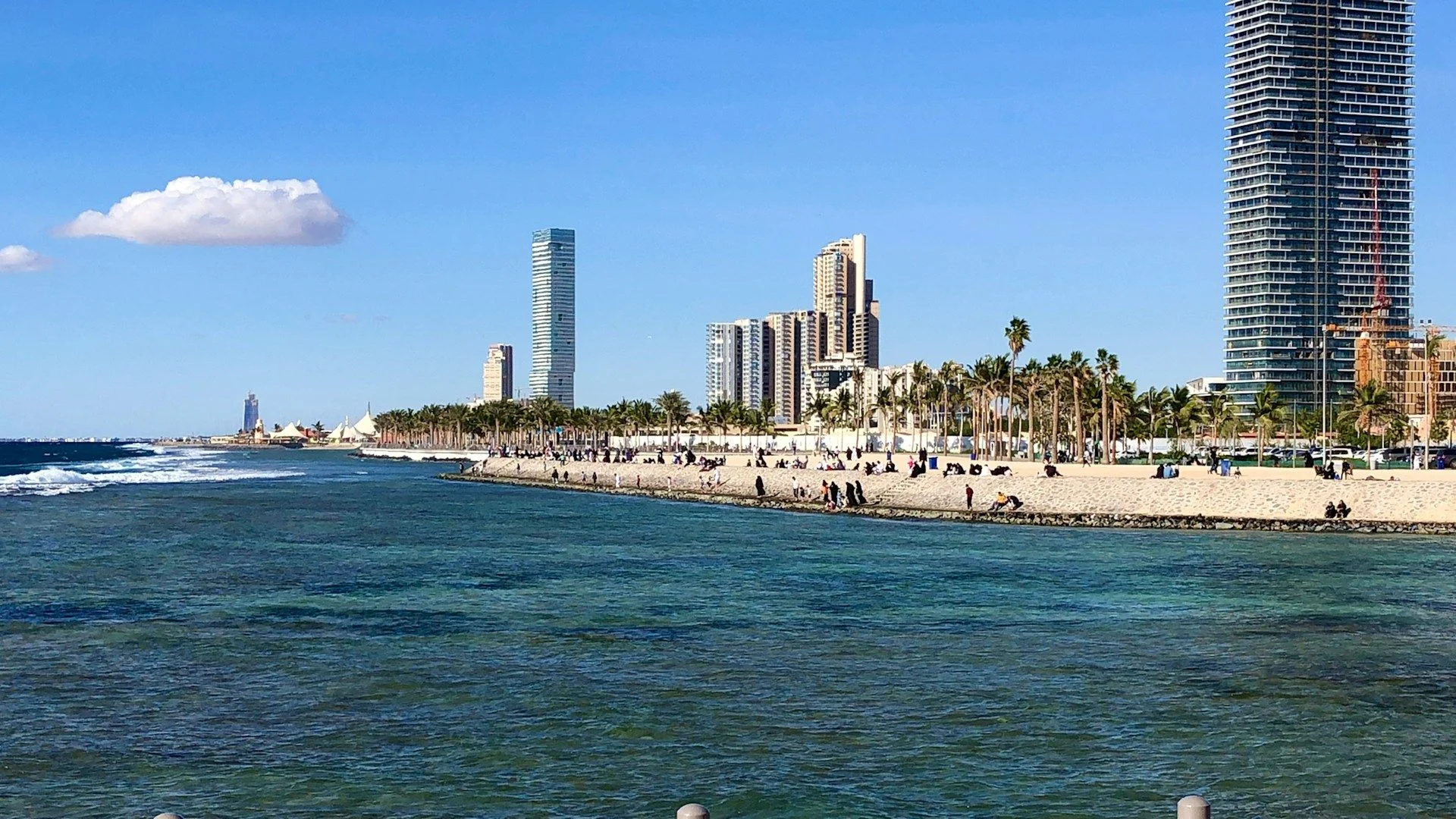
Best offers
in Saudi Arabia
Benefits of investing in commercial real estate in Jeddah


Jeddah demand drivers
Port trade, pilgrimage flows and expanding logistics corridors plus healthcare, education and manufacturing clusters underpin demand in Jeddah, creating a mix of stable public and corporate tenants and seasonal hospitality with short term lease profiles
Asset types and strategies
Port adjacent logistics, central grade offices, pilgrimage hospitality and institutional healthcare and education campuses dominate Jeddah, supporting strategies from core long leases and single tenant holdings to value add repositioning and mixed use redevelopment
Expert selection support
VelesClub Int. experts in Jeddah define strategy, shortlist assets and run screening while performing tenant quality checks, lease structure review, yield logic and capex and fit out assumptions, vacancy risk analysis and due diligence checklist
Jeddah demand drivers
Port trade, pilgrimage flows and expanding logistics corridors plus healthcare, education and manufacturing clusters underpin demand in Jeddah, creating a mix of stable public and corporate tenants and seasonal hospitality with short term lease profiles
Asset types and strategies
Port adjacent logistics, central grade offices, pilgrimage hospitality and institutional healthcare and education campuses dominate Jeddah, supporting strategies from core long leases and single tenant holdings to value add repositioning and mixed use redevelopment
Expert selection support
VelesClub Int. experts in Jeddah define strategy, shortlist assets and run screening while performing tenant quality checks, lease structure review, yield logic and capex and fit out assumptions, vacancy risk analysis and due diligence checklist








Useful articles
and recommendations from experts
Strategic commercial property in Jeddah markets
Why commercial property matters in Jeddah
Jeddah's commercial property market is driven by an economy that combines port activity, trade services, hospitality, and a growing private sector. The city functions as a logistics and gateway node for imports and exports, which sustains demand for warehouses and light industrial premises. Tourism and pilgrimage support hospitality and retail corridors, while a diversified private services sector generates demand for office space and professional services. Demand originates from three principal buyer types: owner-occupiers that need premises to operate a business, investors seeking leased income or capital appreciation, and operators who lease or manage assets such as hotels, clinics, or educational facilities. Understanding which of these buyer types dominates a given submarket is essential when evaluating an asset’s cashflow profile and resilience to economic shifts.
Commercial real estate in Jeddah therefore matters not only as a source of rental income but as a tactical asset that connects trade flows, visitor volumes, and local consumption. Market cycles in Jeddah can be influenced by seasonality tied to religious tourism, shipping volumes at the Red Sea port, and national infrastructure investment. These drivers affect occupancy patterns across offices, retail, hospitality, healthcare, education, and industrial segments, altering the relative attractiveness of properties for different investment strategies.
The commercial landscape – what is traded and leased
The tradable stock in Jeddah includes purpose-built business districts with mid- to high-rise office buildings, high street retail corridors serving dense residential catchments, neighborhood retail clusters anchored by supermarkets and services, business parks and logistics zones near freight routes, and tourism clusters along the coast and near transportation nodes. Lease-driven value typically applies where tenant cashflows and contract terms determine price – for example, stabilized shopping centers and long-let offices. Asset-driven value appears where physical improvement, repositioning, or alternative use potential can alter underlying worth – for example, ageing office stock that can be refurbished or redeveloped into mixed-use schemes.
In Jeddah the interplay between lease-driven and asset-driven value is visible in districts where short-term lease turnover is common versus areas dominated by longer corporate or institutional leases. Operators and investors commonly trade lease covenants, rent escalation clauses, and occupancy profiles when valuing assets. For buyers who focus on lease stability, tenant quality and contract length command a premium. For buyers focused on asset repositioning, structural factors such as plot yield, permitted uses, and building envelope matter more than current rent levels.
Asset types that investors and buyers target in Jeddah
Retail space in Jeddah ranges from high street units in dense urban corridors to neighborhood retail serving residential precincts. High street retail competes on visibility and footfall, whereas neighborhood retail competes on convenience and habitual spend. Offices vary from prime corporate blocks aimed at regional firms to non-prime local office stock suitable for small and medium enterprises. Prime office logic prioritizes floor plate efficiency, parking access, and modern services, while non-prime relies on cost-competitive rents and flexible lease terms.
Hospitality targets both business and leisure visitors, with coastal tourism clusters and proximity to transport nodes being decisive. Restaurant and café premises are evaluated for service infrastructure, extract and utilities capability, and tenancy fit relative to local demand. Warehouse property in Jeddah follows supply chain patterns – proximity to port and arterial roads, clear access for heavy vehicles, and available yard or dock space matter for logistics operators and e-commerce fulfilment. Light industrial units are often assessed for power capacity, ventilation, and flexible lease terms.
Revenue houses and mixed-use assets are attractive where multiple income streams reduce reliance on a single tenant class. Serviced office models appear in locations with high short-term demand from project-based firms or international visitors. Supply chain and e-commerce logic elevates the value of last-mile warehousing and small-format distribution hubs close to urban demand pockets. Across segments, the central comparison is between high-yield but higher-management-intensity assets and lower-yield, lower-management-intensity assets.
Strategy selection – income, value-add, or owner-occupier
Income-focused strategies in Jeddah prioritize stable, long-term leases with creditworthy tenants. These investments target predictability – properties with long lease terms, indexed rent escalation, and clear service charge arrangements. Local factors that push an income focus include tenant demand from bank, corporate, and healthcare sectors and periods of limited development activity that constrain supply.
Value-add strategies pursue uplift through refurbishment, repositioning, or re-leasing. In Jeddah this can mean upgrading building systems to meet modern office standards, reconfiguring retail spaces to improve tenancy mix for tourism seasons, or converting underused floors for alternative commercial uses. Such strategies are sensitive to business cycle swings, construction timelines, and approvals. They require a clear capex plan and an understanding of tenant churn norms in the target segment.
Owner-occupier purchases are common for companies that require long-term control over premises, such as logistics operators needing specialized yards or hospital groups needing tailored clinical space. Owner-occupier logic centers on certainty of occupation, customized configuration, and potential cost advantages over long leases. Mixed-use optimization is a hybrid strategy that seeks to stabilize cashflow by combining retail, office, and residential or hotel components where planning and zoning permit diversification of income streams.
Areas and districts – where commercial demand concentrates in Jeddah
Commercial demand in Jeddah concentrates along several spatial patterns. Central business districts near administrative and corporate nodes attract professional services and corporate offices. Coastal corridors and tourism-facing stretches concentrate hospitality, leisure, and high-end retail driven by visitor volumes. Transport nodes and freight corridors near the port and major arterial roads create logistics and warehousing submarkets. Residential catchment areas support neighborhood retail and small-scale offices. Emerging business areas typically appear where new infrastructure or master-planned developments increase accessibility and offer newer stock.
When comparing areas, investors should evaluate CBD versus emerging peripheral business zones, transport accessibility and commuter flows, tourism corridor exposure versus residential catchment stability, and last-mile industrial access for warehouse properties. Oversupply risk is often local – a concentration of new office completions can compress rents in one district while nearby areas remain supply-constrained. An area framework that prioritizes demand drivers, supply pipeline, and tenant profiles will help filter opportunities effectively.
Deal structure – leases, due diligence, and operating risks
Buyers in Jeddah routinely scrutinize lease documentation for term length, renewal and break options, indexation or escalation mechanisms, and specific obligations for service charges and fit-out. Understanding who bears fit-out risk and the condition of mechanical, electrical, and plumbing systems is critical to forecast near-term capex. Vacancy and reletting risk should be quantified using local re-let benchmarks and tenant turnover data. Tenant concentration risk is material where a small number of tenants represent a large share of income.
Operational diligence typically includes technical inspections, review of service contracts, verification of compliance with building codes, and confirmation of utility and access rights. Financial due diligence focuses on historic operating statements, accuracy of service charge allocation, and the sustainability of rental income streams. Buyers must also assess capex needs for immediate repairs and medium-term upgrades. Operating risks in Jeddah can include construction delays for refurbishments, seasonality in tourism-related income, and fluctuating freight volumes that affect logistics demand.
Pricing logic and exit options in Jeddah
Pricing drivers for commercial property in Jeddah are conventional but locally weighted. Location and footfall matter for retail and hospitality; proximity to ports and arterial roads matters for warehouses; and tenant quality plus lease length influence office valuations. Building quality and remaining useful life determine near-term capex needs and influence discounting. Alternative use potential can add optionality when planning flexibility exists – for example, converting older office blocks into mixed-use space where zoning allows.
Exit options include holding to capture rental growth and refinance opportunities, re-leasing to improve income before sale, or repositioning assets to change the risk profile prior to exit. The decision to hold, re-lease, or reposition should be guided by market cycle timing, availability of financing, and the investor's capacity to execute refurbishment or operational improvements. Exit timing also depends on demand for the asset type – investors may find deeper pools of capital for stabilized offices or logistics assets compared with assets requiring active management or significant redevelopment.
How VelesClub Int. helps with commercial property in Jeddah
VelesClub Int. supports clients through a structured process tailored to Jeddah’s market specifics. The process begins with clarifying investment or operational objectives and defining acceptable risk profiles. Next, VelesClub Int. helps define target segments and district priorities based on demand drivers, supply pipelines, and tenant mix considerations. A disciplined shortlist of assets is then developed with emphasis on lease profile, tenant quality, and capex exposure.
During due diligence VelesClub Int. coordinates technical and financial assessments to highlight operating risks and potential value-add opportunities. The firm assists in preparing negotiation strategies that focus on lease terms, conditional obligations, and alignment of interests between buyer and seller. VelesClub Int. frames scenarios for exit options and holds discussions on operational requirements required to achieve expected repositioning outcomes. All recommendations are tailored to the client’s goals and capabilities rather than following a uniform template.
Conclusion – choosing the right commercial strategy in Jeddah
Selection of a commercial strategy in Jeddah depends on whether the priority is stable income, value creation through repositioning, mixed-use resilience, or owner-occupation. Key decision inputs are lease tenor and tenant quality, location relative to trade and tourism drivers, building condition and capex needs, and the local supply-demand balance in the chosen district type. A pragmatic assessment that links the asset profile to operational capacity and exit flexibility will guide optimal choices.
For a focused assessment and asset screening adapted to these local dynamics, consult VelesClub Int. experts who can translate objectives into a targeted acquisition or leasing plan and coordinate the diligence and negotiation steps needed to evaluate and buy commercial property in Jeddah.