
Commercial space in GdanskActive zones for commercial expansion
Best offers
in Poland
Benefits of investing in commercial real estate in Gdansk


Market demand drivers
Gdansk's port, logistics corridors, shipbuilding and growing offshore wind cluster drive demand across industrial, logistics and office space; strong tourism and universities add retail and hospitality tenants, implying varied lease lengths and tenant stability profiles
Relevant asset strategies
Industrial and logistics near the port, central and suburban graded offices, Old Town retail, hospitality for cruise and business visitors, and mixed-use conversions suit strategies from core long leases to value-add repositioning
Expert selection support
VelesClub Int. experts define strategy, shortlist assets and run screening including tenant quality checks, lease structure review, yield logic assessment, capex and fit-out assumptions, vacancy risk analysis and a practical due diligence checklist
Market demand drivers
Gdansk's port, logistics corridors, shipbuilding and growing offshore wind cluster drive demand across industrial, logistics and office space; strong tourism and universities add retail and hospitality tenants, implying varied lease lengths and tenant stability profiles
Relevant asset strategies
Industrial and logistics near the port, central and suburban graded offices, Old Town retail, hospitality for cruise and business visitors, and mixed-use conversions suit strategies from core long leases to value-add repositioning
Expert selection support
VelesClub Int. experts define strategy, shortlist assets and run screening including tenant quality checks, lease structure review, yield logic assessment, capex and fit-out assumptions, vacancy risk analysis and a practical due diligence checklist








Useful articles
and recommendations from experts
Commercial property in Gdansk investment and strategy
Why commercial property matters in Gdansk
Gdansk is a coastal economic node where port activity, manufacturing supply chains, a growing services sector and tourism intersect. Commercial property in Gdansk responds to demand created by freight and logistics operators, exporters, technology and business services, higher education and a seasonal hospitality sector. Owner-occupiers in industrial and light manufacturing use space close to port access, while investors typically target stabilized income from office and retail leases or seek value-add opportunities in older buildings near transit connections. Operators in hospitality and foodservice depend on visitor flows that vary by season, which makes lease structures and short-term revenue cycles important when assessing risk. The mix of export-oriented industry and an expanding business services base creates diversified tenant demand across offices, retail, hospitality, healthcare and warehousing, which underpins market midterm fundamentals for commercial real estate in Gdansk.
The commercial landscape – what is traded and leased
The traded and leased stock in Gdansk covers a recognizably segmented landscape: central business districts with office concentrations, high street retail corridors in historic and retail-led areas, neighborhood retail serving local catchments, business parks and logistics zones on arterial roads, and tourism clusters near the waterfront and heritage areas. Lease-driven value appears where tenant income and contract terms drive asset pricing, typically in multi-tenant office buildings and retail units with long, indexed leases and strong covenants. Asset-driven value dominates where physical repositioning, redevelopment potential or alternative use are the primary drivers, such as older warehouses that can be extended or converted, mixed-use buildings that can add residential or hotel components, or retail properties that can be reconfigured for experience-led operators. Understanding whether a property is price-sensitive to lease cashflows or to the intrinsic redevelopment potential is fundamental to any purchase decision in this market.
Asset types that investors and buyers target in Gdansk
Investors and buyers in Gdansk evaluate a set of common asset types with distinct investment logics. Retail space in Gdansk splits between high street units that benefit from tourist and local footfall and neighborhood retail that relies on resident spending and consistent service demand. Office space in Gdansk ranges from prime corporate blocks targeting multinational firms to secondary buildings serving local professional services and startups; prime locations trade on stability of longer leases while secondary stock is more sensitive to tenant churn and fit-out needs. Hospitality properties are driven by seasonality and event cycles, with short-term revenue volatility but potential for operational improvements. Restaurant-cafe-bar premises require assessment of extraction of value through lease terms and fit-out quality rather than structural repositioning. Warehouse property in Gdansk is influenced by port access, acreage, ceiling heights and last-mile connectivity for e-commerce fulfilment. Revenue houses and mixed-use assets combine residential and commercial income streams, offering diversification but also more complex management. Comparisons such as high street versus neighborhood retail, prime versus non-prime office logic and the role of serviced office operators should be anchored in local tenant demand patterns and supply pipeline forecasts rather than generic national yardsticks.
Strategy selection – income, value-add, or owner-occupier
Strategy selection in Gdansk is a function of investor objectives, horizon and local market dynamics. An income-focused strategy prioritizes stable leases, tenant quality and lease length – this is common for institutional or long-term investors seeking predictable cashflows in central office or established retail corridors. A value-add strategy targets assets where refurbishment, re-leasing or repositioning can increase net operating income; in Gdansk this often includes older office buildings near transport nodes or warehouse property that can be adapted for higher-value logistics users. Mixed-use optimization leverages complementary income streams and can be effective where zoning and demand permit conversion between commercial and residential or hospitality uses. Owner-occupier purchases are driven by operational needs and total occupancy cost analysis, often seen in manufacturing and logistics sectors where proximity to port infrastructure reduces operational friction. Local factors that push strategy choice include the business cycle sensitivity of exports, tenant churn norms in office submarkets, seasonality in tourism and hospitality, and the administrative intensity of permitting and planning processes; these should be evaluated against the investor's capability to execute repositioning or manage short-term income variability.
Areas and districts – where commercial demand concentrates in Gdansk
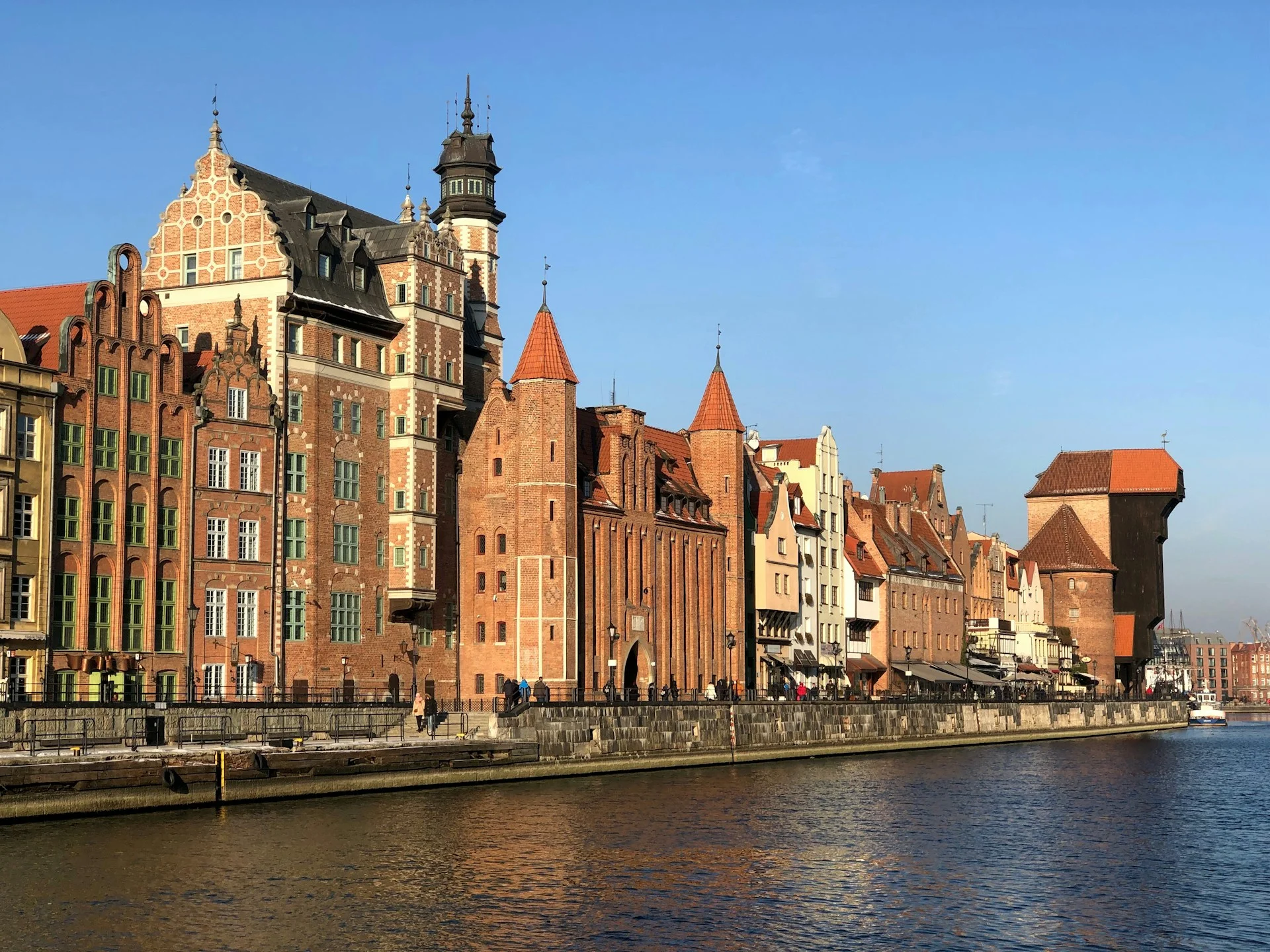
When comparing districts in Gdansk, a practical framework separates the central business areas, established commercial corridors, residential catchments with strong retail pull, and logistics nodes with port access. The central historic area attracts tourism-driven retail and hospitality demand and supports smaller office and service tenants. Wrzeszcz functions as an important business and retail node with a mix of corporate offices and local commerce. Oliwa often draws professional services and education-linked demand, given its amenity set and transport links. Przymorze contains residential catchments that sustain neighborhood retail and service premises. Letnica and areas adjacent to the port are relevant for warehouse and light industrial use due to road and sea freight connectivity. Nowy Port and waterfront zones concentrate tourism-related premises and selective commercial conversion opportunities. Investors should evaluate CBD versus emerging business areas, transport nodes and commuter flows, tourism corridors versus residential catchments, and industrial access and last-mile routes to match asset type with demand intensity and oversupply risk in each district.
Deal structure – leases, due diligence, and operating risks
Deal structure in Gdansk typically revolves around lease terms, tenant covenant strength and the allocation of operating responsibilities. Buyers review lease term length and break options, indexation clauses tied to CPI or contractual escalators, and service charge mechanisms that affect net operating income. Fit-out responsibilities, tenant improvement allowances and obligations at lease expiry determine re-letting costs and capital expenditure timing. Vacancy and reletting risk are assessed through local market absorption rates and typical lease turnover intervals in the submarket. Compliance costs such as building standards, energy performance and safety upgrades are material and should be included in capex budgeting. Tenant concentration risk requires analysis of industry exposure and counterparty diversification. Due diligence extends beyond title and physical inspection to include verification of utility capacities, transport access for logistics assets, lease documentation accuracy and historical operating statements. While this is not legal advice, a rigorous operational and financial review is standard practice to quantify downside scenarios and to structure representations and warranties in purchase documentation.
Pricing logic and exit options in Gdansk
Pricing drivers in Gdansk follow a familiar hierarchy: location and footfall, tenant quality and lease length, building condition and capex requirements, and alternative-use potential. High-footfall retail and long-leased office assets command pricing premia where visible demand and security of income align. Warehouse property in Gdansk is priced based on access to the port, yard and docking capacity, clear height and total leasable area. Buildings with clear alternative use potential – for example conversion to higher-yielding mixed-use or hospitality – can trade at a premium to reflected redevelopment returns if planning risk is low. Exit options typically include hold and refinance for income-oriented investors, re-leasing and exit post-stabilization for value-add plays, and reposition-then-exit when physical improvements have demonstrably increased net operating income. Exit planning should consider liquidity in relevant submarkets, the investor base appetite for particular asset types and cyclical timing rather than assuming a fixed outcome. Pricing assessments should explicitly model capex, vacancy risk and the time required to achieve stabilized cashflows under different exit scenarios.
How VelesClub Int. helps with commercial property in Gdansk
VelesClub Int. provides structured support for screening and selecting commercial property in Gdansk through a process-oriented approach. The first step is clarifying client objectives and risk appetite so that target segments and districts can be defined in measurable terms. VelesClub Int. then shortlists assets based on lease profile, tenant risk, capex needs and strategic fit with the client mandate. The firm coordinates due diligence workflows that prioritize lease documentation review, operating statements and technical inspections and helps interpret findings as they relate to valuation and negotiation strategy. VelesClub Int. also supports transaction steps by aligning timelines between sellers, advisors and financing partners and by advising on commercially pragmatic terms rather than providing legal counsel. All selection and negotiation support is tailored to the client’s operational capabilities and intended hold period.
Conclusion – choosing the right commercial strategy in Gdansk
Selecting the right commercial strategy in Gdansk requires aligning asset type, district dynamics and lease structure with investor goals and operational capability. Income strategies favor long leases and tenant quality, value-add approaches require realistic capex and repositioning timelines, and owner-occupier decisions hinge on operational benefits versus acquisition cost. Buyers who intend to buy commercial property in Gdansk should integrate market segmentation, district-specific demand analysis and rigorous lease-focused due diligence into their decision making. For tailored strategy development and asset screening, consult VelesClub Int. experts who can translate local market detail into a focused acquisition plan and coordinate the practical steps of selection and transaction execution. Contact VelesClub Int. to review strategy options and an initial shortlist aligned with your objectives.