
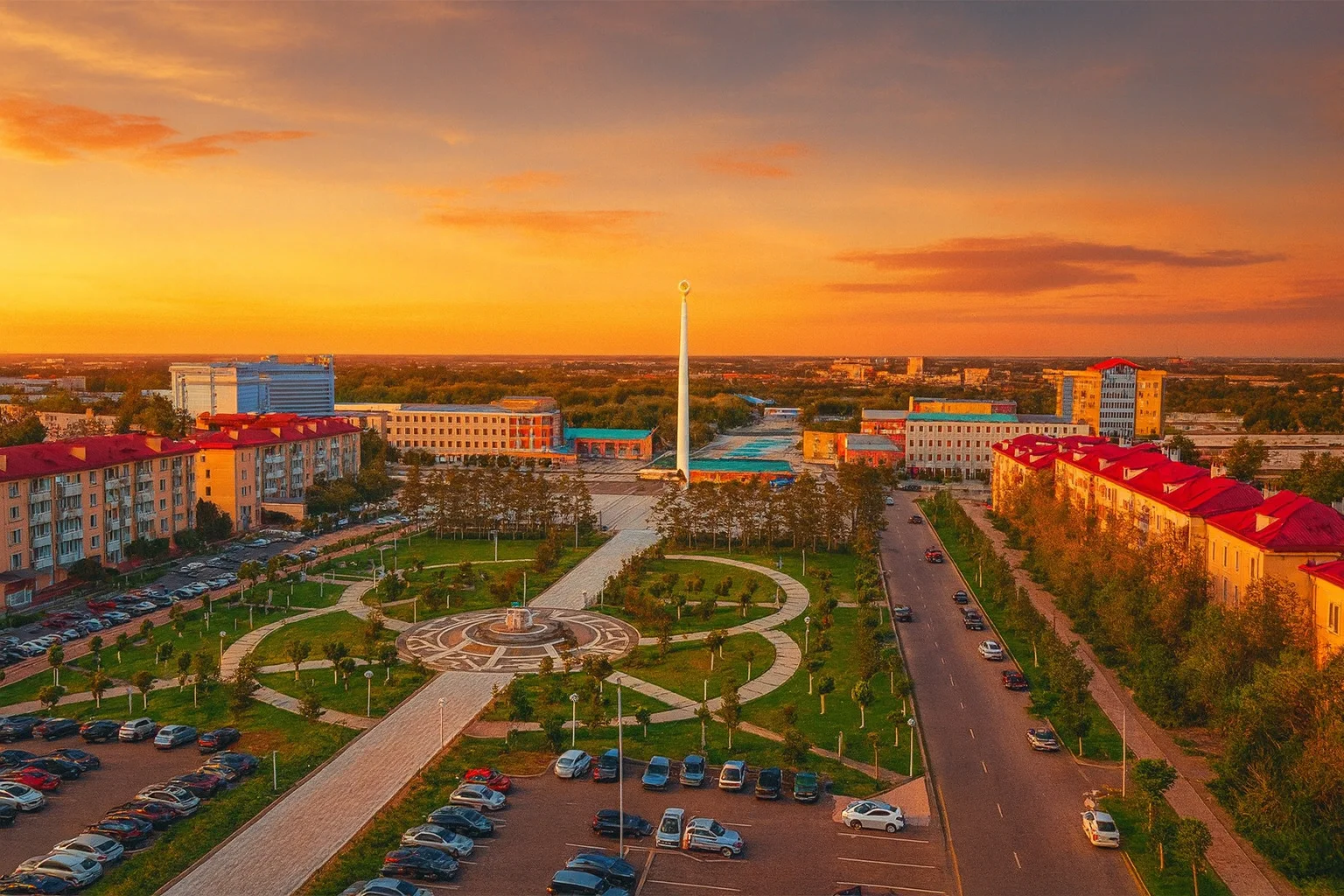
Commercial property for sale in KaragandaCity opportunities for business growth
Best offers
in Kazakhstan
Benefits of investing in commercial real estate in Karaganda


Local demand drivers
Karaganda demand is driven by mining and metallurgy, regional manufacturing clusters, rail logistics corridors, public sector institutions and universities, creating tenant stability biased toward long-term industrial, public and institutional leases
Relevant asset strategies
Industrial warehouses and logistics hubs dominate due to mining and manufacturing, while mid-grade offices, neighborhood retail and project-based hospitality suit local demand, enabling core long leases or value-add repositioning and single- or multi-tenant choices
Expert selection support
VelesClub Int. experts define strategy, shortlist assets and run screening, including tenant quality checks, lease structure review, yield logic assessment, capex and fit-out assumptions, vacancy risk analysis and a tailored due diligence checklist
Local demand drivers
Karaganda demand is driven by mining and metallurgy, regional manufacturing clusters, rail logistics corridors, public sector institutions and universities, creating tenant stability biased toward long-term industrial, public and institutional leases
Relevant asset strategies
Industrial warehouses and logistics hubs dominate due to mining and manufacturing, while mid-grade offices, neighborhood retail and project-based hospitality suit local demand, enabling core long leases or value-add repositioning and single- or multi-tenant choices
Expert selection support
VelesClub Int. experts define strategy, shortlist assets and run screening, including tenant quality checks, lease structure review, yield logic assessment, capex and fit-out assumptions, vacancy risk analysis and a tailored due diligence checklist








Useful articles
and recommendations from experts
Practical guide to commercial property in Karaganda
Why commercial property matters in Karaganda
Karaganda’s commercial property market reflects the city’s industrial base, public sector footprint and regional service role. Demand arises from office occupiers tied to mining support services and regional administration, from retailers serving both city residents and nearby towns, from hospitality providers oriented to business travel and transit, and from logistics operators handling bulk goods distribution. Healthcare and education institutions also generate long‑term lease needs for specialized space. Buyers in this market include owner‑occupiers seeking stable premises for operations, institutional or private investors focused on rental income, and operators who acquire assets to run hotels, clinics or managed office products. The combination of heavy industrial activity and a settled urban population gives the market a dual character – functional demand for warehouses and light industrial units alongside steady demand for office and retail space that serves local consumption and professional services.
The commercial landscape – what is traded and leased
The traded and leased stock in Karaganda spans conventional business districts, high street corridors, neighborhood retail nodes, business parks and logistics zones located near arterial roads and freight corridors. Office stock ranges from purpose‑built mid‑rise blocks occupied by professional services to smaller converted units serving administrative functions. Retail is often concentrated along corridor trading streets and inside compact shopping galleries that cater to daily needs and specialty purchases. Warehousing and light industrial facilities cluster where access to freight routes and industrial estates is most direct, reflecting supply chain connections to raw material processing and regional distribution. In this market the difference between lease‑driven value and asset‑driven value is tangible: lease‑driven value depends primarily on contract length, tenant credit and indexed rent, while asset‑driven value reflects the building’s physical quality, redevelopment potential and alternative use possibilities. Investors and buyers in Karaganda evaluate both streams, balancing current cash flow against refurbishment or conversion upside.
Asset types that investors and buyers target in Karaganda
Retail space in Karaganda attracts investors looking for stable daily footfall and long‑term neighborhood income, with a clear distinction between high street retail that commands premium rents and smaller local retail units that show lower vacancy but also lower yields. Office space in Karaganda is assessed on grade, location and access to professional labor; prime offices in central clusters command higher rents and longer leases, while secondary offices require repositioning or lease restructuring. Hospitality assets are chosen for proximity to business and transport nodes rather than tourism alone, so operator strength and seasonal variations matter. Restaurant, cafe and bar premises are often leased on shorter terms with tenant fit‑out obligations that affect valuation. Warehouse property in Karaganda targets regional distribution needs and manufacturing support – ceiling height, loading access and proximity to major roads influence demand more than retail visibility. Revenue houses or mixed‑use assets that combine residential and commercial components present an option for diversification but require more complex management and regulatory attention. Serviced office models have emerged selectively and are assessed by flexibility of lease terms and demand from small enterprises. E‑commerce and supply chain trends affect logistics and last‑mile warehousing logic, increasing interest in smaller, well‑located warehouse units rather than only large bulk sheds.
Strategy selection – income, value-add, or owner-occupier
Choosing between an income, value‑add or owner‑occupier strategy in Karaganda depends on asset scale, local market cycles and the investor’s operating capabilities. An income focus favors assets with established tenants, indexed rent clauses and low capex needs – typical for stable retail units and long‑leased offices serving public sector or large corporate tenants. A value‑add approach targets assets with physical or tenancy underperformance where refurbishment, reconfiguration or proactive re‑letting can improve cash flow – this is common with older office blocks and secondary retail strips. Mixed‑use optimization appeals where combining retail, office and residential uses can capture multiple demand streams but requires tighter management and sensitivity to zoning and permitting. Owner‑occupier purchases are logical for operators that benefit from controlling premises and reducing occupancy cost volatility, particularly in industrial and light manufacturing segments. Local factors shaping these choices include sensitivity to commodity cycles that affect related service firms, tenant churn norms that vary by sector, seasonal demand for hospitality and retail, and the intensity of local permitting processes. These elements determine whether holding for steady income or pursuing repositioning is preferable in a given submarket.
Areas and districts – where commercial demand concentrates in Karaganda
Commercial demand in Karaganda concentrates along a classic central business area and in transport‑oriented corridors that connect the city to regional industrial zones. A practical district selection framework evaluates a central administrative and professional cluster against emerging business areas where newer office and retail supply may be developing. Transport nodes and commuter flows identify corridors that support flexible office and retail use, while tourism and hospitality demand tends to follow main transit routes rather than dispersed neighborhoods. Industrial access and last‑mile routes determine warehouse viability – facilities closest to arterial roads reduce operating friction for logistics tenants. Residential catchments create steady local retail demand, whereas competition and oversupply risk rise where new speculative development outpaces tenant growth. For investors screening the market, assessing proximity to public sector employers, freight corridors and commuting patterns is more informative than focusing on a single district name; these functional criteria drive occupier demand and rental stability in Karaganda.
Deal structure – leases, due diligence, and operating risks
Buyers and investors in Karaganda typically review lease terms closely as they drive near‑term cash flow and long‑term valuation. Key commercial points include lease length, break options and notice periods, indexation clauses linked to inflation or local indices, service charge mechanisms and the allocation of fit‑out responsibilities between landlord and tenant. Vacancy and reletting risk are assessed through local leasing velocity and tenant concentration metrics. Due diligence commonly covers technical surveys to estimate capex, utility capacity and compliance with building standards, alongside a financial review of historical operating costs and service charge reconciliation. Environmental considerations matter for industrial assets and warehouses, focusing on previous use and remediation needs. Operating risks also include tenant creditworthiness, exposure to sectoral cycles and management intensity required for mixed‑use assets. Buyers should plan for capex and compliance costs in acquisition models and establish contingency for tenant turnover; these practical steps are central to underwriting acquisitions in Karaganda without relying on prescriptive legal guidance.
Pricing logic and exit options in Karaganda
Pricing in Karaganda is driven by location and footfall patterns, tenant quality and remaining lease length, building condition and required capex, and potential for alternative uses such as conversion to mixed‑use or higher‑density employment space. A property with long indexed leases to stable tenants will have a different price profile than an asset with vacant space but redevelopment potential. Exit options include continuing to hold and refinance once operational metrics stabilize, re‑letting and selling to income‑focused buyers, or repositioning physically and exiting to investors looking for upgraded assets. Market liquidity varies by segment – core retail and well‑located offices typically offer more predictable exit pathways, while specialized industrial or hospitality assets can require longer holding periods to realize value. Pricing logic should incorporate scenario analysis for different exit strategies rather than relying on a single forecast; this approach helps quantify the trade‑offs between immediate income and longer‑term appreciation potential in Karaganda.
How VelesClub Int. helps with commercial property in Karaganda
VelesClub Int. supports clients through a structured, market‑focused process tailored to Karaganda’s conditions. The engagement begins by clarifying objectives – income stability, value‑add potential or owner‑occupation – and defining target segments and districts using demand and transport criteria. Shortlisting assets follows a screening based on lease profile, tenant risk and capex needs, then VelesClub Int. coordinates technical assessments and market checks that inform commercial due diligence. Throughout transaction stages the service emphasizes negotiation support and documentation coordination without providing legal advice, focusing on commercial terms, rent structures and operational transition plans. The selection is always tailored to the client’s capital base and operational capability, with attention to local leasing norms and seasonal demand patterns to align asset choice with investment horizon and risk tolerance.
Conclusion – choosing the right commercial strategy in Karaganda
Selecting the appropriate commercial strategy in Karaganda requires matching asset type to tenant demand, lease structure and district dynamics. Income strategies suit assets with long leases to stable tenants, value‑add approaches require realistic capex planning and repositioning potential, and owner‑occupation is optimal for operators prioritizing control over premises. Pricing and exits depend on lease lengths, tenant quality and alternative use options, while due diligence must anticipate capex, vacancy and compliance costs. For a practical, market‑aware screening and transaction process consult VelesClub Int. experts who can tailor selection, coordinate commercial due diligence and support negotiation and acquisition steps. Contact VelesClub Int. to align your commercial objectives and begin focused asset screening in Karaganda.