
Commercial real estate listings in KosharitsaVerified city listings for growth
Best offers
in Bulgaria
Benefits of investing in commercial real estate in Kosharitsa


Tourism and seasonal demand
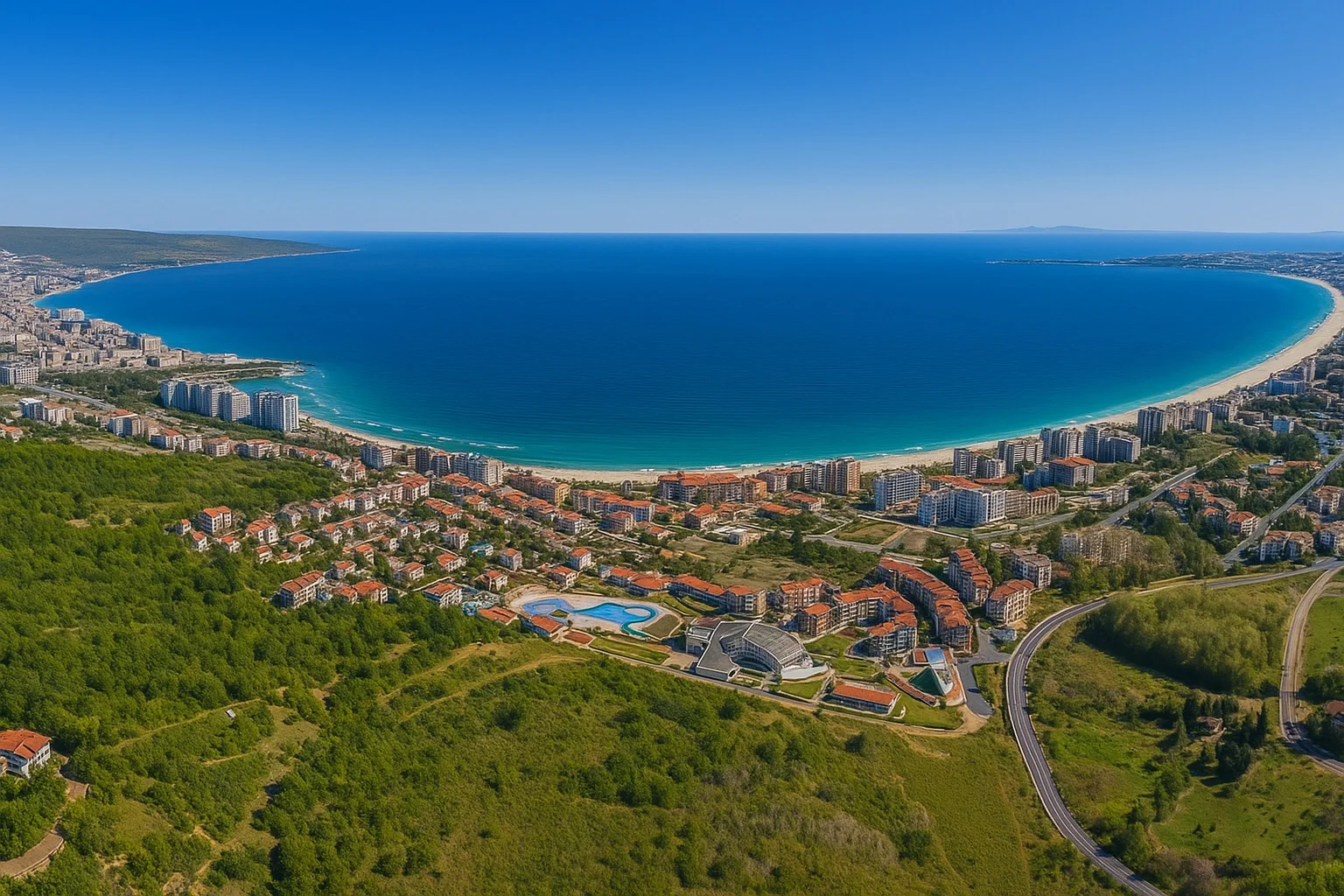
Kosharitsa's coastal tourism and proximity to main beach corridors create concentrated summer demand for hotels, retail and logistics services, implying seasonal lease peaks, higher tenant turnover and a mix of short-term and service leases
Relevant asset strategies
Small hotels, aparthotels, tourist high-street retail, convenience outlets and logistics hubs dominate Kosharitsa, supporting strategies from core long-term operator leases to value-add repositioning, single-tenant management contracts or multi-tenant diversification depending on seasonality
Expert selection support
VelesClub Int. experts define strategy, shortlist assets and run screening including tenant quality checks, lease structure review, yield logic assessment, capex and fit-out assumptions, vacancy risk analysis and a focused due diligence checklist
Tourism and seasonal demand
Kosharitsa's coastal tourism and proximity to main beach corridors create concentrated summer demand for hotels, retail and logistics services, implying seasonal lease peaks, higher tenant turnover and a mix of short-term and service leases
Relevant asset strategies
Small hotels, aparthotels, tourist high-street retail, convenience outlets and logistics hubs dominate Kosharitsa, supporting strategies from core long-term operator leases to value-add repositioning, single-tenant management contracts or multi-tenant diversification depending on seasonality
Expert selection support
VelesClub Int. experts define strategy, shortlist assets and run screening including tenant quality checks, lease structure review, yield logic assessment, capex and fit-out assumptions, vacancy risk analysis and a focused due diligence checklist








Useful articles
and recommendations from experts
Commercial property in Kosharitsa market overview and outlook
Why commercial property matters in Kosharitsa
Kosharitsa’s commercial property market is shaped by a concentrated local economy where seasonal tourism, service activities and supporting logistics create distinct demand cycles for commercial real estate in Kosharitsa. Hospitality and retail are primary occupier sectors during the high season, generating short-term leasing activity and specialised asset needs such as restaurant-cafe-bar premises and small hotel conversions. Outside peak months, demand shifts toward longer-term requirements from local businesses, light industrial service providers and healthcare or education providers serving permanent residents. Buyers in this market typically include owner-occupiers who need premises for a trading business, investors seeking rental income or capital growth tied to seasonally adjusted cash flow, and operators who acquire or lease premises to run hospitality or retail ventures. The mix of these buyers and the seasonal load factors makes Kosharitsa a market where lease structure, tenant mix and cyclical risk management are central to investment decisions.
The commercial landscape – what is traded and leased
The traded and leased stock in Kosharitsa consists of a handful of identifiable types: high-street retail units that serve tourist corridors and local neighborhoods, small office suites used by service professionals and administration, hospitality properties such as guesthouses and small hotels, and warehousing or light industrial units that support logistics to nearby resort areas. Transaction activity frequently involves short-term tourism-oriented leases and longer-term contracts for local services. In this market, lease-driven value is common where rental income depends on seasonal footfall and flexible tenancy terms; asset-driven value appears where structural attributes of a building—location relative to transport access, potential for year-round conversion, or land for expansion—support repositioning or redevelopment for more stable uses. Understanding which component dominates for a given asset is essential: a storefront whose value is derived from summer trading should be assessed differently from a purpose-built warehouse whose value depends on storage demand and last-mile distribution logistics.
Asset types that investors and buyers target in Kosharitsa
Investors and buyers in Kosharitsa typically target a set of asset types defined by the local economy. Retail space in Kosharitsa remains attractive for short-term operators and franchise-style cafes or souvenir retailers that rely on seasonal volume; within retail there is a clear split between high-street tourist-facing units and neighborhood retail serving residents year-round. Office space in Kosharitsa is generally modest in scale; prime office logic here differs from large urban markets and prioritizes proximity to administrative centers and local client catchments rather than large corporate amenities. Hospitality assets capture a wide spectrum, from small guesthouses and boutique operations that depend on summer occupancy to properties that can be managed for a longer operational season. Restaurant-cafe-bar premises require careful evaluation of extraction, fit-out and licensing risk, and they often command business-sensitive lease terms. Warehouses and light industrial units serve local supply chains and e-commerce fulfilment for regional tourism businesses; their valuation reflects access to transport, conditional zoning and last-mile efficiencies. Revenue houses and mixed-use buildings can work where ground-floor commercial uses are supported by residential upper floors that provide year-round income, offering a blend of cashflow stability and exposure to local occupancy risks. Across these segments, comparisons such as high-street versus neighborhood retail, prime versus non-prime office, and serviced office flexibility versus conventional leasing must be anchored to Kosharitsa’s seasonal demand patterns and the limited scale of local occupiers.
Strategy selection – income, value-add, or owner-occupier
Selecting a commercial strategy in Kosharitsa requires matching investor objectives to local market dynamics. An income-focused approach targets stable leases and tenant creditworthiness, which in this market means prioritising year-round occupiers or long-term service contracts rather than purely tourism-dependent tenants. Value-add strategies in Kosharitsa commonly involve refurbishment to extend the trading season, repositioning a hospitality asset to attract longer-stay guests, or reconfiguring retail units into multi-use premises that combine tourist retail with local services. Mixed-use optimisation seeks to stabilise cash flow by combining commercial ground-floor leases with residential income above, which can mitigate seasonality but demands careful management of tenant mix and building operations. Owner-occupier purchases are frequent among local operators who prefer control over fit-out and tenancy risk, particularly for hospitality and specialist retail. Local factors that push each strategy include the intensity of seasonality, the observed tenant churn in tourist-facing segments, and the administrative framework for permits and fit-out approvals. Regulatory complexity and infrastructure seasonality also influence whether a buyer pursues short-term trading returns or a longer-term repositioning play.
Areas and districts – where commercial demand concentrates in Kosharitsa
Demand in Kosharitsa concentrates along a small number of functional areas rather than formal district names. The most active commercial corridors are those adjacent to primary tourist access routes and any clustered resort strips where footfall peaks seasonally. A secondary concentration exists in local neighborhood centres that serve permanent residents and provide consistent demand for grocery, healthcare and professional services. Commercial demand also gathers near transport nodes and arterial roads that link Kosharitsa to nearby resorts or regional logistics routes; these locations are where warehouse property in Kosharitsa and light industrial units are most likely to be found. Emerging business areas may appear where land availability allows small business parks or where former residential plots have been converted to mixed-use. When comparing these area types, investors should evaluate CBD-like concentrations of retail and hospitality against quieter residential catchments, assess access to commuter flows for office occupiers, and consider proximity to last-mile routes for logistics. Oversupply risk is most acute along tourist corridors where rapid construction can outpace demand; areas serving permanent residents typically show lower vacancy volatility.
Deal structure – leases, due diligence, and operating risks
Deal structure in Kosharitsa revolves around lease terms and the operational implications of seasonal trade. Buyers commonly review lease term length, indexation clauses that link rent to inflation or a local index, tenant break options and landlord break clauses, and responsibilities for fit-out and maintenance. Service charges and common area maintenance arrangements require careful scrutiny where mixed-use buildings share infrastructure between residential and commercial occupants. Due diligence covers financial lease schedules, historical occupancy and turnover data across seasons, and contingent liabilities such as deferred maintenance or outstanding compliance work. Reletting risk and vacancy assumptions must be stress-tested against low-season performance, and capex planning should account for conversion costs if repositioning is part of the investment thesis. Operator and tenant concentration risk is material in Kosharitsa where a single operator can dominate seasonal trading; reliance on a narrow tenant base increases exposure to business volatility. Environmental and building compliance checks, energy efficiency considerations and municipal permitting practices should be part of technical due diligence, though this overview does not provide legal advice and prospective buyers should rely on professional consultants for formal reviews.
Pricing logic and exit options in Kosharitsa
Pricing in Kosharitsa is driven by a blend of locational intensity, tenant profile and asset condition. Footfall and visibility along tourist corridors elevate pricing for retail and hospitality assets during peak months, while tenant quality and remaining lease length underpin valuations for income-focused investors. Building fabric, required capex and potential for alternative uses affect how buyers price non-prime offices and warehouses. Option value is relevant where an asset can be redeveloped or converted to a different use that supports year-round income. Exit options available in the market include holding for steady seasonal income and refinancing when cash flow metrics stabilise, re-leasing to improve tenancy terms then selling to yield-focused buyers, and repositioning an asset to capture capital appreciation before a sale. The practicality of each exit route is determined by local demand cycles, investor appetite for tourism-exposed assets, and the degree to which an investor has mitigated operating seasonality and regulatory friction. No guaranteed returns should be assumed; exit timing and outcome depend on market conditions and asset repositioning execution.
How VelesClub Int. helps with commercial property in Kosharitsa
VelesClub Int. supports investors and buyers in Kosharitsa through a structured process that begins by clarifying objectives and risk tolerance relative to seasonal market dynamics. The firm helps define target segments and area types, distinguishing between tourism corridors, neighborhood retail catchments and logistics nodes. Using this brief, VelesClub Int. shortlists assets based on lease profile, tenant mix and required capex, emphasising transparent assessment of vacancy and reletting risk. The support continues through coordination of due diligence activities and review of transaction documentation, focusing on practical operating risks such as service charges, fit-out obligations and tenant break clauses. VelesClub Int. can assist in negotiation strategy and transaction sequencing to align deal structure with the client’s intended strategy, whether income, value-add or owner-occupier acquisition. All recommendations are tailored to the client’s financial capacity and operational capability, with emphasis on practical screening rather than prescriptive legal or tax advice.
Conclusion – choosing the right commercial strategy in Kosharitsa
Choosing the right commercial strategy in Kosharitsa depends on matching investor goals to the locality’s seasonality, tenant profiles and physical stock. Income strategies favour assets with year-round tenants or diversified revenue streams; value-add approaches depend on realistic cost estimates to extend operating seasons or convert uses; owner-occupier purchases are appropriate for operators requiring control over fit-out and tenancy. Pricing and exits are determined by location, tenant strength and capital expenditure needs. For a focused assessment and asset screening aligned to your objectives, consult VelesClub Int. experts to evaluate opportunities, refine strategy and support execution in Kosharitsa’s commercial real estate market. For those looking to buy commercial property in Kosharitsa, professional guidance can clarify trade-offs and identify assets that match operational capabilities and investment criteria.