
Commercial real estate for sale in FortalezaVerified listings for city expansion
Best offers
in Brazil
Benefits of investing in commercial real estate in Fortaleza


Fortaleza demand drivers
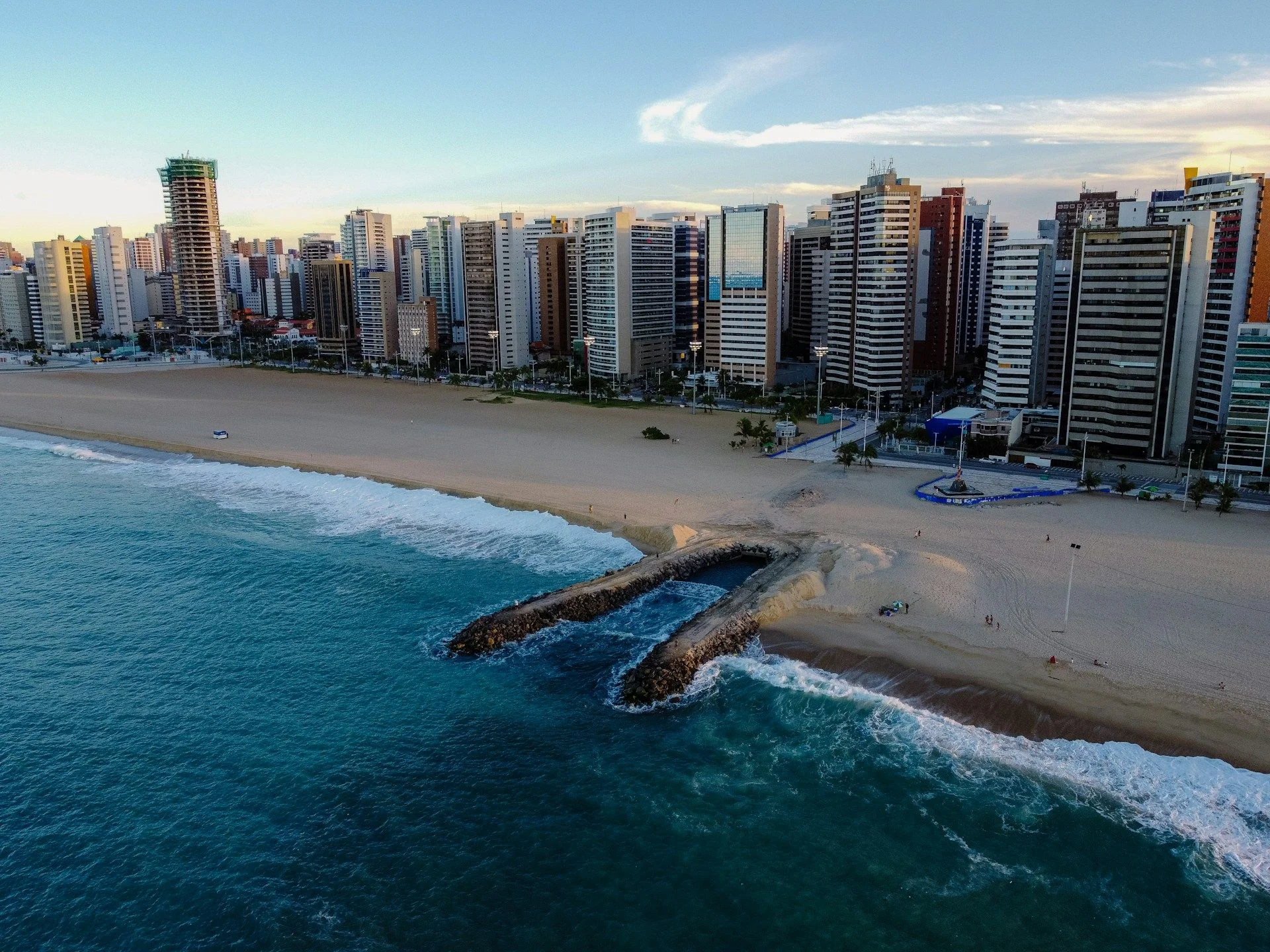
Port activity, tourism and regional administration drive demand in Fortaleza, supported by logistics corridors, growing tech and university clusters, healthcare hubs and retail tourism nodes, implying mixed lease profiles with seasonal and long-term tenant stability
Asset types and strategies
Logistics warehouses near the port suit single-tenant core plays, beachfront and high street retail target tourism and local spending, older office stock offers value-add repositioning, while mixed-use and hospitality support diversified strategy choices
Expert selection support
VelesClub Int. experts define strategy, shortlist assets and run systematic screening including tenant quality checks, lease structure review, yield logic assessment, capex and fit-out assumptions, vacancy risk analysis and a tailored due diligence checklist
Fortaleza demand drivers
Port activity, tourism and regional administration drive demand in Fortaleza, supported by logistics corridors, growing tech and university clusters, healthcare hubs and retail tourism nodes, implying mixed lease profiles with seasonal and long-term tenant stability
Asset types and strategies
Logistics warehouses near the port suit single-tenant core plays, beachfront and high street retail target tourism and local spending, older office stock offers value-add repositioning, while mixed-use and hospitality support diversified strategy choices
Expert selection support
VelesClub Int. experts define strategy, shortlist assets and run systematic screening including tenant quality checks, lease structure review, yield logic assessment, capex and fit-out assumptions, vacancy risk analysis and a tailored due diligence checklist








Useful articles
and recommendations from experts
Practical guide to commercial property in Fortaleza
Why commercial property matters in Fortaleza
Fortaleza’s economy combines a coastal tourism base with diverse local services, light industry and a growing digital and professional services sector. This mix creates recurring demand for commercial real estate in Fortaleza across several segments: office space for local companies and regional branches, retail and high street units that serve both residents and tourists, hospitality stock including small hotels and serviced accommodations, healthcare and education facility requirements, and warehouses serving a regional distribution footprint. Buyers in Fortaleza range from owner-occupiers seeking long-term premises for trade to yield-focused investors buying to let, and operators who acquire assets to manage hospitality or retail portfolios. The seasonal rhythm of beach tourism affects footfall and short-term leasing demand, while municipal infrastructure and port activity shape industrial and logistics requirements. Understanding these local economic drivers is essential when evaluating commercial property in Fortaleza because sector mix and seasonality directly influence lease lengths, tenant profiles and capex expectations.
The commercial landscape – what is traded and leased
The commercial market in Fortaleza features a mixture of business districts, coastal high streets, neighborhood retail strips, business parks near arterial roads, and logistics zones oriented to port and last-mile distribution. Office activity concentrates where corporate services and professional firms cluster, while retail space in Fortaleza splits between high-visibility corridors that rely on tourist and city-centre footfall and neighborhood retail anchored by local demand. Warehouse property in Fortaleza is typically located close to transport nodes and arterial routes serving the metropolitan area and the port, with light industrial units forming a transitional zone between residential and heavy logistics areas. In this market, lease-driven value is common for investor-grade assets where long leases to credit tenants underpin predictable cash flow. Asset-driven value appears where refurbishment, repurposing or rezoning can materially increase net operating income or unlock alternate uses, for example converting older office floors into mixed-use or hospitality configurations where local planning permits. Distinguishing between lease-driven and asset-driven value is key to aligning acquisition criteria with the investor’s intended holding period and risk tolerance.
Asset types that investors and buyers target in Fortaleza
Investors and buyers in Fortaleza focus on several core asset types, with target logic depending on strategy. Retail space ranges from prime coastal corridors and shopping centres that capture tourist and discretionary spending to neighborhood retail serving daily needs; high street versus neighborhood retail trade-offs include rental volatility tied to tourism against steadier baseline demand from local residents. Office space in Fortaleza covers traditional corporate buildings in central areas and smaller serviced or flexible office units that appeal to startups and regional service providers; prime versus non-prime office logic hinges on accessibility, building systems and the ability to attract medium-term leases. Hospitality assets are attractive where seasonality and occupancy patterns support revenue management, but they require active operational capabilities. Restaurant, cafe and bar premises are leased both to independent operators and chains, with turnover risk amplified in tourism corridors. Warehouses and light industrial units respond to e-commerce and supply chain needs; proximity to transport corridors, last-mile delivery routes and secure yard space are decisive. Revenue houses and mixed-use buildings can provide portfolio diversification through multiple income streams, with ground-floor commercial leases and upper-floor residential or office leases. Across segments, the interplay between supply pipeline, tenant quality, and operational complexity determines investor appetite in Fortaleza.
Strategy selection – income, value-add, or owner-occupier
Choosing a strategy for commercial property in Fortaleza requires matching market dynamics to investment objectives. An income-focused approach prioritizes assets with stable, indexed leases and long tenant covenants, suitable where tenant credit and lease length reduce vacancy and re-letting risk. Fortaleza’s retail corridors with established operators and central office buildings with corporate tenants can suit this approach, subject to verification of lease terms and service charge arrangements. A value-add strategy targets assets with physical or leasing underperformance that can be remedied through refurbishment, repositioning or re-leasing; examples include older office blocks near transport nodes where modernization or flexible workspace conversion increases effective rents. Local factors that support value-add in Fortaleza include municipal incentives for urban renewal and gaps in modern office supply. Owner-occupier purchase logic applies when businesses prefer control over premises to mitigate operating uncertainty and secure long-term location advantages; in Fortaleza, owner-occupation is common among trade, hospitality and professional services seeking stable operational bases. Mixed-use optimization blends income and value-add by converting underutilized sections to higher-yield uses while retaining steady tenants elsewhere. Local business cycle sensitivity, tenant churn norms in tourist-facing sectors, and the intensity of municipal permitting processes should inform which strategy is preferable in any given Fortaleza transaction.
Areas and districts – where commercial demand concentrates in Fortaleza
Evaluating where to target acquisitions in Fortaleza requires a district framework that separates CBD activity, coastal corridors, emerging business pockets, and logistics-accessible zones. The traditional central business district concentrates office demand and city-centre retail; coastal districts that host hotels and restaurants draw tourism-driven retailfootfall and short-term leases. Meireles and Aldeota functionally support higher-end commercial tenancy profiles with proximity to corporate services and premium retail, while Centro provides the transactional heart where foot traffic and administrative services concentrate. Praia de Iracema forms a tourism and leisure corridor where hospitality and restaurant demand is pronounced. Papicu and adjacent business areas accommodate service-oriented businesses and some commercial clusters with access to arterial roads. When comparing districts, consider transport nodes and commuter flows, the balance between tourism corridors and residential catchments, and industrial access for logistics uses. Assess competition and potential oversupply by reviewing pipeline development near these districts and monitoring vacancy trends to avoid concentration in areas facing imminent supply growth.
Deal structure – leases, due diligence, and operating risks
Deal structuring in Fortaleza typically centers on detailed lease review and operational due diligence. Buyers should evaluate lease term length, break options, indexation clauses and responsibility for repairs and fit-out costs to model cash flow stability and capex timing. Service charge regimes and how common-area maintenance is allocated impact net effective yield and should be reconciled with historical expenditure. Vacancy and reletting risk require analysis of market absorption rates and typical time-to-lease for the asset class in Fortaleza. Capex planning must account for building code compliance, systems upgrades and potential tenant fit-out allowances. Operating risks include tenant concentration, where a small number of tenants generate a large portion of income, and sector concentration such as dependence on tourism-driven retail. Due diligence should cover title and tax history, physical condition reports, environmental screening for warehousing and light industrial sites, verification of permits for hospitality or foodservice operations, and review of pending municipal plans that affect zoning or usage. While this is not legal advice, structured third-party reports and professional advice are standard elements of a robust diligence process in Fortaleza.
Pricing logic and exit options in Fortaleza
Pricing commercial property in Fortaleza is driven by location and footfall dynamics, tenant quality and remaining lease term, building condition and immediate capex needs, and alternative use potential. Buildings that offer strong visibility in tourist corridors or secure long-term leases to stable tenants command different pricing trajectories compared with assets requiring active repositioning. Alternative use potential increases value where zoning and structure permit conversions between office, retail and mixed-use formats. Exit options for investors include holding to collect stabilized income and refinance, re-leasing prior to sale to improve buyer metrics, and repositioning through capital improvements to access a different buyer pool. Timing exits around seasonal demand cycles and local market liquidity can be important in Fortaleza, particularly for hospitality and tourism-exposed assets. Investors should model multiple exit scenarios to reflect operational risks and market shifts rather than relying on single-point return assumptions.
How VelesClub Int. helps with commercial property in Fortaleza
VelesClub Int. supports clients targeting commercial real estate in Fortaleza through a structured advisory process that clarifies objectives and matches them to local market realities. Engagement typically starts by defining the target segment and district parameters, including preferred lease profiles, acceptable capex ranges and holding period. VelesClub Int. then screens assets against lease and risk profiles to generate a focused shortlist and coordinates technical due diligence, environmental checks and documentation reviews with local experts. The advisory scope includes comparative valuation analysis to align offer strategy with market pricing drivers and assistance in negotiation and transaction sequencing, without providing legal advice. Recommendations are tailored to the client’s goals and capabilities, whether the mandate is to buy commercial property in Fortaleza as an income investment, a value-add play, or an owner-occupier acquisition. Throughout the process, VelesClub Int. emphasizes measurable risk indicators and practical steps to align acquisition outcomes with operational capacity.
Conclusion – choosing the right commercial strategy in Fortaleza
Selecting the appropriate commercial strategy in Fortaleza hinges on aligning sector dynamics, district selection and lease profile with the investor’s return horizon and operational capability. Income-focused investors will prioritize long leases and tenant quality in central and high-footfall corridors, while value-add players will seek properties with repositioning upside in areas where demand for modern space is growing. Owner-occupiers will weigh operational benefits against capex and location accessibility. Warehouse and light industrial opportunities should be assessed in relation to port access and last-mile logistics. For a disciplined strategy and targeted asset screening, consult VelesClub Int. experts who can translate local market data into a focused acquisition roadmap and tailored shortlist for further due diligence.