
Commercial property for sale in FlorianopolisCity opportunities for business growth
Best offers
in Brazil
Benefits of investing in commercial real estate in Florianopolis


Local demand dynamics
Florianopolis demand is driven by coastal tourism, an expanding tech and services cluster, education and public sector activity, producing long-term corporate and institutional leases alongside seasonal hospitality demand that raises lease volatility
Asset types and strategies
Retail on waterfront and neighborhood high streets, class B and tech-focused offices near island hubs, beach hospitality and mixed-use repositioning support strategies from core long-term leases to value-add and single- or multi-tenant structures
Expert selection support
VelesClub Int. experts in Florianopolis define strategy, shortlist assets and run screening including tenant quality checks, lease structure review, yield logic assessment, capex and fit-out assumptions, vacancy risk analysis and a tailored due diligence checklist
Local demand dynamics
Florianopolis demand is driven by coastal tourism, an expanding tech and services cluster, education and public sector activity, producing long-term corporate and institutional leases alongside seasonal hospitality demand that raises lease volatility
Asset types and strategies
Retail on waterfront and neighborhood high streets, class B and tech-focused offices near island hubs, beach hospitality and mixed-use repositioning support strategies from core long-term leases to value-add and single- or multi-tenant structures
Expert selection support
VelesClub Int. experts in Florianopolis define strategy, shortlist assets and run screening including tenant quality checks, lease structure review, yield logic assessment, capex and fit-out assumptions, vacancy risk analysis and a tailored due diligence checklist








Useful articles
and recommendations from experts
Strategic commercial property in Florianopolis market
Why commercial property matters in Florianopolis
Commercial property in Florianopolis is driven by a mixed local economy that combines technology and services, tourism, education, healthcare, and a growing light industrial base. Demand for office space is influenced by public-sector presence and an expanding tech and startup cluster that seeks flexible and traditional office configurations. Retail space in Florianopolis follows both resident consumption and seasonal tourist peaks, producing different demand profiles for high street corridors and neighborhood retail. Hospitality property and restaurant-cafe-bar premises respond to tourism cycles, while healthcare and education create stable tenant demand in purpose-built or adapted commercial assets. Warehouse property in Florianopolis is increasingly relevant for last-mile logistics and e-commerce distribution to serve the island and regional markets. Buyers in this market include owner-occupiers acquiring office or retail for operational needs, investors seeking rental income and capital appreciation, and operators that manage hospitality and serviced space. Each buyer type values different risk and cash-flow characteristics, so understanding sector drivers is essential for investment selection.
The commercial landscape – what is traded and leased
The traded and leased stock in Florianopolis ranges from concentrated business districts to dispersed tourism clusters. Central business districts and main thoroughfares provide higher-footfall retail and prime office opportunities, while neighborhood retail serves local catchments and long-run resident demand. Business parks and multi-tenant office buildings accommodate technology firms and service providers with varying lease flexibility. Logistics zones and light industrial estates support warehousing, distribution and last-mile activities, with particular sensitivity to road access and ferry/bridge constraints. Tourism clusters concentrate hospitality and short-term commercial leases, showing strong seasonality. In this market the distinction between lease-driven value and asset-driven value is material: lease-driven value is determined by contracted cash flows, tenant covenants and lease duration; asset-driven value reflects potential to reposition, densify or convert uses, and is sensitive to capex needs and zoning constraints. Investors must separate properties where value is secured by existing long leases from those where value will be created through management or redevelopment.
Asset types that investors and buyers target in Florianopolis
Main segments targeted by investors and buyers include high street retail, neighborhood retail, prime and secondary offices, hospitality and leisure premises, restaurant-cafe-bar units, warehouses and light industrial premises, and mixed-use or revenue houses that combine residential and commercial income streams. High street retail in Florianopolis attracts tenants dependent on visibility and footfall during peak tourist months, while neighborhood retail provides more stable monthly turnover tied to residents. Prime office space is concentrated in central areas and near major transport nodes; non-prime office logic tends to emphasize lower rents, higher capex and tenant churn. Serviced office and co-working formats are relevant for technology firms and smaller professional services, offering short-term lease flexibility and higher operating management needs. Warehouse and light industrial properties are evaluated on access to arterial roads, loading capacity and ceiling heights; e-commerce demand pushes interest in smaller urban distribution facilities. Revenue houses and mixed-use assets can offer diversified income but require careful analysis of tenancy mix and regulatory constraints. Comparisons between segments should emphasize lease terms, tenant profiles, operating complexity and exposure to seasonality inherent in Florianopolis, rather than generic asset class descriptors.
Strategy selection – income, value-add, or owner-occupier
Selecting a strategy in Florianopolis depends on investor objectives and local market factors. An income-focused strategy emphasizes assets with stable, index-linked leases and creditworthy tenants; this is often suitable for core office or long-let retail where tenant durability outweighs capex needs. A value-add approach targets assets where refurbishment, repositioning or re-leasing can materially increase income — for example upgrading an older office building to higher mechanical standards or converting underused ground floors into retail or hospitality-compatible units. Mixed-use optimization seeks to stabilize cash flow by combining residential and commercial revenues, particularly where zoning permits moderate densification or change of use. Owner-occupier purchases prioritize location, operational efficiency and long-term cost predictability; buyers in Florianopolis may accept a premium for proximity to customers, staff and infrastructure. Local factors that push each strategy include business cycle sensitivity in the tech and services sectors, tenant churn norms in tourist-facing premises, marked seasonality for hospitality-driven income, and regulatory intensity related to coastal development and heritage controls. Strategy must be matched to the time horizon, liquidity needs and willingness to manage operational complexity.
Areas and districts – where commercial demand concentrates in Florianopolis
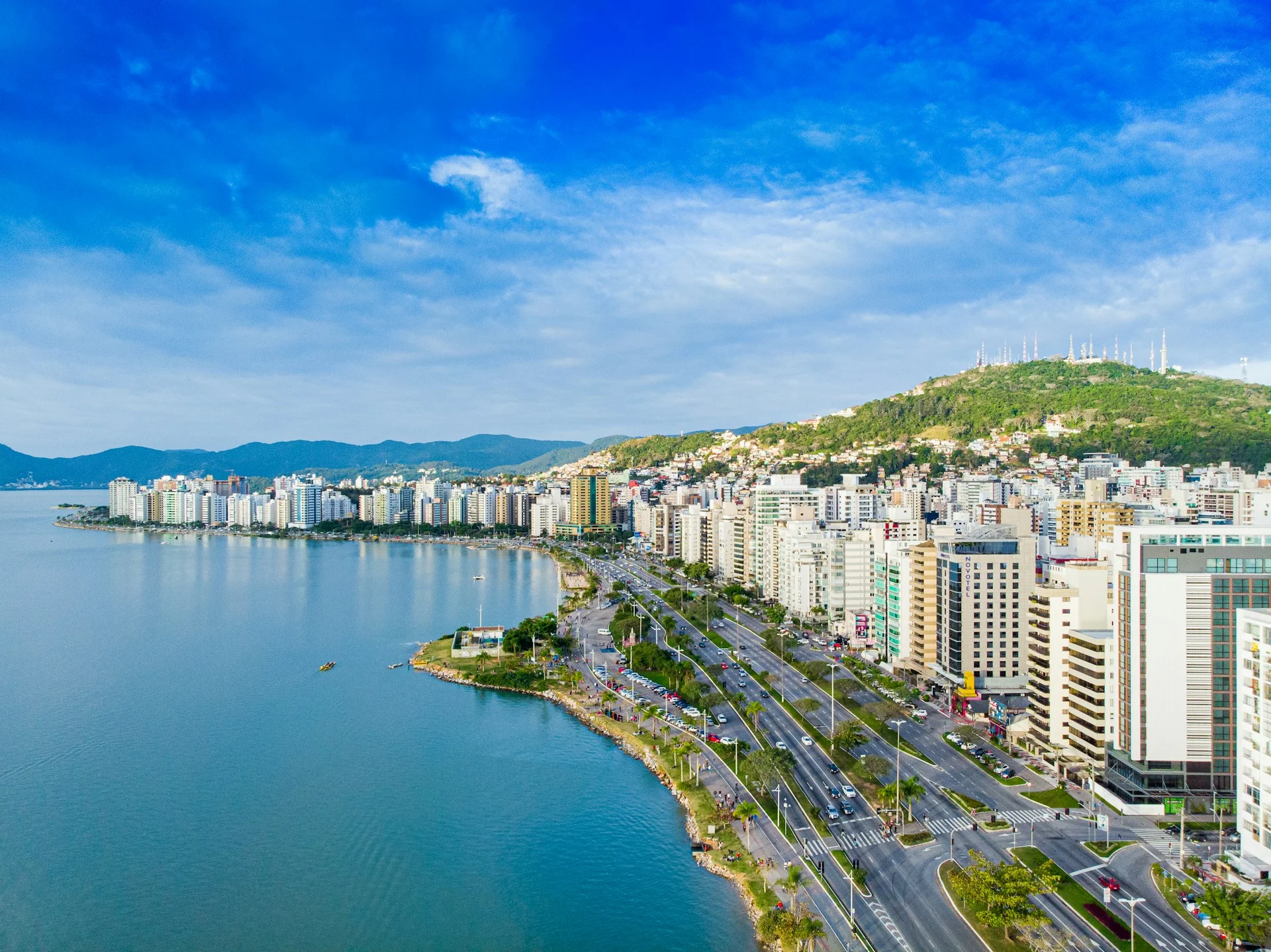
Commercial demand in Florianopolis concentrates in a mix of established business cores, transport-linked corridors and tourism-focused districts. The downtown Centro area functions as a primary commercial and administrative hub with demand for offices and high street retail. Beira-Mar Norte and adjacent waterfront corridors command visibility for corporate offices and service firms. Trindade is notable for education-driven activity and associated services, generating steady demand for neighborhood retail and small office units. Lagoa da Conceicao represents a tourism and lifestyle cluster that supports hospitality, dining and rental-oriented commercial models. Itacorubi attracts professional services and light industrial activities near major transport axes. Jurerê Internacional and other premium coastal districts concentrate hospitality and leisure-oriented commercial uses during peak seasons. When evaluating districts, compare central business district supply and demand, emerging areas adjacent to transport nodes, tourism corridors with seasonal peaks, and industrial catchments that support logistics. Consider commuter flows, bridge and island access constraints, and the risk of oversupply in small submarkets where new development can quickly shift vacancy and rental levels.
Deal structure – leases, due diligence, and operating risks
Deal assessment in Florianopolis emphasizes lease documentation, physical condition and operating risks. Buyers typically review lease term length, break options, rent indexation clauses and renewal mechanics to model future cash flow stability. Service charge allocation, fit-out responsibilities and landlord repair obligations are critical to forecast net operating income and capex exposure. Vacancy and reletting risk must be assessed in light of tenant concentration and local market appetite for specific uses, particularly tourism-dependent tenants with seasonal cash flow patterns. Due diligence covers title and encumbrance checks, building compliance with local codes, environmental assessments for industrial properties, and verification of operating permits for hospitality and foodservice premises. Capex planning should include deferred maintenance, systems upgrades, accessibility and potential adaptation costs. Operating risks in Florianopolis include seasonality-driven income volatility, regulatory controls on coastal and protected areas, and the logistical constraints of island access that affect delivery and labor. Buyers should analyze tenant credit, diversification, and the lease structure to understand downside scenarios without relying on legal advice.
Pricing logic and exit options in Florianopolis
Pricing for commercial real estate in Florianopolis reflects location, tenant quality and lease length, building condition and alternative use potential. Properties with long-term leases to stable tenants command pricing that values secure contracted cash flows, while assets requiring significant capex trade at discounts reflective of repositioning risk. Footfall and access determine retail premiums; visibility and transport proximity influence office valuation; warehouse pricing is driven by functional specifications and last-mile accessibility. Exit options include holding for income with potential refinancing once cash flows stabilize, re-leasing a vacated asset prior to sale to preserve income evidence, or repositioning an asset through refurbishment and re-marketing to a different investor profile. Conversion to alternative uses can be an exit route where zoning and structural feasibility permit, but it requires careful assessment of permitting timelines and cost. In all cases, investors should plan exits based on realistic market absorption, seasonal demand cycles and the timing of capital improvements rather than speculative timing forecasts.
How VelesClub Int. helps with commercial property in Florianopolis
VelesClub Int. supports acquisition and investment decisions for commercial real estate in Florianopolis through a structured advisory process. The service begins by clarifying client objectives and risk tolerance, then defining the target segment and district parameters that match those objectives. VelesClub Int. shortlists assets using both lease and asset-driven filters, assessing tenant profiles, lease terms, capex exposure and alternative use potential. The firm coordinates due diligence activities, advising on key technical and commercial checks and helping prioritize issues that affect valuation and negotiation leverage. During transaction stages VelesClub Int. assists with offer structuring, market comparables and scenario modelling to support negotiation, without giving legal advice. The selection and screening process is tailored to the client’s capabilities, whether focused on income stability, value creation or owner-occupation, and emphasizes transparent tradeoffs between yield, liquidity and operational complexity.
Conclusion – choosing the right commercial strategy in Florianopolis
Choosing the right approach to commercial property in Florianopolis requires aligning strategy with sector-specific drivers, district dynamics and lease structures. Income-focused investors should prioritize long leases and tenant quality in central corridors, while value-add players should seek assets with feasible repositioning pathways and manageable capex. Owner-occupiers must weigh operational needs against purchase premium and location tradeoffs. Throughout the process, rigorous review of leases, capex requirements, and seasonality effects is essential. For tailored strategy and asset screening in this market, consult VelesClub Int. experts to clarify objectives, filter opportunities and coordinate due diligence in Florianopolis.