
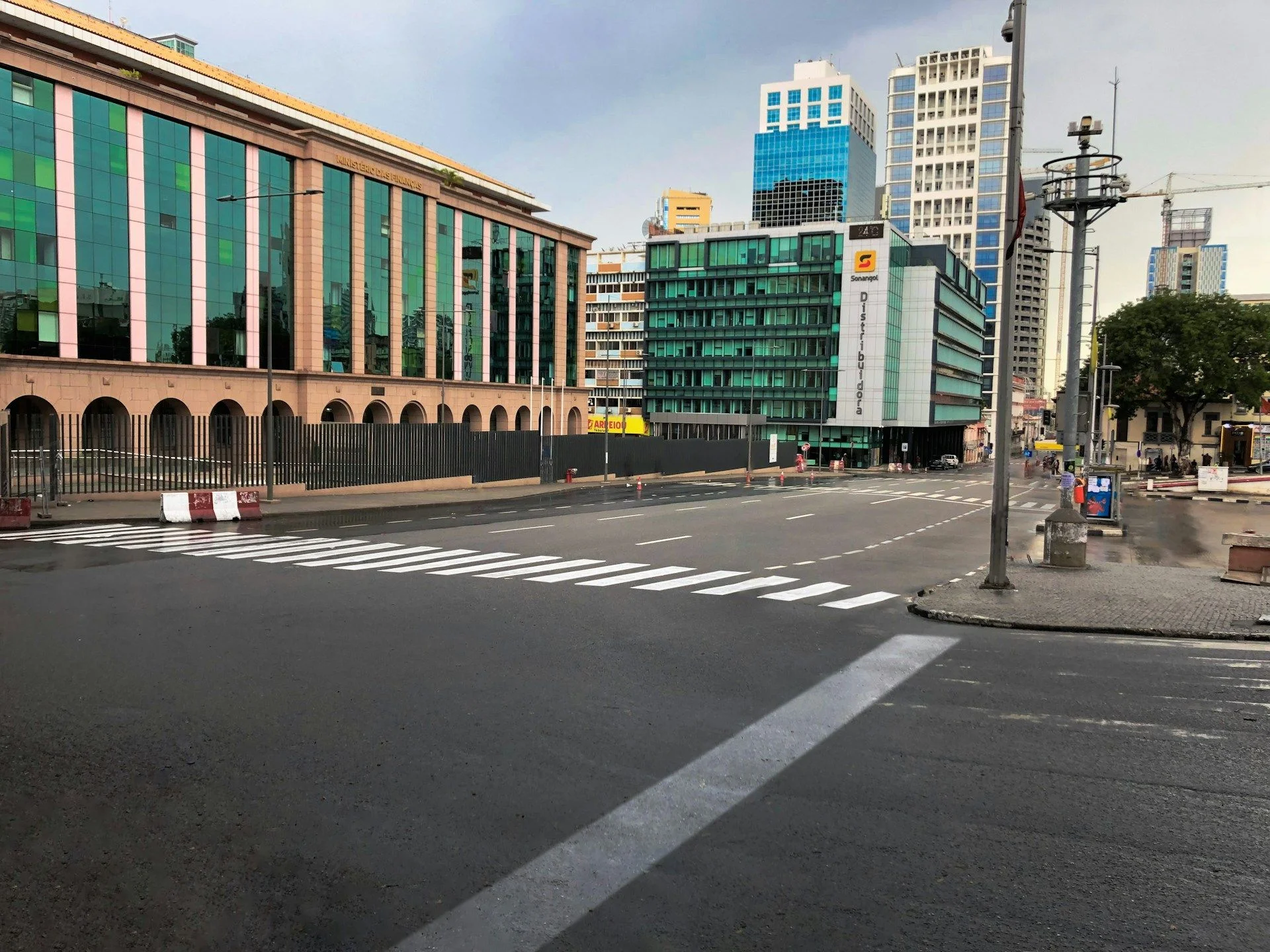
Commercial buildings in LuandaStrategic buildings across active districts
Best offers
in Angola
Benefits of investing in commercial real estate in Luanda


Local demand drivers
Luanda's oil sector and public administration drive demand in business districts and port logistics, resulting in tenants ranging from multinational oil firms and government occupants to local SMEs with mixed lease lengths and stability profiles
Asset types and strategies
Common Luanda segments include CBD offices with limited Grade A stock, port-side logistics, neighborhood retail and hospitality catering to expatriates and business travel, supporting strategies from core long-term leases to value-add repositioning and mixed-use redevelopment
Selection and screening
VelesClub Int. experts define strategy, shortlist assets and run screening with tenant quality checks, lease structure review, yield logic assessment, capex and fit-out assumptions, vacancy risk analysis and a tailored due diligence checklist
Local demand drivers
Luanda's oil sector and public administration drive demand in business districts and port logistics, resulting in tenants ranging from multinational oil firms and government occupants to local SMEs with mixed lease lengths and stability profiles
Asset types and strategies
Common Luanda segments include CBD offices with limited Grade A stock, port-side logistics, neighborhood retail and hospitality catering to expatriates and business travel, supporting strategies from core long-term leases to value-add repositioning and mixed-use redevelopment
Selection and screening
VelesClub Int. experts define strategy, shortlist assets and run screening with tenant quality checks, lease structure review, yield logic assessment, capex and fit-out assumptions, vacancy risk analysis and a tailored due diligence checklist








Useful articles
and recommendations from experts
Practical commercial property in Luanda overview
Why commercial property matters in Luanda
Commercial property in Luanda is a core component of the city’s capacity to host trade, administration and logistics. Angola’s oil-driven economy, ongoing diversification efforts and population concentration in the capital create sustained requirements for offices, retail outlets, hospitality stock, healthcare clinics, educational facilities, and industrial space. Demand originates from owner-occupiers seeking secure premises for operational continuity, investors pursuing rental income or capital growth, and operators managing hospitality and retail chains. The interaction between international oil service firms, local corporates, public administration and a growing SME sector shapes tenant profiles and lease lengths. For investors or buyers who evaluate commercial real estate in Luanda, understanding sector-specific drivers and the cadence of local investment cycles is necessary to set realistic underwriting assumptions and transaction timelines.
The commercial landscape – what is traded and leased
The traded and leased stock in Luanda ranges from concentrated business districts to dispersed neighborhood retail and industrial zones. Central business districts accommodate higher-density offices and corporate services while high street corridors and market nodes support retail space in Luanda. Business parks and managed office clusters represent a smaller but growing supply of serviced office-like arrangements adapted to local demand patterns. Logistics and warehousing sit primarily in industrial belts and near major access routes to ports and cargo terminals. Lease-driven value depends on the predictability and contract terms of rental income, while asset-driven value relates to redevelopment potential, alternative uses and structural condition. In Luanda, short-term government or project-based leases can produce volatile cash flows, whereas multi-year corporate leases deliver more stable income streams. Investors must distinguish between properties where rent roll underwrites valuation and those where repositioning or capex will drive future returns.
Asset types that investors and buyers target in Luanda
Investors and buyers target a spectrum of asset types based on operational needs and risk tolerance. Retail space in Luanda ranges from high street storefronts in dense pedestrian corridors to neighborhood convenience retail serving residential catchments; high street locations trade on visibility and footfall, while neighborhood retail is valued for steady local spend and lower vacancy volatility. Office space in Luanda varies from prime central offices with corporate-grade specifications to secondary buildings requiring refurbishment; prime locations command longer leases and higher tenant quality, while non-prime assets depend on tenant turnover and fit-out cycles. Hospitality and tourism-related premises perform to the extent of seasonal demand and business travel flows, which influence yield sensitivity. Restaurant, cafe and bar premises are typically leased on shorter or turnover-linked terms and require distinct operational due diligence. Warehouse property in Luanda serves distribution, cold chain and light industrial uses; proximity to port facilities and arterial roads is decisive for logistics economics and last-mile cost. Revenue houses and mixed-use buildings can deliver diversified cash flow but require careful management of tenancy mix and service charge structures. For e-commerce and evolving supply chains, warehousing and last-mile distribution nodes have increasing strategic importance, while serviced office models address demand for flexible office arrangements among international contractors and local professional services.
Strategy selection – income, value-add, or owner-occupier
Selection among income, value-add and owner-occupier strategies depends on asset characteristics and Luanda-specific dynamics. An income-focused strategy targets long-term, indexed leases with creditworthy tenants to stabilise cash flows; this is suited to central offices and well-located retail where lease terms are robust and tenant profile is predictable. A value-add approach emphasises refurbishment, re-leasing or functional repositioning where building condition or tenancy mix suppresses current income; in Luanda this can be effective where core locations have ageing stock and rental gaps can be closed through targeted capital expenditure. Mixed-use optimisation combines retail, office and residential components to spread risk across cycles, useful in districts where conversion permissions and market demand align. Owner-occupier purchases prioritize operational control, cost certainty and customization for firm-specific needs, but they tie capital into real estate and expose the buyer to local market cycles. Local factors that influence strategy selection include business cycle sensitivity tied to oil revenues, tenant churn norms in corporate contracting, seasonality affecting hospitality and retail, and the administrative intensity of construction and permitting processes. Each approach requires tailored underwriting of vacancy risk, capex phasing and realistic leasing timelines in Luanda’s market environment.
Areas and districts – where commercial demand concentrates in Luanda
Commercial demand in Luanda concentrates where administrative, corporate and logistics activities intersect. Core central districts host the highest concentration of corporate offices and formal retail corridors. Emerging business areas on the city periphery attract newer office and residential developments, often offering larger floor plates and modern services. Industrial access and logistics activity cluster around established industrial municipalities, where port access, freight routes and customs handling shape warehouse location decisions. Transport nodes and commuter corridors create demand for neighborhood retail and service-oriented offices at interchange points. Tourism corridors and hospitality clusters form closer to coastal access and established hotel zones, creating seasonal uplift in adjacent retail and leisure premises. When assessing districts in Luanda, compare the central business district against emerging nodes, evaluate transport connectivity and commuter flows, distinguish tourism-driven footfall from local resident spending, and map last-mile routes for warehouse economics. Specific municipality and district names are used in planning and permit contexts, but the investment-focused framework should prioritise connectivity, tenant catchment and supply pipeline over nominal area labels.
Deal structure – leases, due diligence, and operating risks
Deal assessment in Luanda centers on lease mechanics, asset condition and operating risk. Buyers typically review lease term, break options, indexation clauses, permitted uses, service charge arrangements and fit-out responsibilities to understand contractual income certainty. Vacancy and reletting risk are assessed through market lettability, average downtime for tenant replacement and tenant concentration metrics. Due diligence covers technical condition surveys, capex forecasting, compliance with building standards, and verification of ownership and encumbrances; environmental risk and utility reliability are material considerations for industrial and healthcare uses. Operating risks include service delivery for common areas, the clarity of service charge mechanisms, and the administrative burden of local property taxation. Tenant credit analysis and sector exposure must be quantified to avoid undue concentration in a single industry subject to commodity price cycles. Buyers should also model capex needs for lifecycle maintenance and any planned repositioning without assuming immediate rental uplifts.
Pricing logic and exit options in Luanda
Pricing for commercial assets in Luanda is driven by location, tenant quality, lease length and required capex. Properties in central locations with long, indexed leases to creditworthy tenants command pricing premiums, while assets requiring significant refurbishment or with short-term tenancies trade at discounts. Building quality, service provision and alternative use potential—such as conversion to mixed-use or higher-density formats—affect valuation because they influence future income generation and development optionality. Exit options include holding the asset and refinancing once cash flows stabilise, re-letting under longer leases before marketing for sale to improve marketability, or repositioning through capital improvements to target a different investor class. Each exit route requires a realistic assessment of market liquidity, typical transaction timelines and buyer appetite for risk in Luanda’s market cycle. Sensitivity testing against vacancy, rent indexation and capex scenarios supports a defensible exit plan.
How VelesClub Int. helps with commercial property in Luanda
VelesClub Int. supports clients through a structured process tailored to Luanda’s market specifics. The engagement begins by clarifying investment objectives and operational constraints, then defining target segments and preferred districts aligned to those goals. VelesClub Int. shortlists assets based on lease profile, tenant mix, and risk metrics, and coordinates technical, financial and market due diligence to validate assumptions. The advisory process includes comparative lease analytics, capex scheduling, and stress testing of income under plausible scenarios. VelesClub Int. also assists in preparing negotiation strategies and coordinates with local advisors for documentation review, while avoiding legal advice that must come from counsel. The selection and recommendation are calibrated to the client’s risk tolerance, liquidity needs and operational capabilities to ensure the chosen commercial property aligns with strategic objectives.
Conclusion – choosing the right commercial strategy in Luanda
Choosing the right commercial strategy in Luanda requires aligning asset type, district characteristics and lease structure with an investor’s cash flow needs and risk appetite. Income strategies favour long-term leases in central locations, value-add opportunities target assets with physical or tenancy upside, and owner-occupier purchases prioritize operational control. Critical due diligence items include lease mechanics, capex planning, tenant concentration and logistics connectivity for warehouse property in Luanda. For practical screening, buyers who want to buy commercial property in Luanda should use a disciplined framework that assesses location, tenant covenant, and repositioning feasibility. Consult VelesClub Int. experts to refine strategy, shortlist compatible assets and coordinate focused due diligence and transaction support tailored to your objectives in the local market.