
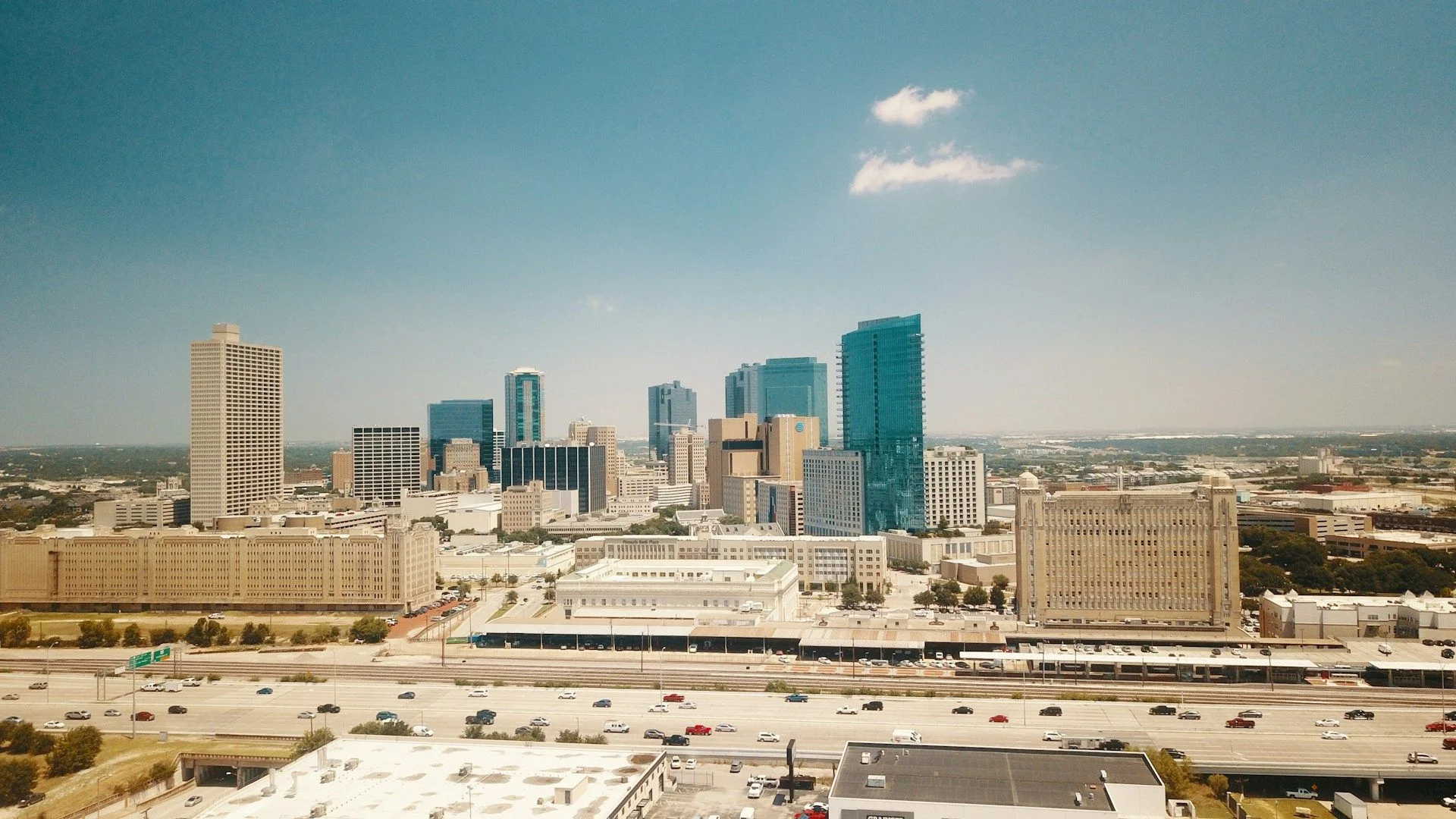
Commercial property for sale in Fort WorthCity opportunities for business growth
Best offers
in Texas
Benefits of investing in commercial real estate in Fort Worth


Diversified economic base
Fort Worth's demand is driven by a diversified economy: downtown and secondary business districts, logistics and freight corridors, aerospace and manufacturing clusters, growing healthcare and university employment, producing stable tenant demand and varied lease profiles
Asset types and strategies
Industrial logistics, suburban low-rise office, medical office and neighborhood retail dominate Fort Worth, with selective downtown hospitality and mixed-use opportunities; strategies range from core long-term leases to single-tenant net plays and value-add repositioning
Expert selection support
VelesClub Int. experts help define strategy, shortlist Fort Worth assets and run screening including tenant quality checks, lease structure review, yield logic, capex and fit-out assumptions, vacancy risk assessment and a tailored due diligence checklist
Diversified economic base
Fort Worth's demand is driven by a diversified economy: downtown and secondary business districts, logistics and freight corridors, aerospace and manufacturing clusters, growing healthcare and university employment, producing stable tenant demand and varied lease profiles
Asset types and strategies
Industrial logistics, suburban low-rise office, medical office and neighborhood retail dominate Fort Worth, with selective downtown hospitality and mixed-use opportunities; strategies range from core long-term leases to single-tenant net plays and value-add repositioning
Expert selection support
VelesClub Int. experts help define strategy, shortlist Fort Worth assets and run screening including tenant quality checks, lease structure review, yield logic, capex and fit-out assumptions, vacancy risk assessment and a tailored due diligence checklist








Useful articles
and recommendations from experts
Investing in commercial property in Fort Worth
Why commercial property matters in Fort Worth
Fort Worth's economy supports a diverse demand profile for commercial space driven by regional logistics, a sizable health-care cluster, higher education institutions, and a growing service and leisure economy. Office occupiers include corporate headquarters, professional services, and satellite operations that serve the wider Dallas–Fort Worth metro area. Retail demand is anchored by both neighborhood-serving trade and tourist-oriented corridors. Hospitality demand follows business and leisure travel patterns, while healthcare and education generate long-term specialized space needs. Owner-occupiers, institutional and private investors, and specialist operators all participate in the market, each with distinct return and risk expectations.
Understanding these sector drivers is central when considering commercial real estate in Fort Worth because tenant mix, lease structure, and location all reflect the local economic base. Investors evaluate how office, retail, industrial, hospitality, healthcare and education demand interacts with transport infrastructure and employment trends to determine sustainable cash flow and longer-term repositioning opportunities.
The commercial landscape – what is traded and leased
Stock in Fort Worth ranges from dense central business district blocks to low-rise neighborhood retail, suburban business parks, and large logistics campuses in the region's industrial corridors. Downtown Fort Worth remains the focal point for office transactions, while the West 7th corridor and entertainment districts concentrate retail and hospitality leases. Industrial activity clusters in logistics zones near major highways and the AllianceTexas area, where warehouse property in Fort Worth commands attention from e-commerce and distribution users.
Lease-driven value is most visible in retail and office segments where in-place rents, tenant covenants and term length determine cash flow. Asset-driven value is more common in industrial and select office or mixed-use properties where functional obsolescence, ceiling heights, column spacing and site configuration open opportunities for redevelopment or re-leasing at higher net effective rents. Differentiating between value that flows from contractual rent versus value that can be created through physical or operational changes is a key part of transaction analysis.
Asset types that investors and buyers target in Fort Worth
Main segments include stand-alone retail units and shopping corridors, multi-tenant office buildings, hotels and limited-service hospitality, restaurant and cafe premises suitable for street-front trade, warehouses and light industrial facilities, and mixed-use assets that combine residential and commercial income. High street retail in entertainment and tourist corridors competes with neighborhood retail that serves daily needs; the former trades on traffic and experience while the latter trades on catchment stability. Office logic separates prime downtown towers with institutional leases from suburban single-tenant and multi-tenant office parks where lease flexibility and parking are factors.
Industrial demand is influenced by supply chain considerations and last-mile logistics needs, with e-commerce-driven users seeking locations close to major arterial routes and intermodal facilities. Hospitality investments are sensitive to both business travel and leisure visitation patterns, while healthcare and education-related premises tend to offer longer lease terms and specialized fit-outs. For investors targeting office space in Fort Worth, considering serviced office models and flexible workspace demand is important where tenant preferences are shifting toward hybrid occupancy.
Strategy selection – income, value-add, or owner-occupier
Three core strategies predominate. An income strategy focuses on stabilized assets with long-term leases and predictable cash flow; this is common in well-leased office and healthcare properties with established tenants. Value-add strategies target properties where refurbishment, re-tenanting or partial conversion can materially increase net operating income. In Fort Worth this can arise in older office buildings near transit nodes or under-utilized industrial sites that can be repurposed for modern logistics. Owner-occupier purchases prioritize operational control and cost certainty for businesses that want to lock in location and capex planning.
Local factors influence which strategy is suitable. Fort Worth's business cycle sensitivity, patterns of tenant churn in certain corridors, and seasonal fluctuations in hospitality demand affect hold period and exit planning. Regulatory intensity, permitting timelines and infrastructure projects also change feasibility for repositioning. Investors should align strategy with capital availability, risk tolerance and expected holding horizon rather than applying a one-size-fits-all approach.
Areas and districts – where commercial demand concentrates in Fort Worth
When comparing districts, distinguish between the central business district and emerging clusters, and assess transport nodes and commuter flows that feed demand. In Fort Worth, Downtown Fort Worth serves as the primary office and professional services concentration, while Sundance Square and the West 7th corridor attract retail, dining and entertainment footfall. The Near Southside and Cultural District provide mixed-use and institutional demand tied to cultural venues and hospitals. AllianceTexas functions as a major logistics and industrial corridor serving regional distribution needs. Each area has different exposure to oversupply risk and competition from newer developments, so matching asset type to district dynamics is essential.
Evaluate tourism corridors separately from residential catchments because visitor-driven retail and hospitality have different seasonality and tenant turnover than neighborhood retail. Industrial and warehouse properties should be assessed for access to arterial highways and intermodal links. A district-level framework that layers transport accessibility, labor supply, tenant demand, and pipeline inventory will help identify where the balance of risk and opportunity lies.
Deal structure – leases, due diligence, and operating risks
Buyers typically review lease terms, including remaining lease term, break options, rent review mechanisms and indexation clauses, plus obligations for service charges and who bears fit-out and capital expenditure responsibilities. Vacancy and reletting risk must be stress-tested against leasing markets in the specific Fort Worth district. Operating risks include deferred maintenance, compliance with building codes, utility and environmental liabilities, tenant concentration and the potential for future capex to meet market standards.
Due diligence steps should cover financial verification of in-place income, physical inspection of mechanical systems and structural elements, confirmation of permitted uses and zoning, assessment of tenant financial strength and covenant quality, and a realistic estimate of short-term capital requirements. For assets with industrial history, environmental site assessment is often a material element. While this overview does not offer legal advice, investors should plan diligence to quantify leasing and operational uncertainties that influence valuation.
Pricing logic and exit options in Fort Worth
Pricing drivers include location and pedestrian or freight footfall, tenant quality and unexpired lease term, building standard and immediate capex needs, and the potential for alternative uses. For retail space in Fort Worth, storefront visibility and catchment demographics influence rental levels and valuation. Office pricing depends heavily on core downtown versus suburban positioning and on the ability to attract or retain creditworthy tenants. Warehouse property in Fort Worth is priced on locational advantage for distribution, clear height, yard and dock capabilities, and access to major highways.
Exit options typically include hold-and-refinance to capture cash-on-cash returns while transferring risk via re-leasing, re-lease-then-exit when market fundamentals improve, or reposition-and-exit following physical upgrades and lease-up. Timing and chosen exit should reflect tenant demand cycles, financing conditions and local development activity. Avoid assuming fixed return levels; instead, plan scenarios based on tenant retention rates, rent compression or growth, and realistic capex-to-rent uplift expectations.
How VelesClub Int. helps with commercial property in Fort Worth
VelesClub Int. supports a structured process that begins with clarifying the client's objectives and capital constraints, then defining target segments and districts within Fort Worth that match those objectives. The firm shortlists assets using a combination of lease profile analysis, tenant risk scoring and physical condition assessment to focus on opportunities with the desired income or value-add characteristics. VelesClub Int. coordinates third-party due diligence providers, compiles documentation for underwriting and assists in preparing negotiation strategies that reflect local leasing markets.
The service is tailored to each client’s capabilities – for an income-oriented investor the emphasis is on lease security and cash flow stability; for a value-add investor the focus shifts to capex planning and timing of repositioning; for owner-occupiers the workstream centers on operational fit and long-term workplace planning. VelesClub Int. does not provide legal advice but helps bridge commercial, technical and market information so clients can make informed choices and manage transaction milestones efficiently.
Conclusion – choosing the right commercial strategy in Fort Worth
Selecting the right commercial strategy in Fort Worth requires aligning sector dynamics, district characteristics and lease risk with an investor's tolerance for operational involvement and capital deployment. Income strategies favor stabilized leases in reliable districts, value-add strategies require careful capex budgeting and market timing, and owner-occupier transactions prioritize location and operational fit. For investors seeking to buy commercial property in Fort Worth, a disciplined approach to district selection, lease analysis and due diligence reduces execution risk and clarifies exit options.
Consult VelesClub Int. experts to refine strategy, screen assets and coordinate the technical and commercial workstreams needed to evaluate opportunities in the Fort Worth market. Tailored support can accelerate decision-making and ensure selections match the client’s goals and capabilities.