
Commercial real estate for sale in Myrtle BeachVerified listings for city expansion
Best offers
in South Carolina
Benefits of investing in commercial real estate in Myrtle Beach


Tourism and services demand
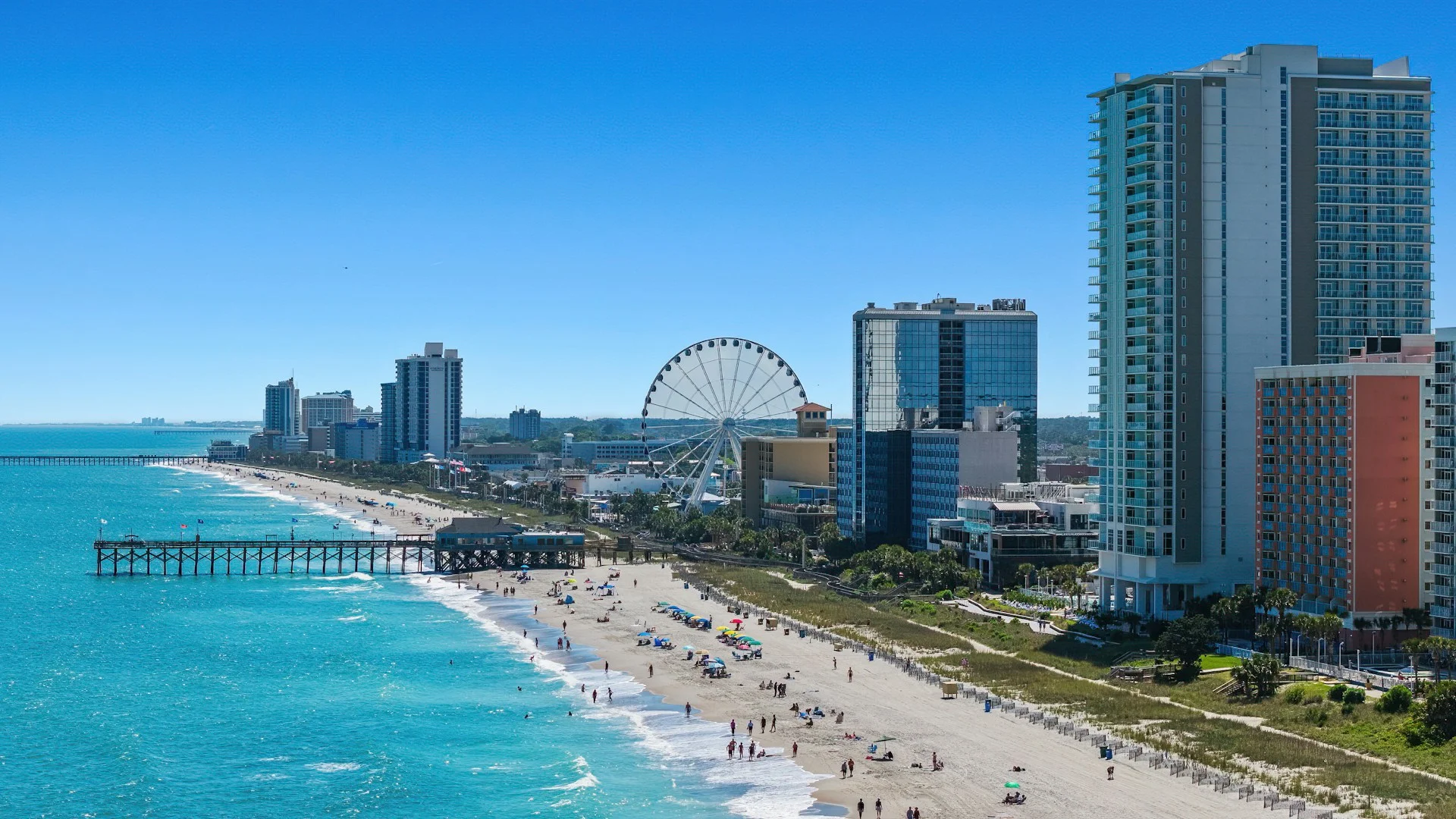
Myrtle Beach's seasonal tourism, coastal retail corridors, healthcare providers and regional education institutions drive demand for commercial space, implying a mix of seasonal lease profiles and pockets of longer-term tenant stability
Segment and strategy mix
Myrtle Beach investment commonly targets hospitality and beachfront hotels, tourist-oriented retail and strip centers, medical and neighborhood offices; strategies range from core long-term leases to value-add repositioning and single-tenant versus multi-tenant mixed-use plays
Expert selection support
VelesClub Int. experts define strategy, shortlist Myrtle Beach assets and run screening including tenant quality checks, lease structure review, yield logic assessment, capex and fit-out assumptions, vacancy risk analysis and due diligence checklist
Tourism and services demand
Myrtle Beach's seasonal tourism, coastal retail corridors, healthcare providers and regional education institutions drive demand for commercial space, implying a mix of seasonal lease profiles and pockets of longer-term tenant stability
Segment and strategy mix
Myrtle Beach investment commonly targets hospitality and beachfront hotels, tourist-oriented retail and strip centers, medical and neighborhood offices; strategies range from core long-term leases to value-add repositioning and single-tenant versus multi-tenant mixed-use plays
Expert selection support
VelesClub Int. experts define strategy, shortlist Myrtle Beach assets and run screening including tenant quality checks, lease structure review, yield logic assessment, capex and fit-out assumptions, vacancy risk analysis and due diligence checklist








Useful articles
and recommendations from experts
Commercial property in Myrtle Beach market overview
Why commercial property matters in Myrtle Beach
Commercial property in Myrtle Beach plays a central role in the local economy because the city combines a tourism-driven service base with a growing resident population and regional logistics demand. Demand originates in distinct sectors – offices for local professional services and regional management, retail serving residents and visitors, hospitality for seasonal and year-round lodging, healthcare for an aging and growing community, education-related facilities both K–12 and post-secondary, and industrial and warehousing to support regional distribution and building trades. Buyers in this market include owner-occupiers that need operational space, investors seeking income through leased assets, and operating companies that require specialized premises such as hotels or restaurants. The interplay between seasonal tourism peaks and a broader year-round economy makes commercial real estate in Myrtle Beach a hybrid market where occupancy, cashflow patterns, and tenant mix must be assessed against both leisure and local demand drivers.
The commercial landscape – what is traded and leased
The traded and leased stock in Myrtle Beach spans several recognizable types. Business districts and downtown cores supply small- to mid-size office buildings and mixed-use blocks. High street corridors and highway-facing retail strips capture visitor footfall and drive-through convenience retail. Neighborhood retail and local service nodes meet daily resident needs. Business parks and logistics zones host light industrial, contractor yards, and small distribution units. Tourism clusters anchored by beachfront corridors and entertainment complexes generate short-term hotel and leisure leases. The practical distinction between lease-driven value and asset-driven value is straightforward in Myrtle Beach: assets that derive value primarily from current contracted income will be judged on lease length, indexation, and tenant quality, while asset-driven value relies on physical attributes, redevelopment potential, or seasonal repositioning to capture higher rents or alternative uses. Investors need to separate properties whose value is supported by long-term, stable leases from those whose value depends on location-sensitive footfall and capital works.
Asset types that investors and buyers target in Myrtle Beach
Retail space in Myrtle Beach is targeted for both tourist-oriented formats and local convenience retail. High street retail locations or oceanfront-facing units command premium rents during peak seasons, while neighborhood centers provide stable income from service-oriented tenants. Office space in Myrtle Beach ranges from small professional suites in downtown locations to campus-style buildings in suburban corridors; prime office logic focuses on accessibility for local businesses and proximity to professional services. Hospitality properties are a major category – from limited-service hotels to larger full-service assets – where room revenue is sensitive to seasonality and event calendars. Restaurant-cafe-bar premises are acquired either by operators seeking turnkey locations or investors leasing to experienced operators; their value depends on frontage, extraction capacity, and permit compliance. Warehouses and light industrial units serve contractors, e-commerce last-mile needs, and regional distribution; warehouse property in Myrtle Beach benefits from proximity to coastal transport routes and growing inland residential areas. Revenue houses and mixed-use properties that combine residential units above retail have appeal where zoning supports short-term rental conversion or where mixed income streams can de-risk seasonal volatility. Comparisons such as high street versus neighborhood retail rely on trade-off analysis between transient tourist demand and stable resident spending, while prime versus non-prime office logic focuses on tenant credit, lease duration, and fit-out obligations. Serviced office or coworking models have emerged as a supplementary layer in market niches, and supply chain shifts have increased attention to light logistics within short drives of major corridors.
Strategy selection – income, value-add, or owner-occupier
Choosing a strategy in Myrtle Beach depends on investor objectives and local market dynamics. An income-focused strategy emphasizes acquiring assets with stable, long-term leases and credible tenants to generate predictable cashflow through seasonal cycles. This is common for buyers prioritizing lower management intensity and exposure to tourist seasonality through tenants that serve year-round demand. A value-add approach targets assets requiring refurbishment, repositioning, or re-leasing to improve occupancy and rent – for example, converting underused retail into mixed-use or upgrading building systems to attract higher-quality tenants during off-season months. Local factors that favor value-add include pockets of aging stock, changing consumer patterns, and redevelopment opportunities in converting former hospitality sites to alternate commercial uses. Mixed-use optimization seeks to balance income streams across retail, office, and residential components to dampen seasonality risk. Owner-occupier purchases are pursued by operators who need control over premises, such as medical practices or specialist logistics firms; they consider long-term operational needs, capital planning, and the cost of tenant disruption. Business cycle sensitivity in Myrtle Beach, tenant churn norms in tourism-linked segments, and municipal regulation intensity will push different strategies; investors must align capital expenditure plans and lease structures with these local drivers.
Areas and districts – where commercial demand concentrates in Myrtle Beach
Demand in Myrtle Beach concentrates along a few identifiable districts and corridors that serve different commercial functions. Downtown Myrtle Beach acts as a central district for municipal services, professional offices, and some retail and dining clusters oriented to both residents and visitors. Broadway at the Beach functions as a tourism and entertainment cluster with high pedestrian volumes during peak periods. The Market Common is an established mixed-use redevelopment area that attracts lifestyle retail, offices, and medical or education-related services. Carolina Forest represents a fast-growing suburban catchment with residential expansion that supports neighborhood retail and small offices. The Myrtle Beach International Airport area and nearby highway corridors provide nodes for logistics, light industrial, and travel-oriented commercial uses. The Highway 17 commercial corridor links multiple trade catchments and hosts big-box retail, automotive services, and corporate offices. When comparing districts, investors should assess central business district advantages versus emerging area upside, transport node accessibility and commuter flows versus purely tourism corridors, and the balance between residential catchments that provide steady demand and tourism strips that provide high but seasonal turnover. Oversupply risk typically concentrates where multiple new developments target the same visitor cohort or when speculative hospitality and retail space are built without matching year-round demand.
Deal structure – leases, due diligence, and operating risks
Deal structure analysis in Myrtle Beach starts with lease examination and extends to operational risk assessment. Buyers typically review lease term and remaining duration, break options and tenant notice requirements, indexation clauses and permitted rent adjustments, service charge obligations and their basis, and fit-out responsibilities that can affect future reletting. Vacancy and reletting risk should be modeled against both off-season demand and repositioning timelines for conversion or refurbishment. Due diligence extends beyond lease terms to include physical building surveys, capex planning for coastal exposure and HVAC systems, compliance checks for health and safety and local permitting, and assessment of tenant concentration risk within a building or portfolio. Operating risks specific to Myrtle Beach include seasonality-driven revenue swings, event-driven occupancy peaks that may not represent sustainable demand, and supply chain sensitivities for warehouse users tied to tourism supply. Financial diligence should consider realistic turnover patterns for retail and hospitality tenants, insurance and coastal risk premiums, and the likely timing of capital expenditures. Buyers should coordinate technical, financial, and tenancy due diligence to align purchase price with identifiable and latent risks without treating regulatory or compliance steps as legal advice.
Pricing logic and exit options in Myrtle Beach
Pricing in Myrtle Beach is driven by several observable factors. Location and footfall matter where retail or hospitality income depends on visitor numbers, while office and warehouse pricing hinge more on accessibility and catchment population. Tenant quality and remaining lease length inform discounting for income reliability, and building quality plus deferred capex determine adjustment required by a buyer to reach a market-standard operating profile. Alternative use potential – for example converting low-performing retail into service uses or subdividing larger units – influences pricing where zoning and permitting allow. Exit options commonly used in the market include hold-and-refinance strategies where an investor stabilizes occupancy before seeking new capital on improved metrics, re-leasing to stronger tenants then selling with an income narrative, or repositioning an asset physically and operationally before exit. The decision to sell will reflect seasonality risk, comparative demand for the asset type at the time of sale, and the relative liquidity of similar properties in Myrtle Beach. Pricing and exit planning should be scenario-tested for off-season performance and for possible shifts in visitor patterns or regional economic changes.
How VelesClub Int. helps with commercial property in Myrtle Beach
VelesClub Int. approaches commercial property in Myrtle Beach through a structured advisory and screening process tailored to client objectives. The first step is clarifying objectives and capital parameters – whether a client seeks stable income, a value-add repositioning, mixed-use optimization, or an owner-occupier purchase. Next, VelesClub Int. defines target segments and district priorities that match those objectives, drawing distinctions between tourism-facing corridors and resident-focused catchments. Shortlisting assets follows, with emphasis on lease profile, tenant quality, capex needs, and reletting risk. The firm coordinates due diligence workflows including technical surveys, market comparables, and cashflow stress testing – identifying operating risks such as seasonality, tenant concentration, and compliance-driven costs. VelesClub Int. supports negotiation and transaction coordination by clarifying commercial terms, advising on acceptable risk allocation in leases and sale documents, and helping structure timelines for acquisition, refurbishment, and re-leasing, while leaving legal review to qualified counsel. All selection and screening are calibrated to the client’s goals and capabilities to ensure alignment between expected outcomes and operational capacity.
Conclusion – choosing the right commercial strategy in Myrtle Beach
Choosing a commercial strategy in Myrtle Beach requires balancing seasonal tourism dynamics with year-round resident demand, understanding district-specific drivers, and matching lease structure to investment horizon. Income strategies suit investors focused on lease stability, value-add approaches target aging stock and conversion opportunities, and owner-occupiers prioritize operational fit and long-term control. Practical due diligence should concentrate on lease mechanics, capex needs, tenant concentration, and realistic off-season performance assumptions. For buyers seeking to buy commercial property in Myrtle Beach or to evaluate commercial real estate in Myrtle Beach across retail space in Myrtle Beach, office space in Myrtle Beach, or warehouse property in Myrtle Beach, consulting a specialist advisor reduces search friction and clarifies trade-offs. Contact VelesClub Int. experts to align strategy, shortlist assets, and proceed with tailored screening and transaction support.