
Commercial buildings in HawaiiBusiness assets aligned with demand


Best offers
in Hawaii
Benefits of investing in commercial real estate in Hawaii


Island roles
Hawaii matters because Oahu, Maui, Kauai, and Hawaii Island do not serve the same commercial purpose, so buyers need to separate business core, resort demand, and interisland service logic before comparing assets
Format fit
The best fit changes fast: mixed business and medical property on Oahu, resort-linked hospitality on Maui, service retail on Kauai, and practical warehouse, flex, or owner-user space where island operations require it
Wrong filters
Buyers often compare Hawaii assets through tourism image or headline yield, but the stronger reading asks whether a property serves residents, visitors, healthcare demand, daily business use, or interisland distribution on that island
Island roles
Hawaii matters because Oahu, Maui, Kauai, and Hawaii Island do not serve the same commercial purpose, so buyers need to separate business core, resort demand, and interisland service logic before comparing assets
Format fit
The best fit changes fast: mixed business and medical property on Oahu, resort-linked hospitality on Maui, service retail on Kauai, and practical warehouse, flex, or owner-user space where island operations require it
Wrong filters
Buyers often compare Hawaii assets through tourism image or headline yield, but the stronger reading asks whether a property serves residents, visitors, healthcare demand, daily business use, or interisland distribution on that island








Useful articles
and recommendations from experts
Commercial property in Hawaii by island role
Commercial property in Hawaii needs a different reading from mainland regional markets because demand is divided by island function, not just by distance or city size. Oahu carries the main business core, the largest office concentration, the deepest retail base, the main freight hub, and the broadest service economy. Maui, Kauai, and Hawaii Island work through different combinations of hospitality, healthcare, local spending, construction support, food service, and small-scale operating property. That makes Hawaii commercially relevant, but it also means buyers cannot use one statewide benchmark for every asset.
A practical Hawaii reading starts with daily function. One property works because it serves Honolulu business activity and dense local demand. Another works because it captures repeat resort spending and visitor traffic. Another only makes sense when interisland logistics, service operations, maintenance needs, or local medical demand support the site every day. VelesClub Int. helps turn that map into a clearer commercial reading, so buyers compare assets by actual role instead of by a generic Hawaii story.
Why Hawaii needs an island by island commercial reading
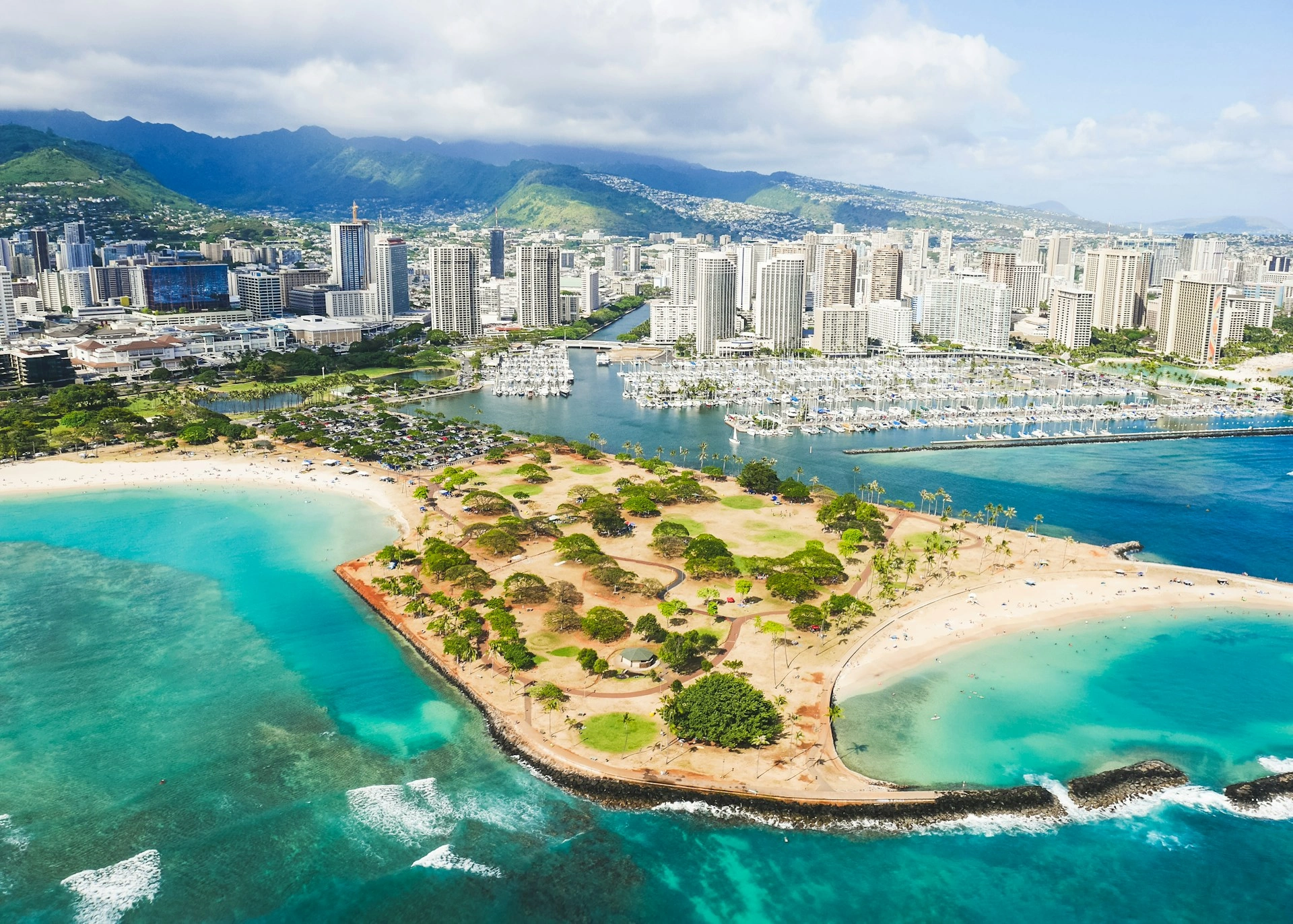
Hawaii does not behave like one commercial market with one pricing logic. Oahu is the commercial center because it concentrates the main office districts, the largest container port, the main airport cargo flows, the broadest healthcare base, and the deepest year-round consumer market. The neighbor islands are different. They support commercial property through hospitality, local services, construction activity, healthcare demand, and smaller operating networks rather than through one large urban business core.
This matters because the same asset label can hide very different market logic. Office space in Hawaii means something very different on Oahu from what it means on Maui or Hawaii Island. Retail space in Hawaii also changes by island. Visitor-facing retail, neighborhood retail, resort service retail, and local convenience retail should not share one comparison model. The stronger acquisition is usually the one that matches the daily function of that island rather than the one that simply carries a Hawaii address.
Oahu carries the main commercial core in Hawaii
Oahu is the clearest mixed business market in Hawaii because it combines Honolulu office demand, government and professional services, healthcare, education, local consumer density, hospitality, and the central logistics role for the state. For buyers, that makes Oahu the broadest commercial market in Hawaii. Office, mixed business property, neighborhood and urban retail, medical office, industrial service space, and selected hospitality assets can all make sense there, but not under one simple pricing logic.
The practical reading inside Oahu is to separate true business districts from tourism-heavy corridors, medical and service nodes, urban neighborhood retail, and industrial areas tied to port, airport, and interisland movement. A stronger Oahu asset usually has a visible relationship to one of those demand systems. A weaker one often borrows Honolulu visibility without fitting a durable occupier base. In Hawaii, Oahu is where buyers most need to separate image from real commercial function.
Neighbor island Hawaii follows service and resort demand
Maui, Kauai, and Hawaii Island should not be treated as weaker copies of Oahu. They are different commercial systems. Hospitality, food and beverage, medical services, local retail, contractor space, resort support uses, and practical mixed commercial property carry more weight there than broad office exposure. Commercial property in Hawaii becomes much more island-specific once buyers move beyond Oahu, because the strongest tenant base is often tied to visitor spending on one side and resident-serving services on the other.
Maui is often read through resort and visitor demand first, but the stronger acquisition case is not always the most visible hospitality concept. Buildings that serve both local services and visitor flow can be more practical. Kauai often rewards smaller service-led assets, neighborhood retail, and hospitality-support property rather than large-format commercial ideas. Hawaii Island changes again because its commercial demand is more spread out, with healthcare, local services, tourism pockets, construction support, and island operations all shaping asset relevance. On the neighbor islands, scale is less important than fit.
Industrial Hawaii depends on port air and interisland function
Hawaii has real industrial and warehouse relevance, but buyers need to read it through constrained island logistics rather than through a mainland distribution model. Oahu carries the main industrial and warehouse role because imported goods move through the primary harbor and then out across the state. This gives Oahu a structurally important industrial layer tied to container handling, storage, service fleets, food distribution, construction supply, and interisland shipping support. A stronger industrial asset in Hawaii usually serves everyday island operations, not abstract regional scale.
The neighbor islands then have a different industrial reading. They do not compete with Oahu as the central freight platform, but they still support warehouse, yard, flex, and service space where island operations require local storage, contractor access, food supply, maintenance, and last-stage distribution. This means warehouse property in Hawaii should not be screened by size alone. The better test is whether the building solves a real island logistics or service problem, has practical access, and belongs to the local operating network.
What formats fit Hawaii best
The strongest commercial formats in Hawaii are not evenly distributed. Oahu supports selective office, mixed business property, urban and neighborhood retail, medical office, industrial service space, and hospitality in the right corridors. Maui supports hospitality, food and beverage property, service retail, medical and mixed commercial uses tied to both visitor and resident demand. Kauai often fits smaller retail, resort-adjacent services, contractor space, and local mixed-use better than broad office or large industrial assumptions. Hawaii Island often makes more sense through healthcare-linked property, service retail, flex, contractor space, and selected hospitality tied to stable visitor zones.
This means buy commercial property in Hawaii should begin with format discipline. Hospitality is not a statewide default. Office is not one statewide category. Industrial is not one statewide category either. A Honolulu mixed business property, a Maui resort-support retail unit, a Kauai service asset, and a Hawaii Island flex building belong to different demand systems. The stronger acquisition is usually the one whose format already matches how that island works every day.
What makes one Hawaii asset more practical than another
A stronger Hawaii asset usually has a clean relationship between place, user base, and daily function. If it is hospitality, the demand should be durable beyond a seasonal spike. If it is retail, the spending base should be visible and repeatable, whether that comes from residents, visitors, or both. If it is office, the local business and service ecosystem should already exist. If it is industrial or flex, access, handling practicality, storage logic, and service use should be obvious. If it is mixed-use, more than one income path should be realistic without forcing a speculative identity change.
Weaker assets usually fail on comparison logic. A local service retail unit may be priced as if it serves premium resort traffic. A small office property may be valued as if Oahu business depth exists on every island. A warehouse may look scarce but still fail on layout or operating relevance. Pricing in Hawaii usually follows island role before category alone. That is why cap rate, headline rent, or tourism language only become useful after the building's actual commercial job is clear. VelesClub Int. helps buyers test that fit before price becomes the main argument.
Questions buyers raise on commercial property in Hawaii
Is Oahu always the best place to buy commercial property in Hawaii?
No. Oahu is the broadest business and logistics market, but hospitality, local service, medical, and smaller mixed commercial strategies may fit neighbor islands better depending on the use case.
Where does warehouse property in Hawaii feel most natural?
Mostly on Oahu, where the main freight and interisland distribution role is concentrated, but smaller island warehouse and flex assets can be practical when they serve everyday local operations.
Why can a service asset on Maui or Kauai be more practical than a more visible hospitality concept?
Because repeat local use and steady support demand can create a clearer occupancy base than visibility alone.
Should office space in Hawaii be screened the same way across all islands?
No. Honolulu business districts, medical office, small professional suites, and mixed service property on neighbor islands depend on different occupiers and need different benchmarks.
What usually makes one Hawaii asset easier to underwrite than another?
The stronger property is usually the one whose user base, format, and island role already fit together without requiring a forced change in market identity.
A practical acquisition view of Hawaii with VelesClub Int.
The right way to read Hawaii is to separate Oahu as the main business and logistics core, Maui as a larger resort and service market, Kauai as a smaller service and hospitality island, and Hawaii Island as a spread-out healthcare, service, and visitor market before comparing assets. Once those roles are clear, commercial property in Hawaii becomes easier to judge by user fit, building function, and whether the property already belongs to its island demand structure.
A stronger acquisition in Hawaii is usually not the one attached to the loudest tourism image or the simplest scarcity story. It is the one whose format, daily use, and island role already work together in that specific market. VelesClub Int. supports that regional discipline, so buyers can compare Hawaii assets with a calmer and more practical commercial lens.