
Commercial buildings in SousseStrategic buildings across active districts
Best offers
in Tunisia
Benefits of investing in commercial real estate in Sousse


Sousse demand drivers
Sousse's tourism, port logistics, industrial zones and public institutions create demand for retail, hospitality, storage and offices, resulting in seasonal hospitality leases alongside year-round commercial and industrial tenants with varied lease profiles
Commercial asset mix
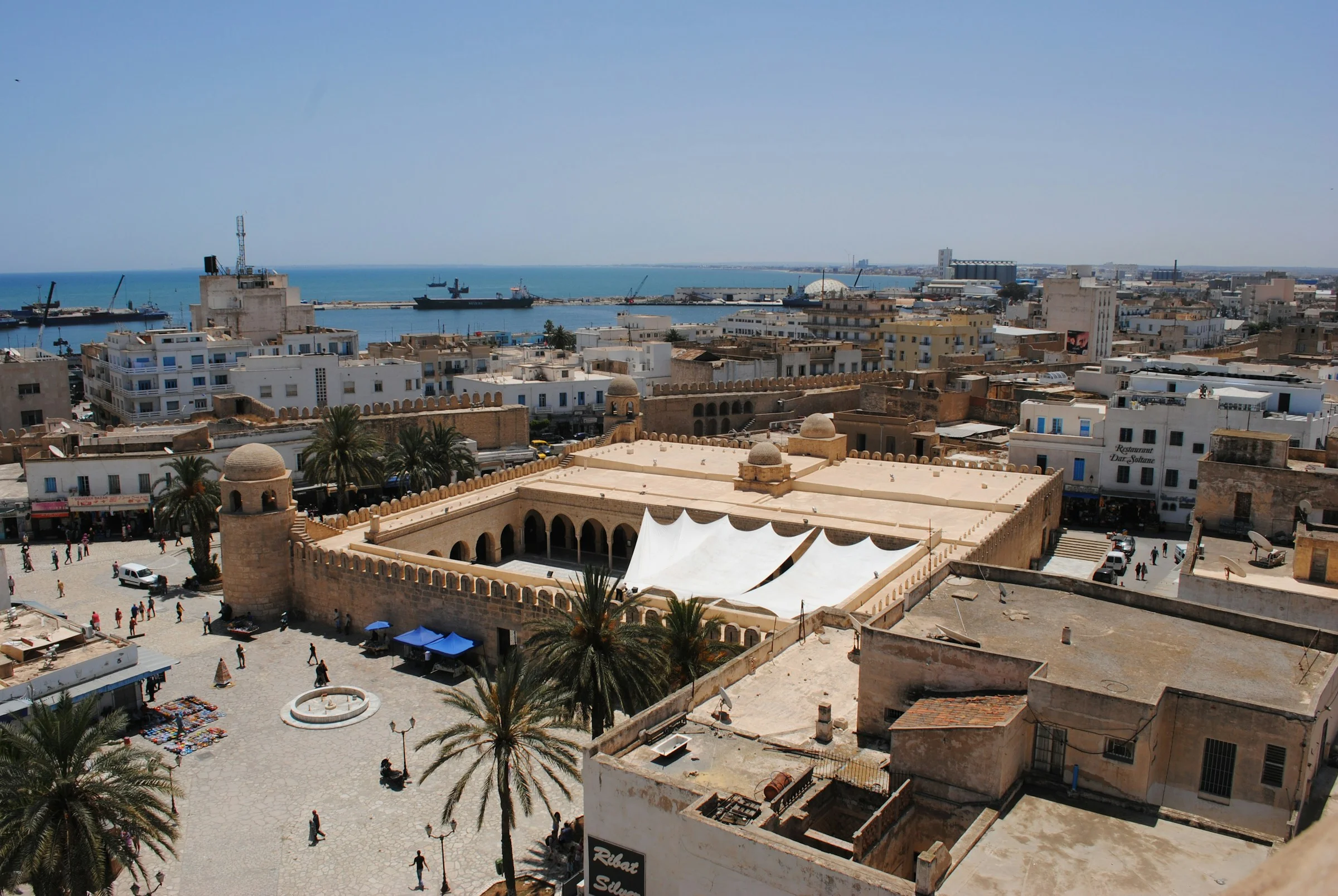
High-street retail and beachfront hospitality serve tourist corridors in Sousse, logistics warehouses and light industrial units cluster near the port, while mid-grade offices and mixed-use repositioning suit core long leases or value-add strategies
Expert selection support
VelesClub Int. experts define strategy, shortlist assets and run screening with tenant quality checks, lease structure review, yield logic assessment, capex and fit-out assumptions, vacancy risk analysis and a tailored due diligence checklist
Sousse demand drivers
Sousse's tourism, port logistics, industrial zones and public institutions create demand for retail, hospitality, storage and offices, resulting in seasonal hospitality leases alongside year-round commercial and industrial tenants with varied lease profiles
Commercial asset mix
High-street retail and beachfront hospitality serve tourist corridors in Sousse, logistics warehouses and light industrial units cluster near the port, while mid-grade offices and mixed-use repositioning suit core long leases or value-add strategies
Expert selection support
VelesClub Int. experts define strategy, shortlist assets and run screening with tenant quality checks, lease structure review, yield logic assessment, capex and fit-out assumptions, vacancy risk analysis and a tailored due diligence checklist








Useful articles
and recommendations from experts
Guide to commercial property in Sousse
Why commercial property matters in Sousse
Sousse’s economy combines tourism, light manufacturing, services and public administration, creating a multi-source demand profile for commercial property. Touristic months increase demand for hospitality and short-term retail, while year-round administrative and service activities maintain baseline need for office space. Healthcare and education sectors support specialised premises, and small-scale industrial workshops feed persistent demand for warehousing and light industrial shells. Buyers in Sousse include owner-occupiers seeking location advantage, institutional and private investors seeking rental income or capital appreciation, and operators who acquire or lease to manage hotels, restaurants, clinics or offices. Understanding how seasonal tourism cycles overlay with local service economy dynamics is central to assessing asset resilience and tenant mix in Sousse.
The commercial landscape – what is traded and leased
The traded and leased stock in Sousse is varied by function and location. Central business corridors and high streets concentrate office and retail transactions where pedestrian flows and business services cluster. Peripheral tourism clusters support hospitality assets and short-stay retail leases calibrated to peak seasons. Suburban catchments and local neighbourhoods supply small retail units and professional offices that trade on convenience and resident demand. Logistics and light industrial units are typically located close to arterial roads and industrial zones, serving manufacturing and distribution for regional markets. In Sousse markets, lease-driven value tends to dominate where rental contracts and occupier demand define income streams, whereas asset-driven value is more visible in properties that can be repositioned through refurbishment, consolidation or change of permitted use. Distinguishing between assets whose value is sustained by long leases and those where capital works can materially change net operating income is a primary market lens.
Asset types that investors and buyers target in Sousse
Retail space in Sousse is often segmented between high street units that benefit from tourism and central footfall, and neighbourhood retail that serves residents and workers. High street retail commands premium rents during peak seasons but has higher vacancy risk off-season. Neighborhood retail typically offers more stable tenancy patterns and lower capex expectations. Office space in Sousse ranges from small professional suites to multi-tenant office buildings; prime office logic centres on proximity to administrative services and transport nodes, while non-prime stock competes on price and flexible lease terms. Serviced office concepts can be attractive where demand for flexible workspace is rising, allowing higher effective yields from shorter-term occupiers.
Hospitality assets are driven by seasonality and operator capability; hotel performance depends on location relative to beaches and tourism nodes as well as on the quality of management. Restaurant, cafe and bar premises operate on a mixed model where frontage visibility matters in city centres and kitchen and service layout matter where food production is the primary activity. Warehouses and light industrial properties respond to supply chain shifts and e-commerce trends; proximity to regional roads and port access can be a decisive factor for logistics users. Revenue houses and mixed-use assets combine residential and commercial income streams and can be used to diversify income and reduce single-sector exposure. Investors weigh high street versus neighborhood retail, prime versus non-prime offices, and the role of warehouses in supporting last-mile distribution when assessing portfolio fit in Sousse.
Strategy selection – income, value-add, or owner-occupier
Three principal strategies are commonly applied in Sousse. An income-focused strategy seeks stable leases with creditworthy tenants and predictable indexation clauses to produce steady cash flow. This approach suits investors prioritising lower turnover and predictable operating metrics, and is sensitive to tenant concentration and lease terms. A value-add strategy targets assets where refurbishment, reconfiguration or re-leasing can materially increase net operating income. In Sousse, opportunities for value-add are often tied to upgrading building services, improving façades for tourist appeal or converting underused retail into mixed-use formats. This strategy requires conviction on demand recovery and accurate capex modelling.
Owner-occupiers typically acquire to secure long-term location control and to avoid lease escalation. For businesses in Sousse, owning premises can be a strategic move to stabilize operating costs, but it binds capital and introduces property management responsibilities. Mixed-use optimisation combines income generation with operational flexibility; for example, combining retail with office or short-stay accommodation can smooth seasonal revenue swings. Local factors that influence strategy selection include the business cycle sensitivity of tourism, tenant churn norms in urban retail, seasonal occupancy patterns, and the administrative intensity of permitting and compliance. Each strategy demands a tailored risk assessment and cashflow projection that reflects Sousse market rhythms.
Areas and districts – where commercial demand concentrates in Sousse
Commercial demand in Sousse concentrates along a set of functional district types rather than uniformly across the city. The central business area hosts administrative offices, professional services and high-street retail where daytime population density and accessibility drive office and retail leasing. Seaside tourism corridors and resort clusters generate concentrated demand for hotels, serviced accommodation and seasonal retail, creating a rhythm of peak and off-peak performance. Residential catchment areas and suburban neighbourhoods deliver consistent demand for small retail, clinics and local offices that rely on resident spending rather than tourists.
Industrial and logistics zones near major transport arteries provide sites for warehousing and light industrial operations where access to road and port infrastructure matters for distribution efficiency. Emerging business districts and redeveloped commercial corridors can present opportunities where public infrastructure upgrades or private investment improve accessibility and amenity. When comparing districts in Sousse, investors should assess footfall drivers, commuter flows, seasonal exposure and the balance between supply and demand to identify concentration risk or oversupply. A district selection framework in Sousse prioritises transport nodes, tourism vs residential catchments, and industrial access for last-mile logistics.
Deal structure – leases, due diligence, and operating risks
Deal evaluation in Sousse focuses on lease terms and the operational realities behind headline rent. Key lease elements to review include lease term and remaining duration, break options and tenant rights, rent indexation mechanisms, responsibility for common area charges and repairs, and fit-out obligations. Vacancy and reletting risk must be modelled using local leasing velocity and the functional suitability of the premises. Buyers generally estimate capex needs for compliance, building systems and tenant fit-out, and they account for operating expenditure variability such as service charges and utilities.
Due diligence covers physical condition surveys, verification of zoning and permitted use, review of existing lease documentation and payment records, and assessment of tenant credit where available. Environmental considerations and compliance with local building codes are part of technical due diligence for warehouses and industrial units. Operational risks in Sousse commonly include seasonality-related revenue swings for tourism-exposed assets, tenant concentration in single-use buildings, and potential timing delays in permitting for change of use or refurbishment. A pragmatic approach emphasises scenario modelling for vacancy and capex, and prioritises clarity on who bears specific operating costs under the lease.
Pricing logic and exit options in Sousse
Pricing in Sousse is driven by location fundamentals, tenant quality and lease length, and the condition of the building and required capital expenditure. Frontage and footfall will affect retail valuation, while proximity to government services and transport drives office premiums. For warehouse property in Sousse, access to arterial routes and handling capacity influence marketability. Buildings that require limited capex and offer long, indexed leases to reliable occupiers will attract different pricing multiples compared with assets needing repositioning or significant refurbishment.
Exit options in Sousse typically include holding to capture rental growth and refinancing when income stabilises, re-leasing then selling once occupancy and lease profiles are improved, or repositioning and exiting after physical upgrades increase net operating income. Investors also consider alternative use potential where zoning allows conversion between commercial types or to mixed-use schemes; this can increase optionality and influence initial pricing. Exit timing should reflect local demand cycles, particularly for tourism-linked assets where seasonal results can affect short-term cashflow and market sentiment.
How VelesClub Int. helps with commercial property in Sousse
VelesClub Int. supports clients by clarifying investment objectives and mapping those objectives to segments and districts in Sousse. The process begins with defining target asset type, acceptable lease profile and risk tolerance. VelesClub Int. then applies screening criteria to shortlist assets that match required cashflow patterns, tenant mix and location characteristics. The team coordinates technical and financial due diligence workflows, ensuring that capex assumptions, lease obligations and vacancy scenarios are quantified for decision making. VelesClub Int. also assists in negotiation strategy and transaction coordination, aligning timing and documentation with client capabilities without providing legal advice.
Where clients aim to buy commercial property in Sousse, VelesClub Int. tailors selection to operational needs or income objectives, and supports scenario analysis for hold, reposition or exit strategies. The service is customised to capital structure, approved capex budgets and market timing. By integrating local market intelligence with structured due diligence and transaction support, VelesClub Int. helps reduce information asymmetry and focus on assets that meet the investors' specified return volatility and liquidity preferences.
Conclusion – choosing the right commercial strategy in Sousse
Choosing the right commercial strategy in Sousse requires aligning asset type with local demand patterns, lease characteristics and district dynamics. Income-focused investors prioritise long leases and tenant credit, value-add players target repositioning opportunities and owner-occupiers balance operational benefit against capital commitment. Proper due diligence on leases, technical condition and market seasonality is essential to manage vacancy and capex risk. For tailored strategy selection and asset screening, consult VelesClub Int. experts who can clarify objectives, shortlist suitable properties and coordinate due diligence to support a disciplined acquisition process in Sousse.