
Buy commercial property in CarougePractical support for asset selection
Best offers
in Geneva (Canton)
Benefits of investing in commercial real estate in Carouge


Demand drivers in carouge
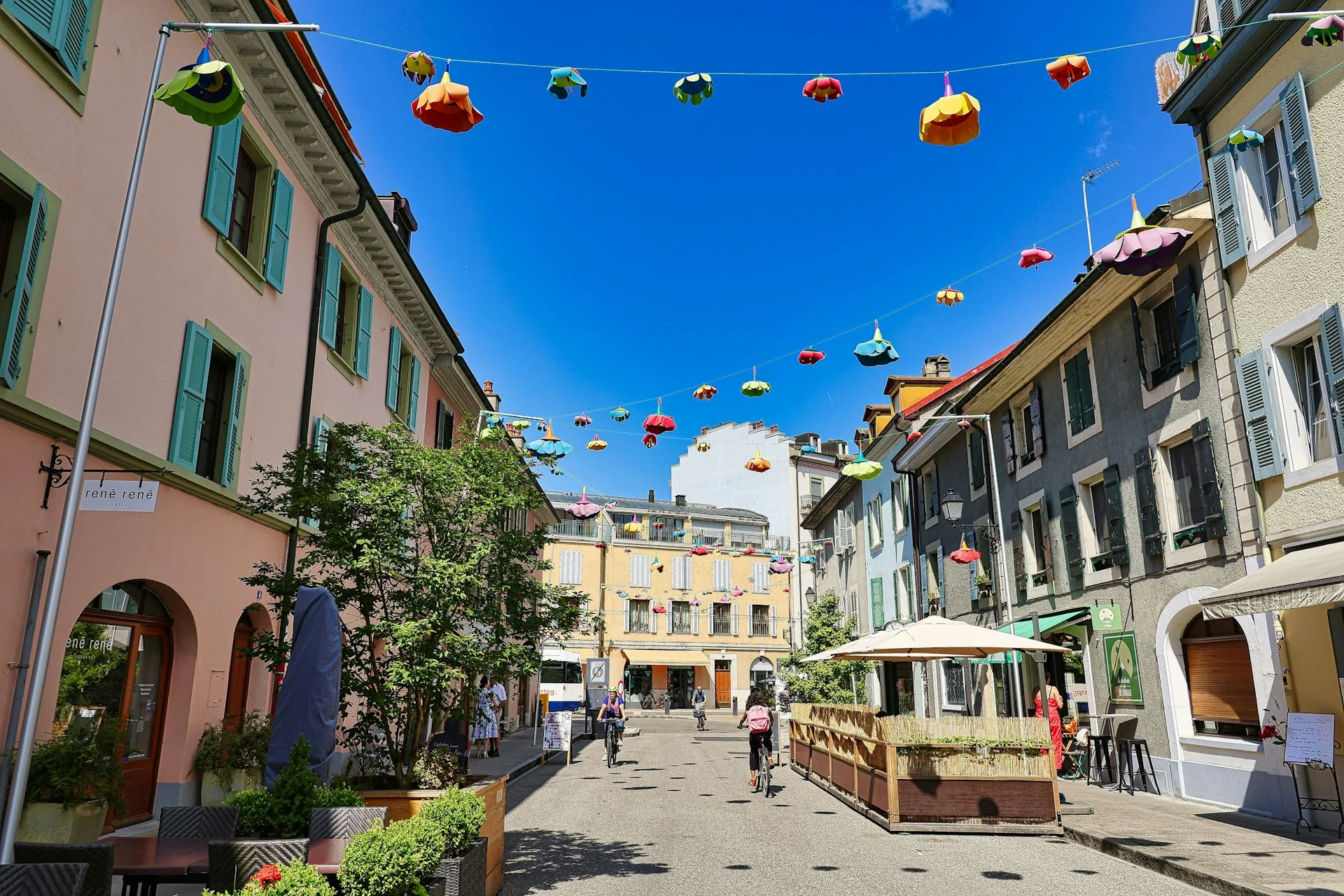
Proximity to Geneva business districts, steady boutique retail and artisan trade, inbound tourism and daily cross-border commuting create demand for smaller offices, specialty retail and service leases, supporting stable tenant profiles and mixed lease lengths
Asset types and strategies
High-street retail, small professional offices and mixed-use buildings dominate Carouge, driven by artisan trade and local services; strategies range from core long-term leases for professional tenants to value-add repositioning and multi-tenant or single-tenant retail plays
Selection and screening support
VelesClub Int. experts define strategy, shortlist assets and run screening with tenant quality checks, lease structure review, yield logic assessment, capex and fit-out assumptions, vacancy risk analysis and a practical due diligence checklist
Demand drivers in carouge
Proximity to Geneva business districts, steady boutique retail and artisan trade, inbound tourism and daily cross-border commuting create demand for smaller offices, specialty retail and service leases, supporting stable tenant profiles and mixed lease lengths
Asset types and strategies
High-street retail, small professional offices and mixed-use buildings dominate Carouge, driven by artisan trade and local services; strategies range from core long-term leases for professional tenants to value-add repositioning and multi-tenant or single-tenant retail plays
Selection and screening support
VelesClub Int. experts define strategy, shortlist assets and run screening with tenant quality checks, lease structure review, yield logic assessment, capex and fit-out assumptions, vacancy risk analysis and a practical due diligence checklist








Useful articles
and recommendations from experts
Investment considerations for commercial property in Carouge
Why commercial property matters in Carouge
Carouge functions as a compact commercial market with demand driven by a mix of local services, professional firms, and tourism-linked activity. The local economy supports offices for small and medium professional services, retail serving both residents and visitors, hospitality assets oriented to short-stay demand, and niche light industrial or warehouse activity where logistics access is feasible. Owner-occupiers include local business operators and professional practices seeking stability. Investors target diversified income streams from leased assets and operators are commonly independent retailers, gastro-service providers, and regional service companies. Understanding how these participant types interact with the municipal and regional economy is essential when assessing commercial real estate in Carouge.
Demand patterns in Carouge reflect proximity effects with larger regional centers, a compact urban fabric that concentrates footfall along primary streets, and a business mix that favors smaller lot sizes and flexible lease structures. These characteristics influence tenant profiles, acceptable lease lengths, and the typical capex expectations from buyers and investors.
The commercial landscape – what is traded and leased
The stock traded and leased in Carouge tends to be concentrated in a few functional categories: high street and neighborhood retail, boutique office suites and converted professional units, small-scale hospitality premises, and limited warehouse or light industrial units at the municipal periphery. Business districts are smaller than in larger cities; instead commercial intensity follows main corridors and cluster nodes adjacent to transport links. Neighborhood retail and service premises are often lease-driven assets where income stability depends on tenant turnover and local consumer patterns, while certain mixed-use buildings derive more asset-driven value due to redevelopment potential or constrained supply.
Lease-driven value in Carouge is commonly assessed through factors such as lease term length, indexation to local inflation measures, tenant covenant strength, and service-charge structures. Asset-driven value emerges where building fabric, permitted uses, or alternative use potential can support a change in cashflow through repositioning or densification. For buyers focused on income, long-term leases with established operators matter. For buyers focused on asset upside, the physical condition and planning flexibility of the building are critical.
Asset types that investors and buyers target in Carouge
Retail premises in Carouge range from compact high street units to neighborhood convenience outlets. High street retail benefits from concentrated pedestrian flows and visibility, pricing ahead of neighborhood retail because of demonstrable footfall and tourist spillover. Neighborhood retail commands more stable, domestically-oriented tenants but typically smaller ticket sizes and shorter lease durations. Office space in Carouge is often small to mid-sized suites suitable for professional services, creative firms, and satellite branches of regional companies. Prime versus non-prime office logic applies: prime units command higher rents per square meter due to location and finish, while non-prime units attract tenants sensitive to cost and flexible lease terms.
Hospitality assets and restaurant-cafe-bar premises in Carouge require scrutiny on trading potential and lease structures that may include higher operational responsibilities for tenants. Warehouses and light industrial units are fewer and tend to sit at transport access points; they are relevant for last-mile distribution and light manufacturing that supports local retail and regional supply chains. Revenue houses and mixed-use buildings that combine ground-floor retail with upper-floor residential or office space are common targets for investors seeking income diversification and for owner-occupiers who want integrated use. Serviced office models and flexible workspace operators can be relevant where demand from small firms and freelancers is concentrated, creating an opportunity for higher revenue per square meter but also higher operational complexity.
Strategy selection – income, value-add, or owner-occupier
Choosing between an income focus, a value-add approach, or owner-occupation depends on the investor profile, capital availability, and tolerance for operational intervention. Income-focused acquisition centers on stable leases with low vacancy risk and predictable indexation. In Carouge this strategy suits buyers seeking steady cashflow from established retail tenants or long-standing professional leases, with sensitivity to tenant churn norms and the local business cycle.
Value-add strategies involve refurbishment, re-leasing, or repositioning to capture rental growth or to change use within planning constraints. In Carouge, value-add plays can be effective where building quality is below market standard and where modest interventions can increase rents or attract higher-quality tenants. However, local supply constraints and regulatory intensity can limit large-scale repositioning, so careful assessment of permitted uses and capex timing is required.
Owner-occupier purchases make sense for operators who prioritize location control and long-term operational stability. In Carouge, owner-occupation is common among independent retailers, hospitality operators, and professional firms that prefer to control fit-out and lease duration risk. Mixed-use optimization blends income and owner-occupation, where part of a building generates rental income while another part is owner-occupied, offering a hedge against vacancy but requiring integrated asset management.
Areas and districts – where commercial demand concentrates in Carouge
Commercial demand in Carouge concentrates along main pedestrian corridors and at transport nodes that capture commuter and visitor flows. The central shopping corridors and streets adjacent to primary public transport stops deliver higher footfall and support specialty retail and cafes. Surrounding residential catchments supply steady demand for neighborhood retail and personal services. At municipal edges where road access and loading areas are available, small business parks or light industrial units cater to logistics and supply chain functions relevant to local retailers. Emerging business areas typically appear near transit improvements or where building stock allows conversion to office or coworking uses. When assessing districts, evaluate competition and oversupply risk in the corridor versus the stability of residential catchments that underpin neighborhood retail.
A practical district selection framework for Carouge compares the compact central corridors for visibility and tourist spillover, the secondary streets for lower-cost tenancy, the residential catchments for stable retail demand, and peripheral sites for warehouse or light industrial needs. Transport nodes and proximity to regional connections influence both rent levels and re-letting prospects, so they should be primary filters when narrowing target areas.
Deal structure – leases, due diligence, and operating risks
Buyers reviewing commercial opportunities in Carouge should focus on core lease elements: remaining lease term, break options and notice periods, indexation mechanism and frequency, responsibility for repairs and fit-out, and service-charge allocation. Clauses that affect reletting risk and capex liability materially impact valuation and should be examined in detail. Vacancy risk in smaller markets can be higher for non-prime units, so stress-testing rent roll assumptions and tenant concentration is essential.
Due diligence in Carouge needs to include physical condition surveys, compliance checks for permitted use and fire and safety standards, and an assessment of latent capex such as envelope repairs or systems replacement. Operational risks include tenant turnover, short lease durations common to small occupiers, and the impact of seasonal footfall associated with tourism. Financial due diligence should reconcile reported income streams, account for service-charge sufficiency, and identify items that could require immediate capital expenditure after acquisition.
Risk management also involves reviewing tenant diversity to avoid concentration risk, confirming the quality of lease documentation to enforce rent collection and recovery of operating costs, and modelling different letting scenarios to understand downside vacancy and remediation costs. These steps help translate lease-level details into asset-level risk profiles that inform pricing and negotiation strategy.
Pricing logic and exit options in Carouge
Pricing in Carouge is driven by location quality and pedestrian or commuter footfall, tenant covenant and remaining lease length, and the building condition including immediate capex needs. Alternative use potential affects pricing where planning rules allow conversion between commercial uses or between commercial and residential use; such potential increases buyer flexibility but requires careful planning assessment. Market liquidity and comparables tend to be localized and sensitive to micro-location differences, so accurate benchmarking is key to realistic pricing.
Exit strategies include holding to capture rental growth and refinance when cashflow stabilizes; re-letting to achieve a higher passing rent prior to sale; and repositioning through refurbishment or permitted-use change to improve net operating income before exit. Each exit route has timing and cost implications – holding reduces transaction timing risk but exposes the owner to market cycles, while reposition and re-letting strategies require capital and active management. Buyers should align the chosen exit path with lease profiles, capex timelines, and market liquidity in Carouge.
How VelesClub Int. helps with commercial property in Carouge
VelesClub Int. provides a structured support process for clients targeting commercial property in Carouge. The process begins with clarifying objectives – income preference, value-add appetite, or owner-occupation requirements – and defining the target segment and district characteristics that match those objectives. VelesClub Int. then shortlists candidate assets based on lease profile, tenant risk, building condition, and alignment with the client risk tolerance. The shortlist is accompanied by scenario modelling for lease rollovers, vacancy sensitivity, and capex timing to quantify potential outcomes.
VelesClub Int. coordinates practical due diligence by aligning survey resources, compiling tenancy and service-charge information, and organizing meetings with current managers or representatives where appropriate. While not providing legal advice, VelesClub Int. supports the documentation review process by highlighting commercial terms that materially affect value and by advising on negotiation priorities. The selection and negotiation support is tailored to the client’s goals and capabilities so that strategy and asset choice reflect both market realities and investment constraints.
Conclusion – choosing the right commercial strategy in Carouge
Selecting the appropriate commercial strategy in Carouge requires aligning investment objectives with local demand patterns, lease structures, and building-specific constraints. Income-focused buyers should prioritize long leases with stable tenants and conservative vacancy assumptions. Value-add investors must assess capex requirements and planning flexibility before committing. Owner-occupiers should weigh the benefits of location control against operational capital needs. For those considering to buy commercial property in Carouge, careful district selection, lease analysis, and capex planning are essential to manage downside risk and preserve optionality. Consult VelesClub Int. experts for tailored strategy definition and focused asset screening to move from market overview to a targeted acquisition plan.