
Commercial property for sale in Castile-La ManchaRegional opportunities for business growth
Best offers
in Castile-La Mancha
Benefits of investing in commercial real estate in Castile-La Mancha


Logistics Spine
Castile-La Mancha matters because logistics spillover, industrial land, agro-commercial depth, and heritage cities create a regional market where distribution, practical business use, and selective hospitality coexist instead of depending on one provincial center
Functional Mix
In Castile-La Mancha, warehouses near Guadalajara and Illescas, mixed service buildings in provincial capitals, agro-linked operational space, and tourism-facing premises in Toledo or Cuenca usually fit better than broad speculative office ideas
Cheap Land
Castile-La Mancha is often screened through low prices alone, yet the stronger comparison is between Madrid-adjacent logistics belts, heritage tourism cities, and agro-industrial corridors, because similar assets can hide very different occupier depth
Logistics Spine
Castile-La Mancha matters because logistics spillover, industrial land, agro-commercial depth, and heritage cities create a regional market where distribution, practical business use, and selective hospitality coexist instead of depending on one provincial center
Functional Mix
In Castile-La Mancha, warehouses near Guadalajara and Illescas, mixed service buildings in provincial capitals, agro-linked operational space, and tourism-facing premises in Toledo or Cuenca usually fit better than broad speculative office ideas
Cheap Land
Castile-La Mancha is often screened through low prices alone, yet the stronger comparison is between Madrid-adjacent logistics belts, heritage tourism cities, and agro-industrial corridors, because similar assets can hide very different occupier depth








Useful articles
and recommendations from experts
Commercial property in Castile-La Mancha by corridor role
Why Castile-La Mancha works as more than a low-cost interior market
Commercial property in Castile-La Mancha should not be read as a generic inland Spanish market whose only advantage is being cheaper than Madrid. The region has a clearer internal structure than that. Guadalajara and the northern edge connect directly to the Madrid consumer basin and the Henares logistics system. Toledo province, especially the Illescas and La Sagra side, extends that same logic from the south. Toledo and Cuenca introduce a very different layer through heritage tourism and destination spending. Albacete and Ciudad Real add industrial, agro-commercial, and operational demand that makes the region more than a distribution platform.
That is what gives Castile-La Mancha real commercial depth. It combines logistics, service use, industrial land, food-chain support, and selective hospitality in one regional market. The result is not one balanced territory where every province supports the same asset types. It is a region where the strongest commercial assets usually belong to clear submarket roles. Some areas are best read through warehousing and distribution. Some through provincial services. Some through agro-industrial support. Some through heritage and visitor activity.
This is why buy commercial property in Castile-La Mancha is usually a market-reading exercise before it becomes an investment decision. A buyer entering Guadalajara, Illescas, Toledo, Cuenca, Albacete, or Ciudad Real is not entering the same occupier system. The better property is usually the one that matches the local business function already present in that part of the region.
Guadalajara and Toledo put Castile-La Mancha inside the Madrid orbit
The dominant commercial demand cluster in Castile-La Mancha sits in the Madrid-adjacent north and northeast, where the region benefits from proximity to Spain's main consumer center. This is the foundation of the regional logistics story. Guadalajara has long been tied to the Henares corridor, while Illescas and the broader Toledo side have become one of the clearest south-of-Madrid distribution environments. This is not a minor edge effect. It is the main reason the region behaves differently from many other interior territories.
That adjacency changes the entire commercial reading. In these areas, the strongest demand often comes from warehousing, e-commerce support, last-mile extension, storage, trade support, and operational premises rather than from classic city-center offices. Mixed industrial buildings, service warehouses, and practical commercial compounds are often more natural than symbolic office acquisitions. The stronger asset is usually the one that fits a real operating corridor, not the one that simply offers lower land cost.
This is also why VelesClub Int. would read northern and northwestern Castile-La Mancha first through movement and business utility. Too many buyers see the region as secondary to Madrid, when in practice part of its value comes from being inside Madrid's wider logistics geography without carrying the same cost structure.
Logistics property in Castile-La Mancha is strongest where corridor fit is real
Warehouse property in Castile-La Mancha should not be screened as if the whole region were one broad logistics platform. The strongest logistics logic is concentrated where access, scale, and occupier demand already align. Guadalajara and Toledo stand out most clearly because they combine location, industrial land, and direct relevance to distribution flows. That is where storage, yards, support buildings, and operational assets usually make the strongest commercial sense.
The useful test is not whether a site is simply large or inexpensive. It is whether the property belongs to a live movement system. In a region with so much available industrial land, this distinction matters. Some properties can look commercially attractive on paper because the entry price is low. But the stronger logistics asset in Castile-La Mancha is usually the one that sits near proven corridors, established warehouse clusters, or routes with clear last-mile and national distribution logic behind them.
This makes the region one of those markets where scale can mislead. A smaller logistics asset in the right part of Guadalajara or Toledo may be more useful than a much larger site deeper in the interior if the surrounding business geography is stronger. VelesClub Int. helps structure that comparison by separating actual corridor utility from generic low-cost availability.
Heritage cities change hospitality and retail space in Castile-La Mancha
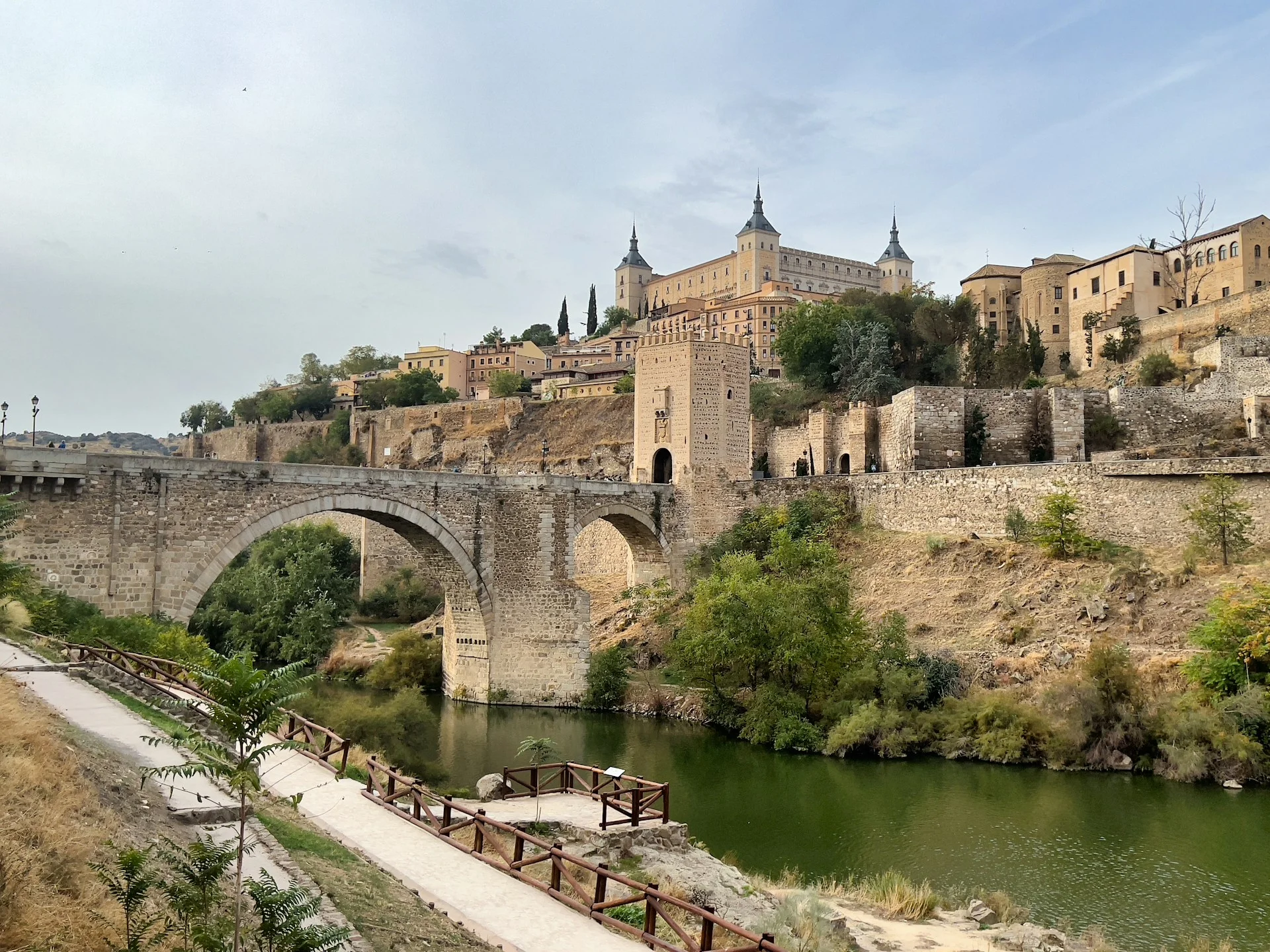
The secondary commercial layer in Castile-La Mancha comes from tourism and heritage, but it is selective rather than region-wide. Toledo and Cuenca are the clearest examples because both have a strong historical identity that attracts visitors in a way most of the region does not. This gives hospitality property, dining-led premises, visitor-oriented retail, and mixed heritage-area commercial units a clearer role than they would have in a purely logistics and agribusiness market.
Still, the stronger hospitality asset in Castile-La Mancha is usually the one whose concept fits the local destination pattern rather than the one with heritage appeal alone. Toledo can support a wider blend of city tourism, food and beverage, short-stay demand, and selective service uses because it is both a heritage city and a regional capital. Cuenca is more selective and more closely tied to historic and scenic positioning. These are not interchangeable hospitality markets.
This is one of the most common comparison mistakes in the region. Buyers sometimes compare a tourism-facing premises in Toledo or Cuenca with a logistics or service asset elsewhere in Castile-La Mancha as if both should be judged through one pricing lens. In practice, one is built on visitor spend and urban heritage activity, while the other depends on year-round operational demand.
Albacete and Ciudad Real add industrial and agro-commercial depth in Castile-La Mancha
Outside the Madrid-adjacent belt, the region changes again. Albacete gives Castile-La Mancha an industrial, commercial, technological, and logistics role that is more diversified than many buyers expect. It is one of the provinces where practical commercial use matters more than regional image. Mixed industrial buildings, service-led premises, trade property, and selected office assets can all make sense when they support real local business needs.
Ciudad Real adds another layer through agri-food, energy-related activity, and regional services. More broadly, Castile-La Mancha occupies a strong position in Spain's food and agriculture economy, and that matters commercially. Wine, olive oil, meat, dairy, vegetables, and related processing and packaging activity support storage, support premises, operational yards, and direct-use commercial property in a way that makes the region more than a heritage or logistics story.
This is where owner-occupier logic becomes especially important. In parts of Albacete and Ciudad Real, the stronger asset is often the one that supports a real operating business rather than one bought mainly for passive image value. That gives Castile-La Mancha a grounded commercial profile. In several provincial markets, utility matters more than symbolism.
Office space in Castile-La Mancha depends on provincial role not regional label
Office space in Castile-La Mancha is strongest in the provincial capitals and in places where service activity is concentrated enough to create dependable weekday use. Toledo, Albacete, Ciudad Real, Guadalajara, and to a more selective extent Cuenca can all support office and mixed service property, but not in the same way. Toledo combines regional administration with tourism and mixed urban demand. Guadalajara benefits from business proximity to Madrid and the logistics belt. Albacete and Ciudad Real often read more clearly through local services, healthcare, education, and direct business activity.
The better office formats in the region are usually practical rather than symbolic. Mixed service buildings, medical premises, education-linked property, upper-floor professional units, and owner-occupier offices often fit Castile-La Mancha better than broad speculative office ideas. Outside the provincial capitals, office logic usually weakens quickly unless it is tied directly to logistics, agribusiness, or local enterprise.
This is why a service office in Toledo, a professional unit in Albacete, and an operational office near Guadalajara should not be screened as one category only. Their occupier systems are different even though the label is the same. In Castile-La Mancha, office value nearly always depends on local role before building type.
Pricing logic across commercial real estate in Castile-La Mancha
Pricing in commercial real estate in Castile-La Mancha is shaped by function much more than by broad regional reputation. Guadalajara and Toledo can justify value through logistics relevance, proximity to Madrid, and strong industrial land positioning. Toledo and Cuenca can justify stronger pricing where hospitality and heritage-driven commercial use are real and well located. Albacete and Ciudad Real tend to price more through practicality, local service depth, and owner-occupier logic than through prestige.
This means similarly priced assets can carry very different resilience. A warehouse near a proven corridor may be easier to understand than a much cheaper but less connected industrial site. A mixed service building in Toledo or Albacete may have stronger everyday use than a visually attractive but weakly supported hospitality premise. A practical agro-commercial property in Ciudad Real may look less glamorous than a heritage-area unit, but still offer clearer occupier logic.
In Castile-La Mancha, the sharper comparison is almost always function against function. This is the regional discipline VelesClub Int. would bring to the market: logistics against logistics, service buildings against service buildings, hospitality against hospitality, and owner-occupier use against owner-occupier use rather than flattening everything into one low-cost central Spain narrative.
Questions that clarify commercial property in Castile-La Mancha
Why does commercial property in Castile-La Mancha feel more structured than many inland regions?
Because the region combines a Madrid-adjacent logistics belt, several provincial service capitals, a strong agri-food base, and selective heritage tourism cities inside one territory. Those layers create different commercial systems rather than one flat market.
Is Castile-La Mancha mainly a logistics region?
Not entirely. Logistics is the strongest driver in Guadalajara and Toledo, but the region also has real service demand in the capitals, agro-commercial depth in provinces such as Ciudad Real and Albacete, and hospitality in Toledo and Cuenca.
Where does warehouse property in Castile-La Mancha usually make the most sense?
Most often in the proven logistics belts near Guadalajara and Illescas, and in locations where regional distribution, e-commerce support, or industrial servicing already create a clear operating geography.
What do buyers most often misread in Castile-La Mancha?
They often compare corridor assets, heritage properties, and agro-commercial buildings through one low-cost lens. The sharper method is to ask whether the property depends on Madrid spillover, local services, visitor spending, or food-chain operations.
When is owner-occupier logic stronger than passive investment logic in Castile-La Mancha?
Mainly in Albacete, Ciudad Real, and other practical provincial markets where direct business use, service activity, processing, or logistics support can explain value more clearly than broad investor demand.
A clearer regional reading of Castile-La Mancha with VelesClub Int.
Castile-La Mancha works best when it is understood as a region of linked but different commercial engines. Guadalajara and Toledo anchor the logistics and Madrid-spillover core. Toledo and Cuenca reshape hospitality and heritage-based commercial value. Albacete and Ciudad Real add industrial, agro-commercial, and owner-occupier depth. That layered structure is what gives the region real commercial breadth.
With VelesClub Int., commercial property in Castile-La Mancha can be assessed through provincial role instead of broad image or simple price advantage. That creates a calmer and more practical basis for comparing office space, retail space, warehouse property, hospitality assets, and mixed commercial buildings across a region where the best decision usually begins with one question: what economic system already supports this property every day?