
Commercial property in Basque CountryVerified assets for business expansion
Best offers
in Basque Country
Benefits of investing in commercial real estate in Basque Country

Triple Core
Basque Country matters because Bilbao, Vitoria-Gasteiz, and the Gipuzkoa coast create three linked commercial centers, giving the region stronger service, logistics, and export depth than a single city reading would suggest
Use Balance
In Basque Country, offices and mixed service buildings fit Bilbao, warehouses and operational assets fit Vitoria-Gasteiz, while industrial, hospitality, and retail uses depend on how each Gipuzkoa or Bizkaia submarket actually functions
False Mirrors
Basque Country is often priced through Bilbao visibility alone, yet the stronger comparison is between port linked services, inland logistics utility, and export driven coastal towns, because similar assets can depend on different occupiers
Triple Core
Basque Country matters because Bilbao, Vitoria-Gasteiz, and the Gipuzkoa coast create three linked commercial centers, giving the region stronger service, logistics, and export depth than a single city reading would suggest
Use Balance
In Basque Country, offices and mixed service buildings fit Bilbao, warehouses and operational assets fit Vitoria-Gasteiz, while industrial, hospitality, and retail uses depend on how each Gipuzkoa or Bizkaia submarket actually functions
False Mirrors
Basque Country is often priced through Bilbao visibility alone, yet the stronger comparison is between port linked services, inland logistics utility, and export driven coastal towns, because similar assets can depend on different occupiers


Useful articles
and recommendations from experts
Commercial property in Basque Country by regional role
Why commercial property in Basque Country needs a wider reading
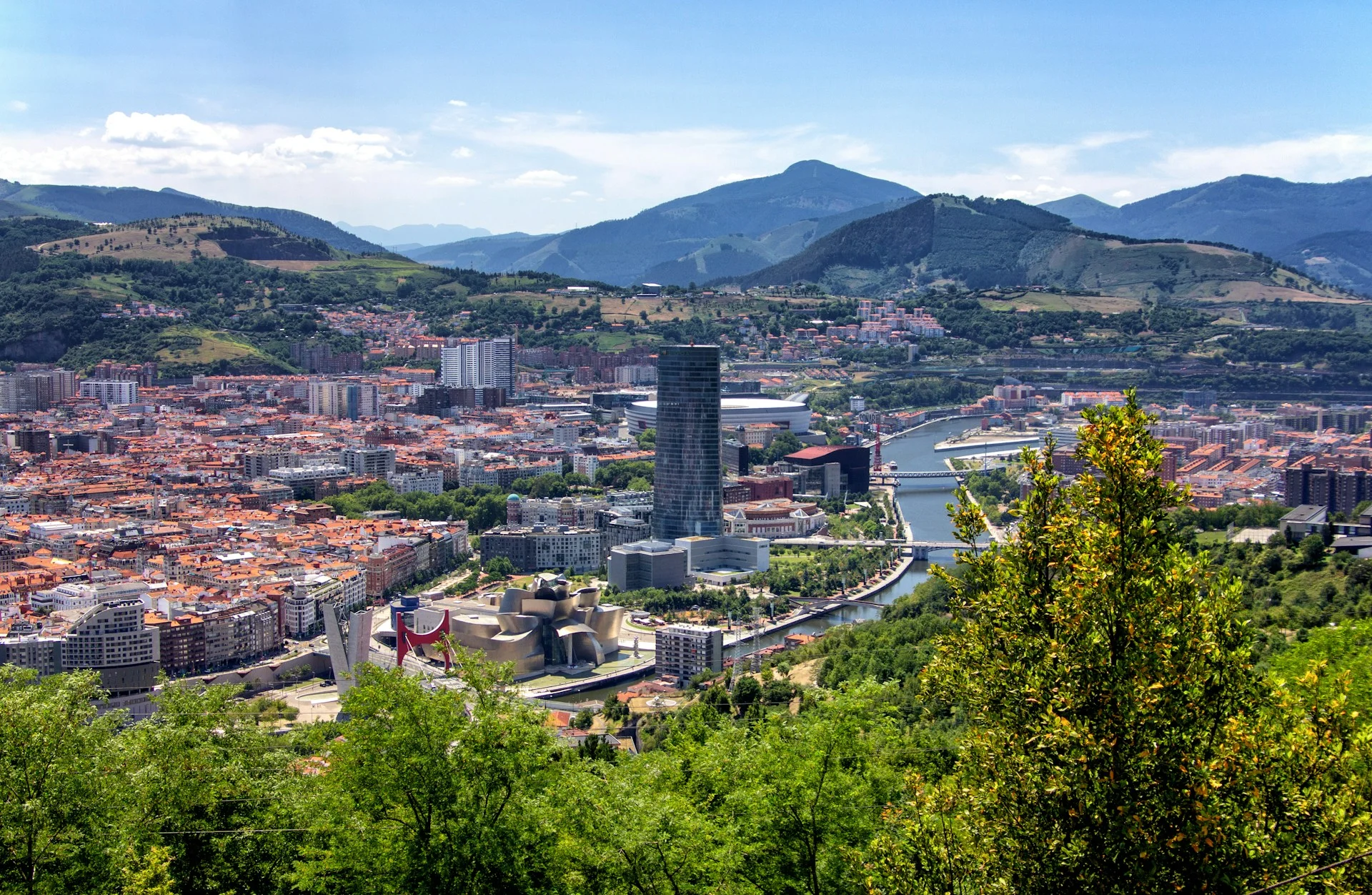
Commercial property in Basque Country should not be read as a Bilbao page with a few secondary markets around it. The region works through three linked but different commercial engines. Bilbao gives Basque Country its largest service, finance, office, and port related economy. Vitoria-Gasteiz adds logistics, administration, industrial estates, and one of the clearest inland operating environments in northern Spain. Gipuzkoa, with San Sebastian and the wider coastal and valley system, contributes export industry, advanced manufacturing, tourism, and smaller but commercially dense local markets. That internal structure is the reason Basque Country deserves its own regional commercial page.
This matters because a buyer entering Bilbao, Vitoria-Gasteiz, San Sebastian, Irun, Eibar, Mondragon, Durango, or a coastal hospitality market is not entering the same occupier system. Office space in Basque Country, warehouse property in Basque Country, retail space in Basque Country, and mixed commercial buildings all exist across the region, but they do not rely on the same tenant base or pricing logic. The stronger asset is usually the one that belongs clearly to the right provincial and corridor role rather than the one with the broadest regional image.
Bilbao gives Basque Country its dominant service and port core
The main commercial weight of Basque Country still sits in and around Bilbao. This is the region's deepest urban service market and the place where administration, finance, professional services, healthcare, education, culture, and port related business overlap most clearly. That gives office space in Basque Country its strongest foundation and makes mixed service buildings, medical premises, education linked assets, and central commercial units especially relevant in the Bilbao system.
What makes Bilbao important is not only urban scale. It is the combination of weekday business demand and maritime relevance. Some assets depend on formal office occupancy and professional services. Others work through clinics, universities, neighborhood services, food and beverage, and mixed urban demand connected to a large working population. In both cases, the stronger property is usually the one with the clearest operating role rather than the one with the most symbolic centrality.
The port side also changes how commercial real estate in Basque Country should be read. Bilbao is not simply a service city. It is also a gateway market. That means some assets in Bizkaia should be screened through logistics support, trade, and movement rather than through office prestige alone. This is one reason VelesClub Int. approaches the region through function first. Bilbao contains more than one commercial story.
Vitoria-Gasteiz changes warehouse property in Basque Country
The second major commercial layer of Basque Country sits in Alava, and especially in Vitoria-Gasteiz. This is where warehouse property in Basque Country becomes most convincing. The city combines administration and local services with logistics parks, industrial estates, transport links, and a practical inland business environment that is very different from the port and office led logic of Bilbao. It is one of the clearest reasons the region cannot be screened through coastal visibility alone.
In Vitoria-Gasteiz and the surrounding Alava corridors, storage, trade support, mixed operational buildings, technical service property, and light industrial assets often make stronger sense than prestige office acquisitions or hospitality led ideas. The stronger warehouse asset is not simply the cheapest site or the largest box. It is the property that already fits a live operating geography shaped by distribution, production, and regional access.
This is also where buy commercial property in Basque Country becomes more attractive for owner occupiers and practical investors. In Vitoria-Gasteiz, commercial value often comes from business utility, yard function, loading access, and tenant relevance rather than from symbolic address. That gives the region a more balanced commercial profile than a Bilbao only reading would suggest.
In Gipuzkoa, commercial property in Basque Country becomes more export driven
Gipuzkoa changes the regional hierarchy again. San Sebastian adds tourism, higher value urban consumption, and a service economy with strong local spending, but the province is not only a hospitality market. The wider Gipuzkoa territory includes export manufacturing, precision industry, technology, cooperative business culture, and valley towns where direct business use remains central. That creates a type of commercial property in Basque Country that is much more practical and production aware than a leisure reading would imply.
In this part of the region, mixed industrial buildings, technical offices, trade support premises, small warehouses, service retail, and selected hospitality assets all have a place, but they should not be given equal weight. The stronger property in Gipuzkoa is usually the one that fits a real local business pattern. A technical premises in an industrial town, a service building near a dense urban corridor, and a hospitality unit in San Sebastian do not belong to the same demand system even though they sit in the same province.
This is one of the most common comparison mistakes in Basque Country. Buyers often compare Bilbao office value with San Sebastian hospitality value or with an industrial valley premises as if the region were one continuous high income market. In practice, the sharper comparison is always function against function.
Retail space and hospitality in Basque Country depend on city and coast
Retail space in Basque Country is one of the most variable asset categories because the region contains very different spending environments. In Bilbao, retail often depends on residents, workers, students, healthcare users, and mixed urban movement. In San Sebastian, retail can depend more heavily on hospitality adjacency, visitor spending, food culture, and premium local consumption. In Vitoria-Gasteiz, retail often works through practical daily use, administration, education, and neighborhood services. In industrial towns, it may be shaped more by local trade and worker demand than by broad city appeal.
That means a property described simply as retail space in Basque Country may belong to completely different occupier systems. A ground floor service unit in Bilbao, a dining led premises in San Sebastian, and a practical roadside or neighborhood commercial unit in Vitoria-Gasteiz should never be compared through one pricing lens. The sharper comparison is always catchment against catchment: who uses the property every day, and what regional role creates that use.
Hospitality property in Basque Country is real, but it is selective rather than universal. San Sebastian and some coastal markets can clearly support boutique stays, food and beverage, and visitor facing mixed assets. Bilbao also supports urban hospitality through business and leisure demand. But the region is not a pure tourism economy, so hospitality should never dominate the whole commercial reading.
What makes one commercial asset more practical in Basque Country
The most practical asset in Basque Country is usually the one that matches the surrounding economic role. In Bilbao, that often means offices, mixed service buildings, central retail, and port related support uses. In Vitoria-Gasteiz, it may mean warehouses, distribution buildings, technical service premises, and owner occupier property. In Gipuzkoa, it may mean industrial support, export linked business space, local service buildings, or selective hospitality depending on the exact town and corridor.
This is where VelesClub Int. adds value. Basque Country offers offices, warehouses, retail units, hospitality assets, and mixed commercial buildings, but they should never be screened as if they belong to one uniform northern Spain market. Stronger decisions come from separating metropolitan service value, inland operating logic, and export driven provincial demand before assets are compared within them.
For buyers and investors, that creates a calmer framework. Instead of asking which city sounds strongest, the more useful question is which economic system already supports the property every day. In Basque Country, that question usually explains more than image, prestige, or headline pricing.
Questions that clarify commercial property in Basque Country
Why does commercial property in Basque Country feel more divided than many buyers expect?
Because the region combines a Bilbao service and port core, a Vitoria-Gasteiz logistics and industrial platform, and a Gipuzkoa system shaped by export industry, coastal hospitality, and dense local business activity.
Is Basque Country mainly a Bilbao office market?
No. Bilbao is the dominant service core, but the region also has clear commercial depth in Vitoria-Gasteiz for warehouses and operations, and in Gipuzkoa for industrial premises, local trade, and selective hospitality assets.
Where does warehouse property in Basque Country usually make the most sense?
Most often in and around Vitoria-Gasteiz and in the strongest inland operating corridors, where distribution, industrial estates, and transport access already create a real geography for storage and business support property.
What do buyers most often misread in Basque Country?
They often compare Bilbao service assets, San Sebastian hospitality property, and inland operational premises through one high income regional lens. The sharper method is to ask whether the property depends on offices, visitors, exports, or logistics.
When is hospitality more relevant than office or warehouse logic in Basque Country?
Mainly in San Sebastian and the stronger coastal visitor markets, where accommodation, dining, and visitor facing commercial formats are supported by repeat travel demand rather than by weekday business occupancy alone.
A clearer way to compare Basque Country with VelesClub Int.
Basque Country works best when it is understood as a region of three connected commercial engines rather than one city led market. Bilbao anchors the service and office core, Vitoria-Gasteiz strengthens warehouse and logistics relevance, and Gipuzkoa adds industrial depth, local trade, and selective hospitality value. That layered structure is what gives the region real commercial breadth.
With VelesClub Int., commercial property in Basque Country can be assessed through regional role instead of surface reputation. That creates a calmer and more practical basis for comparing office space, retail space, warehouse property, hospitality assets, and mixed commercial buildings across a region where the best decision usually begins with one question: what economic system already supports this property every day?