
Commercial real estate for sale in DohaVerified listings for city expansion
Best offers
in Qatar
Benefits of investing in commercial real estate in Doha


Demand drivers
Demand in Doha is driven by central business districts, rising tourism, port and logistics growth, expanding education and healthcare sectors and public-sector projects, implying generally stable tenants and longer institutional or corporate lease profiles
Asset types and strategies
Doha segments include grade A and mid-tier offices in business hubs, retail near tourism corridors, logistics and light industrial near ports, and hospitality and mixed-use; strategies span core long-term leasing to selective value-add repositioning
Expert selection support
VelesClub Int. experts define strategy, shortlist assets and run technical screening, including tenant quality checks, lease structure review, yield logic, capex and fit-out assumptions, vacancy risk assessment and a practical due diligence checklist
Demand drivers
Demand in Doha is driven by central business districts, rising tourism, port and logistics growth, expanding education and healthcare sectors and public-sector projects, implying generally stable tenants and longer institutional or corporate lease profiles
Asset types and strategies
Doha segments include grade A and mid-tier offices in business hubs, retail near tourism corridors, logistics and light industrial near ports, and hospitality and mixed-use; strategies span core long-term leasing to selective value-add repositioning
Expert selection support
VelesClub Int. experts define strategy, shortlist assets and run technical screening, including tenant quality checks, lease structure review, yield logic, capex and fit-out assumptions, vacancy risk assessment and a practical due diligence checklist








Useful articles
and recommendations from experts
Practical guide to commercial property in Doha
Why commercial property matters in Doha
Commercial property in Doha underpins much of the city’s real economy by providing space for offices, retail, hospitality, healthcare, education and logistics. Doha’s role as a regional administrative and commercial hub generates steady demand for office space and corporate headquarters, while tourism and events drive periodic pressure on hotel and short-stay accommodation. Healthcare and education expansion creates demand for specialist premises and long-term leases, and growth in e-commerce and trade increases requirements for warehouse and light industrial space. Buyers in the market include owner-occupiers seeking a strategic base, institutional and private investors focused on income and capital growth, and operators that acquire or lease assets to run hospitality, retail or serviced office businesses.
Understanding these demand drivers matters because they determine lease length expectations, capex profiles and tenant mix. For example, corporates seeking office space in Doha often prefer multi-year indexed leases with defined fit-out handover standards, while retail operators evaluate footfall and catchment demographics. Investors therefore need to match asset type, lease structure and location to expected tenant demand trends in Doha’s economy rather than rely on generic market assumptions.
The commercial landscape – what is traded and leased
The traded and leased stock in Doha spans core business districts, high street corridors, neighbourhood retail, business parks, logistics zones and tourism clusters. Office leases dominate in central business districts and major mixed-use developments, while retail takes multiple forms from small shopfronts to larger mall-facing units. Logistics and warehouse properties cluster around industrial areas and transport nodes, with light industrial premises offering lower capital intensity and faster lease turnover. Hospitality property behaves differently from standard asset classes because its revenue is operational and seasonally sensitive, but it remains a tradable commercial asset class for investor portfolios.
A key distinction in Doha is between lease-driven value and asset-driven value. Lease-driven value attaches to income characteristics – tenant quality, remaining lease term, indexation and lease covenants – and is important for investors focused on stable cash flow. Asset-driven value is related to the physical building, location flexibility, redevelopment potential and permitted uses on the site. In Doha, developers and investors often weigh both: a well-leased asset in a prime district may command higher pricing, while an underperforming asset with redevelopment potential can attract value-add buyers prepared to invest in repositioning.
Asset types that investors and buyers target in Doha
Main segments in Doha include retail space, office space, hospitality, restaurant and café premises, warehouses and light industrial properties, and mixed-use revenue houses where permitted. Retail ranges from high street and mall-anchored space to neighbourhood convenience units. High street retail typically commands higher rents per square metre driven by visibility and pedestrian flows, while neighbourhood retail depends more on resident catchment and stable daily demand. Office space in Doha divides into prime central business district stock, secondary decentralised offices and serviced offices that cater to short-term occupiers and flexible workspace demand.
Hospitality assets require operational due diligence; investor interest is often driven by expected room rates, occupancy patterns and event-driven seasonality. Restaurant and café premises are evaluated for kitchen fit-out standards, extraction requirements and lease transferability. Warehouse and light industrial properties reflect supply chain changes and e-commerce growth – demand concentrates near major arterial roads and hinterland distribution routes. Mixed-use assets can allow income diversification but require careful zoning and management considerations.
Comparative logic in Doha is specific: prime versus non-prime offices are separated by location, building quality and tenant covenant strength rather than simple age; high street versus neighbourhood retail depends on tourism and commuter footfall as well as residential density; and serviced offices present a different risk profile with shorter leases but potentially higher yield volatility. E-commerce trends support greater demand for modern warehouse property in Doha that offers clear manoeuvring, ceiling height and access for last-mile logistics.
Strategy selection – income, value-add, or owner-occupier
Buyers typically choose among income-focused, value-add and owner-occupier strategies, with mixed-use optimisation a combined approach where relevant. An income strategy in Doha emphasises stable, long-term leases with reputable tenants and predictable indexation clauses. This approach fits institutional investors or buyers seeking predictable cash flow and lower operational involvement. Local factors that support income strategies include the presence of regional corporate tenants, long-term government leases and sectors with lower seasonality such as healthcare or education.
Value-add strategies in Doha involve refurbishment, repositioning or re-leasing to enhance rental tone and shorten vacancy cycles. Opportunities arise from mismanaged assets, outdated fit-outs or zoning flexibility that allows a change of use. Value-add buyers must account for capex, permitting timelines and potential tenant churn during the repositioning period. The business cycle sensitivity of Doha’s commercial market and occasional oversupply in certain segments can both create opportunities and raise execution risk for value-add plays.
Owner-occupier logic in Doha is driven by business operational needs, cost of long-term occupancy versus leasing, and strategic location benefits near clients or transport nodes. Owners avoid lease uncertainty but assume maintenance and compliance responsibilities. Mixed-use optimisation combines rental income from parts of an asset with owner occupation of other parts, requiring more complex management but offering diversification against single-tenant concentration risk. Each strategy should be assessed against local seasonality, regulation intensity and tenant churn norms specific to Doha.
Areas and districts – where commercial demand concentrates in Doha
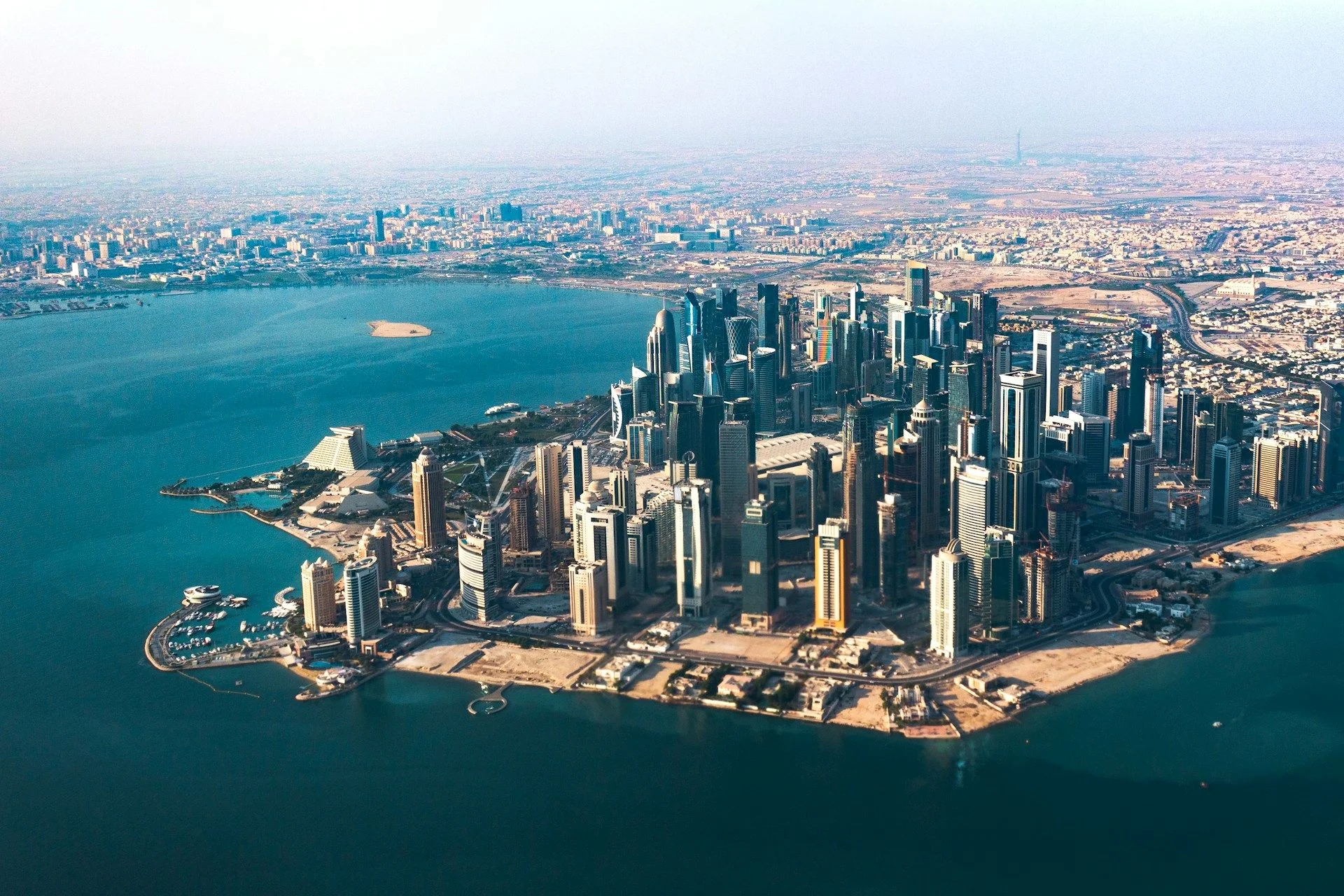
Commercial demand in Doha concentrates in a mix of established CBD locations and emerging business areas. West Bay functions as a core high-rise business district with a concentration of offices and corporate demand. Lusail is an emerging development corridor with mixed-use momentum and potential for new office and retail supply. The Pearl offers a premium mixed-use and hospitality cluster that attracts retail and leisure operators. Al Sadd provides a dense residential catchment that supports neighbourhood retail and small office occupiers. The Industrial Area hosts logistics, warehousing and light industrial stock that serves trade and distribution needs. Education City anchors demand for specialist education and research-related commercial amenities. Investors compare CBD strength against emerging corridors when assessing footfall, commuter flows and tenant profiles.
When evaluating districts in Doha consider transport nodes and commuter patterns, the balance between tourism corridors and residential catchments, and industrial access for last-mile routes. Competition and potential oversupply are district‑specific risks where development pipelines may affect future pricing and vacancy. Identifying the district type and its tenant universe is a primary step in matching asset strategy to location dynamics.
Deal structure – leases, due diligence, and operating risks
Buyers in Doha typically review lease term, remaining contractual length, break options, indexation mechanisms, service charge allocation and fit-out responsibilities. Due diligence covers lease documentation, evidence of rent collection history, tenant solvency indicators and subletting restrictions. Vacancy and reletting risk are assessed through market comparables and understanding local tenant demand cycles. Operating risks include maintenance and deferred capex, compliance with local building codes and utilities provisioning, and concentration of income in a small number of tenants.
Practical due diligence steps include verifying title and permitted use, confirming service charge regimes and historical expenditure, inspecting mechanical and electrical systems for capex planning, and testing assumptions about lease escalation and renewal probability. Financial modelling should incorporate potential downtime between tenants, marketing and leasing commissions, and scenarios for indexation and operating cost increases. Tenant concentration risk is a notable consideration in Doha where a single large corporate or government lease can dominate cash flow and materially affect valuation upon vacating.
Pricing logic and exit options in Doha
Pricing drivers in Doha include location and footfall, tenant quality and lease length, building quality and remaining lifecycle, and alternative use potential. A longer unexpired lease with a creditworthy tenant typically supports a higher price per square metre than a comparable vacant or short-let asset. Conversely, an asset with permitted redevelopment potential or flexible zoning can support a premium for buyers focused on conversion or densification. Capex needs and compliance costs reduce effective pricing and must be reflected in bid processes.
Exit options available to investors in Doha generally fall into hold-and-refinance, re-lease-then-exit, or reposition-then-exit strategies. Hold-and-refinance relies on stable income to secure refinancing based on rental cash flow rather than immediate resale. Re-leasing prior to divestment can improve yield and attract a broader buyer pool. Repositioning followed by sale targets capital appreciation through physical or functional improvements. Each exit path requires alignment with market timing, tenant demand and the regulatory environment that affects change of use and redevelopment approvals.
How VelesClub Int. helps with commercial property in Doha
VelesClub Int. supports clients through a structured process tailored to commercial property in Doha. The engagement begins with clarifying objectives and risk tolerance, then moves to defining target segments and districts aligned with those objectives. Shortlisting criteria emphasise lease characteristics, tenant risk profile, capex requirements and location dynamics. VelesClub Int. coordinates practical due diligence actions including technical inspections, lease audit checklists and market comparables to validate assumptions and quantify operating risk.
During transaction phases VelesClub Int. assists in prioritising negotiation points tied to lease protections, handover conditions and capex allowances. The advisory input is focused on screening and selection rather than legal representation, and it is adapted to the client’s capabilities—whether the client seeks an income asset, a value-add opportunity or owner-occupation. The selection process emphasises measurable metrics such as lease term, vacancy assumptions and projected capex to ensure alignment with investor strategy.
Conclusion – choosing the right commercial strategy in Doha
Choosing the right approach to commercial real estate in Doha requires matching asset type, district and lease profile to investor objectives and local market dynamics. Income strategies prioritise lease security and tenant quality, value-add plays focus on repositioning and capex execution, and owner-occupiers evaluate long-term operational benefits versus leasing flexibility. District selection, lease mechanics and realistic capex planning determine pricing and exit feasibility. For targeted screening and objective assessment of opportunities to buy commercial property in Doha, consult VelesClub Int. experts who can help define strategy, shortlist assets and coordinate practical due diligence and transaction steps tailored to your goals.