
Commercial real estate listings in VisayasSelected listings across active regions

Popular
cities and regions in Philippines
Best offers
in Visayas
Benefits of investing in commercial real estate in Visayas


Gateway hierarchy
Visayas matters because Cebu, Iloilo, Bacolod, Bohol, and Eastern gateway cities do not compete on one scale; each captures a different mix of trade, services, tourism, education, and regional distribution across the archipelago
Use precision
The best fit changes quickly in Visayas: mixed business towers in Metro Cebu, regional office and medical property in Iloilo, hospitality retail in island leisure hubs, and practical warehouse space near ports and airports
False twins
Buyers often compare Visayas assets by beach image or Cebu pricing, but the stronger test is whether a property serves ferry arrivals, export processing, hospital traffic, student demand, or year-round local spending
Gateway hierarchy
Visayas matters because Cebu, Iloilo, Bacolod, Bohol, and Eastern gateway cities do not compete on one scale; each captures a different mix of trade, services, tourism, education, and regional distribution across the archipelago
Use precision
The best fit changes quickly in Visayas: mixed business towers in Metro Cebu, regional office and medical property in Iloilo, hospitality retail in island leisure hubs, and practical warehouse space near ports and airports
False twins
Buyers often compare Visayas assets by beach image or Cebu pricing, but the stronger test is whether a property serves ferry arrivals, export processing, hospital traffic, student demand, or year-round local spending








Useful articles
and recommendations from experts
Commercial property in Visayas by gateway and function
Commercial property in Visayas should be read as an archipelago market, not as one tourism region with a few cities attached to it. That is where most weak comparisons begin. Cebu, Panay, Negros, Bohol, Samar, and Leyte do not produce the same commercial demand, even when the properties look similar on paper. Some assets belong to a capital-like business core. Some belong to regional service cities. Some only make sense because ports, airports, ferry routes, and industrial estates keep goods and workers moving across islands. Others depend on leisure demand, but only when that leisure demand overlaps with real local spending and year-round services.
The practical consequence is simple. A tower in Cebu, a medical building in Iloilo, a hotel-linked retail unit in Panglao, and a warehouse near a port in Eastern Visayas should never share one pricing model. Visayas is commercially useful precisely because it offers several acquisition lanes inside one island group, but buyers only see that advantage when the asset is matched to the right gateway, the right user base, and the right commercial task. VelesClub Int. approaches Visayas through that map first, because the wrong benchmark is usually the first expensive mistake.
Why Visayas needs an archipelago commercial reading
Unlike a mainland region, Visayas does not spread demand evenly across one land corridor. It works through islands, gateways, and regional capitals. Metro Cebu is the clearest commercial core because it combines office, trade, logistics, hospitality, education, and a deeper labor market than the rest of the island group. Iloilo and Bacolod do not try to copy that role. They work more as regional service and administrative markets, with stronger weight on healthcare, education, mixed business property, and local consumer demand. Bohol and resort-driven areas bring another layer, where leisure, food and beverage, and service retail can matter, but only when they are supported by more than short bursts of visitor traffic.
This is why commercial real estate in Visayas becomes easier to price once the island group is divided into functions. The stronger comparison is not island versus island. It is gateway versus gateway. Which city handles trade? Which market supports professional and medical demand? Which location works for warehousing and supply? Which one only looks attractive because tourism is visible? Once those questions are answered, the market stops looking fragmented and starts looking structured.
Metro Cebu in Visayas prices the top commercial tier
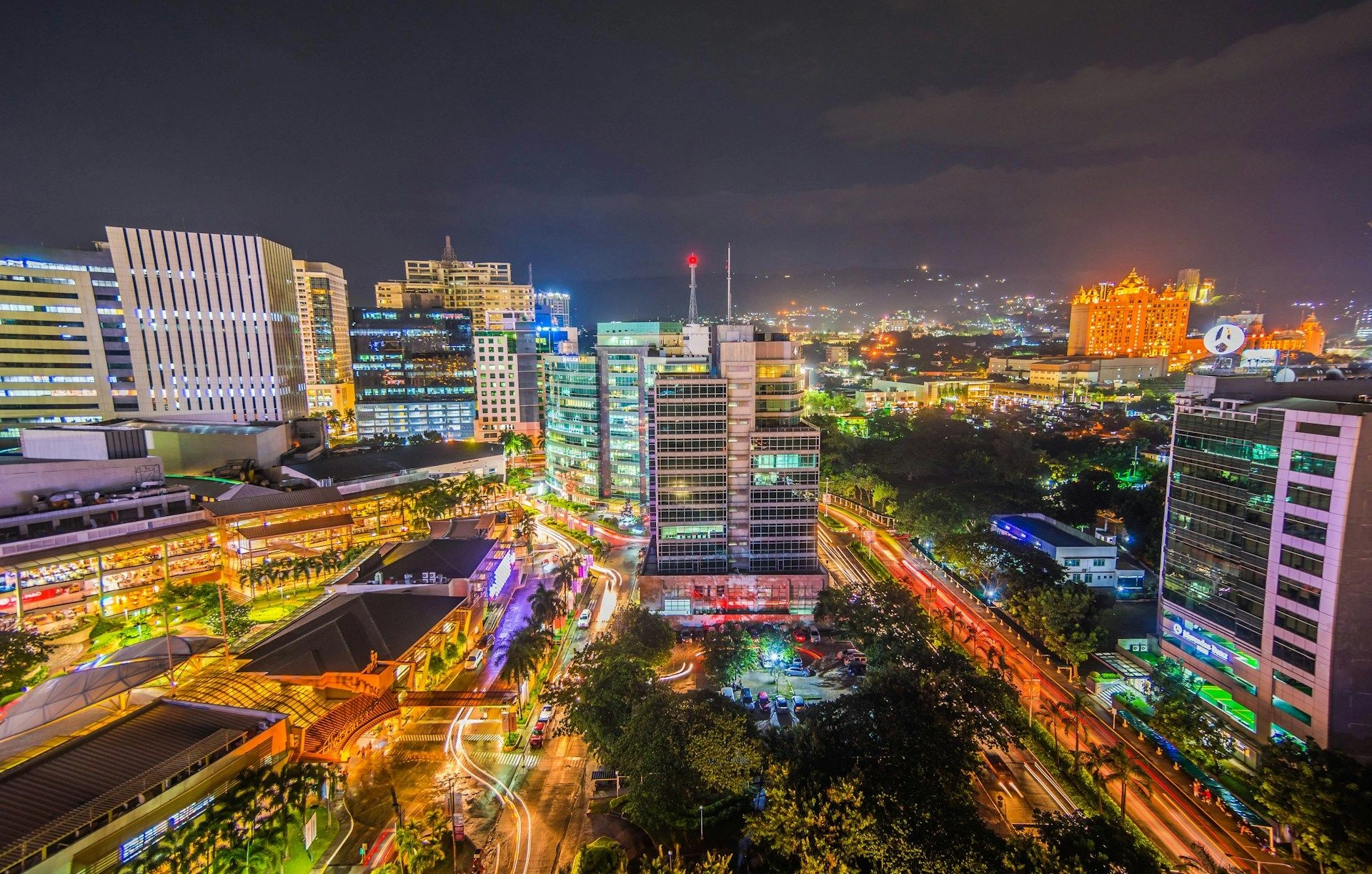
Metro Cebu remains the commercial center of gravity in Visayas because it holds the broadest office base, the strongest urban retail corridors, the deepest mixed business market, and one of the most practical logistics positions in the island group. This is the part of Visayas where larger office, mixed-use, service retail, hospitality, and selected industrial assets can all make sense inside one connected economy. But that does not mean every Cebu property deserves core pricing. The market is strongest where the building already fits a real business district, a dense service corridor, or an operating zone tied to trade and daily urban demand.
The better Cebu acquisition usually has a visible reason to exist. A mixed business asset serving professional users, a retail unit anchored by workday and residential traffic, or a practical industrial building supporting the metro economy can all be stronger than a more prominent property with weaker daily relevance. Buyers who treat Cebu as one flat premium market usually overpay for weaker submarkets and undervalue buildings whose tenant base is narrower but more durable.
Panay and Negros give Visayas a regional service middle
Iloilo and Bacolod change the buyer logic because they are not smaller copies of Cebu. They are regional service capitals. The strongest assets there often come from healthcare, education, government-related activity, regional shopping, food processing, business services, and mixed commercial property tied to everyday city use. That makes these markets especially relevant for medical office, practical service office, neighborhood and city retail, smaller mixed business buildings, and owner-user commercial space. The useful benchmark here is not skyline quality. It is user clarity.
That is why some of the cleaner acquisitions in Visayas appear outside the highest-profile metro. A medical-support building in Iloilo, a mixed business property in Bacolod, or a service retail center serving repeat local demand can be easier to underwrite than a louder concept in a market with less stable daily use. VelesClub Int. treats Panay and Negros as commercially important because they carry institutional gravity and local spending that do not depend on capital-city scale.
Ports airports and industrial estates shape operational Visayas
Industrial and warehouse property in Visayas only make sense when the building is tied to a real movement function. That function may be export processing, inter-island distribution, airport-linked handling, food and beverage supply, contractor storage, or manufacturing support. Cebu clearly carries the strongest version of this through its trade and logistics position, but it is not the only operating market. Iloilo, Bacolod, Tacloban, and selected secondary cities can also support practical warehouse and flex demand when the building serves port movement, regional supply, or service businesses that need storage and handling rather than just floor area.
This is why warehouse property in Visayas should not be screened by size alone. A larger box in the wrong island market can be weaker than a smaller building that solves a real supply problem. The better industrial acquisition usually has obvious loading logic, working access, a believable occupier base, and a clean relationship to the local gateway around it. In Visayas, logistics value is rarely abstract. It is almost always tied to a specific island task.
Tourism in Visayas is commercially strong only when local demand supports it
Leisure markets in Visayas attract attention fast, but they are also where weak underwriting hides most easily. Bohol, island resorts near Cebu, and selected coastal locations can support hospitality, food and beverage, wellness, and tourism-linked retail. But the stronger property is rarely the one with the most dramatic leisure image. It is the one whose customer base remains visible outside the narrowest visitor window. A restaurant, resort-support unit, or mixed commercial building that serves both guests and local households can be more practical than a pure seasonal concept with better photos and weaker repeat demand.
That distinction matters even more in smaller island markets. A coastal property may look premium, but if staffing, supplies, transport, and local spending do not reinforce the business model, the asset is harder to defend. Buy commercial property in Visayas through tourism alone and many weak assets look stronger than they are. Buy through demand overlap and the market becomes much clearer. The best hospitality-led acquisitions usually benefit from residents, workers, transport flow, and repeat services as well as visitors.
What usually makes one Visayas asset more practical than another
The stronger Visayas asset usually gets three things right at once. It sits in the correct gateway. It serves a visible user base. And its daily commercial purpose is easy to explain. That sounds simple, but it removes most weak deals very quickly. A building may have a good city name but the wrong tenant type. A warehouse may have enough space but no real supply function. A retail unit may have foot traffic but the wrong spending pattern. A hospitality asset may have image without year-round support demand.
Pricing also becomes easier once the asset is read through that filter. Metro Cebu can justify stronger pricing where business concentration and trade function are real. Iloilo and Bacolod may justify value through medical, educational, and service demand rather than office prestige. Industrial property only deserves a premium when utility is hard to replace. Tourism-led assets only deserve stronger pricing when demand overlap is genuine. VelesClub Int. uses that sequence because in Visayas price is often the last thing that should be compared, not the first.
Questions buyers ask about commercial property in Visayas
Is Cebu always the best place to buy commercial property in Visayas?
No. Cebu is the broadest mixed business and logistics market, but medical, service, owner-user, and certain hospitality strategies can fit Iloilo, Bacolod, Bohol, or secondary gateways more naturally.
Where does warehouse property in Visayas make the most sense?
Usually where the building supports an actual gateway task such as port handling, airport-linked supply, regional storage, food distribution, or export-related industrial use.
Why can Iloilo or Bacolod assets be easier to underwrite than louder resort properties?
Because hospitals, campuses, government activity, and repeat local spending often create a steadier daily user base than a property relying too heavily on visitor-driven demand.
Should office space in Visayas be screened the same way across the island group?
No. Metro Cebu office, regional service office, medical office, and owner-user business space depend on different occupiers and should never share one comparison model.
What usually separates a better Visayas acquisition from a weaker one?
The better property already fits its gateway. The weaker one usually depends on a story borrowed from another island or a broader tourism narrative than the local market can support.
A tighter acquisition map for Visayas with VelesClub Int.
The practical way to read Visayas is to stop treating it as one island group and start separating its commercial gateways. Metro Cebu is the top mixed business and logistics core. Iloilo and Bacolod are the regional service and institutional middle. Bohol and leisure-heavy islands are hospitality and service markets that must be screened more carefully than they are usually sold. Secondary cities in Eastern Visayas matter when they serve ports, hospitals, schools, and regional trade rather than when they are compared with capital-style office markets.
Once those roles are separated, commercial property in Visayas becomes easier to compare by tenant base, building purpose, and island function. That is where VelesClub Int. adds value. The stronger acquisition is rarely the one with the broadest island-group narrative. It is the one whose format, users, and daily task already work together inside the right Visayas gateway.