
Commercial real estate for sale in Port LouisVerified listings for city expansion
Best offers
in Mauritius
Benefits of investing in commercial real estate in Port Louis


Port louis demand drivers
Port Louis as Mauritius capital and main port concentrates finance, government, wholesale trade, tourism and light manufacturing, driving demand from corporate and public-sector tenants seeking medium to long lease profiles and relative income stability
Local asset strategies
Port Louis high-street retail near the waterfront, CBD offices, logistics and warehouses serving the port, small hotels and mixed-use conversions align with strategies from core long leases to value-add repositioning and single-tenant or multi-tenant formats
Selection and screening
VelesClub Int. experts define strategy, shortlist assets and run screening including tenant credit and covenant checks, lease structure review, yield logic, capex and fit-out assumptions, vacancy risk analysis and a tailored due diligence checklist
Port louis demand drivers
Port Louis as Mauritius capital and main port concentrates finance, government, wholesale trade, tourism and light manufacturing, driving demand from corporate and public-sector tenants seeking medium to long lease profiles and relative income stability
Local asset strategies
Port Louis high-street retail near the waterfront, CBD offices, logistics and warehouses serving the port, small hotels and mixed-use conversions align with strategies from core long leases to value-add repositioning and single-tenant or multi-tenant formats
Selection and screening
VelesClub Int. experts define strategy, shortlist assets and run screening including tenant credit and covenant checks, lease structure review, yield logic, capex and fit-out assumptions, vacancy risk analysis and a tailored due diligence checklist








Useful articles
and recommendations from experts
Strategic commercial property in Port Louis Market
Why commercial property matters in Port Louis
Port Louis functions as the principal commercial and administrative center, and its economic profile drives demand for a range of commercial real estate types. Financial services, wholesale trade, government administration, tourism and associated hospitality services create sustained requirements for office space, retail space, and hospitality assets. Industrial activity linked to the harbour and logistics flows supports demand for warehouses and light industrial units. Health and education sectors generate specialized requirements such as clinic and campus-adjacent premises. Buyers in this market include owner-occupiers seeking location and operational control, institutional and private investors focused on income and capital appreciation, and operator-occupiers who combine asset ownership with business operations in hospitality, logistics or retail.
The concentration of public institutions, trade intermediaries and visitor flows makes commercial real estate in Port Louis particularly sensitive to policy shifts and seasonality in tourism. This sensitivity affects leasing dynamics and tenant stability. Investors who assess sector-specific drivers alongside macro trends in trade and tourist arrivals can better position assets for either stable income or repositioning strategies.
The commercial landscape – what is traded and leased
The traded and leased stock in Port Louis includes a compact central business district, high street retail corridors adjacent to markets and waterfront attractions, small to mid-sized business parks, and logistics zones near the harbour. Lease-driven value dominates in retail corridors and serviced offices where short- to medium-term cash flows depend on footfall and tenant turnover. Asset-driven value is more pronounced in purpose-built logistics property and larger, well-located office buildings where structural quality, long-term pavement to transport nodes and redevelopment potential underpin pricing.
Retail units frequently trade on a combination of base rent and turnover-linked arrangements in the most visited corridors, while office leases tend toward fixed-term rentals with indexation clauses. Warehouse property close to the port or freeport facilities sees longer leases with tenant responsibility for fit-out and operational systems. Hospitality and short-stay accommodation often involve operator-lease structures or management agreements where the underlying land or building remains an investor asset while operations are contracted out.
Asset types that investors and buyers target in Port Louis
Retail space in Port Louis varies from high street units serving daily urban demand to small shopfronts near tourist routes. High street retail commands premium rental per square metre but carries higher churn and sensitivity to seasonality. Neighborhood retail offers lower entry pricing and steadier local demand, often suitable for owner-occupiers or small-scale investors seeking lower management intensity.
Office space in Port Louis ranges from multi-tenant buildings in the central business district to smaller serviced office suites targeted at professional services and back-office functions. Prime offices are priced on location, quality of building systems and proximity to administrative centers. Non-prime offices compete on lease flexibility and cost. Serviced offices appeal where startup and outsourcing activity creates demand for flexible, short-term occupancy with managed services included.
Warehouse property in Port Louis and light industrial units are evaluated on access to the harbour, clearance capacity, ceiling heights and utility resilience. Investors looking at industrial stock focus on last-mile delivery needs for e-commerce and distribution efficiency for import-export operations. Where supply constraints exist close to port facilities, land value and logistics positioning become primary pricing drivers.
Hospitality and restaurant-cafe-bar premises form a tourism-linked cluster. Hotel and foodservice assets are affected by seasonal visitor patterns and by local corporate demand. Revenue houses and mixed-use schemes that combine retail at ground level with offices or residential units above can provide diversified income streams, but their performance depends on coherent leasing strategies and active asset management to balance differing tenant profiles.
Strategy selection – income, value-add, or owner-occupier
An income-focused strategy prioritizes assets with long-term, index-linked leases and creditworthy tenants. In Port Louis this tends to align with well-located office buildings leased to established firms or logistics properties serving import-export operations. Core income strategies are sensitive to tenant concentration risk and require rigorous lease review to confirm escalation provisions and break options.
Value-add approaches rely on refurbishment, repositioning or re-leasing to capture upside. In Port Louis, opportunities for value-add typically arise where buildings are functionally obsolete for modern office or retail needs but located within desirable corridors or near transport nodes. Repositioning former retail or office stock into mixed-use solutions or upgrading building services to attract higher-quality tenants can create value, although success depends on demand elasticity and local planning constraints.
Owner-occupier purchases are common for operators who require control over fit-out and long-term location stability, such as hospitality groups or large professional firms. In Port Louis, the owner-occupier logic often responds to the cost and availability of suitable leases, tax considerations and operational continuity. Mixed-use optimization is another route where investors combine short-term retail income with longer-term office or residential leases to smooth volatility caused by tourism seasonality.
Areas and districts – where commercial demand concentrates in Port Louis
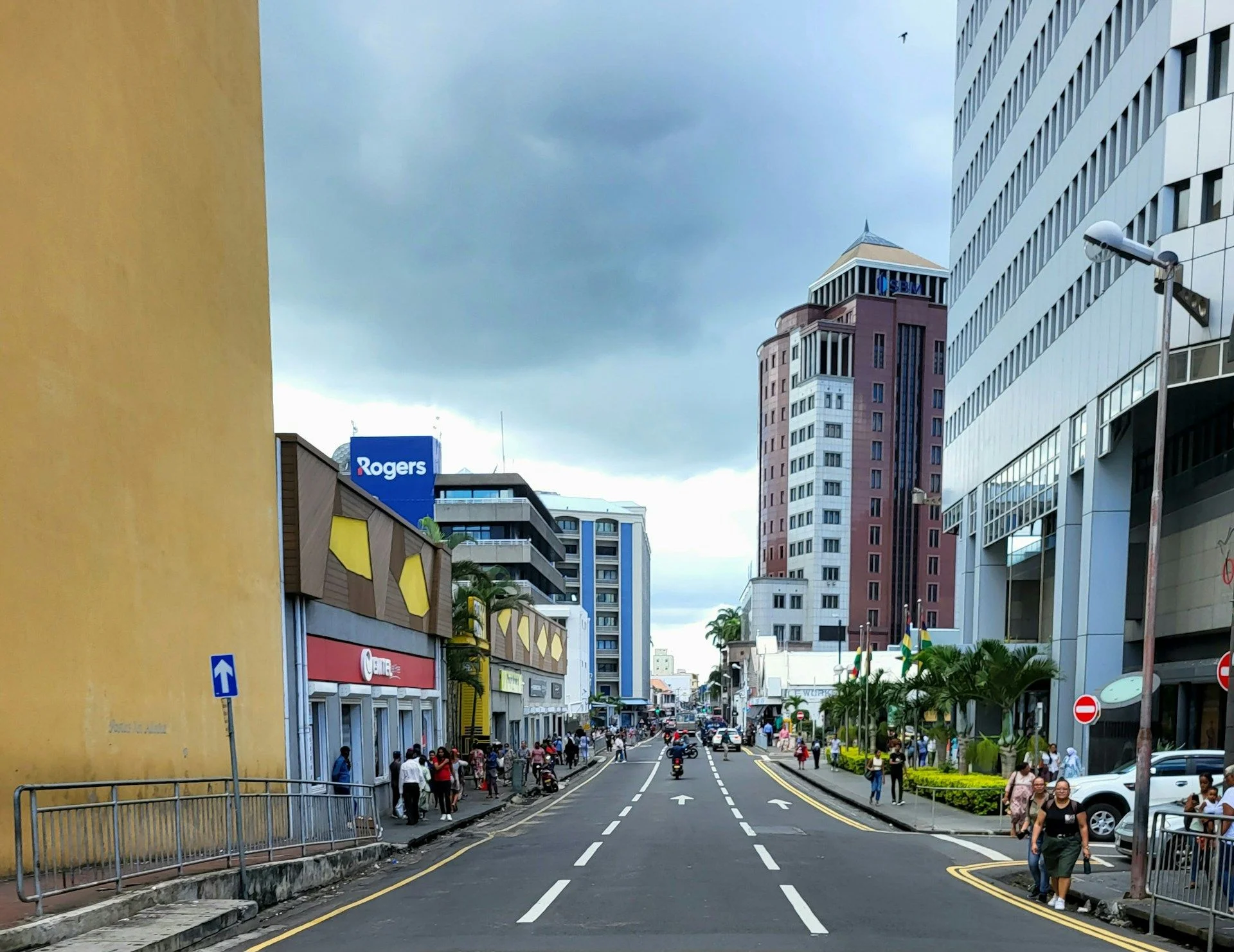
Commercial demand in Port Louis concentrates in a few clear location types. The central business district attracts financial services, legal and professional tenants who value proximity to government offices and client networks. Waterfront and market-adjacent corridors perform strongly for retail and hospitality due to visitor flows and concentrated daytime activity. Industrial and logistics demand clusters near the port and container-handling facilities where access and clearance speed are operational priorities.
Emerging business areas form around transport nodes and commuter corridors where land is available for business parks and modern office development. These locations can attract back-office operations and tech-related occupiers seeking competitive rents and better parking and services than the historic CBD. Residential catchments that support neighborhood retail and small professional services create secondary demand pockets; understanding commuter patterns and public transport links is essential when comparing competing locations. Oversupply risk is highest where speculative development outpaces real tenant formation, so proximity to demand generators and vacancy trends must guide selection.
Deal structure – leases, due diligence, and operating risks
Buyers typically review the lease register, confirming term length, tenant covenant strength, rental indexation, operating expense allocation and explicit break options. Service charge frameworks and clarity on landlord versus tenant responsibility for fit-out and maintenance influence cash flow predictability. For retail and hospitality leases, turnover rent clauses and seasonal adjustments may be present and require careful modeling of peak and off-peak performance.
Due diligence in Port Louis should include physical building surveys, verification of utility capacity and resilience, compliance checks for zoning and planning consents, and an assessment of any port-related environmental or logistical constraints. Capex planning must account for building systems, façade and structural repairs and possible upgrades to meet modern energy and safety standards. Vacancy and reletting risk are central considerations; investors should quantify time-to-let assumptions and likely rent reversion under different market conditions. Tenant concentration risk, especially where a single tenant represents a high share of rental income, needs scenario analysis for stress-test outcomes.
Pricing logic and exit options in Port Louis
Pricing drivers in Port Louis include location and pedestrian or logistics footfall, tenant quality and remaining lease term, building quality and scheduled capex, and alternative use potential such as conversion to mixed-use where planning allows. Proximity to administrative centers and the harbour can materially affect both rental rates and capital values. Market pricing also reflects liquidity and investor appetite for local assets versus regional alternatives.
Exit options for investors include holding to stabilize and refinance once income is predictable, re-leasing to improve net operating income before disposal, or repositioning the asset to a different use class to access a new buyer pool. In Port Louis, a common route is to improve building performance through targeted upgrades and then market the asset to domestic or regional investors seeking exposure to the city’s core commercial sectors. Timing of exit should consider seasonality and transaction market depth to avoid pricing pressure during low-demand periods.
How VelesClub Int. helps with commercial property in Port Louis
VelesClub Int. supports clients through a structured process tailored to Port Louis market specifics. The process begins with clarifying investment objectives and operational requirements, then defining target segments and district filters that align with those objectives. VelesClub Int. shortlists assets based on lease profile, tenant risk, physical condition and repositioning potential, emphasizing comparatives that reflect local demand drivers such as proximity to the harbour or government nodes.
For shortlisted opportunities, VelesClub Int. coordinates technical and financial due diligence, ensuring key items such as service charge regimes, capex forecasts and lease documentation are reviewed against market benchmarks. The firm assists in transaction preparation and negotiation planning without providing legal advice, focusing on structuring offers and exit scenarios consistent with client goals and market realities. Selection and asset screening are customized to the client’s risk tolerance, capital structure and intended hold period.
Conclusion – choosing the right commercial strategy in Port Louis
Selecting the appropriate commercial strategy in Port Louis requires matching asset type, lease profile and district dynamics to the investor or occupier objective. Income-focused investors prioritize long leases and tenant strength; value-add players target functional obsolescence in desirable corridors; owner-occupiers seek control over fit-out and operations. Key decisions should be grounded in thorough lease review, capex planning and a clear understanding of local demand patterns tied to the harbour, government activity and tourism seasonality.
For investors and buyers looking to buy commercial property in Port Louis or to evaluate commercial real estate in Port Louis, engaging an advisor that understands local transaction mechanics and district-level demand is critical. Consult VelesClub Int. experts to refine strategy, screen assets and coordinate due diligence in support of a disciplined acquisition or repositioning program. VelesClub Int. can provide targeted market analysis and assist with the practical steps needed to pursue opportunities in this market.