
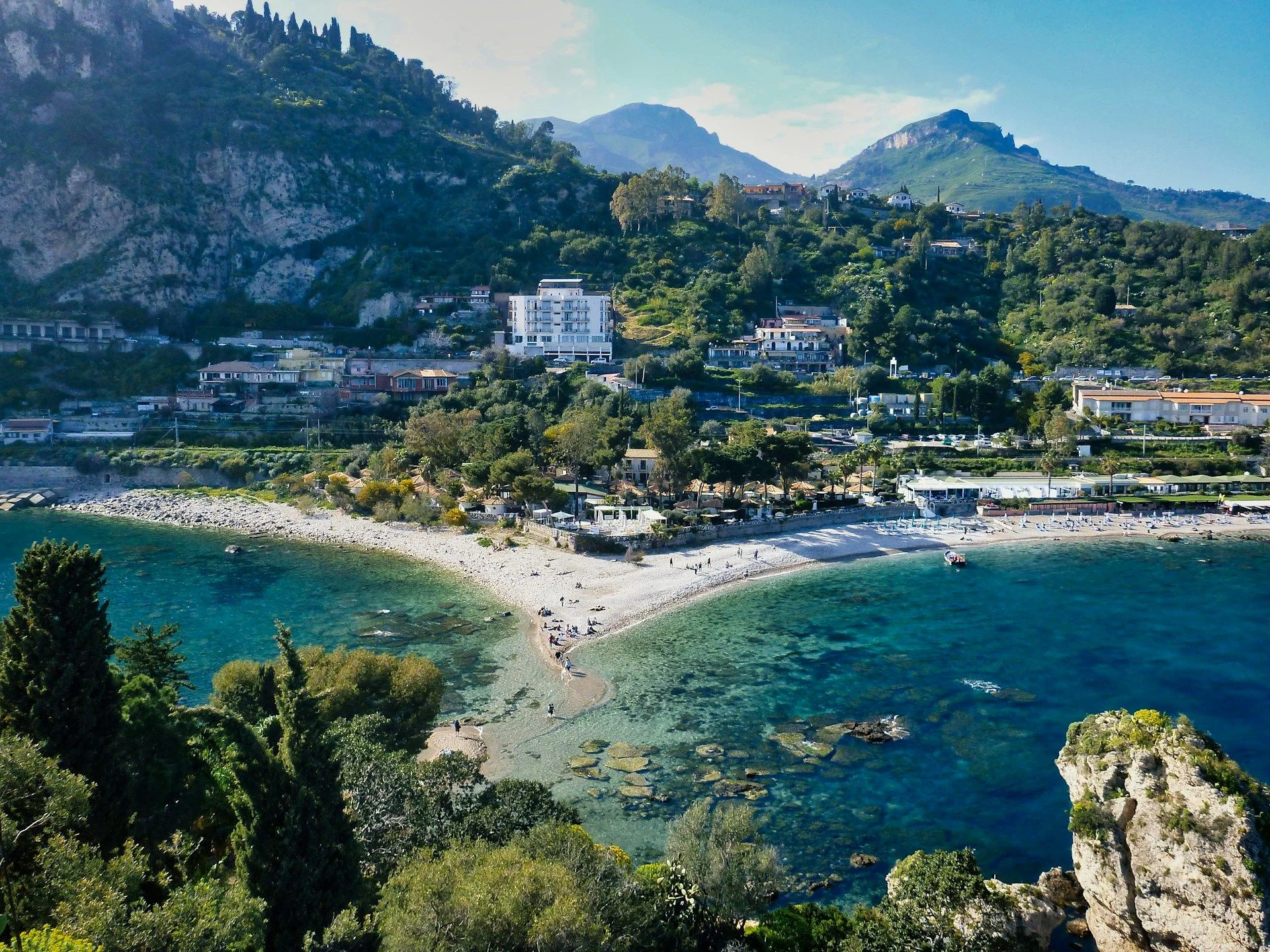
Commercial real estate for sale in TaorminaVerified listings for city expansion
Best offers
in Sicily
Benefits of investing in commercial real estate in Taormina


Tourism and public sector
Taormina's year-round tourism peaks, concentrated high-season commerce and a compact public services base sustain demand for retail, hospitality and service offices, implying variable occupancy cycles with mixed short-term leases and some stable public-sector tenancies
Relevant asset types
Tourism-driven hospitality, high-street retail and restaurants dominate Taormina, complemented by mixed-use conversions and small professional offices; strategies range from core long-term leases for public or medical tenants to value-add repositioning of historic commercial units
Expert selection support
VelesClub Int. experts define strategy, shortlist assets and run technical screening including tenant quality checks, lease structure review, yield logic assessment, capex and fit-out assumptions, vacancy risk evaluation and a structured due diligence checklist
Tourism and public sector
Taormina's year-round tourism peaks, concentrated high-season commerce and a compact public services base sustain demand for retail, hospitality and service offices, implying variable occupancy cycles with mixed short-term leases and some stable public-sector tenancies
Relevant asset types
Tourism-driven hospitality, high-street retail and restaurants dominate Taormina, complemented by mixed-use conversions and small professional offices; strategies range from core long-term leases for public or medical tenants to value-add repositioning of historic commercial units
Expert selection support
VelesClub Int. experts define strategy, shortlist assets and run technical screening including tenant quality checks, lease structure review, yield logic assessment, capex and fit-out assumptions, vacancy risk evaluation and a structured due diligence checklist








Useful articles
and recommendations from experts
Investment and leasing commercial property in Taormina
Why commercial property matters in Taormina
Taormina’s local economy is driven by tourism, a concentrated service sector and a small but consistent resident population, which together create defined demand profiles for commercial real estate. Visitor flows sustain hospitality and retail activity during high season while a year-round base of professional and municipal services supports demand for office space and specialized medical or education facilities. Investors, owner-occupiers and operators evaluate opportunities against this seasonal pattern and the town’s limited developable land, which tends to preserve rental premiums in core corridors. Commercial property in Taormina functions both as an income-generating asset when leased to tourism-related operations and as a strategic location for owner-occupiers seeking direct control of service or retail operations that rely on footfall and visual exposure.
The buyer universe in Taormina typically includes private investors focused on rental income, hospitality operators considering asset-light or asset-heavy models, and small to medium enterprises seeking owner-occupied premises. Public sector procurement and healthcare or education providers may also be active in selecting specialized space, particularly where historic buildings can be repurposed. The interaction between visitor seasonality and year-round local demand is central to underwriting cash flow assumptions for any commercial real estate in Taormina.
The commercial landscape – what is traded and leased
Trade and leasing activity in Taormina centers on distinct stock types: high-street retail and restaurant premises in pedestrian corridors, boutique hotels and small-scale hospitality assets clustered near tourist viewpoints, compact office suites serving professional services and municipal needs, and limited warehousing or light industrial units positioned for last-mile logistics. Unlike large urban markets, leasing markets here are characterized by smaller unit sizes, shorter supply pipelines and a higher proportion of mixed-use buildings where ground-floor commercial use coexists with upper-floor residential or lodging.
Value in Taormina can be lease-driven or asset-driven depending on the segment. Lease-driven value is predominant where long-term contracts with operating tenants create predictable income, for example established retail or long-stay hotel leases. Asset-driven value emerges where redevelopment potential, conversion to different permitted uses or refurbishment can materially alter income or occupancy — a common dynamic where older buildings can be upgraded to contemporary hospitality or specialist office functions. Understanding which driver dominates for a given asset class is essential when comparing deals in Taormina’s market.
Asset types that investors and buyers target in Taormina
Main asset types in Taormina reflect the town’s economic structure. Retail space in Taormina is concentrated in primary pedestrian corridors and near tourist nodes; these units command premium rents in peak months but show pronounced seasonality. Office space in Taormina is generally small-format and caters to professional services, tourism administration and creative businesses; prime office logic emphasizes location relative to visitor flows and municipal services, while non-prime offices compete on price and functional fit-out. Hospitality remains a dominant category, with small hotels, guesthouses and boutique accommodations representing both operating and investment opportunities.
Food and beverage premises — restaurants, cafes and bars — are critical and typically require bespoke fit-out and operational approvals. Warehouses and light industrial holdings are less common but important for logistics and supply chains that support hospitality and retail, especially for storage, distribution and provisioning during peak season. Revenue houses and mixed-use buildings that combine short-term accommodation on upper floors with retail at street level are often attractive to investors who can optimize multiple income streams. Comparisons between high-street retail and neighborhood retail hinge on footfall concentration, visibility and the tenant mix, while office comparisons focus on accessibility, serviceability and the availability of modern utilities or co-working models where applicable.
Strategy selection – income, value-add, or owner-occupier
Three primary strategies prevail in Taormina: income, value-add and owner-occupier. Income-oriented investors prioritize stable leases with operators that can generate year-round cash flow, favoring assets with longer lease terms, indexation clauses and demonstrable tenant performance across seasons. Value-add investors look for opportunities to increase net operating income through refurbishment, repositioning to higher-yield uses or re-tenanting to reduce vacancy; in Taormina this often involves capitalizing on historic building character while upgrading services for hospitality or boutique retail.
Owner-occupier purchases are common among local businesses that require continuity of location and control over fit-out and operations. Local factors that influence strategy choice include pronounced tourist seasonality, which raises vacancy and tenant churn risk during the off-season; regulatory intensity related to historic preservation and planning that can limit redevelopment scope; and a relatively shallow transactional market that increases due diligence lead times. Mixed-use optimization can be an effective middle ground, allowing owners to spread risk across multiple income types and to capture both tourist and resident demand.
Areas and districts – where commercial demand concentrates in Taormina
Commercial demand in Taormina concentrates along a small set of functional area types rather than across broad suburban grids. Primary pedestrian corridors and historic center routes attract retail, dining and tourist-facing hospitality because of concentrated foot traffic and visibility. Immediate waterfront and viewpoint-adjacent clusters support hospitality and experiential dining. Secondary neighborhood commercial strips provide everyday retail and professional services for residents and year-round guests. For logistics and storage, demand concentrates near access points to main roads and service nodes that enable quick provisioning of hotels and restaurants during high season.
When comparing areas, buyers should use a framework that weighs central visibility versus operational constraints, seasonality intensity, and potential competition or oversupply risk. Transport nodes and commuter flows matter for office tenants that rely on staff mobility, while tourism corridors dictate premium retail positioning. Industrial access and last-mile routes are crucial for warehouse property in Taormina where servicing hospitality and retail quickly is a priority. Investors should also assess the balance between tourism corridors and residential catchments to judge how much an asset’s income will depend on seasonal visitors versus local demand.
Deal structure – leases, due diligence, and operating risks
Typical deal analysis in Taormina focuses on lease terms, break options, indexation and service charge regimes. Buyers evaluate the remaining lease term, tenant covenant strength, rent review mechanisms and any tenant fit-out or reinstatement obligations that transfer cost and operational risk. Vacancy and reletting risk are elevated in highly seasonal segments, so underwriting should stress-test cash flows across low-season scenarios and consider tenant concentration risk where a few contracts represent a large share of income.
Due diligence covers physical condition, compliance with planning and heritage rules, operating expenses and capex requirements. Detailed review should include service charge allocation, energy efficiency and utility capacity where upgrades are needed, and an assessment of access constraints that could affect hotel or retail operations. Environmental and site-specific operational risks such as waste handling, logistical access and supply chain resilience matter for warehouse property in Taormina and for larger hospitality operations. While this overview is not legal advice, pragmatic diligence planning in Taormina typically allocates more time to regulatory checks and heritage constraints than similar-sized modern markets.
Pricing logic and exit options in Taormina
Pricing in Taormina is a function of micro-location, seasonal footfall, tenant quality and lease length, plus the physical condition and permitted uses of the asset. Buildings that require limited capital expenditure and have long-term tenants with steady off-season performance command pricing advantages. Conversely, assets with redevelopment potential or alternative use options may be priced with a premium for upside if planning risk is manageable. For warehouse property in Taormina, proximity to provisioning routes and operational flexibility are primary pricing drivers rather than tourist footfall.
Exit options include hold-and-refinance for income-focused investors, re-lease followed by sale when market conditions improve, and reposition-then-exit for value-add strategies where refurbishment or conversion materially increases earning potential. Owners can also optimize mixed-use assets by reconfiguring tenancy mixes to improve occupancy stability. Timing of exits should consider seasonality in buyer interest and the thinness of the local transaction market, which can extend marketing periods compared with larger urban centers.
How VelesClub Int. helps with commercial property in Taormina
VelesClub Int. supports commercial asset screening and selection in Taormina through a structured, client-focused process. First, we clarify investor objectives and operational constraints, distinguishing whether the priority is stable income, capital appreciation or owner occupation. Next, we define target segments and area types aligned with those objectives, whether that means prioritizing high-street retail corridors, small boutique hospitality assets, office suites close to municipal services or logistic nodes for warehouse property in Taormina.
VelesClub Int. shortlists assets by combining lease profile analysis, tenant risk assessment and a pragmatic capex estimate to highlight trade-offs between price and required investment. We coordinate due diligence steps, ensuring that regulatory and heritage constraints are evaluated early and that operational assumptions reflect seasonal demand patterns. In negotiation and transaction stages our role is to align commercial terms with client risk tolerances and to coordinate advisers, while leaving legal advice to qualified counsel. Selection and recommendations are tailored to the client’s goals, capacity and preferred strategy.
Conclusion – choosing the right commercial strategy in Taormina
Selecting the right commercial strategy in Taormina requires weighing seasonality, tenant stability, building condition and local regulatory constraints. Income strategies favor assets with stable, year-round tenants and conservative underwriting. Value-add approaches suit buyers willing to manage refurbishment and repositioning within the limits of historic preservation and planning. Owner-occupiers prioritize operational control and fit-out flexibility. Across all strategies, careful lease and operational due diligence, realistic capex planning and a clear exit pathway are essential to align risk with return expectations. For a practical, market-aware assessment and asset screening tailored to your objectives, consult VelesClub Int. experts to plan strategy and shortlist suitable opportunities to buy commercial property in Taormina.