
Commercial real estate brokers in LombardyCommercial support across key submarkets
Best offers
in Lombardy
Benefits of investing in commercial real estate in Lombardy


Layered Engines
Lombardy matters because Milan's office core, the industrial east, airport and logistics gateways, lake tourism, and production districts create several real commercial markets inside one region rather than one dominant pricing story
Provincial Fit
In Lombardy, offices, urban service buildings, logistics property, industrial compounds, hospitality assets, and selective roadside retail all fit, but only when matched to the province level demand pattern behind each submarket
Milan Trap
Lombardy is often priced through Milan prestige alone, yet the better comparison is between metropolitan depth, logistics access, manufacturing occupancy, and tourism spend, because similar assets can sit in completely different demand systems
Layered Engines
Lombardy matters because Milan's office core, the industrial east, airport and logistics gateways, lake tourism, and production districts create several real commercial markets inside one region rather than one dominant pricing story
Provincial Fit
In Lombardy, offices, urban service buildings, logistics property, industrial compounds, hospitality assets, and selective roadside retail all fit, but only when matched to the province level demand pattern behind each submarket
Milan Trap
Lombardy is often priced through Milan prestige alone, yet the better comparison is between metropolitan depth, logistics access, manufacturing occupancy, and tourism spend, because similar assets can sit in completely different demand systems








Useful articles
and recommendations from experts
Commercial property in Lombardy by regional function
Why Lombardy behaves like several regions at once
Commercial property in Lombardy should not be read as a single regional market led by one city. Milan is the dominant commercial core, but the region is much broader than a metropolitan office story. Lombardy combines a large urban services economy, strong manufacturing provinces, major logistics corridors, airport linked movement, lake tourism, and practical provincial markets where owner occupier demand still matters. That mix gives the region unusual internal depth and makes broad assumptions less useful than province by province reading.
This is why buy commercial property in Lombardy is rarely one decision type. A buyer entering central Milan, Monza and Brianza, Bergamo, Brescia, Varese, Como, Lodi, Pavia, Cremona, Mantova, or Sondrio is not entering the same commercial system. The labels may be similar, but the occupier base changes. In one part of the region the asset may depend on finance, consultancy, and urban consumption. In another it depends on manufacturing, warehousing, engineering, or airport logistics. Elsewhere, hospitality and second stay spending become the stronger drivers.
For that reason, commercial real estate in Lombardy is best understood as a linked network of submarkets rather than a single premium region. Its strength comes from overlap. Milan creates visibility and liquidity. The eastern and southern corridors create operational depth. The northern provinces bring cross border, tourism, and advanced manufacturing value. The better asset is usually the one that belongs to the right regional role, not simply the most famous location.
Milan anchors the office map in Lombardy
The dominant demand cluster in Lombardy is still metropolitan office and service use, and Milan is the reason. The city and its wider urban belt support finance, design, technology, legal services, consulting, media, life sciences, education, healthcare, and premium retail in a way no other part of the region can fully mirror. Office space in Lombardy therefore begins with Milan, but it does not end with the central core. The surrounding metropolitan municipalities, business parks, mixed use districts, and outlying service corridors also matter because they absorb demand that does not need a prestige central address but still needs access to the Milan system.
Monza and Brianza sits close to this metropolitan engine while keeping its own industrial and design identity. That makes it commercially useful for mixed office, engineering, light production, and service assets that benefit from proximity to Milan without depending entirely on Milan pricing. In this part of Lombardy, mixed commercial buildings and owner occupier properties often make more sense than pure prestige acquisitions because real business use remains a strong part of demand.
Retail space in Lombardy also behaves differently inside the Milan orbit. In the city, prime retail depends on pedestrian quality, brand relevance, and urban purchasing power. In the suburban ring, service retail, showroom space, food and beverage, medical uses, and convenience led formats often carry steadier logic. That distinction is important because the Milan story can make surrounding assets look more interchangeable than they really are.
Eastern Lombardy drives warehouse and industrial relevance
If Milan anchors the office market, eastern Lombardy gives the region much of its operational backbone. Bergamo and Brescia are especially important because they combine manufacturing strength, export oriented business culture, technical know how, and a dense network of industrial and service enterprises. This creates a commercial environment where warehouse property in Lombardy and operational assets make practical sense rather than existing as a secondary add on to the urban story.
In these eastern provinces, industrial compounds, light manufacturing premises, roadside service property, trade support buildings, and warehouses linked to supply chains can be more natural than classic office investments. Bergamo supports a broad business base with strong craft and industrial activity. Brescia adds engineering, metals, food related production, and tourism around Lake Garda and Lake Iseo. The result is a market where commercial buildings are often valued for utility, road access, and occupier fit rather than for image alone.
This is also where buyers can misread the region. They may assume that the most attractive commercial property in Lombardy is always the one closest to Milan. In practice, some of the clearest tenant logic sits in the east, where production, logistics, and local enterprise generate consistent occupancy needs. A warehouse or industrial service asset in the right Bergamo or Brescia corridor can be more straightforward to read than a loosely defined mixed use asset in a much more expensive metropolitan zone.
Across northern Lombardy, tourism and cross border access reshape value
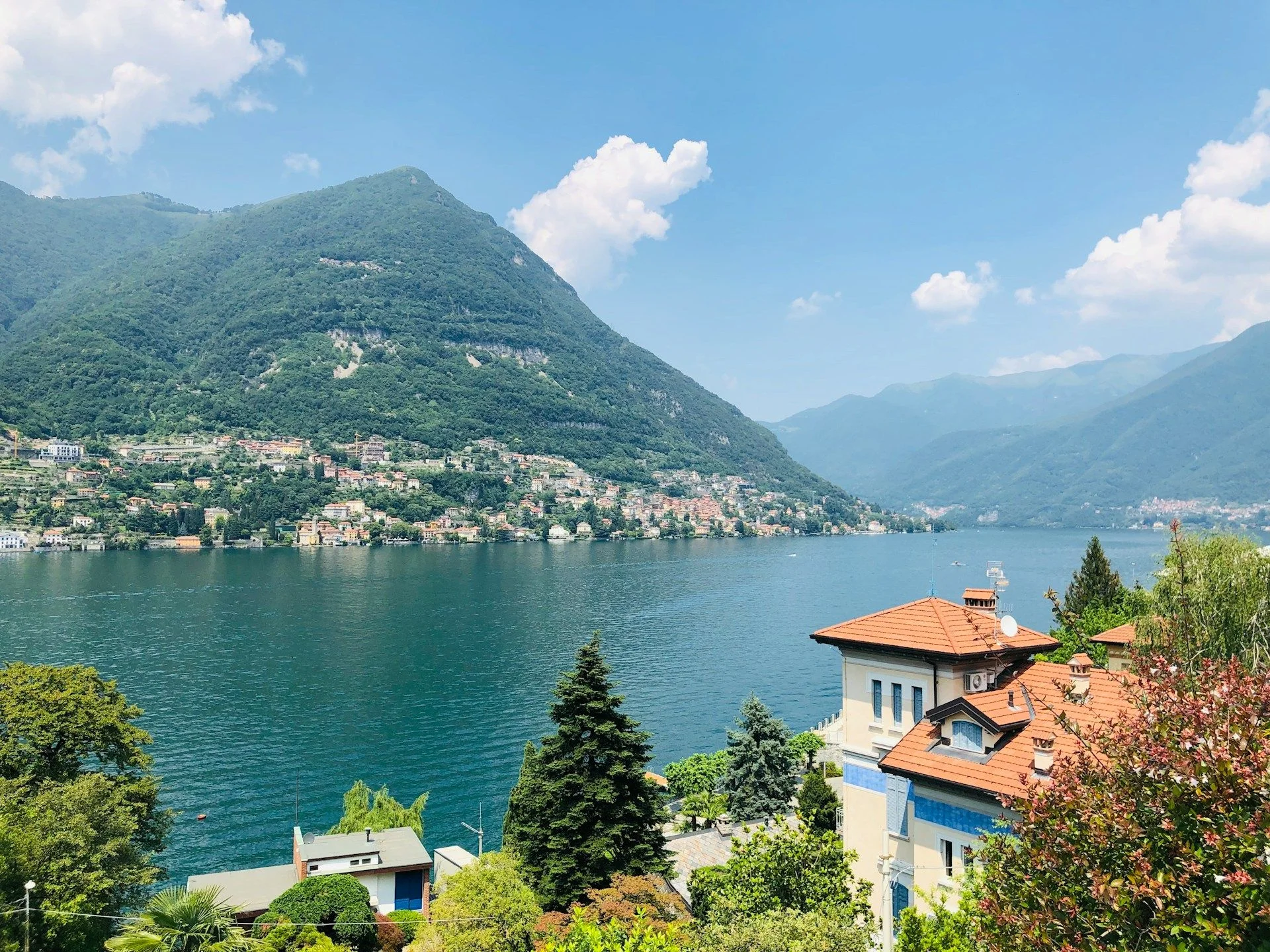
Northern Lombardy changes the regional asset hierarchy again. Varese matters because of Malpensa and its wider transport role. Como and Lecco bring a blend of industry, craftsmanship, and lake driven hospitality. Sondrio adds mountain tourism, lower density service demand, and selective hospitality relevance. These northern markets do not share one single pattern, but they do show why Lombardy cannot be screened through metropolitan assumptions alone.
In Varese, logistics and business movement have real commercial relevance. Access toward northern Europe, airport linked activity, and a strong production base make warehouse, service, and operational assets more meaningful than purely decorative commercial themes. Como and Lecco are different. They combine manufacturing and technical capacity with lake tourism, which means commercial property can shift quickly from industrial use to hospitality, dining, and service retail depending on the exact district and catchment. Retail space in Lombardy is therefore not one category even within the north. A lakefront hospitality linked unit and an industrial town service premises belong to very different demand systems.
This is where pricing can become deceptive. A northern asset may look expensive because of setting or cross border appeal, but the stronger comparison is whether the property is tied to stable production, practical mobility, or visitor spending. In Lombardy, scenic context does not automatically create better commercial logic. It has to align with an actual occupier story.
Southern Lombardy favors practical commercial use over prestige
Southern Lombardy brings another layer that is easy to underestimate. Lodi, Pavia, Cremona, and Mantova often work through logistics, agriculture linked industry, food processing, roadside trade, storage, and direct local business use rather than through metropolitan branding. Lodi is especially relevant for logistics because flat terrain, transport links, and large scale warehousing have reinforced its role in the regional movement of goods. Cremona and Mantova add industrial and agro industrial depth, while Pavia mixes provincial services with education and technical sectors.
In this part of the region, office space is usually secondary to operational commercial use. Small offices, mixed service buildings, medical premises, training space, local trade units, and owner occupier properties can be more natural than large speculative office acquisitions. Warehouse property in Lombardy often becomes more price efficient and more function driven once the search moves south of the Milan core, but only if the asset sits inside a real distribution or production geography.
That makes southern Lombardy commercially important even when it is less visible. Buyers looking for practical use, clearer land economics, or direct occupier logic may find these provinces more readable than prestige driven submarkets. The key is to compare them by role, not by image.
What makes one asset more workable in commercial real estate in Lombardy
The strongest asset in Lombardy is usually the one that matches its submarket's real economic function. In Milan, that may mean office or mixed use property tied to business services and dense urban consumption. In Monza and Brianza, it may mean a building that supports engineering, design, or owner occupier operations. In Bergamo or Brescia, it may be an industrial support property or warehouse that fits a production corridor. In Varese, airport and logistics relevance may matter more. In Como, Lecco, or Sondrio, hospitality and service assets need to be screened against tourism rhythm rather than generic regional pricing.
This is where VelesClub Int. becomes useful. Lombardy offers many commercial formats, but too many comparisons are made at the wrong level. A metropolitan office unit, an eastern warehouse, a lake hospitality asset, and a southern owner occupier property should not be judged through one valuation lens. VelesClub Int. helps separate metropolitan demand, industrial occupancy, logistics functionality, and tourism exposure so that the reader can identify what kind of commercial market they are actually entering.
The practical test is simple but not superficial. What type of tenant or operator naturally belongs here, and what regional function supports that use? In Lombardy, that question usually explains more than headline prestige.
Questions that clarify commercial property in Lombardy
Why does commercial property in Lombardy feel more fragmented than in many other Italian regions?
Because Lombardy combines a dominant metropolitan core with strong industrial provinces, logistics corridors, airport linked districts, and lake tourism markets. Similar assets may therefore rely on completely different demand structures even when they sit inside one region.
Is Milan always the best place to buy commercial property in Lombardy?
Not always. Milan is the deepest office and service market, but warehouse, industrial, and owner occupier logic can be stronger in provinces such as Bergamo, Brescia, Lodi, or Varese when the asset depends more on operations than on metropolitan prestige.
When does hospitality become more relevant than industry in Lombardy?
Mostly in the lake and mountain provinces, and in districts where visitor stay patterns are strong enough to support hotels, dining, and service retail. Even there, the exact catchment matters because tourism value is not evenly distributed across northern Lombardy.
Why can two warehouses in Lombardy behave very differently?
Because one may sit inside a true logistics or production corridor while another is simply cheaper land with weaker access and occupier depth. In this region, connectivity and regional function matter more than warehouse category alone.
What is the most common comparison mistake in Lombardy?
Buyers often compare all assets against Milan pricing or Milan prestige. The sharper method is to ask whether the property belongs to the metropolitan office market, a manufacturing corridor, an airport and logistics belt, or a tourism and hospitality district.
A clearer regional reading of Lombardy with VelesClub Int.
Lombardy works best when it is read as a layered commercial region rather than a Milan only economy. Milan anchors the office and service core, Monza and Brianza extends mixed business depth, Bergamo and Brescia strengthen industrial and warehouse relevance, Varese adds airport and logistics logic, the lake provinces reshape hospitality value, and the southern provinces support practical commercial use through logistics and production. That is what makes the region commercially rich and also easy to misread.
With VelesClub Int., commercial property in Lombardy can be assessed through regional role instead of surface reputation. That creates a calmer and more disciplined way to compare office, retail, warehouse, hospitality, and mixed use assets across a region where the best decision usually comes from understanding not only where the property is, but what economic function the surrounding territory already performs.