
Commercial real estate in CapriSelected assets for city growth
Best offers
in Campania
Benefits of investing in commercial real estate in Capri


Tourism-driven demand
Capri's commercial demand is concentrated on tourism-driven sectors, including hospitality, luxury retail, marina services and seasonal food and beverage operators, producing summer revenue peaks and lease profiles mixing short-term seasonal contracts with selective longer-term arrangements
Core segments and strategies
Common Capri commercial segments include boutique hospitality, high-street luxury retail, restaurants, small professional offices and marina-related services, supporting strategies from core long-term leases for stable operators to value-add repositioning and mixed-use conversions of existing buildings
Selection and screening support
VelesClub Int. experts define strategy, shortlist assets and run screening processes that include tenant quality checks, lease structure review, yield logic assessment, capex and fit-out assumptions, vacancy risk analysis and due diligence checklist
Tourism-driven demand
Capri's commercial demand is concentrated on tourism-driven sectors, including hospitality, luxury retail, marina services and seasonal food and beverage operators, producing summer revenue peaks and lease profiles mixing short-term seasonal contracts with selective longer-term arrangements
Core segments and strategies
Common Capri commercial segments include boutique hospitality, high-street luxury retail, restaurants, small professional offices and marina-related services, supporting strategies from core long-term leases for stable operators to value-add repositioning and mixed-use conversions of existing buildings
Selection and screening support
VelesClub Int. experts define strategy, shortlist assets and run screening processes that include tenant quality checks, lease structure review, yield logic assessment, capex and fit-out assumptions, vacancy risk analysis and due diligence checklist








Useful articles
and recommendations from experts
Practical guide to commercial property in Capri
Why commercial property matters in Capri
Commercial property in Capri functions as a core component of the local economy because the island concentrates a mix of tourism-driven trade, professional services and selective local services that require physical premises. Demand derives from seasonal hospitality operations, specialty retail operators catering to high-spend visitors, small professional offices that serve island residents and businesses, and logistical nodes around the ports that support supplies and deliveries. Buyers range from local owner-occupiers who need premises to operate a hospitality or retail business, to domestic and international investors buying for income and capital preservation, and to operators looking for sites to run guest accommodation or food and beverage outlets. Understanding how these buyer types interact with Capri’s compact geography and high seasonality is essential to assessing the viability of any commercial acquisition.
The concentration of high-value consumer spending during peak months amplifies the importance of well-located commercial real estate in Capri, while year-round local demand supports smaller-scale retail and service leases. Sectors such as hospitality and retail are often the price setters for street-level locations, while office demand tends to be concentrated in compact professional clusters and above-ground floors. Healthcare and education have a limited footprint but can become anchors in specific neighborhoods, and light logistics around the ports influence last-mile supply chains. The result is a market where floorplate, frontage and proximity to tourist corridors materially affect rent levels and asset value.
The commercial landscape – what is traded and leased
The commercial landscape in Capri comprises a mix of business districts and tourism clusters rather than expansive industrial zones. Typical stock includes high-street retail along major pedestrian routes, compact office suites and professional workshops above ground-floor businesses, hospitality units including small hotels and guesthouses, and limited warehousing concentrated near port areas used for island logistics. Lease-driven value is prominent for street-front units where rental income and seasonal yield determine market pricing, while asset-driven value is stronger in buildings that offer redevelopment potential, structural quality or alternative use potential beyond the immediate trade cycle.
In Capri, the distinction between lease-driven and asset-driven value is visible in two adjacent properties with similar footprints: one may command a premium because of an established, long-term tenant and tourism footfall, while another with the same physical characteristics but short-term leases or high capex needs may be valued on its redevelopment prospects. Operators and investors therefore trade both lease security and physical asset attributes. The compact nature of the market means that vacancy risk, tenant mix and maintenance exposure are immediately reflected in price discovery, and lease terms often include seasonal clauses and indexing to account for the island’s demand volatility.
Asset types that investors and buyers target in Capri
Retail space in Capri remains one of the most actively traded segments due to the concentration of visitors and high-street corridors. Investors compare high-street flagship locations versus neighborhood retail that serves residents and local workers: high-street units benefit from peak-season footfall and tourist spending but come with higher price per square metre and tighter tenant expectations, while neighborhood retail trades on steadier, year-round cashflow with lower headline rents.
Office space in Capri tends to be small-format and specialist, with demand from professional services, small creative firms and back-office functions related to tourism. Prime office logic favours centrality, easy client access and integrated facilities, whereas non-prime office stock is judged on rental flexibility and conversion potential. Serviced office concepts have limited penetration but can appeal to seasonal operators seeking short-term, fully equipped accommodation for staff and administrative activities.
Hospitality and restaurant-cafe-bar premises are a distinct asset class in Capri, where location relative to plazas, beaches and transportation nodes determines trading potential. Lease structures often combine base rent with turnover clauses or seasonal adjustments. Warehouses and light industrial units are scarce but strategically important: warehouse property in Capri is typically situated near port areas to support supplies and short-term storage for hospitality and retail operators, and investors evaluate these assets on accessibility and operational constraints imposed by island logistics.
Revenue houses and mixed-use buildings can offer diversification for investors, combining ground-floor retail with residential or office units above. In Capri, mixed-use assets benefit from occupying multiple market segments, reducing single-tenant concentration risk and providing options to reconfigure space for alternative uses if market conditions change. Throughout these comparisons, supply chain and e-commerce logic should be factored where goods distribution and stock replenishment timing influence tenant operating costs and therefore rent sustainability.
Strategy selection – income, value-add, or owner-occupier
Income-focused strategies in Capri prioritize long-term, stable leases with creditworthy tenants or established hospitality operators that provide predictable cashflow through peak and off-peak cycles. Local factors that favor income strategies include high entry pricing for prime retail and limited new supply in central zones, which can make long leases attractive despite seasonality. Investors must nonetheless assess tenant concentration and the durability of trading patterns outside high season.
Value-add strategies target assets where refurbishment, repositioning or re-leasing can materially increase net operating income. In Capri this approach is frequently applied to underutilized upper floors above retail, buildings needing aesthetic upgrades to match premium surroundings, or properties where lease terms can be renegotiated to capture higher seasonal yields. Seasonality and permitting constraints in island contexts can extend project timelines, so investors should factor longer holding periods and local approval processes into their repositioning plans.
Mixed-use optimization seeks to balance retail or hospitality income with residential or office leases to create a diversified revenue stream. This strategy is relevant where zoning and building structure permit conversion, and where there is buyer demand for smaller, flexible units. Owner-occupier purchases are common among hospitality operators and restaurateurs who prioritize operational control and on-site customization; owner-occupier logic in Capri emphasizes proximity to tourist corridors, access to supply routes and the ability to manage seasonal staffing and maintenance cycles.
Areas and districts – where commercial demand concentrates in Capri
Commercial demand in Capri concentrates in a few distinct area types that reflect visitor flow and local circulation patterns. The central square and main pedestrian corridors act as the island’s highest-demand retail and hospitality zone, with strong footfall during the season and correspondingly higher rents. Secondary tourism corridors that lead to beaches and viewing points create clusters of hospitality and leisure businesses with a different trading profile and often shorter lease tenures.
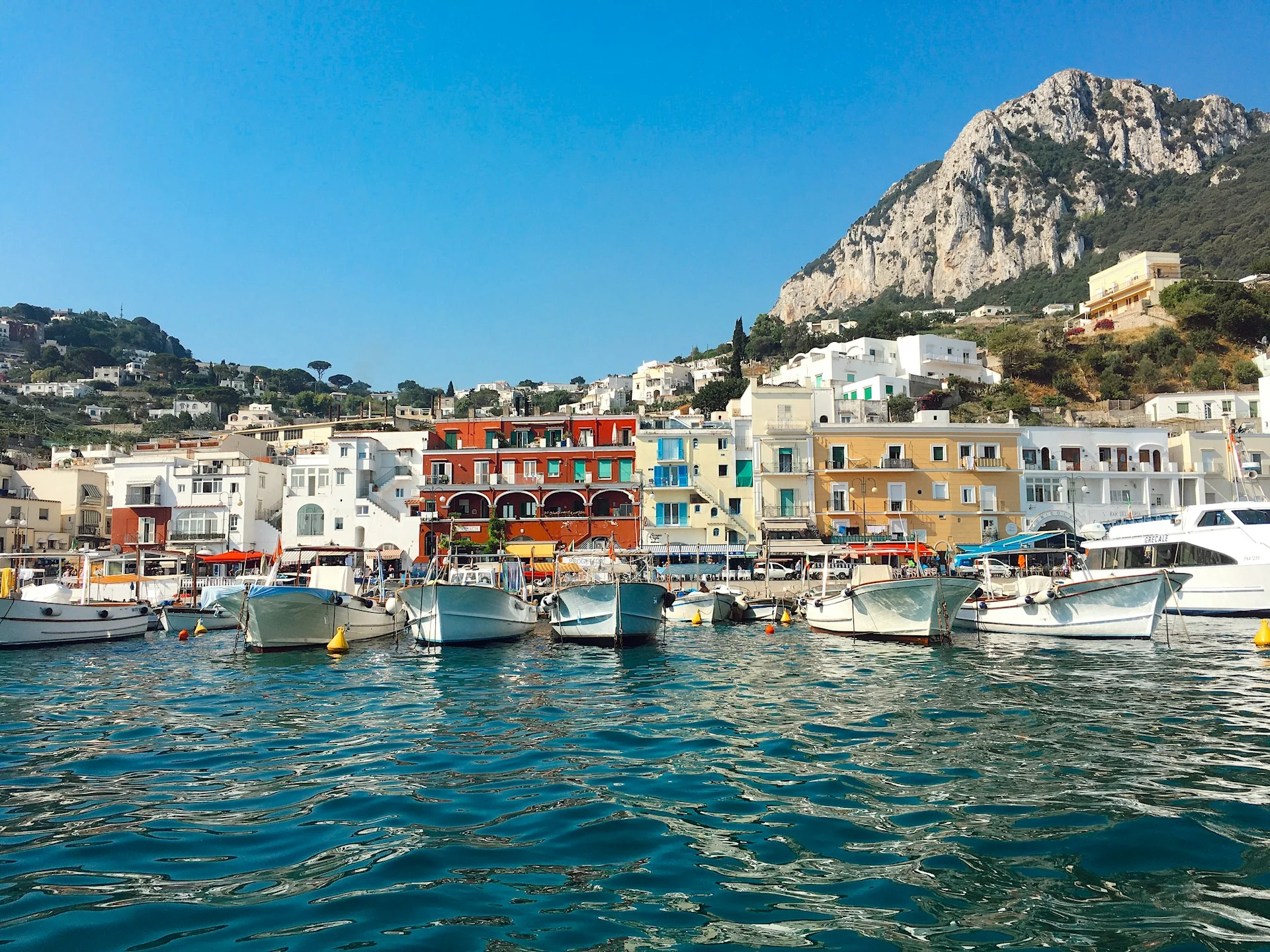
Marina areas near the main ports serve both as logistical hubs and as locations for food and small retail units that capture arrivals and departures. Anacapri, while quieter than the main town, supports a different commercial demand profile with a greater emphasis on local services, small-scale retail and professional offices that serve permanent residents. When evaluating locations, investors should apply a district selection framework that weighs centrality versus operational constraints, transport node proximity, residential catchment strength, and the potential for seasonal oversupply in narrow corridors.
For buyers assessing asset location, the trade-off between tourism corridors and residential catchments is critical. Tourism corridors deliver higher headline rents but elevated vacancy and tenant churn risk outside peak months. Residential catchments and commuter flows support steadier income but at lower rent levels. Industrial access and last-mile routes are concentrated near ports and service areas; those sites are functionally important but rare, and they carry specific operational constraints tied to island logistics and limited expansion possibilities.
Deal structure – leases, due diligence, and operating risks
Negotiations and deal structuring in Capri commonly focus on lease length, break options, indexation clauses and the allocation of fit-out responsibilities. Buyers review service charge arrangements, provisions for seasonal rent adjustments or turnover rent mechanisms, and tenant obligations for maintenance and insurance. Vacancy and reletting risk is magnified on the island because of limited alternative tenants for certain use types and the high sensitivity of trading to seasonal demand.
Due diligence priorities include an assessment of lease documentation, confirmation of permitted use and any planning restrictions, condition surveys to identify capex liabilities, and operational cost reviews including utilities and local service charges. Compliance costs and capex planning are particularly important when buildings have heritage constraints or require upgrades to meet modern hospitality or retail standards. Tenant concentration risk should be modelled for revenue stability, and potential costs associated with tenant fit-outs or reversions must be budgeted realistically. These are practical, preparatory steps rather than legal advice, and they define the commercial viability of a deal.
Pricing logic and exit options in Capri
Pricing in Capri is driven by location and footfall, tenant quality and remaining lease length, building quality and immediate capex needs, and alternative use potential. High-visibility locations with proven seasonal trading and solid short-term tenants will command a premium, whereas assets requiring significant refurbishment are valued on the basis of achievable repositioning outcomes. Investors should also assess the liquidity of different asset types, since niche industrial or specialized hospitality properties may be harder to exit quickly compared with prime retail or well-located mixed-use buildings.
Exit options typically include holding the asset to generate income and potentially refinancing to optimize capital structure, re-leasing under improved terms prior to sale to enhance marketability, or repositioning the asset and selling to a different buyer profile. Market timing relative to the tourism cycle and local transaction activity should inform exit planning. Re-leasing then exit is a common pathway for assets where rent improvements materially increase attractiveness to investor buyers, while reposition then exit is used where physical upgrades open alternative use cases or attract higher-quality tenants.
How VelesClub Int. helps with commercial property in Capri
VelesClub Int. supports commercial asset selection in Capri through a structured process that begins with clarifying the client’s objectives, time horizon and risk tolerance. The next step defines target segments and districts tailored to those objectives, whether the priority is retail-led income, hospitality operations, office consolidation or logistical support near port infrastructure. VelesClub Int. shortlists assets based on lease and risk profile, screening for tenant quality, lease terms and capex exposure to focus diligence on commercially relevant items.
During due diligence coordination VelesClub Int. assists with document management, arranges physical and technical surveys, and consolidates commercial risk analysis for negotiation. The advisory output is aimed at helping clients evaluate trade-offs between immediate income and longer-term repositioning potential, and supporting transaction steps without providing legal advice. Selection and negotiation support is tailored to each client’s operational capabilities and investment criteria, and VelesClub Int. frames opportunities against the island’s seasonal and logistical characteristics to align acquisition strategy with expected performance.
Conclusion – choosing the right commercial strategy in Capri
Choosing the right commercial strategy in Capri depends on aligning asset type, lease structure and location with the investor’s objectives and operational capabilities. Income strategies favor established, well-located leases; value-add approaches require careful timing and capital planning given island permitting and seasonal cycles; owner-occupiers must weigh the benefits of operational control against the cost and availability of suitable premises. Investors who plan to buy commercial property in Capri should prioritize rigorous lease review, realistic capex budgeting and a district selection framework that reflects tourist flow and local demand patterns.
For strategic asset selection and practical screening of opportunities in the Capri market, consult VelesClub Int. experts to clarify objectives, narrow target segments and evaluate risks associated with tenancy, seasonality and operational logistics. VelesClub Int. can help structure the due diligence and selection process so that final decisions rest on clear commercial analysis rather than general assumptions.