
Commercial real estate for sale in HesseVerified listings for regional expansion
Best offers
in Hesse
Benefits of investing in commercial real estate in Hesse

State leverage
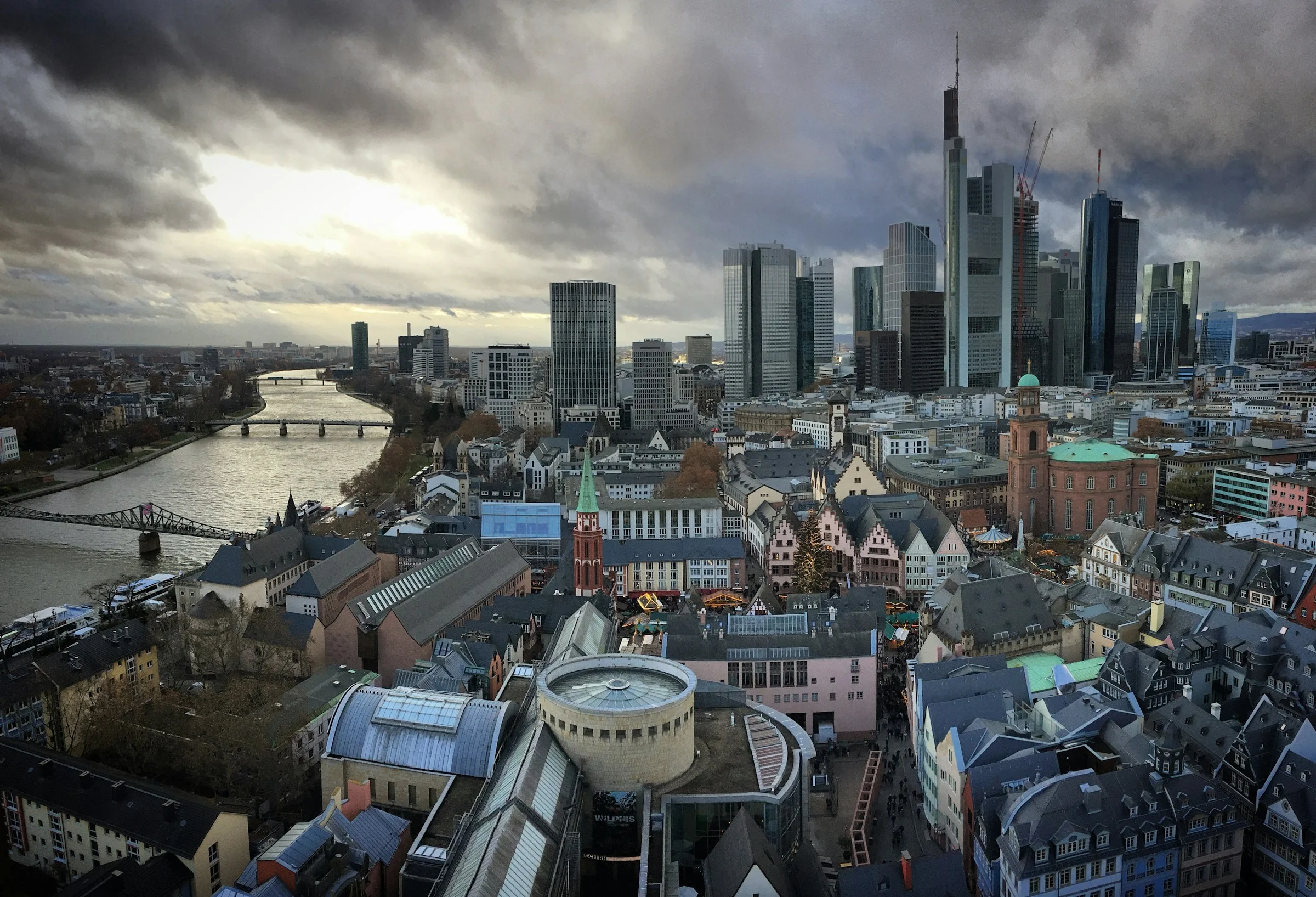
Hesse stands out because Frankfurt finance, Wiesbaden administration, Darmstadt science and Kassel logistics sit inside one state, letting buyers read offices, trade space and support property through function instead of simple city hierarchy
Corridor logic
Office and mixed-use buildings fit strongest in the Rhine-Main core, while industrial units, warehousing and roadside premises gain weight where airport access, motorway flow, chemical industry and regional distribution actually shape occupier demand
North shortcut
Many buyers judge Hesse only through Frankfurt, yet stronger decisions come from state balance, because a Wiesbaden service block, Darmstadt lab-linked office and Kassel logistics asset answer very different business needs
State leverage
Hesse stands out because Frankfurt finance, Wiesbaden administration, Darmstadt science and Kassel logistics sit inside one state, letting buyers read offices, trade space and support property through function instead of simple city hierarchy
Corridor logic
Office and mixed-use buildings fit strongest in the Rhine-Main core, while industrial units, warehousing and roadside premises gain weight where airport access, motorway flow, chemical industry and regional distribution actually shape occupier demand
North shortcut
Many buyers judge Hesse only through Frankfurt, yet stronger decisions come from state balance, because a Wiesbaden service block, Darmstadt lab-linked office and Kassel logistics asset answer very different business needs


Useful articles
and recommendations from experts
Commercial property in Hesse by state role
Commercial property in Hesse matters because this state does not behave like one dominant city with weaker surroundings. It behaves like a tilted system. The south is driven by Frankfurt and the wider Rhine-Main economy, where finance, airport movement, services and dense commuter flows create the strongest office and mixed-use benchmark. But the state does not stop there. Wiesbaden adds administration and insurance depth, Darmstadt adds science and technical business demand, Central Hesse widens the healthcare and university layer, and Kassel gives the north a very different logistics and industrial profile. That internal split is what makes Hesse commercially useful.
This is why commercial real estate in Hesse should not be read through one pricing map. A property in Frankfurt, a service building in Wiesbaden, a specialist office near Darmstadt and a warehouse property in Hesse near Kassel are not stronger or weaker versions of the same asset. They belong to different demand systems inside one state. Buyers who flatten Hesse into a simple Frankfurt story usually miss the point. The state works because unlike submarkets reinforce one another instead of repeating one another.
Why Hesse cannot be read from Frankfurt alone
The strongest first step is to stop treating Hesse as if it were just the outer shell of Frankfurt. Frankfurt is the loudest commercial engine, but not the only one. The state also carries its political capital in Wiesbaden, one of Germany's most important airport and motorway interfaces in the Rhine-Main area, a science-heavy city in Darmstadt, a university and healthcare belt through Central Hesse, and a northern logistics platform around Kassel. This creates one of the clearest north-south contrasts in Germany.
That contrast changes asset selection. In some parts of Hesse, value comes from high-intensity office and professional occupancy. In others, it comes from transport utility, distribution reach or practical local service demand. The right question is therefore not which city sounds strongest. The right question is what role the building plays inside the state economy.
Office space in Hesse starts in Frankfurt
Office space in Hesse begins with Frankfurt because no other city in the state matches its mix of finance, legal work, consulting, hospitality, transport reach and daily professional movement. The city creates the clearest benchmark for high-density office buildings, mixed-use blocks and service-led commercial property. It is also the place where commercial activity spills into hotels, food-led ground floors, convenience retail and transit-oriented urban premises with unusual force.
But even here, centrality alone is not enough. A stronger Frankfurt asset is usually one that sits inside a real business pattern rather than one that relies only on a prime label. Buildings connected to the right office corridors, commuter movement and service density tend to make more sense than buildings that are merely expensive. In Hesse, Frankfurt sets the tone, but it does not define every good commercial reading in the state.
Wiesbaden gives Hesse an administrative commercial layer
Wiesbaden changes the state picture because it adds a different kind of stability. The city carries administrative depth, insurance and service demand, local professional occupancy, hospitality and a more measured urban rhythm than Frankfurt. That makes it especially relevant for offices, mixed-use buildings, healthcare-related premises and service-led retail that depend on continuity more than on financial intensity.
For buyers, Wiesbaden matters because it proves that good commercial property in Hesse does not always need the highest volume market. Sometimes it needs the steadier one. A building there may work because it belongs to a durable pattern of public-facing services, daily business use and local spending rather than to the fastest-moving office core in the state.
Darmstadt changes specialist demand in Hesse
Darmstadt gives Hesse one of its most useful specialist submarkets. Science, engineering, research, technical business services and education create a commercial environment where offices, mixed-use buildings and lab-adjacent service property can make sense in a way that is different from both Frankfurt and Wiesbaden. This is not generic suburban office demand. It is a more focused knowledge-economy layer.
That makes user fit especially important. A building in Darmstadt is strongest when it serves technical occupiers, research-linked services or the daily needs of a science-oriented business environment. Buyers who compare Darmstadt only by broad office pricing often miss what is actually carrying value there. In Hesse, specialist demand can be more powerful than prestige when the local ecosystem is clear.
In Hesse the airport corridor makes support property matter
One of the state's most important commercial features is the airport and motorway belt in southern Hesse. This is where support property, trade units, practical offices, airport-facing hotels, selective warehouse property in Hesse and mixed operational space gain weight. The strongest reading is not grand logistics by image. It is high-value servicing. The region needs storage, supply, maintenance, business travel support and flexible space close to one of Europe's most important movement hubs.
That means operational property should not be treated as secondary simply because Frankfurt office stock dominates the state's reputation. In reality, useful support space around the airport and the Rhine-Main transport web can be commercially stronger than a more visible building elsewhere if it solves a real daily business problem. Utility and access often matter more than symbolism in this layer of Hesse.
North Hesse gives the state a second commercial axis
North Hesse changes the story again. Around Kassel, the state becomes less about finance and more about logistics, manufacturing support, distribution, trade and practical business movement. This gives Hesse a second commercial axis that is easy to overlook if the south dominates the analysis. Kassel matters not because it imitates Frankfurt, but because it solves different needs inside the state and beyond it.
For buyers, that makes the north especially relevant for industrial units, warehouses, roadside premises, trade-support property and selected mixed-use stock tied to local service demand. A building here should be judged through route utility, labour reach, replacement practicality and its role in a working corridor. In Hesse, the northern market gives the state balance by doing a job the southern metro core does not do.
Central Hesse keeps service demand broad
Between those stronger poles sits a quieter but commercially useful middle layer. Central Hesse supports healthcare, education, administration, local offices, student-related demand, food-led retail and everyday service property. This part of the state matters because it keeps the commercial story from becoming too dependent on one premium metro and one logistics north. In cities and towns with stable institutional activity, mixed-use property and service-led assets can perform through habit and necessity rather than through scale.
That is important for retail space in Hesse as well. A smaller service unit in the right central location can be more durable than a louder premises in a market driven by higher rents and thinner margins. Not every good commercial asset in Hesse needs a skyline, an airport or a freight corridor. Some simply need a strong daily-use pattern and a reliable local role.
Retail space in Hesse follows routine before spectacle
Retail space in Hesse is broader than luxury city-centre frontage and commuter food corridors. The state supports convenience retail, pharmacies, health and beauty services, neighbourhood mixed-use premises, food-led trade, local hospitality and practical district commerce across very different urban settings. What changes is not whether retail works, but what kind of spending actually drives it.
In Frankfurt, food, convenience and transport-heavy demand often matter most. In Wiesbaden, district continuity and service use can be stronger. In Central Hesse, routine local consumption may be the real driver. In tourist and leisure pockets, short-term spend can help, but it rarely replaces everyday need. Buyers who want to buy commercial property in Hesse should therefore compare retail by customer rhythm, not by simple visibility.
Pricing in Hesse follows role more than geography
Pricing in Hesse can look simple from a distance because Frankfurt pulls the headlines upward. In practice, the state contains several distinct value systems. A Frankfurt office may price around intensity and scarcity. A Wiesbaden service building may price around continuity. A Darmstadt asset may depend on specialist fit. A Kassel warehouse may derive its logic from movement and servicing. Two buildings of similar size can therefore have almost nothing in common commercially.
That is why a stronger reading begins with function before price. What problem does the building solve. Which flow does it capture. Which local system keeps it relevant. In Hesse, those questions usually explain value more clearly than a broad regional average ever can.
VelesClub Int. and commercial property in Hesse
Hesse is exactly the kind of state where structure matters more than noise. VelesClub Int. helps by separating the Rhine-Main office core, the administrative layer of Wiesbaden, the specialist logic of Darmstadt, the quieter service markets of Central Hesse and the northern corridor around Kassel into clearer commercial roles. That makes unlike assets easier to compare without forcing them into one state-wide template.
This is especially useful in a market where buyers often overreact to one city. Some focus too heavily on Frankfurt. Others move too quickly toward cheaper northern or secondary locations without understanding what actually drives them. A clearer Hesse reading comes from matching the asset to the right local economy, not from assuming every part of the state should look like the capital of finance.
Questions that sharpen commercial property in Hesse
Why can a Wiesbaden or Darmstadt asset be more practical than a louder Frankfurt property
Because the right building there can serve steadier administrative, insurance, scientific or technical demand. A clearer local role can sometimes create more durable occupier logic than a more expensive Frankfurt address.
When is warehouse property in Hesse more convincing than buyers first expect
Usually when it sits in the airport and motorway web of the south or in the Kassel corridor in the north, where movement, servicing and replacement scarcity overlap in a commercially meaningful way.
Why does North Hesse matter if Frankfurt dominates the state economy
Because the north solves a different problem. It supports logistics, trade and distribution in ways the southern office core does not, which makes it commercially useful rather than simply cheaper.
How should buyers compare Frankfurt and Darmstadt in commercial terms
Not as direct substitutes. Frankfurt usually reads more strongly through finance, mixed-use density and large office demand, while Darmstadt often makes more sense through research, engineering and specialist service occupancy.
Why can a smaller retail or service unit in Central Hesse read better than a more visible city asset
Because repeated daily spending, healthcare demand, education-related use and local continuity can create steadier occupancy logic than a louder address with higher costs and less reliable routine trade.
A clearer commercial reading of Hesse
Hesse is commercially relevant because it combines several working markets inside one state. Frankfurt anchors office and mixed-use intensity. Wiesbaden broadens the administrative and insurance layer. Darmstadt sharpens the science and specialist-office story. The airport belt gives support property unusual weight. North Hesse provides a second corridor through logistics and trade. Central Hesse keeps daily service demand broad and grounded.
The strongest way to read commercial property in Hesse is therefore by state role, corridor access, local continuity and specific business function. Different assets make sense here for different reasons, and the state rewards buyers who match format to the right submarket instead of chasing one simplified Frankfurt narrative. VelesClub Int. helps turn broad interest in Hesse into a calmer and more practical commercial framework.