
Commercial property for sale in Hamburg regionRegional opportunities for business growth
Best offers
in Hamburg region
Benefits of investing in commercial real estate in Hamburg region

Port overlap
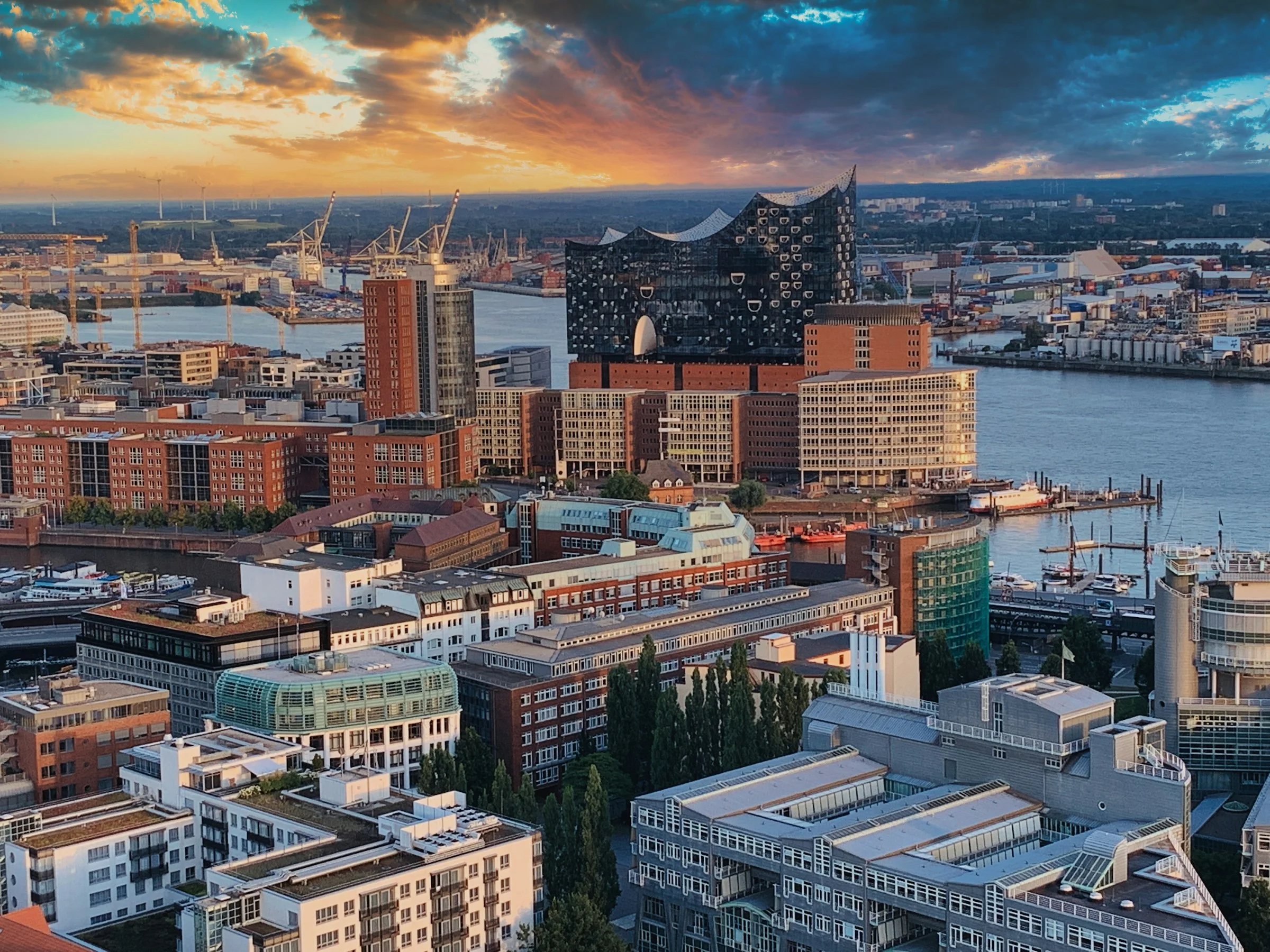
Hamburg region matters because port trade, central office districts, airport-linked business space and southern logistics belts sit unusually close together, so commercial value comes from overlap between maritime movement, services and daily metropolitan demand
Working nodes
Office and mixed-use buildings fit best from City Nord to HafenCity, while logistics, trade and service premises read strongest in Billbrook, Harburg and airport-facing zones where access and operational utility really matter
Wrong average
Many buyers compare Hamburg region through central office pricing, yet stronger decisions come from node role, because a HafenCity mixed-use block, a Billbrook warehouse and a Harburg business unit answer different occupier needs
Port overlap
Hamburg region matters because port trade, central office districts, airport-linked business space and southern logistics belts sit unusually close together, so commercial value comes from overlap between maritime movement, services and daily metropolitan demand
Working nodes
Office and mixed-use buildings fit best from City Nord to HafenCity, while logistics, trade and service premises read strongest in Billbrook, Harburg and airport-facing zones where access and operational utility really matter
Wrong average
Many buyers compare Hamburg region through central office pricing, yet stronger decisions come from node role, because a HafenCity mixed-use block, a Billbrook warehouse and a Harburg business unit answer different occupier needs


Useful articles
and recommendations from experts
Commercial property in Hamburg region by port layer
Commercial property in Hamburg region matters because this market is built on overlap. It is not only an office city, not only a port economy and not only a logistics platform. It works because those layers sit unusually close to one another. The central urban core carries office, hospitality, retail and professional services. The port and river zones shape logistics, trade support and industrial servicing. The south of the Elbe keeps practical business space relevant. The airport side adds another layer of movement-based commercial use. All of that happens inside one metro structure where daily labour, goods and services move constantly between very different districts.
That is why commercial real estate in Hamburg region needs a metro reading rather than a simple city-centre reading. A buyer who looks only at prime offices misses why support property and logistics units remain structurally important. A buyer who looks only at warehouses misses the value of mixed-use buildings and high-density service locations. Hamburg region is strongest when it is read through node role, river access, airport reach and everyday metropolitan servicing rather than through one average price map. VelesClub Int. helps make those differences easier to read.
Why Hamburg region works through several commercial layers
The strongest way to understand Hamburg region is to stop treating it as one uniform city market. It behaves more like a chain of commercial environments linked by the port, the river, the ring roads, the rail system and one of the largest labour pools in northern Europe. The centre carries office and mixed-use demand. The port-facing zones carry logistics and trade. The southern belt holds operational space that the centre cannot easily absorb. Outer business locations pick up airport, distribution and service functions. That internal structure is the reason the market stays commercially broad.
This matters because unlike in a single-core office city, location quality in Hamburg region is not defined only by prestige. A building can be strong because it sits in the right functional layer. The strongest properties are usually the ones that belong clearly to a real movement pattern, a real service district or a real logistics requirement. In this market, fit often matters more than image.
In Hamburg region the centre is not the whole office story
The central districts still set the main benchmark for office space in Hamburg region. This is where legal work, consulting, media, hospitality, retail, finance-related services and dense weekday activity come together. The city core remains the clearest reference point for high-quality offices, mixed-use blocks and service-led buildings because occupier depth is strongest there and daily demand spreads into hotels, food-led premises and street-level convenience.
But the office market is not limited to one old central core. City Nord and other established business districts matter because they offer a different profile of office use. Some occupiers need prestige and mixed urban intensity. Others need larger floorplates, easier access and a cleaner functional business environment. In Hamburg region, office property should be compared by user fit, not by how close it sits to one central label.
HafenCity changes mixed-use property in Hamburg region
HafenCity is commercially important because it changes how mixed-use property in Hamburg region should be read. It is not just an extension of the centre and not just a waterfront image story. It supports offices, hospitality, services, retail and urban daily use in a format that depends on proximity to the core but also on a newer pattern of occupation. Buildings here can work because they combine business use with food, visitor flow and high-quality mixed urban movement.
For buyers, this matters because a HafenCity asset belongs to a different commercial pattern from a classic central office block or a peripheral logistics site. It often makes sense through overlap. A strong building here usually benefits from more than one customer stream at once. That makes mixed-use logic especially important in this part of Hamburg region.
South of the Elbe warehouse property in Hamburg region gets strategic
Warehouse property in Hamburg region becomes most meaningful when it is read through the southern and south-eastern operational belt. This is where access, yards, loading and practical servicing start to matter more than office prestige. The reason is simple. A port city with dense urban demand still needs storage, distribution, maintenance, food handling and trade-support buildings close enough to the core to work on a daily basis.
That makes places south of the Elbe commercially important even when they do not look glamorous. In the right position, a warehouse or operational unit can be stronger than a more visible building elsewhere because it solves a real business problem. In Hamburg region, logistics value usually comes from workable access and replacement scarcity, not from abstract scale.
Billbrook and Harburg keep Hamburg region operational
Billbrook and Harburg matter because they keep the market from becoming too office-heavy in its commercial reading. Billbrook remains one of the clearest practical business zones in Hamburg region, where industrial-support property, storage, trade units and service premises serve the wider metro every day. Harburg adds a different role, combining local urban demand, business use, education-linked activity and southern access into a more mixed profile.
For buyers, this changes comparison. A building in Billbrook may be strongest because it serves movement and servicing. A building in Harburg may make more sense because it blends district retail, offices, education and local services. Neither should be judged against the city centre as if it were trying to be the same thing. They belong to different commercial systems inside the same region.
Airport-side Hamburg region broadens business space
The airport side gives Hamburg region another commercial layer that should not be treated as an afterthought. Around the airport and nearby business zones, the market supports travel-linked hotels, practical offices, trade premises, service buildings and mixed operational space that depend on movement rather than on classic city-centre footfall. This part of the metro is commercially meaningful because it solves timing and access problems that the central districts do not solve as efficiently.
That means airport-side buildings should be judged by function, not by whether they resemble central offices. In Hamburg region, this layer broadens the market and gives buyers a separate logic to work with. A well-positioned airport-facing building can be commercially convincing because it fits mobility and daily business use, not because it carries the most expensive address.
Retail space in Hamburg region follows worker flow and district use
Retail space in Hamburg region is broader than one prime shopping street and one tourist strip. The metro supports food-led trade, convenience retail, health and beauty services, mixed-use street premises, district shopping and practical service commerce across many different neighbourhoods. What changes from place to place is not whether retail works, but which customer stream drives it. In some districts it is office workers. In others it is residents. In others it is visitors and transport users together.
This is why a smaller service-led unit can often read better than a louder address. A building attached to real daily routine usually has stronger occupier logic than one that relies on image alone. Good retail reading in Hamburg region begins with catchment, station access, district role and repeated use, not with centrality as a slogan.
Pricing across Hamburg region follows function not image
Pricing in Hamburg region can look simple from a distance because the central market attracts so much attention. In practice, the region contains several different value systems. A core office or mixed-use block may price around visibility and occupier depth. A HafenCity asset may price around mixed urban overlap and constrained supply. A Billbrook warehouse may derive value from access and servicing need. A Harburg business building may depend on district fit and local continuity. An airport-side asset may work through mobility and timing rather than prestige.
That is why broad metro averages can mislead. Two buildings of similar size may have almost nothing in common commercially. One may depend on office workers, another on logistics, another on mixed-use urban activity. A stronger reading of commercial property in Hamburg region begins with one question: what job does the building do in the metro economy.
How VelesClub Int. reads commercial property in Hamburg region
Hamburg region is exactly the kind of market where structure matters more than noise. VelesClub Int. helps by separating the central office and service core, the HafenCity mixed-use layer, the port and south-of-Elbe operational belt, the Billbrook and Harburg working districts and the airport-facing business zones into clearer commercial roles. That matters because unlike assets can otherwise look similar on paper while belonging to very different demand patterns in practice.
This approach is especially useful in Hamburg region because buyers often overreact to one layer. Some focus too heavily on central offices. Others focus too heavily on port and logistics property. The stronger reading usually lies in fit between the building and the exact kind of movement, service demand or operational need around it.
Questions that sharpen Hamburg region commercial property
Why can a Billbrook or Harburg asset be more practical than a louder central Hamburg building
Because the right building there can solve clear daily business needs. In Billbrook that may mean storage, servicing or trade support. In Harburg it may mean district continuity, education-linked demand or southern access.
When is office space in Hamburg region more convincing outside the centre
Usually when it sits in an established business node such as City Nord or another location where occupiers value layout, accessibility and service continuity more than the most expensive central address.
Why can warehouse property in Hamburg region outperform more visible assets
Because operational buildings solve harder practical problems. In the right south-side or port-linked position, access, loading and scarcity of useful stock can create stronger commercial relevance than a more visible but less functional property.
How should buyers compare HafenCity and Harburg in commercial terms
Not as direct substitutes. HafenCity usually reads more strongly through mixed-use urban intensity and hospitality overlap, while Harburg often makes more sense through district services, education-related activity and southern business continuity.
Why can a district retail unit in Hamburg region read better than a prime central one
Because repeated local spending, easier access and reliable daily use can create steadier occupancy logic than a more visible property that depends on higher costs and less stable destination footfall.
A clearer commercial view of Hamburg region
Hamburg region is commercially relevant because it combines several working markets inside one port metro. The centre anchors offices and premium mixed-use depth. HafenCity broadens the waterfront urban story. The south of the Elbe makes warehouse and support property structurally important. Billbrook and Harburg keep the market operational and district-based. The airport side adds movement-led business space that the core does not replace.
The strongest way to read commercial property in Hamburg region is therefore by node role, commuter reach, access and servicing need. Different assets make sense here for different reasons, and the region rewards buyers who match format to function instead of chasing one simplified port-city narrative. VelesClub Int. helps turn broad interest in Hamburg region into a calmer and more practical commercial framework.