
Commercial real estate in Berlin regionStrategic assets across active submarkets
Best offers
in Berlin Region
Benefits of investing in commercial real estate in Berlin region

Capital layers
Berlin region matters because federal demand, creative business concentration and Brandenburg spillover produce several commercial layers at once, so buyers are reading a metro system, not one isolated city market
Layer fit
Offices, mixed-use blocks, studio-linked premises, urban logistics units and airport-facing business space fit here when the building matches its exact node, because Mitte, Adlershof and the BER belt reward different uses
Price illusion
Many buyers compare the Berlin region through central-city pricing, yet stronger judgment comes from commuter reach, ring-road access, innovation clusters and support-space scarcity, because prestige and actual business utility often separate
Capital layers
Berlin region matters because federal demand, creative business concentration and Brandenburg spillover produce several commercial layers at once, so buyers are reading a metro system, not one isolated city market
Layer fit
Offices, mixed-use blocks, studio-linked premises, urban logistics units and airport-facing business space fit here when the building matches its exact node, because Mitte, Adlershof and the BER belt reward different uses
Price illusion
Many buyers compare the Berlin region through central-city pricing, yet stronger judgment comes from commuter reach, ring-road access, innovation clusters and support-space scarcity, because prestige and actual business utility often separate


Useful articles
and recommendations from experts
Commercial property in Berlin region by urban role
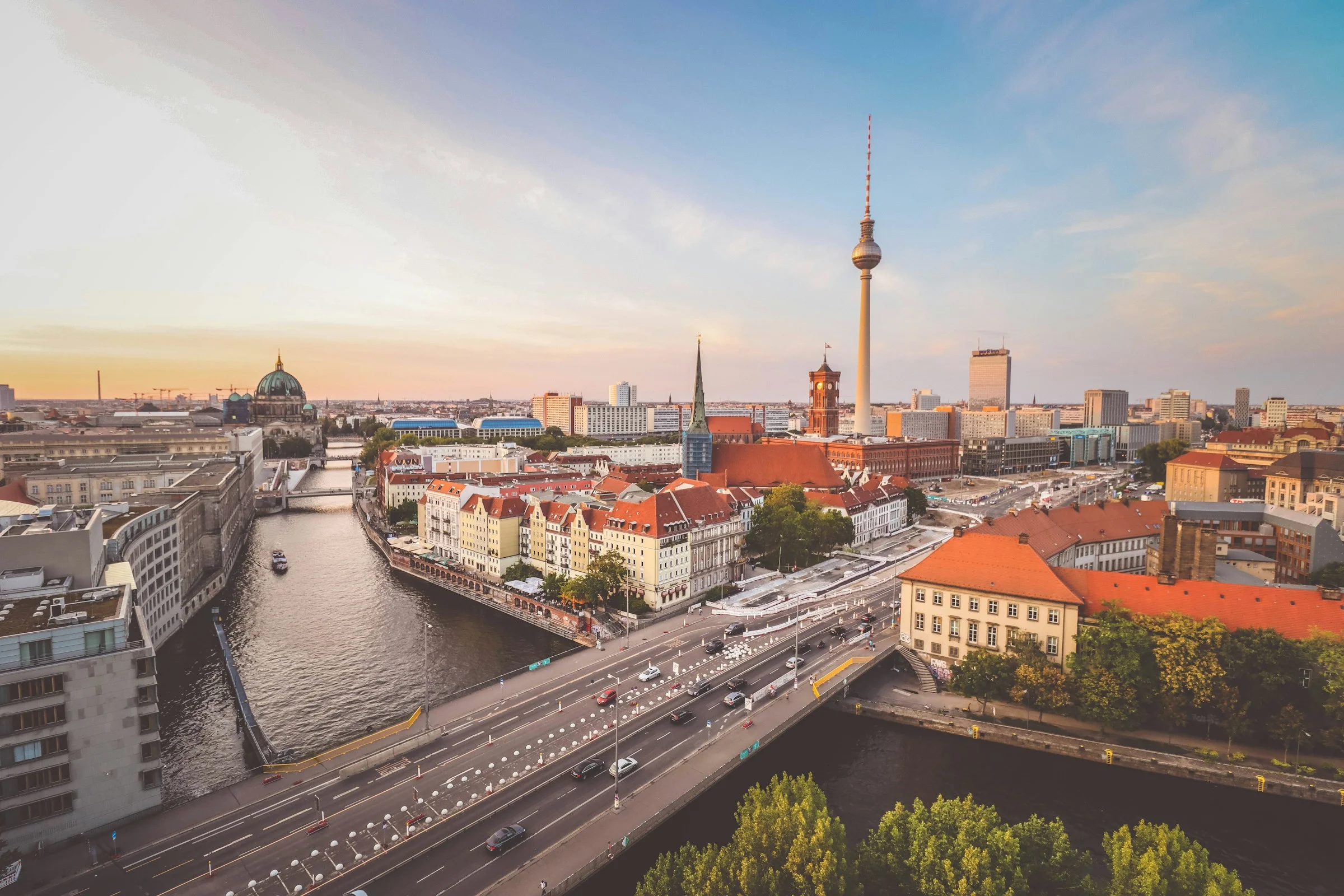
Commercial property in Berlin region matters because this is not a single-core market with weaker space around it. It is a capital metro economy where federal administration, technology, media, science, healthcare, tourism, education, culture, logistics and airport-linked business all create demand at the same time. Berlin city itself carries the strongest office and mixed-use concentration, but the wider region gains a second commercial life from the science and innovation districts, the ring-road belts, the airport corridor and the Brandenburg-facing spillover that keeps practical business space relevant outside the inner city.
That is why commercial real estate in Berlin region needs a metro reading rather than a simple city-centre reading. A buyer who looks only at prime central offices will miss why support property, trade space, studio-linked premises and urban logistics units matter so much in the outer belts. A buyer who looks only at cheaper edge locations will miss the value created by federal demand, creative concentration and transit-heavy mixed-use districts in the core. Berlin region is strongest when it is read through node role, commuter flow, research concentration and servicing need rather than through one average metropolitan price. VelesClub Int. helps turn that spread-out but tightly connected market into a clearer commercial framework.
Why the Berlin region needs a regional commercial reading
Berlin region deserves its own commercial page because it works through overlap. It is a capital city, a science and innovation platform, a media and creative cluster, a tourism market, a healthcare and education centre and a logistics-served consumer economy all at once. These functions do not sit neatly in one district. They spread across the inner core, the western office and service zones, the south-east innovation belt, the airport-facing areas and the outer commercial corridors.
This matters because the region is often misread in two incomplete ways. Some buyers reduce it to central Berlin and assume everything outside the S-Bahn ring is lower-value support space. Others treat it mainly as a growth market of cheaper outer districts and miss the commercial discipline created by node-specific demand. Both views miss the point. Berlin region supports office space, mixed-use buildings, retail space, studio-related premises, service property and selective warehouse formats because it has several stable demand engines working at once.
Central Berlin region sets the office and mixed-use benchmark
The central part of Berlin region remains the clearest benchmark for office and mixed-use property. Government activity, legal and advisory work, hospitality, food-led trade, culture, tourism and dense weekday movement all help create one of the most varied urban commercial markets in Germany. This is where offices, service-led buildings and mixed-use blocks can benefit from both professional occupancy and constant street-level activity.
For buyers, this means the core matters not only because it is central, but because it combines several income logics in one place. A building here may draw value from office use, hotel and visitor flow, transport access, food and convenience demand and the prestige of central positioning. But even inside the core, micro-location matters. A transit-heavy mixed-use street and a quieter institutional quarter do not belong to the same commercial pattern.
The Berlin region changes around City West and the western belt
The western side of Berlin region has a different business logic from the historic and political centre. City West and adjacent western districts support a more established office and service profile, with stronger links to professional services, retail continuity, healthcare and high-value mixed-use occupancy. This is less about symbolic capital functions and more about a durable commercial environment shaped by mature demand.
That matters because a building in the western belt should not be judged as a secondary version of Mitte. It belongs to a different pattern, one where occupiers may value continuity, shopping access, hotel demand and stable service ecosystems more than direct proximity to government and tourism. In Berlin region, the western side broadens the office story and prevents the market from collapsing into one central narrative.
South east Berlin region gives science and technology real weight
The south-east of Berlin region, especially around research and innovation locations, adds a different office and commercial profile. This part of the market supports science-linked companies, laboratories, technical business services, campus-style office buildings and mixed-use property tied to highly specific knowledge demand. It is one of the clearest places where office buildings should be judged through user fit and cluster relevance rather than through classic city-centre prestige.
For buyers, that changes comparison. A building in this part of Berlin region may be commercially convincing because it sits near research capacity and technical labour, not because it has the strongest urban image. This is one of the few parts of the metro where the distinction between general office space and specialist business space becomes especially important.
Airport-facing Berlin region makes support space more relevant
The airport side of Berlin region gives the market one of its most important practical layers. Around the BER corridor and nearby business areas, the region supports travel-linked services, hotels, trade premises, support buildings, small logistics units and mixed operational stock that depend on movement rather than on classic inner-city footfall. This is commercially meaningful in its own right, not just as overspill from the centre.
That changes asset hierarchy. A building near the airport may derive value from timing, accessibility, storage and service need, business travel or regional distribution rather than from symbolic address value. In Berlin region, this airport-facing layer broadens the market and gives buyers a separate commercial logic to work with.
Outer Berlin region makes warehouse property selective but important
Warehouse property in Berlin region should be read selectively, but it should not be ignored. The metro is not Germany's largest freight basin, yet the city still needs storage, food distribution, maintenance yards, event support, hotel supply handling and last-mile business space to keep daily life functioning. The strongest assets are rarely the biggest. They are the ones that solve a practical servicing problem close to real demand.
That makes route fit, ring-road access and replacement difficulty especially important. A modest operational unit in the right outer belt can be commercially stronger than a larger but less useful building farther away because practical stock close to the city is not easy to replace. In Berlin region, utility often matters more than scale, and support-space scarcity is part of the value logic.
Retail space in Berlin region follows district role not one style
Retail space in Berlin region is broader than one luxury axis and one tourist strip. The metro supports food-led trade, pharmacies, health and wellness services, convenience units, mixed-use neighbourhood premises, nightlife-related retail and practical service commerce across many districts with very different customer patterns. That matters because much of the commercial life of the region depends on repeated local use rather than on destination shopping alone.
This is one of the reasons the region rewards careful selection. A smaller service-led unit in the right district can be commercially more durable than a louder address with weaker daily use. Good retail reading in Berlin region usually begins with catchment, transport access, district role and the exact kind of spending the premises are built to capture. A Friedrichshain food unit, a Charlottenburg service premises and a ring-road retail block are not comparable through one simple standard.
Pricing in Berlin region follows node role and scarcity
Pricing and positioning vary sharply because Berlin region contains several commercial markets at once. Central office and mixed-use stock can price around visibility, transport depth and occupier concentration. Research-linked business areas depend more on specialist fit and cluster value. Airport-facing and outer-belt property depend on access, servicing utility and the scarcity of practical stock. District retail and service premises depend on frontage, local continuity and repeated daily demand.
That means broad metropolitan averages can mislead. Two buildings of similar size may have almost nothing in common if one depends on office workers, another on science-linked services and another on urban logistics or neighbourhood retail. A stronger reading of commercial property in Berlin region begins with one question: what job does the building do in the metro economy.
Questions that sharpen commercial property in Berlin region
Why can an outer-belt or airport-facing asset be more practical than a louder central Berlin building
Because the right building there can serve stable servicing, business travel, storage, distribution or flexible occupancy needs. A clearer functional role can sometimes create steadier tenant logic than a more expensive central address.
When is office space in Berlin region more convincing outside the city core
Usually when it sits in established service or research nodes where occupiers value accessibility, larger floorplates, specialist adjacency or practical daily use more than pure central prestige. The stronger comparison is by user pattern, not by image.
Why can support property in Berlin region outperform more visible assets
Because operational buildings solve harder servicing problems. In the right airport or ring-road location, access, usability and scarcity of suitable stock can create stronger commercial relevance than a more visible but less practical property.
How should buyers compare central Berlin and the south-east innovation belt in commercial terms
Not as direct substitutes. Central Berlin usually reads more strongly through offices, tourism, government and mixed-use density, while the south-east often makes more sense through science, technical business use and cluster-specific demand.
Why can a district retail unit in Berlin region read better than a prime central one
Because repeated local spending, easier access and reliable daily use can create steadier occupancy logic than a more visible property that depends on higher costs, tighter margins or less stable destination footfall patterns.
A clearer commercial view of Berlin region
Berlin region is commercially relevant because it combines several working markets inside one capital metro. The city core anchors office and mixed-use depth. The western side broadens the mature service economy. The south-east gives science and innovation real commercial weight. The airport belt and outer corridors make support property and selective warehouse space more meaningful than first impressions suggest.
The strongest way to read commercial property in Berlin region is therefore by node role, commuter reach, specialist demand and servicing need. Different assets make sense here for different reasons, and the region rewards buyers who match format to function instead of chasing one simplified capital-city narrative. VelesClub Int. helps turn broad interest in Berlin region into a calmer and more practical commercial framework.