
Office space in ArcachonOffice locations for city expansion
Best offers
in Nouvelle-Aquitaine
Benefits of investing in commercial real estate in Arcachon


Seasonal and service demand
Arcachon demand is driven by coastal tourism, marina and oyster-trade activity, second-home owners and local essential services, producing seasonal occupancy spikes alongside stable demand from groceries, healthcare and municipal tenants with mixed lease lengths
Asset types and strategies
High street retail, seasonal hospitality, marina-linked commercial and mixed-use conversions dominate Arcachon, favoring core long leases for essential services, short-stay and boutique repositioning, and single versus multi-tenant choices based on location and seasonality
Expert asset selection
VelesClub Int. experts define strategy, shortlist assets and conduct screening including tenant quality checks, lease structure review, yield logic assessment, capex and fit-out assumptions, vacancy risk analysis and a tailored due diligence checklist
Seasonal and service demand
Arcachon demand is driven by coastal tourism, marina and oyster-trade activity, second-home owners and local essential services, producing seasonal occupancy spikes alongside stable demand from groceries, healthcare and municipal tenants with mixed lease lengths
Asset types and strategies
High street retail, seasonal hospitality, marina-linked commercial and mixed-use conversions dominate Arcachon, favoring core long leases for essential services, short-stay and boutique repositioning, and single versus multi-tenant choices based on location and seasonality
Expert asset selection
VelesClub Int. experts define strategy, shortlist assets and conduct screening including tenant quality checks, lease structure review, yield logic assessment, capex and fit-out assumptions, vacancy risk analysis and a tailored due diligence checklist








Useful articles
and recommendations from experts
Market guide to commercial property in Arcachon
Why commercial property matters in Arcachon
Commercial property in Arcachon matters because the town’s local economy combines a strong seasonal tourism base with year-round service demand. Visitor-driven sectors produce concentrated demand for hospitality premises and retail corridors during high season, while resident services, healthcare and education sustain occupational levels through the off-season. Office occupiers in Arcachon tend to be small and medium professional services, local administration and regional operators that require proximity to the town centre and transport links. Industrial and warehousing needs are typically linked to local supply chains, food processing and last-mile distribution for coastal tourism activity. Buyers include owner-occupiers seeking to control operating costs and location, institutional and private investors seeking rental income or capital growth, and operators that acquire to integrate operations. The pattern of demand in Arcachon places a premium on adaptable buildings and lease flexibility, and it affects how different investor types assess risk and return.
The commercial landscape – what is traded and leased
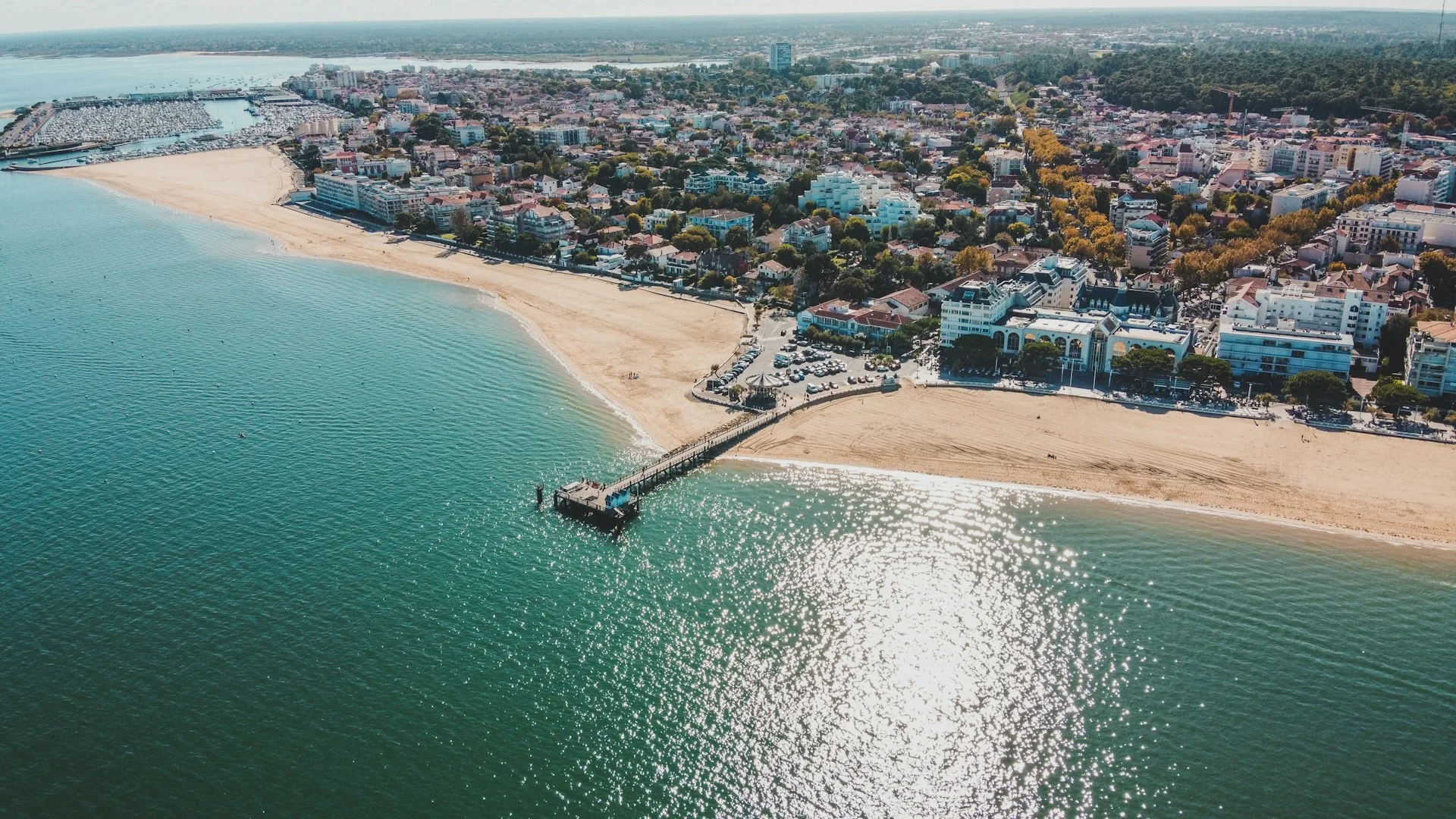
The commercial real estate in Arcachon comprises a mix of central business addresses, high-street retail, neighborhood retail nodes, small business parks on the town periphery and logistics zones that support coastal supply chains. The waterfront and principal pedestrian corridors concentrate retail and hospitality activity during the season, generating high footfall for short periods and quieter trading for the rest of the year. Lease-driven value prevails where rental income and tenancy profiles determine market pricing, most notably in established shopping streets and hospitality clusters. Conversely, asset-driven value emerges in older buildings or peripheral industrial units where redevelopment potential, alternative use options or structural upgrades can create value independently of short-term rental performance. In Arcachon, understanding this split is essential because seasonal demand can exaggerate headline rents in peak months while masking underlying vacancy and turnover risk over a 12-month cycle.
Asset types that investors and buyers target in Arcachon
Retail space in Arcachon is a primary target for investors focused on consumer-facing income streams. High-street units near pedestrian routes command the most attention for visibility and seasonal sales, while neighborhood retail serves resident day-to-day needs and tends to offer more stable occupancy outside the tourist season. Office space in Arcachon is typically smaller-scale and is evaluated on location, building quality and flexible floorplates suitable for professional services or small regional branches. Hospitality assets—including hotels, guesthouses and serviced units—are evaluated for operational strength in peak months and revenue management potential across the year. Restaurant and cafe premises are a distinct segment because they combine fit-out intensity with licencing and health compliance requirements that affect transferability. Warehouse property in Arcachon is typically light industrial and last-mile oriented; these assets are judged by access to arterial roads, loading geometry and local service catchment rather than scale logistics infrastructure. Revenue houses and mixed-use buildings can be attractive where ground-floor commercial units produce cashflow while upper floors provide residential rental diversification. Comparing high-street versus neighborhood retail logic highlights a trade-off: high-street units can deliver strong short-term seasonal turnover but higher tenant churn, while neighborhood retail often yields more consistent year-round performance. Prime versus non-prime office logic similarly separates short-term yield expectations from long-term capital preservation, and serviced office considerations enter where transient demand or short-term tenancy is common.
Strategy selection – income, value-add, or owner-occupier
Investors and buyers in Arcachon typically choose between income strategies that prioritise stable lease profiles, value-add strategies that rely on refurbishment and re-leasing, or owner-occupier acquisitions aimed at operational control. An income-focused approach targets properties with long-dated leases to creditworthy tenants or diversified tenant mixes that reduce vacancy risk, which suits conservative investors seeking predictable cashflow through seasonality. Value-add strategies are often applied to older retail units, small office blocks or light industrial stock where modest capital expenditure can improve energy performance, compliance and marketability; Arcachon’s local planning constraints and conservation areas can influence refurbishment scope and timing. Mixed-use optimisation is a hybrid option that leverages residential demand to underwrite commercial refurbishment, but it requires careful regulatory and planning due diligence. Owner-occupiers choose to buy commercial property in Arcachon when location certainty and cost control outweigh capital opportunity costs; they must factor in operating cycles specific to the town, including higher peak-season staffing and maintenance demands. Local factors such as tourism seasonality, tenant churn norms and the intensity of municipal regulation typically push some investors towards conservative income plays, while others accept seasonal variability to extract uplift through repositioning and active asset management.
Areas and districts – where commercial demand concentrates in Arcachon
A practical district selection framework for Arcachon distinguishes central commercial corridors from tourism corridors, residential catchments and peripheral industrial access zones. The central business district and main pedestrian approaches concentrate retail and professional services demand and are the most visible for visitors and residents alike. Tourism corridors that run toward the waterfront and recreational nodes generate concentrated short-term demand for hospitality and leisure-related retail, and they require different leasing and operational models than the CBD. Residential catchments and local high streets support everyday retail and small service occupiers and are generally less affected by seasonal peaks, offering more predictable tenancy patterns. Industrial access zones and small business parks on the town edge serve logistics and light manufacturing needs; these locations are evaluated for road access, vehicle circulation and proximity to employee catchments. Transport nodes and commuter flows matter because rail and road connections to regional centres influence office and logistics occupier behaviour. Competition and oversupply risk should be assessed by comparing vacancy trends across these district types rather than assuming uniform demand across the town.
Deal structure – leases, due diligence, and operating risks
Deal structure in Arcachon hinges on lease terms, fit-out obligations and operational risk allocation. Buyers typically review lease length, break options, rent review clauses and indexation mechanisms to assess income stability across seasonal cycles. Service charges and maintenance regimes are important in mixed-use and multi-tenant buildings because they affect net operating income and reversionary risk. Fit-out responsibilities, especially for hospitality and restaurant premises, must be understood since heavy tenant fit-outs increase vendor-specific valuations and can complicate re-letting. Due diligence should address vacancy and reletting risk, capex requirements for compliance and energy performance, and hidden operating costs such as historic maintenance backlogs. Tenant concentration and tenant credit profile are core considerations; a single-season-heavy tenant concentration will look very different from diversified, year-round tenancies. Environmental and building compliance topics, including basic safety, accessibility and energy standards, influence capital expenditure planning. Financial modelling must incorporate seasonality, probable downtime between lettings and the potential cost of tenant fit-outs or decontamination works in hospitality and food-related uses. Buyers should also quantify operating risks associated with municipal planning constraints and potential changes to permitted uses, which can materially affect repositioning options.
Pricing logic and exit options in Arcachon
Pricing logic for commercial assets in Arcachon is driven by location and footfall patterns, tenant quality and remaining lease length, building condition and capex needs, and the property’s alternative use potential. Waterfront visibility and proximity to main pedestrian flows command a premium for retail and hospitality, while stable residential catchments can command higher valuations for locally-oriented retail. Longer unexpired lease terms to creditworthy tenants reduce perceived risk and therefore support higher capital values, whereas short leases or vacant units introduce a re-letting discount. Building quality and the scale of near-term capex also influence buyer pricing because structural or systems upgrades require immediate capital outlay. Exit strategies commonly include hold-and-refinance to extract retained value after operational stabilisation, re-lease followed by sale once rental performance normalises, or reposition and exit after targeted refurbishment and repositioning. Repositioning to alternative uses—such as converting under‑utilised retail to mixed-use formats where planning permits—can broaden exit routes, but these options should be validated against local planning policies and market demand. Pricing expectations should therefore be aligned to the most credible exit given the asset’s district, physical characteristics and tenant profile.
How VelesClub Int. helps with commercial property in Arcachon
VelesClub Int. supports clients with a structured process that begins by clarifying investment objectives and risk tolerance relative to Arcachon’s market dynamics. We define target segments and districts that match those objectives, distinguishing between seasonal hospitality exposure and more stable neighborhood retail or office demand. Our screening selects assets against predefined lease and risk profiles, highlighting items such as lease length, break clauses, tenant concentration and capex obligations. We coordinate commercial due diligence and document review with local specialists, ensuring that key operational risks and compliance exposures are identified early. During negotiation and transaction steps VelesClub Int. provides market comparables, lease analysis and transaction structuring input, and we tailor recommendations to client capabilities and exit preferences. The process is designed to be pragmatic and adaptable to local seasonality, regulatory constraints and district-level variations in demand.
Conclusion – choosing the right commercial strategy in Arcachon
Choosing the right commercial strategy in Arcachon requires matching asset type and district to investor objectives, accounting for the town’s seasonal tourism cycles and the mix of short-term visitor demand versus year-round resident needs. Income-focused investors should prioritise tenancies and districts with steady year-round footfall, while value-add strategies can succeed where planning context permits sensible refurbishment and re-letting. Owner-occupiers must weigh operational benefits against the capital and maintenance profile of coastal assets. For those looking to buy commercial property in Arcachon or to optimise an existing holding, VelesClub Int. offers targeted screening and process support tailored to specific risk appetite and return horizons. Consult VelesClub Int. experts to define a clear strategy, screen suitable assets and progress a disciplined acquisition or repositioning plan aligned with Arcachon market realities.