
Commercial property in BeckenhamCity assets with business clarity
Best offers
in Greater London
Benefits of investing in commercial real estate in Beckenham


Local demand drivers
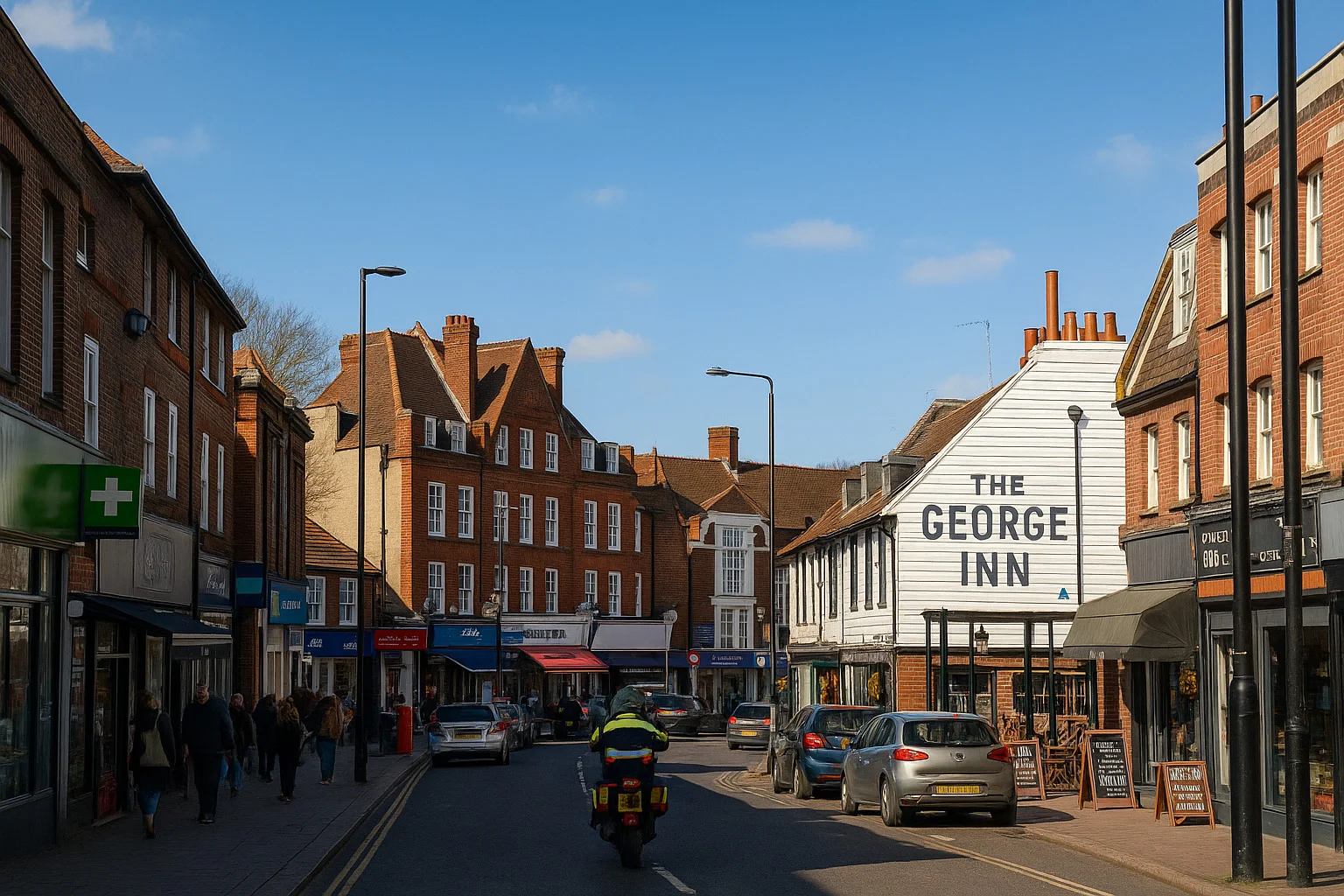
Beckenham's commuter links to central London, retail high street, and education and healthcare hubs sustain demand for commercial space, yielding a mix of short-term SME leases and longer retail or institutional leases affecting tenant stability
Common asset strategies
High-street retail, small professional offices, healthcare clinics and flexible light industrial units dominate Beckenham, supporting strategies from core long-lease retail and single-tenant medical assets to value-add office refurbishments and mixed-use repositioning for neighborhood demand
Expert selection support
VelesClub Int. experts define strategy, shortlist Beckenham assets and run financial screening, including tenant quality checks, lease structure review, yield logic, capex and fit-out assumptions, vacancy risk analysis and a practical due diligence checklist
Local demand drivers
Beckenham's commuter links to central London, retail high street, and education and healthcare hubs sustain demand for commercial space, yielding a mix of short-term SME leases and longer retail or institutional leases affecting tenant stability
Common asset strategies
High-street retail, small professional offices, healthcare clinics and flexible light industrial units dominate Beckenham, supporting strategies from core long-lease retail and single-tenant medical assets to value-add office refurbishments and mixed-use repositioning for neighborhood demand
Expert selection support
VelesClub Int. experts define strategy, shortlist Beckenham assets and run financial screening, including tenant quality checks, lease structure review, yield logic, capex and fit-out assumptions, vacancy risk analysis and a practical due diligence checklist








Useful articles
and recommendations from experts
Practical commercial property in Beckenham overview
Why commercial property matters in Beckenham
Commercial property in Beckenham functions as a local economic backbone by serving a mix of resident-driven demand and commuter-linked activity. The town supports office and professional services that cater to nearby residential populations, retail that serves both daily needs and comparison shopping, hospitality that absorbs modest leisure and business travel, and small-scale logistics and light industrial uses that support local supply chains and last-mile distribution. Buyers range from owner-occupiers seeking compact offices or ground-floor retail with living space above, to private investors targeting income-producing assets, and operators who require specific layouts for hospitality, healthcare or education services. The interplay between local household spending, transport connections to larger employment centres, and the pattern of small business formation in Beckenham shapes both short-term leasing activity and longer-term investment appetite.
The commercial landscape – what is traded and leased
The traded and leased stock in Beckenham is heterogeneous but skewed toward smaller lot sizes and short to medium lease terms. Typical supply includes high street retail units with upper-floor accommodation, small to medium office suites, neighborhood retail parades, independent hospitality venues, and compact warehouse or light industrial units positioned for last-mile delivery. In practice, market value bifurcates into lease-driven value, where the contractual income stream and lease security determine pricing, and asset-driven value, where physical attributes, conversion potential and redevelopment options matter more. Lease-driven assets in Beckenham are often priced on the strength and length of tenant covenants and local footfall patterns, while asset-driven opportunities attract investors who can add value through refurbishment or reconfiguration to meet demand for modern office space or flexible work hubs. The local market also reflects seasonal variation in retail and hospitality turnovers, and periodic vacancy cycles linked to tenant churn common in small commercial units.
Asset types that investors and buyers target in Beckenham
Investors and owner-occupiers in Beckenham target a range of asset types tailored to the towns scale and market dynamics. Retail space in Beckenham is typically composed of high street units and neighborhood parades; prime high street units command relative stability when anchored by service providers and convenience retailers, while secondary retail benefits from lower entry pricing but higher leasing and reletting risk. Office space in Beckenham is often compact and subdivided; prime versus non-prime logic applies where central, well-served offices attract longer leases and higher rents, and suburban or upper-floor suites compete on cost and amenity. Serviced office or flexible workspace is relevant where micro-enterprises and remote-working professionals seek short-term, plug-and-play arrangements. Hospitality and restaurant-cafe-bar premises are frequent targets for owner-operators and specialist investors given local dining demand, but these assets carry operational complexity and fit-out dependency. Warehouses and light industrial units in Beckenham tend to be smaller footprint properties that play a role in local distribution and e-commerce fulfilment; their value is driven by access to arterial roads and suitability for racked storage or small-scale production. Revenue houses and mixed-use assets, combining residential above and commercial at ground level, present stabilised cashflow potential but require attention to planning and service-charge dynamics. Comparing high street versus neighborhood retail, the trade-off is typically between visibility and cost, while office logic hinges on retention of key tenants and the building’s ability to meet modern occupier requirements.
Strategy selection – income, value-add, or owner-occupier
Choosing a strategy for commercial real estate in Beckenham depends on investor objectives and local market signals. An income-led approach focuses on acquiring assets with stable, index-linked leases and low tenant turnover to deliver predictable cashflow; this strategy suits investors prioritising steady returns and lower management intensity, and it is reinforced in Beckenham by long-standing professional leases and established retail service providers. A value-add strategy targets properties with physical or operational deficits where refurbishment, reconfiguration, or re-letting can materially increase net operating income; in Beckenham this may include consolidating small upper-floor offices into larger suites, modernising shopfronts to attract national or regional occupiers, or converting underused storage into higher-yielding flexible workspace. Mixed-use optimisation combines residential and commercial planning to diversify income streams, but local planning sensitivity and tenant mix must be assessed carefully. Owner-occupier purchase logic in Beckenham is driven by occupiers seeking control over premises, customization for specialist uses such as clinics or training facilities, and potential cost-benefit compared with long-term leasing. Local factors that favour one strategy over another include the business cycle sensitivity of retail and hospitality demand, typical tenant churn levels in small commercial units, seasonal peaks in consumer spending, and the relative intensity of local planning constraints and compliance requirements.
Areas and districts – where commercial demand concentrates in Beckenham
In Beckenham commercial demand concentrates around a small town centre with high street retail and services, transport nodes that generate commuter footfall and support convenience retail and cafes, pockets of suburban office stock serving local professional services, and small logistics clusters near main roads that accommodate light industrial and warehouse use. When assessing where to allocate capital, consider the core retail corridor that draws regular visits from residents, the station area where day-time and evening activity converges, emerging business pockets where older light industrial stock offers repositioning potential, and residential catchments that underpin neighborhood retail. Transport nodes in Beckenham influence both office and retail rent gradients, with pedestrian flows and interchange facilities increasing practical catchment sizes for convenience retailers and small restaurants. Competition and oversupply risk are localised: too many similar retail or leisure offers in a concentrated high street drives vacancy and weaker rents, while an oversupply of small offices without modern amenities limits leasing prospects. For industrial and warehouse property in Beckenham, proximity to arterial routes that connect to wider distribution networks and the ability to offer flexible lease terms for small occupiers influence demand most strongly.
Deal structure – leases, due diligence, and operating risks
Deal structuring in Beckenham follows familiar commercial patterns, but local asset characteristics determine the emphasis during due diligence. Buyers review lease term and remaining contractual length as primary inputs to income stability, break clauses and tenant options that create vacancy risk, indexation or rent review mechanisms that affect income growth, and service charge regimes where multi-occupied buildings transfer operating cost risk. Fit-out responsibilities and dilapidations exposure are particularly important in hospitality, retail and small office leases, since bespoke tenant fit-outs can be costly to remove or adapt. Due diligence covers title and lease documentation, building condition surveys focused on deferred capex, compliance checks for safety, accessibility and environmental requirements, and operational assessments of tenant concentration and business viability. Vacancy and reletting risk in Beckenham is influenced by local tenant pools: smaller independent retailers and service businesses dominate, so tenant turnover can be higher than in larger regional centres. Buyers should model capex scenarios for roof, façade and services upgrades, and anticipate compliance-related outlays for property safety and energy performance improvements. Tenant concentration risk is material where a single occupier or sector accounts for a large portion of rent; diversification of lease expiry profiles and active asset management are standard mitigation tools. Operational risks also include seasonal demand fluctuation for retail and hospitality, and logistics demand variability tied to local e-commerce patterns.
Pricing logic and exit options in Beckenham
Pricing for commercial assets in Beckenham is driven by location quality, depth of catchment, and tenant profile. Footfall and accessibility influence retail valuations, while office pricing depends on proximity to transport links, floorplate usability and amenity provision. Warehouse property in Beckenham attracts premiums for units that support efficient loading and last-mile connectivity. Tenant covenant strength and lease length materially impact yields and valuation multiples: stronger tenants and longer leases lower perceived risk and support higher prices. Building quality, required capex and adaptability to alternative uses affect value-add prospects; properties with favourable conversion potential to alternative uses such as flexible workspace, small-scale residential, or mixed-use configurations carry a different risk-return profile. Exit options available to investors include hold-and-refinance where improved cashflow supports balance sheet growth, re-letting to stabilise income before sale, or repositioning and disposing once refurbishment has demonstrably increased net operating income. Reposition-then-exit strategies require realistic timelines for planning consents and leasing cycles in Beckenham. Each exit path should be modelled against local absorption rates for the intended segment to avoid timing mismatches between refurbishment completion and market demand.
How VelesClub Int. helps with commercial property in Beckenham
VelesClub Int. provides structured support for clients evaluating commercial real estate in Beckenham through a process-driven approach. The first step is to clarify investment or occupation objectives and the target return-risk profile. Next, VelesClub Int. assists in defining the target segment and district characteristics within Beckenham that align with those objectives, whether that is compact office suites near transport nodes, ground-floor retail in convenience-led corridors, or small warehouses serving last-mile logistics. Shortlisting of assets is based on lease analysis, tenant risk profiling and capex needs, with scenarios that quantify vacancy exposure and repositioning potential. VelesClub Int. coordinates technical due diligence inputs and reviews documentation to highlight operational risks and likely capex requirements, helping clients prioritise inspections and budget contingencies. During negotiation and transaction steps VelesClub Int. supports commercial terms alignment and assists in preparing offer structures consistent with the client’s exit strategy, while ensuring the selection process is tailored to specific goals and operational capabilities.
Conclusion – choosing the right commercial strategy in Beckenham
Choosing the right commercial strategy in Beckenham requires aligning asset type, lease profile and exit plan with local demand drivers and the investor or occupier’s capability to manage operational complexity. Income-focused owners benefit from stable, lease-backed high-street or professional office assets, while value-add investors find opportunity in refurbishing smaller offices, modernising retail fronts, or repositioning light industrial stock for flexible logistics. Owner-occupiers prioritise location, customisation potential and control over operating costs. In all cases due diligence that emphasises lease detail, capex planning and tenant concentration is critical. For a tailored review of opportunities and a pragmatic asset screening in Beckenham, consult VelesClub Int. experts who can align selection and execution with your objectives and constraints.