
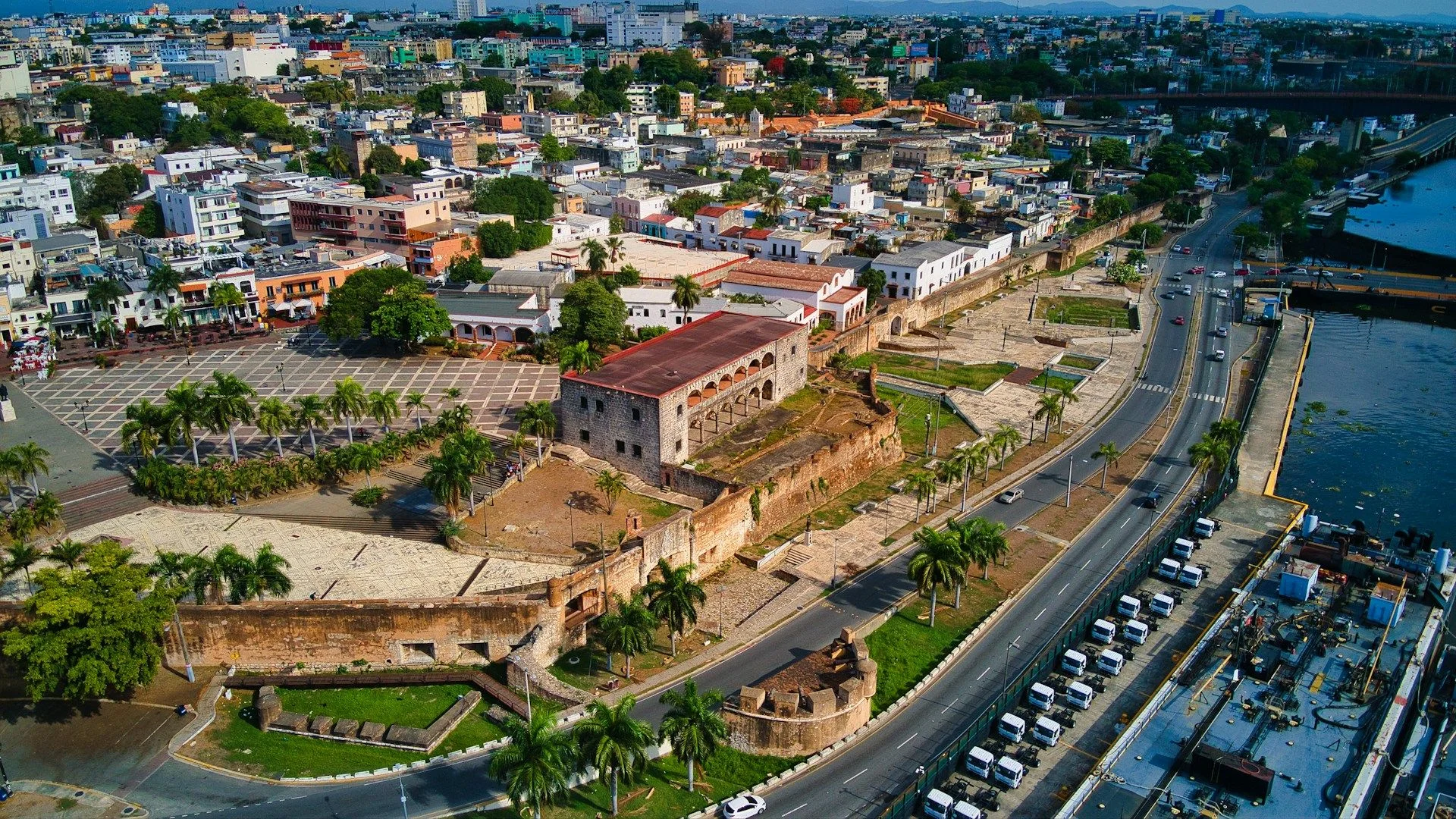
Industrial buildings in Santo DomingoLogistics assets for city expansion
Best offers
in Dominican Republic
Benefits of investing in commercial real estate in Santo Domingo


Local demand drivers
Santo Domingo demand is driven by government and corporate offices, tourism and hospitality, port-related logistics, free-zone manufacturing, universities and healthcare clusters, creating mixed tenant stability and varying lease profiles across sectors
Asset types and strategies
Core offices in central business districts, hospitality in tourist corridors, logistics and warehouses near port and free zones, retail catering local and visitor demand, and value-add repositioning or long-lease strategies depending on tenant stability
Expert selection support
VelesClub Int. experts define strategy, shortlist assets and run screening with tenant quality checks, lease structure review, yield logic, capex and fit-out assumptions, vacancy risk assessment and a local due diligence checklist
Local demand drivers
Santo Domingo demand is driven by government and corporate offices, tourism and hospitality, port-related logistics, free-zone manufacturing, universities and healthcare clusters, creating mixed tenant stability and varying lease profiles across sectors
Asset types and strategies
Core offices in central business districts, hospitality in tourist corridors, logistics and warehouses near port and free zones, retail catering local and visitor demand, and value-add repositioning or long-lease strategies depending on tenant stability
Expert selection support
VelesClub Int. experts define strategy, shortlist assets and run screening with tenant quality checks, lease structure review, yield logic, capex and fit-out assumptions, vacancy risk assessment and a local due diligence checklist








Useful articles
and recommendations from experts
Investing in commercial property in Santo Domingo
Why commercial property matters in Santo Domingo
Santo Domingo functions as the commercial and administrative center of the Dominican Republic and concentrates activity that drives demand for a diverse set of commercial real estate. The local economy combines public administration, financial and professional services, tourism and hospitality, light manufacturing and port-related logistics. That mix produces demand for offices from corporate and professional tenants, retail frontage for both tourist-facing and resident-focused trade, hospitality assets for seasonal and year-round visitor flows, healthcare and education facilities to serve a growing urban population, and industrial and warehousing space to support manufacturing and distribution. Buyers in this market are a mix of owner-occupiers seeking to control operating location costs, local and cross-border investors seeking income and capital appreciation, and operators who acquire or lease assets to run hotels, medical clinics, schools, or logistics centers. Understanding how each sector responds to macro cycles, tourism seasonality and trade flows is essential when evaluating commercial real estate in Santo Domingo for acquisition or leasing.
The commercial landscape – what is traded and leased
The stock of commercial property in Santo Domingo spans central business districts, high street corridors, neighborhood retail centers, small business parks, logistics zones adjacent to port and road arteries, and clusters of hospitality properties near tourism corridors. Office space in Santo Domingo tends to cluster where corporate and financial tenants co-locate, while retail space in Santo Domingo concentrates along arterial streets that combine local shoppers with tourist footfall. Warehouse property in Santo Domingo often sits near transport nodes and freight routes to limit last-mile costs. In this market some assets derive most of their value from contracted cash flows and the strength of existing leases, while others are valued for the site, redevelopment potential and physical attributes that allow repositioning. Lease-driven value is more common for stabilized retail and office buildings with long-term international or institutional tenants; asset-driven value appears in properties with alternative use potential, surface area for expansion, or conversion options in response to changing demand.
Asset types that investors and buyers target in Santo Domingo
Investors and owner-occupiers target a predictable set of asset types. Retail premises range from high street storefronts aimed at visitors and local shoppers to neighborhood retail serving resident catchments. The high street vs neighborhood retail comparison rests on footfall, tenant mix and lease lengths: high street sites command premium rents from tourism-related tenants and established national brands, while neighborhood retail offers steadier, lower-volatility income from food, services and convenience tenants. Office assets divide into prime towers in central business areas and non-prime offices in secondary locations; prime office logic is driven by tenant quality, amenities and accessibility, whereas non-prime relies more on cost-sensitive occupiers and shorter lease terms. Serviced office or co-working formats have grown in response to flexible occupier demand and can change cash flow profiles through higher turnover but potentially higher effective yields. Hospitality assets are evaluated on average daily rates, occupancy seasonality and operational margins rather than fixed long-term leases; restaurants, cafes and bars are typically leasehold and require careful assessment of fit-out and operating covenants. Warehouses and light industrial units are increasingly influenced by e-commerce and supply chain optimization; proximity to arterial roads and port access is a key determinant of value. Mixed-use and revenue houses combine residential and commercial income streams and are considered when urban regeneration or tourism demand supports multiple revenue lines. Across segments, investors consider supply pipeline, tenant diversification and the interaction between physical asset quality and lease structure when choosing targets.
Strategy selection – income, value-add, or owner-occupier
Choice of strategy in Santo Domingo depends on investor objectives and local market characteristics. An income-focused approach emphasizes stabilized assets with long-term leases to creditworthy tenants, limited management requirements and predictable cash flow. This strategy is favored where tenant demand is consistent and lease indexation protects rental income against inflation and currency shifts. A value-add strategy targets properties with physical or lease-up improvements that can increase net operating income through refurbishment, re-tenanting or conversion to a higher-yielding use; this approach is responsive to undersupplied niches such as modern logistics or upgraded offices but requires careful assessment of capex, permitting timelines and market absorption. Mixed-use optimization combines elements of both strategies by diversifying revenue streams across retail, office and residential components to reduce single-sector exposure. Owner-occupier purchase logic weighs the savings in occupancy costs, customization benefits and long-term stability against the capital tied up and potential opportunity cost. Local factors in Santo Domingo that push strategy selection include tourism seasonality, which affects hospitality and retail cash flow volatility; tenant churn norms in the service and retail sectors; the intensity of municipal permitting in district-level redevelopment; and sensitivity to broader business cycle trends affecting corporate office demand.
Areas and districts – where commercial demand concentrates in Santo Domingo
Commercial demand in Santo Domingo concentrates along a set of district types that reflect administrative, financial, tourism and industrial functions. The historical central district draws tourism, cultural visitors and specialist retail. Higher-end office and corporate services cluster in modern commercial districts such as Piantini and Naco where professional tenants, proximity to financial services and higher-quality building stock intersect. Neighborhood commercial demand is visible in residential districts and municipal centers that support everyday retail and local services. Industrial and logistics demand is strongest closer to port access and major arterial routes that serve distribution and manufacturing needs; these corridors are the practical locations for warehouse property in Santo Domingo. The municipal subdivisions of Santo Domingo Este, Santo Domingo Norte and Santo Domingo Oeste each present different trade-offs between land availability, cost and proximity to labor pools. When evaluating location, compare CBD assets against emerging business areas, prioritize access to transport nodes and commuter flows, distinguish tourism corridors from resident catchments, and consider industrial access for logistics uses. Oversupply risk is concentrated where speculative development outpaces absorptive demand, so district-level supply metrics and recent leasing activity are essential inputs to any site-level decision.
Deal structure – leases, due diligence, and operating risks
Deal evaluation in Santo Domingo centers on lease terms and the operating profile of the asset. Buyers review lease length, renewal and break options, indexation clauses, permitted use restrictions, responsibility for service charges and common-area maintenance, and the allocation of fit-out and repair obligations. Vacancy and reletting risk are assessed through market leasing comparables, typical tenant downtime in the sector and the presence of tenant concentration risk where a single occupier generates a large share of income. Due diligence should address capex needs and compliance costs related to building codes, fire safety, environmental assessment and permitted use. Operating risks include variability in utilities and municipal services, exposure to tourism seasonality for hospitality and retail tenants, and shifts in logistics routes that affect warehouse demand. Financial diligence evaluates rent rolls, collection history and expense pass-through mechanisms; physical diligence inspects structural, MEP and façade conditions to estimate near-term capital expenditures; and market diligence tests tenant demand, competitive inventory and likely leasing velocity. These reviews inform price negotiation, warranty and indemnity considerations, and contingency planning for operational stabilization post-acquisition.
Pricing logic and exit options in Santo Domingo
Pricing of commercial property in Santo Domingo is driven by a few consistent factors: location and footfall, tenant covenant quality and remaining lease term, building condition and immediate capex requirements, and the potential for alternative use or densification. Properties with long leases to high-quality tenants and predictable cash flows command pricing premia, while assets requiring immediate investment trade at discounts that reflect development and leasing risk. Alternative use potential, such as conversion to mixed-use or higher-density commercial formats, can enhance value for buyers with development capability but requires an assessment of planning constraints and market demand. Exit options are typically structured around hold-and-refinance strategies to extract value through enhanced cash flows, re-lease-and-exit where operational improvement increases net operating income before sale, or reposition-and-exit where physical refurbishment supports a higher exit multiple. Market timing, availability of buyers for specific segments and the strength of leasing evidence at exit influence which route is feasible. The decision to buy commercial property in Santo Domingo should therefore incorporate both acquisition pricing and realistic exit scenarios based on current and projected market dynamics.
How VelesClub Int. helps with commercial property in Santo Domingo
VelesClub Int. provides structured support to clients assessing commercial real estate in Santo Domingo through a process-oriented approach. The engagement begins by clarifying investment objectives, risk tolerance and operational capabilities. VelesClub Int. helps define target segments and district priorities, aligning asset type selection with the client’s income, value-add or owner-occupier strategy. The next phase is targeted sourcing and shortlisting, where assets are screened using standardized lease and risk-profile criteria and compared on location, tenant strength and capex needs. VelesClub Int. then coordinates due diligence workflows by assembling market comparables, commissioning technical inspections and organizing financial reviews to quantify vacancy and reletting risk. During negotiation and transaction steps VelesClub Int. supports commercial terms analysis, structures indicative offers and coordinates counterpart communication without providing legal advice. The selection and execution process is tailored to each client’s goals and capabilities, with attention to district-level supply, tenant demand patterns and exit planning specific to Santo Domingo.
Conclusion – choosing the right commercial strategy in Santo Domingo
Selection of the right commercial strategy in Santo Domingo depends on clear objectives, an evidence-based assessment of district-level demand, and realistic planning for lease and capital expenditure risk. Income-focused investors should prioritize assets with long leases and strong tenant covenants, value-add buyers should target properties with demonstrable repositioning upside and manageable permitting constraints, and owner-occupiers should weigh operational benefits against capital deployment. Warehouse, retail and office segments each respond to distinct drivers in Santo Domingo, so segmentation and location analysis are essential. For a practical, market-specific assessment and asset screening, consult VelesClub Int. experts who can align target selection, due diligence and transaction support to client goals and the realities of the Santo Domingo commercial market.