
Commercial property for sale in Nicosia DistrictRegional opportunities for business growth

Best offers
in Nicosia District
Benefits of investing in commercial real estate in Nicosia District


Capital gravity
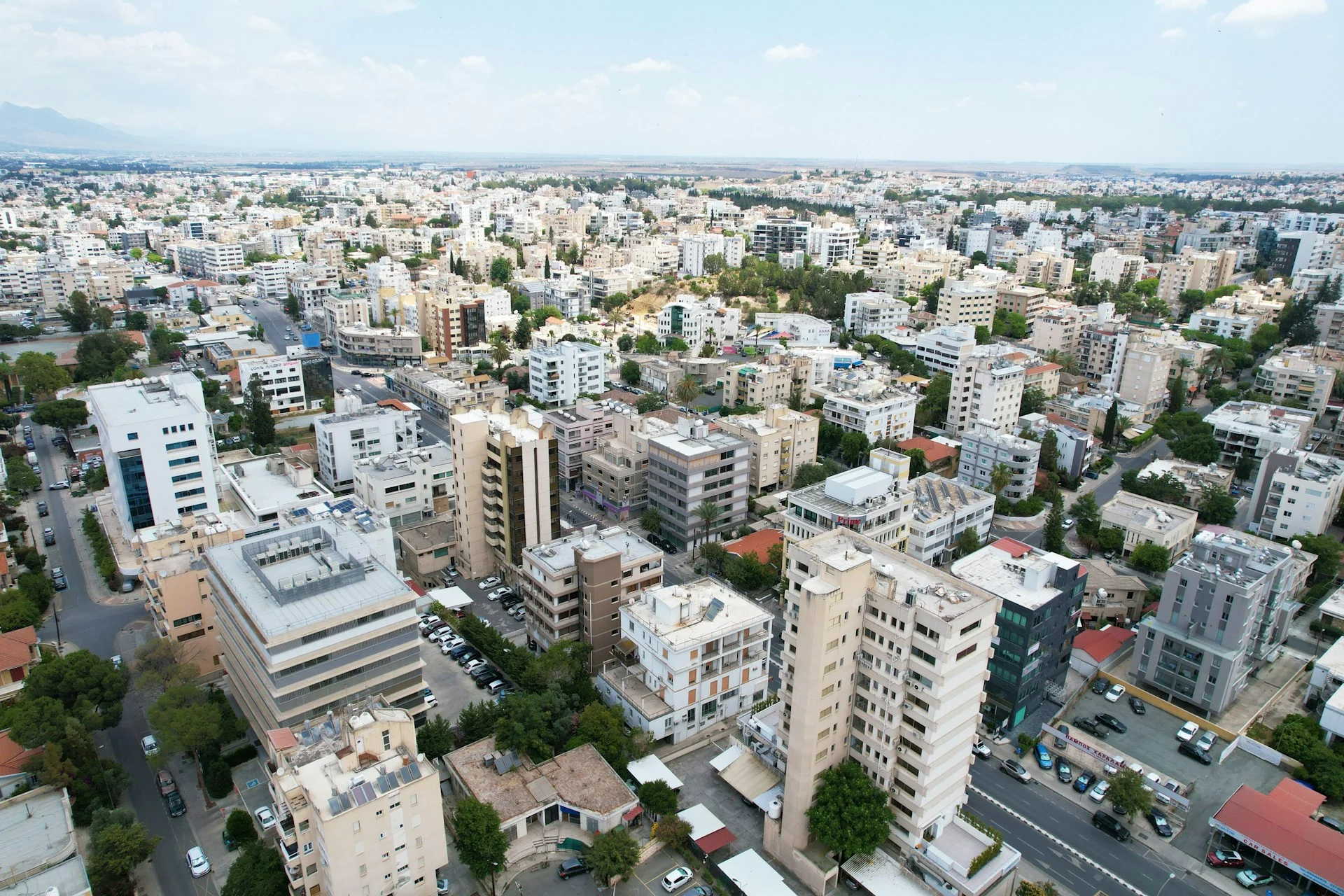
Nicosia District combines the island's strongest administrative and office base with suburban retail growth, industrial belts, and motorway linked business movement, giving commercial demand more depth and continuity than a single city centre market
Format discipline
Office, mixed commercial buildings, service retail, light industrial units, and practical warehouse property usually fit Nicosia District best, while hospitality plays a smaller role because the market is driven by work, services, and circulation
District reading
VelesClub Int. helps separate central office zones, suburban service corridors, and southern industrial nodes, so Nicosia District is screened through function, access, and occupier logic rather than treated as one continuous capital market
Capital gravity
Nicosia District combines the island's strongest administrative and office base with suburban retail growth, industrial belts, and motorway linked business movement, giving commercial demand more depth and continuity than a single city centre market
Format discipline
Office, mixed commercial buildings, service retail, light industrial units, and practical warehouse property usually fit Nicosia District best, while hospitality plays a smaller role because the market is driven by work, services, and circulation
District reading
VelesClub Int. helps separate central office zones, suburban service corridors, and southern industrial nodes, so Nicosia District is screened through function, access, and occupier logic rather than treated as one continuous capital market








Useful articles
and recommendations from experts
How commercial property in Nicosia District works
Commercial property in Nicosia District matters because this is the part of Cyprus where year round business function is strongest and most diversified. The district contains the capital, the main government and administrative concentration, a deep professional services base, education and healthcare demand, suburban population growth, and some of the island's most established light industrial and logistics oriented areas. That makes it very different from the coastal regions, where hospitality and visitor activity often dominate commercial selection.
Nicosia District is also commercially distinct because it is not only the historic and administrative core of the country. It is a larger inland system that includes the capital city, dense urban municipalities, suburban commercial belts, industrial zones, and outward motorway links toward the rest of the island. For that reason, commercial real estate in Nicosia District should never be read as a single city centre office story. It is a mixed district market where office, retail, services, owner occupier use, warehousing, and light industrial demand all play different roles.
Why Nicosia District holds the strongest business depth in Cyprus
The first reason is institutional gravity. Nicosia remains the capital and the main administrative centre of Cyprus, and that gives the district a concentration of decision making, public services, business services, education, consulting, healthcare, and support functions that other districts do not match in the same way. This creates steady demand for office space, mixed commercial buildings, clinics, service units, and everyday business premises that work through routine use rather than seasonal peaks.
The second reason is that the district does not stop at the inner city. Strovolos, Engomi, Aglantzia, Lakatamia, Latsia, Geri, and the broader southern and western suburban arc all add layers of commercial activity. Some parts of the district work through office and services, others through suburban consumption, and others through industrial and storage utility. Anyone planning to buy commercial property in Nicosia District needs to understand that the strongest opportunities are usually not defined by the district label alone, but by which part of this larger system the asset actually serves.
Demand in Nicosia District follows core city belts and motorway edges
The district can be read through three main commercial layers. The first is the central and inner urban belt, where office space, medical and education linked uses, agencies, consulting, mixed commercial buildings, and practical retail remain the clearest formats. This is the part of Nicosia District where administrative importance and business concentration are felt most strongly.
The second layer is the suburban service belt. Areas such as Strovolos, Engomi, Lakatamia, and the southern suburban arc capture daily household demand, road based visibility, mixed use occupancy, and business decentralisation. In these locations, service retail, clinics, trade units, small business premises, and mixed commercial buildings often make more sense than large pure office concepts. Commercial logic here is shaped by movement and everyday catchment rather than prestige alone.
The third layer is the southern and south eastern industrial and logistics zone structure around places such as Latsia, Geri, Dali, and Nisou. This is where warehouse property in Nicosia District and light industrial premises become more relevant. The district's motorway connectivity toward Limassol, Larnaca, and the wider inland network gives these nodes practical value for storage, trade servicing, assembly, owner occupier use, and regional distribution support.
Which asset types fit Nicosia District best
The strongest formats in the district are office space in the right urban nodes, mixed commercial buildings, service retail, clinics and education linked premises, warehouse property, light industrial units, and operational assets for owner occupiers. Nicosia District does not reward every segment equally. Hospitality and leisure property exist, but they are not the defining regional story. The district is stronger where the asset is tied to business use, services, administration, trade, or circulation.
Office space in Nicosia District is clearly relevant, but it has to be read by submarket. Inner city and established urban municipalities support stronger office logic because they sit close to administration, professional services, education, and corporate activity. But outside the best office clusters, hybrid formats can be more practical than pure office buildings. A property that combines office, clinic, showroom, service, and small business use may align better with district demand than a narrow office concept in a weak node.
Warehouse property in Nicosia District is also important, though not in the same way as a port region. Here, storage and logistics work because the district is the island's central administrative and road connected core. Warehousing makes sense when it supports wholesale trade, distribution toward other districts, business supply chains, retail servicing, food related movement, and owner occupier operations. The strongest units usually come from access and utility rather than image.
Retail space in Nicosia District depends on daily use and catchment
Retail space in Nicosia District should be read through routine demand. This is a market where residents, workers, students, public sector activity, and local services shape turnover more than visitor traffic. That makes convenience led retail, district shopping formats, service retail, roadside commercial property, and mixed use trade units particularly meaningful. The better retail assets are often the ones that serve repeated local use rather than occasional destination spending.
This is also why suburban municipalities matter so much. Parts of Strovolos and the wider southern suburban corridor can support practical retail and service occupancy because they combine population growth, visibility, accessibility, and everyday movement. In some cases, a well positioned suburban asset can be easier to read than a more central property with weaker access or less flexible use. Nicosia District rewards commercial property that fits ordinary life and ordinary business behaviour.
Industrial and operational property in Nicosia District
Light industrial and operational assets deserve strong weight in the district because they reflect the practical side of the regional economy. Nicosia District includes established industrial areas and business zones that serve fabrication, storage, distribution, repair, building related trades, food servicing, and a wide range of owner occupier businesses. These assets are rarely the most glamorous, but they are often among the clearest in commercial logic.
This is especially true in the southern industrial arc, where proximity to major roads and separation from the tightest urban core give businesses more workable premises. A district like Nicosia does not need a port to support industrial value. It needs a strong business base, road access, labour availability, and recurring service demand, and it has all of these in a more balanced way than most other parts of Cyprus.
Pricing and positioning across Nicosia District are highly selective
Commercial value in the district is shaped by role, access, and functional fit more than by the idea of being in the capital area. A property in a central municipality can still be weak if it has poor parking, low flexibility, or narrow demand support. A suburban or industrial area asset can still be strong if it aligns with real movement, catchment, or operational use. This is why pricing should always be interpreted through commercial function, not only through district prestige.
In office and mixed commercial property, value usually follows proximity to strong service clusters, transport convenience, and adaptability of use. In retail, catchment and routine visibility are central. In warehouse and light industrial property, access to the district's road network and practical usability matter more than visual profile. One commercial asset becomes more attractive than another in Nicosia District when its local role is already clear before the acquisition decision begins.
How VelesClub Int. reads Nicosia District more clearly
Nicosia District can appear simple from a distance because the capital dominates its image. In practice, it becomes easier to understand when divided into inner office and service clusters, suburban retail and mixed use corridors, and southern industrial and warehouse nodes. VelesClub Int. helps turn those district layers into a more disciplined commercial reading rather than leaving the buyer with one broad inland label.
That matters because the best opportunities in Nicosia District are rarely the most generic ones. They are usually the assets whose role inside the district economy is already legible. VelesClub Int. supports that clarity by screening commercial property in Nicosia District through demand source, access logic, and occupier fit before a broad capital area search turns into an undisciplined comparison.
Questions that clarify commercial property in Nicosia District
Why can two office properties in Nicosia District with similar size feel very different in commercial quality?
Because office demand here depends heavily on submarket role. A building close to strong service clusters and daily business activity may be much easier to position than one with similar area in a weaker or more isolated location.
Is retail space in Nicosia District strongest only in the city centre?
No. Central locations matter, but many practical retail assets sit in suburban municipalities where daily traffic, household demand, parking convenience, and service need create steadier commercial logic than a prestige address alone.
When does warehouse property in Nicosia District make the most sense?
It makes the most sense when it supports district wide business activity, trade servicing, and road based distribution. Access to the motorway system and fit for real operations usually matter more than large scale alone.
Why are mixed commercial buildings often easier to read than pure single use assets in Nicosia District?
Because the district supports overlapping demand. One building may serve offices, clinics, services, education related use, and trade activity at the same time, which can create a more resilient occupancy story than a narrow concept.
What makes the southern industrial arc of Nicosia District attractive for owner occupier buyers?
It combines practical access, established business use, and more workable premises than the tightest urban core. For many operating businesses, control, utility, and road connection matter more than being in the central office belt.
A clearer commercial view of Nicosia District
Nicosia District rewards buyers who understand that it is not only the capital centre and not one uniform inland market. It is a combination of office concentration, suburban service demand, industrial belts, and road linked business activity. The more clearly those layers are separated, the easier it becomes to choose the right format and avoid weak comparisons.
With VelesClub Int., commercial property in Nicosia District becomes easier to assess through submarket role, access, and practical fit. That gives buyers a calmer basis for comparison and a more structured path toward commercial strategy and asset screening across the district.