
Buy commercial real estate in Larnaca DistrictClear support for regional acquisition
Popular
cities and regions in Cyprus
Best offers
in Larnaca District
Benefits of investing in commercial real estate in Larnaca District


Connected demand
Larnaca District combines airport access, seafront services, suburban growth, and port related movement, giving the market steady commercial demand beyond tourism alone and making retail, mixed use, and practical business property easier to position
Format balance
Hospitality and service retail often suit the coast and city belt, while mixed commercial buildings, trade units, storage, and light industrial property usually make more sense in airport side and inland nodes
Clear screening
VelesClub Int. helps separate city centre service clusters, airport corridor assets, seafront hospitality strips, and suburban industrial pockets, so Larnaca District can be compared through demand source, access, and occupier fit
Connected demand
Larnaca District combines airport access, seafront services, suburban growth, and port related movement, giving the market steady commercial demand beyond tourism alone and making retail, mixed use, and practical business property easier to position
Format balance
Hospitality and service retail often suit the coast and city belt, while mixed commercial buildings, trade units, storage, and light industrial property usually make more sense in airport side and inland nodes
Clear screening
VelesClub Int. helps separate city centre service clusters, airport corridor assets, seafront hospitality strips, and suburban industrial pockets, so Larnaca District can be compared through demand source, access, and occupier fit








Useful articles
and recommendations from experts
How commercial property in Larnaca District works
Commercial property in Larnaca District matters because this is one of the few parts of Cyprus where tourism, transport access, daily urban use, and practical business activity overlap in a compact geography. The district includes the city itself, the airport side, a long beach and service strip, suburban municipalities, and inland villages that create selective hospitality and food led demand. That gives the market more continuity than a pure holiday location and more flexibility than a narrow office district.
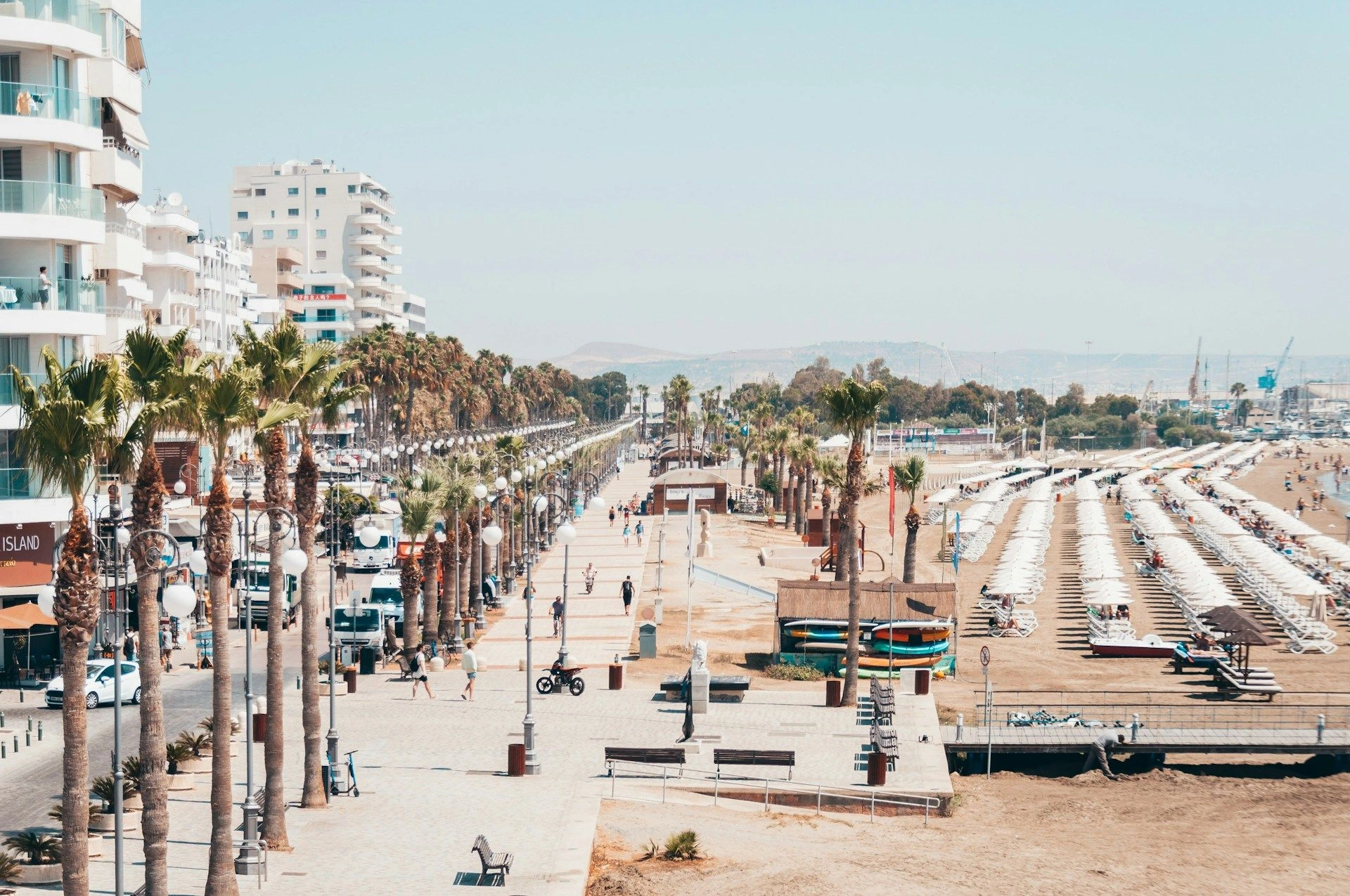
Larnaca District is commercially distinct because it does not rely on one single engine. The city centre and waterfront support hospitality, food and beverage, and service retail. The airport side and southern approach support storage, trade units, road visible commercial property, and owner occupier business use. The eastern coastal belt adds hotels, restaurants, beach services, and mixed residential commercial demand. Inland, the district supports village hospitality, craft led retail, and smaller service property where the local setting is strong enough. For that reason, commercial real estate in Larnaca District should never be read as one continuous seafront market.
Why Larnaca District has a broader commercial base
The first reason is access. Larnaca International Airport gives the district a level of connectivity that shapes commercial demand well beyond tourism. Airport linked movement supports car rental, trade, hospitality supply, road visible service property, business travel, and practical storage. This does not turn the district into a heavy logistics region, but it does give certain parts of the market a steadier operating base than a standard leisure coast would normally have.
The second reason is that the district combines city life with suburban spread. Finikoudes and Mackenzie create visible visitor and leisure demand, but Aradippou, Livadia, Oroklini, Dromolaxia, Meneou, and other suburban nodes add daily households, schools, clinics, trade activity, and road based commercial use. That makes buy commercial property in Larnaca District a question of local role rather than broad district branding. The better assets are usually the ones that already fit one of these clear demand systems.
Demand in Larnaca District follows city coast airport and suburbs
The district can be read through four practical layers. The first is the city and seafront belt, where hospitality, food led retail, mixed commercial property, clinics, agencies, and selected office use are easiest to justify because local life and visitor flow overlap. This is where pedestrian visibility, convenience, and service density matter most.
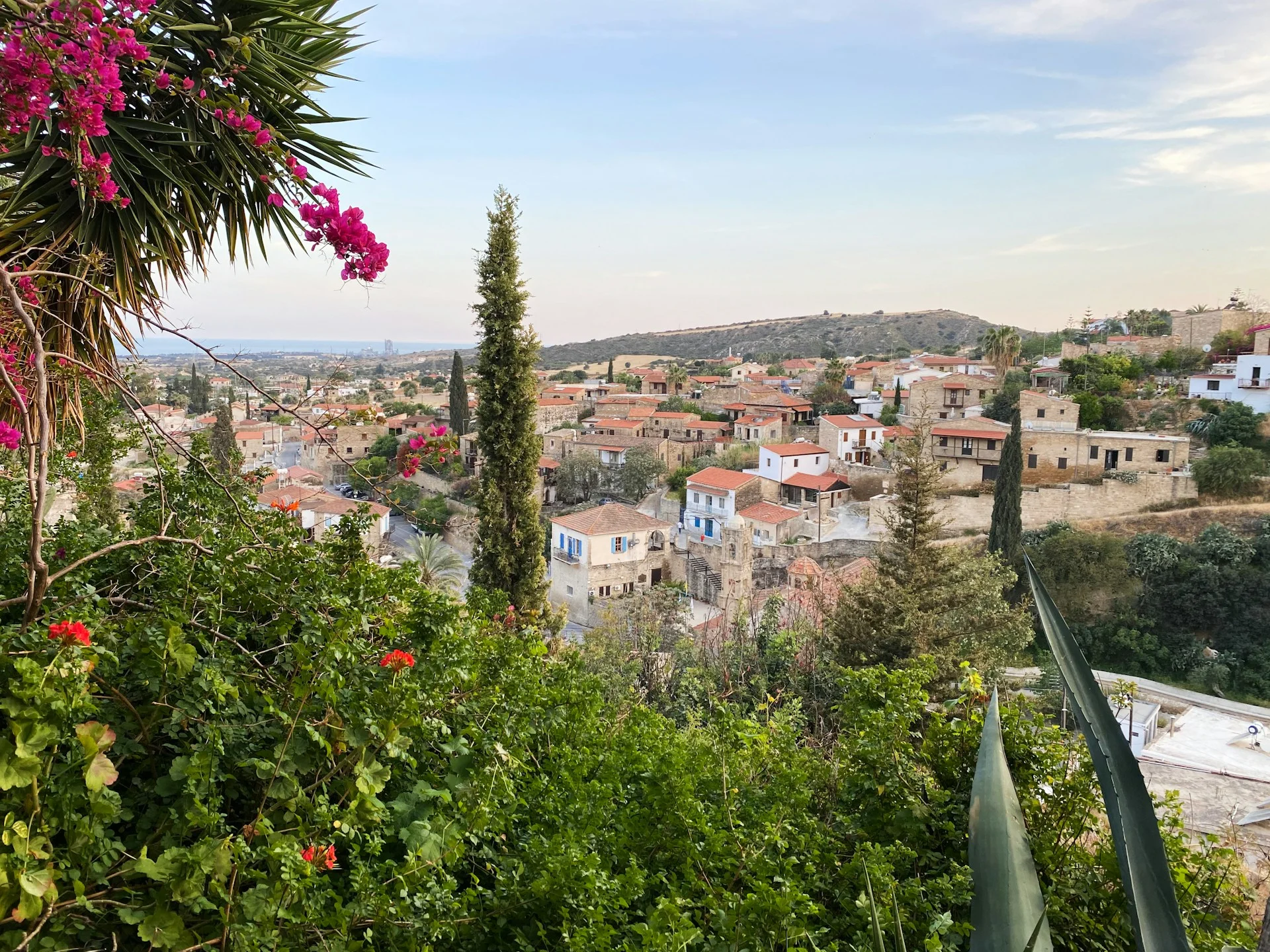
The second layer is the airport side and southern approach. Here, the commercial story becomes more operational. Storage, trade units, service yards, practical business premises, and owner occupier formats often make more sense than concept driven retail. The third layer is the eastern coastal strip, where hotels, restaurants, beach services, and retail linked to both residents and visitors can perform well when the exact node has sufficient density. The fourth layer is the inland village network, where commercial value is more selective and usually tied to food, crafts, destination dining, and smaller hospitality formats rather than to mainstream office or warehouse use.
Which asset types fit Larnaca District best
The strongest formats in the district are hospitality property, service retail, mixed commercial buildings, selected office premises, trade units, and practical warehouse or light industrial space in the right corridors. Larnaca District does not reward every segment equally. Pure large scale office stock is not the defining regional story, and heavy industrial logic is much weaker than in larger inland or port dominant markets. What works best here is property that matches the district's compact but layered economy.
Retail space in Larnaca District is meaningful when it serves either strong local catchment or repeat visitor movement. Hospitality is relevant because the district has beaches, city tourism, diving activity, and airport convenience, but the best hospitality assets usually sit inside established service ecosystems rather than depending on sea view alone. Mixed commercial buildings deserve special weight because one property can serve restaurant, office, clinic, retail, and service occupancy more naturally here than a narrow single use concept.
Retail space in Larnaca District depends on overlap not hype
The strongest retail locations in the district often benefit from overlap between everyday use and visitor spending. Finikoudes and Mackenzie are the clearest examples of places where food and beverage, convenience retail, and leisure services can draw from both locals and tourists. But not every coastal unit is strong simply because it is near the water. Retail success depends on pedestrian flow, surrounding services, ease of access, and the exact quality of the local catchment.
Suburban retail can also be highly practical. In places like Aradippou, Livadia, and Oroklini, commercial property may perform better through routine visibility, parking convenience, and household demand than through destination appeal. This is one of the key differences inside Larnaca District: some assets succeed because they serve leisure patterns, while others are stronger because they fit ordinary daily movement. Buyers who read only the coastal image can miss the more durable suburban formats.
Office space in Larnaca District works selectively
Office space in Larnaca District exists as a real segment, but it works selectively rather than universally. The strongest office logic usually appears in the city, in established service corridors, and in mixed commercial locations where agencies, legal and accounting services, clinics, education, and local business support already create recurring use. In those parts of the district, selected office buildings or floors can make sense.
Outside the better service nodes, hybrid assets are often easier to position than pure office stock. A building that can support offices, consulting, medical use, showroom functions, or training activity usually fits the district better than a narrow office concept without a clear local demand base. This matters because Larnaca District is not trying to replicate the office concentration of Nicosia or the corporate seafront of Limassol. It is stronger where office use is tied to practical services and flexible occupancy.
Warehouse property in Larnaca District and the airport side
Warehouse property in Larnaca District is relevant in a practical rather than oversized way. The district benefits from airport access, regional road links, and a trade and service economy that supports storage, hospitality supply, distribution to nearby urban areas, and owner occupier business use. The airport side, Aradippou direction, and parts of the inland access belt often make the clearest case for this kind of property.
That does not mean every storage or industrial asset is equally attractive. The stronger premises are usually the ones with clear road access, realistic servicing conditions, and a use case tied to trade, supply, food related operations, construction, or district level business activity. In Larnaca District, warehouse and light operational formats are valuable when they solve a local need, not when they are treated as generic large scale logistics plays.
Pricing and positioning across Larnaca District are uneven
Commercial value in the district is shaped by role more than by label. A coastal property can still be weak if it relies on narrow seasonal demand or has limited operational flexibility. A suburban or airport side asset can still be highly practical if it serves local trade, storage, healthcare, education, or everyday retail use. One commercial asset becomes more attractive than another when its purpose inside the district economy is already clear before the acquisition decision starts.
This means pricing should be interpreted differently by segment. Hospitality and retail near the seafront usually follow service density, promenade quality, and visitor overlap. Office space in Larnaca District depends more on service cluster strength and adaptability of use. Warehouse property in Larnaca District follows access, layout, and suitability for real operating businesses. The district is compact, but it still contains enough internal variation to make lazy comparison expensive.
How VelesClub Int. reads commercial property in Larnaca District
Larnaca District can look simple from a distance because the airport and beaches dominate its image. In practice, it becomes easier to understand when divided into city service property, waterfront hospitality and food led zones, airport corridor trade and storage assets, and suburban mixed use locations. VelesClub Int. helps turn those distinctions into commercial clarity instead of leaving the buyer with one broad district label.
That matters because the best opportunities in Larnaca District are rarely the most generic ones. They are usually the assets whose role is already legible inside the district's working geography. VelesClub Int. supports that clarity by screening property through demand source, access logic, and occupier fit before a broad search turns into weak comparison between unrelated submarkets.
Questions that clarify commercial property in Larnaca District
Why can two retail units in Larnaca District with similar size perform very differently?
Because one may depend on stable overlap between residents and visitors, while the other may rely on narrow seasonal flow or weak surrounding services. In this district, context usually matters more than area alone.
Is the best hospitality property in Larnaca District always near the main seafront?
Not always. Strong hospitality usually needs more than proximity to the water. Access, food and beverage concentration, repeat movement, airport convenience, and the maturity of the local service cluster often matter just as much.
When does office space in Larnaca District become a practical acquisition?
It becomes more practical where the asset is tied to recurring professional use, clinics, agencies, education, or local business services. Pure office concepts in weak or overly leisure led locations are usually harder to position.
What makes warehouse property in Larnaca District stronger near the airport side?
Airport approach and inland access zones usually support storage, supply, and trade activity more naturally than the seafront does. The value comes from movement, servicing, and operational fit rather than from image.
Why are mixed commercial buildings often easier to read in Larnaca District than single use assets?
Because the district combines several moderate scale demand systems. A flexible building can serve retail, office, clinic, food, or service use at the same time, which often creates a clearer occupancy story.
A clearer commercial view of Larnaca District
Larnaca District rewards buyers who understand that it is not only a tourism district and not only an airport district. It is a compact regional market where city services, coastal leisure, suburban growth, and practical business movement all shape commercial demand in different ways. The more clearly those layers are separated, the easier it becomes to choose the right format and avoid weak comparisons.
With VelesClub Int., commercial property in Larnaca District becomes easier to assess through access, asset role, and submarket fit. That gives buyers a calmer basis for comparison and a more structured path toward district level commercial strategy and asset screening.