
Buy commercial property in Famagusta DistrictBusiness assets across strong submarkets

Best offers
in Famagusta District
Benefits of investing in commercial real estate in Famagusta District


Leisure density
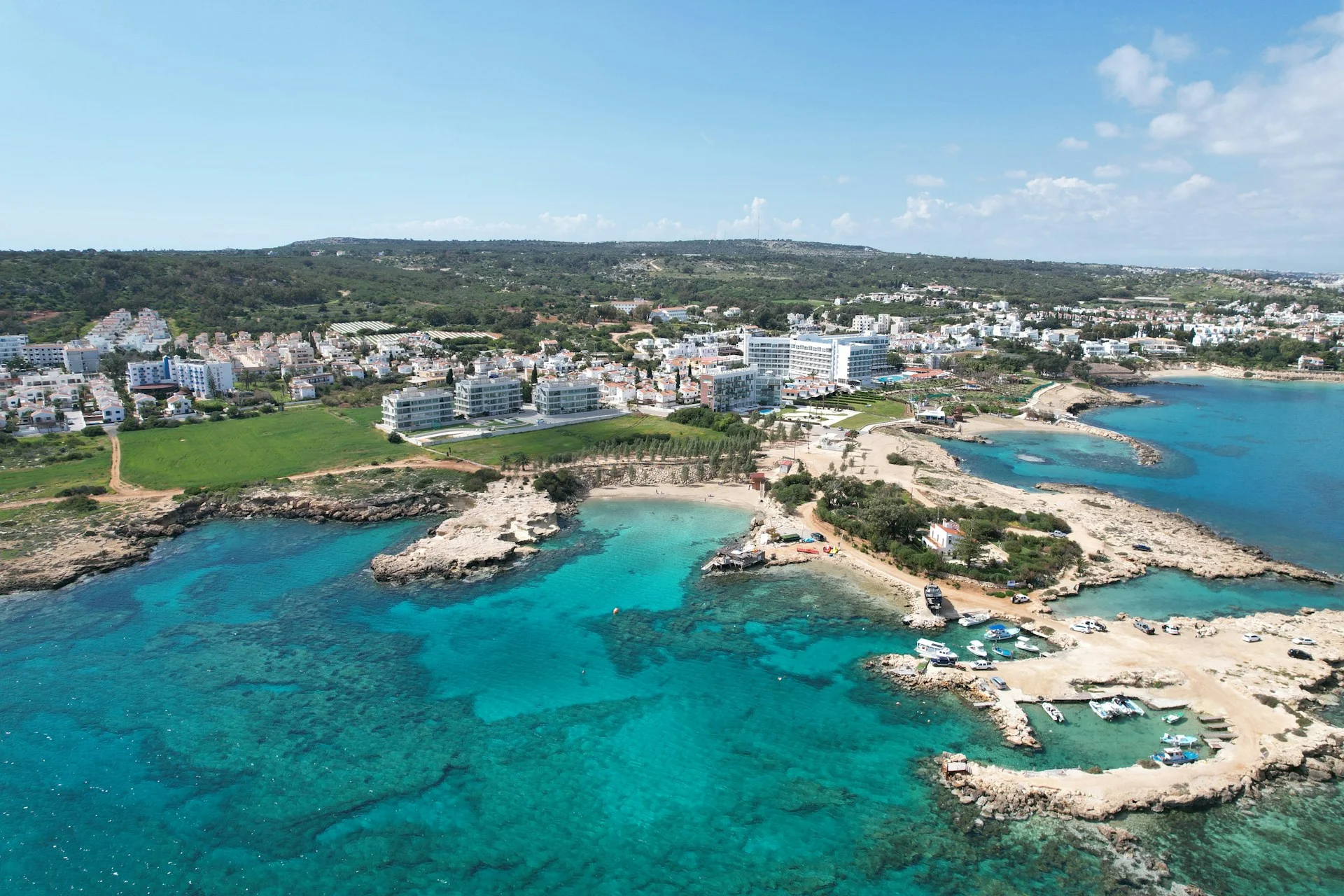
Famagusta District concentrates some of Cyprus' strongest beach, resort, dining, and short stay demand, giving the area a commercially dense eastern coast where hospitality, food led retail, and services can cluster effectively
Submarket spread
Ayia Napa and Protaras favour visitor facing formats, while Paralimni, Deryneia, Sotira, and the inland belt often support more practical retail, mixed use, trade, and owner occupier property with steadier local demand
Sharper screening
VelesClub Int. helps separate promenade hospitality assets, suburban service corridors, and inland operational nodes, so buyers read the district through demand source, season depth, and commercial role instead of treating the coast as one market
Leisure density
Famagusta District concentrates some of Cyprus' strongest beach, resort, dining, and short stay demand, giving the area a commercially dense eastern coast where hospitality, food led retail, and services can cluster effectively
Submarket spread
Ayia Napa and Protaras favour visitor facing formats, while Paralimni, Deryneia, Sotira, and the inland belt often support more practical retail, mixed use, trade, and owner occupier property with steadier local demand
Sharper screening
VelesClub Int. helps separate promenade hospitality assets, suburban service corridors, and inland operational nodes, so buyers read the district through demand source, season depth, and commercial role instead of treating the coast as one market








Useful articles
and recommendations from experts
How commercial property in Famagusta District works
Commercial property in Famagusta District matters because this is one of the clearest leisure driven commercial zones in Cyprus, yet it is not only a resort strip. The district combines Ayia Napa, Protaras, and the wider Paralimni area with inland municipalities and villages that support local services, trade, food related business, and owner occupier demand. That gives the market more depth than a simple summer destination and makes the district commercially broader than its nightlife and beach image suggests.
Famagusta District is commercially distinct because demand is split between two strong layers. The dominant layer is clearly hospitality and visitor spending along the eastern coast. The secondary layer is local service and practical business use centred more on Paralimni, Deryneia, Sotira, and the inland belt. This means commercial real estate in Famagusta District should not be read as one continuous tourism market. Some assets work because they capture promenade footfall and seasonal intensity, while others work because they serve residents, schools, clinics, retail routines, food supply, and day to day district movement.
Why Famagusta District is commercially relevant
The district has one of the island's strongest concentrations of beach tourism, restaurant demand, leisure services, and short stay activity. Ayia Napa and Protaras are not just well known holiday names. They create a dense seasonal economy that supports hotels, aparthotel formats, restaurants, bars, convenience retail, excursion related services, and mixed commercial property tied to repeated visitor flow. This makes the district one of the most readable places in Cyprus for hospitality linked commercial strategy.
But the district remains relevant beyond its strongest holiday months because it also has a working local base. Paralimni functions as a service and municipal centre, and surrounding areas support residents, supermarkets, clinics, schools, workshops, trade units, and everyday retail. This is important for buyers who want to buy commercial property in Famagusta District without relying only on one leisure concept. The better asset is often the one that matches the exact submarket rather than the one closest to the most famous beach.
In Famagusta District demand follows coast core and inland belt
The commercial geography of the district is easiest to read through three main layers. The first is the Ayia Napa and Protaras coastal belt, where visitor density, dining, beach traffic, and short stay demand are strongest. The second is Paralimni and its adjoining service arc, where district life becomes more balanced and mixed commercial use becomes easier to justify. The third is the inland and south western belt around Deryneia, Sotira, and the wider red soil village area, where practical retail, trade, food linked business, storage, and owner occupier premises make more sense than purely leisure led property.
This internal structure matters because similar looking assets can have very different commercial logic. A restaurant unit in Ayia Napa, a shop in Protaras, a clinic or mixed use building in Paralimni, and a storage or trade property near Sotira do not belong to the same market simply because they sit in the same district. Famagusta District rewards buyers who separate visitor flow assets from resident serving assets before comparing price, size, or frontage.
Which commercial formats make the most sense in Famagusta District
The strongest formats in the district are hospitality property, food led and service led retail, mixed commercial buildings, selected office and clinic premises, and practical trade or storage units in the right inland nodes. This is not a market where every category deserves equal weight. Hospitality is clearly the leading commercial story, but it should not absorb the whole page. Retail space in Famagusta District is also important, and mixed use property often performs well because it can capture several layers of district demand at once.
Pure office exposure is less dominant here than in Nicosia or parts of Limassol. Warehouse property in Famagusta District exists as a real segment, but it usually works through local supply, trade support, and district servicing rather than through large scale island wide logistics. The practical buyer should therefore focus on fit rather than on category prestige. In this district, commercial strength comes from being useful to the exact area that surrounds the property.
Retail space in Famagusta District depends on the right catchment
Retail performs best where one of two conditions is clear. Either the unit serves heavy visitor movement, or it serves repeat local use. Along the coast, the strongest retail and food premises usually depend on promenades, hotel concentration, repeat leisure spending, and easy pedestrian access. In these locations, compact units can outperform larger concepts because the district often rewards immediacy, visibility, and service intensity more than floor area alone.
In Paralimni and other service oriented areas, the logic changes. Retail space in Famagusta District can work well when it is tied to routine household demand, healthcare related visits, education, car based convenience, or district services. That means a less glamorous location can still be commercially stronger than a coastal unit if the local catchment is steadier and the use is less exposed to tourism cycles. This is one of the most important practical distinctions inside the district.
Hospitality property in Famagusta District is strong but selective
Hospitality is the district's most visible commercial segment, yet it is not one uniform product. Ayia Napa, central Protaras, the quieter edges of the coast, and selected inland destination pockets do not behave the same way. Some locations suit lively restaurant and leisure concepts. Others fit family oriented accommodation, quieter boutique formats, or food and beverage tied to beach and evening flow. The strongest hospitality properties are usually the ones whose concept already matches the local rhythm of spending and movement.
This means a buyer should not reduce hospitality to sea proximity alone. Commercial property in Famagusta District becomes easier to read when the question shifts from how close is it to the beach to what type of visitor and what type of service pattern the place actually supports. In practice, season depth, town character, nearby accommodation stock, and footfall quality often matter more than a general resort label.
Office space in Famagusta District works in a narrower band
Office space in Famagusta District is a selective segment rather than a central one. The strongest office logic usually sits in Paralimni and a few practical district nodes where municipal functions, clinics, agencies, legal and accounting work, education related services, and local administration create recurring business use. These are not deep corporate office markets, but they can support practical professional occupancy where local demand already exists.
Outside those nodes, hybrid property is often easier to position than a pure office concept. A building that can support office use, clinic use, training, service retail, or agency activity often fits the district better than a narrow office format with limited flexibility. For this reason, office space in Famagusta District should usually be screened as part of the service economy rather than as a standalone metropolitan office play.
Warehouse property in Famagusta District and the inland nodes
Warehouse and trade property have a place in the district, but the logic is local and regional rather than oversized. The stronger cases usually appear where assets support hospitality supply, food and beverage operations, construction trades, agricultural handling, district distribution, or owner occupier business use. Areas around Sotira, Deryneia, and the inland access belt tend to make more sense for this kind of property than the seafront itself.
Warehouse property in Famagusta District should therefore be read through utility. Access, yard practicality, servicing conditions, and closeness to the right operating base matter much more than image. In many cases, medium scale premises with a clear user profile will read better than larger speculative units without a defined district role. This is one reason the inland side of the district deserves more weight than first impressions usually give it.
Pricing and positioning across Famagusta District are uneven
Commercial value in the district is shaped by commercial role, not only by the broad appeal of the eastern coast. A coastal unit can still be weak if it relies on shallow seasonal footfall or a concept that does not fit the immediate area. An inland or Paralimni based asset can still be highly practical if it serves residents, trade activity, district services, or stable professional use. One commercial asset becomes stronger than another when its role inside the district economy is already visible before the acquisition decision begins.
For hospitality and visitor retail, pricing usually follows pedestrian quality, local positioning, service density, and season depth. For office space in Famagusta District, value depends more on district function, flexibility, and local service concentration. For warehouse property in Famagusta District, usability and access matter most. This uneven structure is why the district benefits from disciplined comparison instead of broad assumptions based on tourism image.
How VelesClub Int. reads commercial real estate in Famagusta District
From a distance, the district can appear simple because Ayia Napa and Protaras dominate its image. In practice, it becomes much clearer when divided into coastal hospitality zones, Paralimni centred service property, and inland operational nodes. VelesClub Int. helps turn those distinctions into a useful commercial framework rather than leaving the buyer with one broad eastern coast label.
That matters because the best opportunities in Famagusta District are rarely the most generic ones. They are usually the assets whose demand source is already understandable. VelesClub Int. supports that clarity by screening the district through season depth, local catchment, access, and format fit, which helps narrow a broad search into a more disciplined regional comparison.
Questions that sharpen commercial choices in Famagusta District
Why can two hospitality assets in Famagusta District with similar sea access behave very differently commercially?
Because sea access does not create the same spending pattern everywhere. One area may support stronger dining, nightlife, and late trading, while another depends more on family stay patterns and lower evening intensity.
Is retail space in Famagusta District strongest only in Ayia Napa and Protaras?
No. Those coastal areas dominate visitor led spending, but Paralimni and nearby service nodes often provide steadier local demand. Some of the most practical units in the district are built on routine catchment rather than on holiday traffic.
When does office space in Famagusta District become a practical purchase?
It becomes more practical where the property is tied to clinics, agencies, education, municipal activity, or other recurring district services. Pure office concepts away from those functions are usually harder to position.
What makes warehouse property in Famagusta District stronger inland than on the coast?
Inland locations are usually better for supply, storage, construction related activity, and owner occupier use. The coast is more valuable for visitor facing formats, while the inland belt often provides stronger operating logic.
How should buyers compare a Paralimni mixed use asset with a Protaras hospitality unit?
They should compare demand source first. One serves district life and broader year round use, while the other serves a more concentrated leisure economy. The better choice depends on strategy, not on which area is more famous.
A clearer commercial view of Famagusta District
Famagusta District rewards buyers who understand that it is not one tourism strip and not one inland service market. It is a combination of coastal hospitality intensity, Paralimni centred district services, and inland practical business nodes. The more clearly those layers are separated, the easier it becomes to choose the right format and avoid weak comparisons.
With VelesClub Int., commercial property in Famagusta District becomes easier to assess through demand pattern, internal geography, and practical fit. That gives buyers a calmer basis for comparison and a more structured path toward district level commercial strategy and asset screening.