
Commercial property in IstriaRegional assets with business clarity
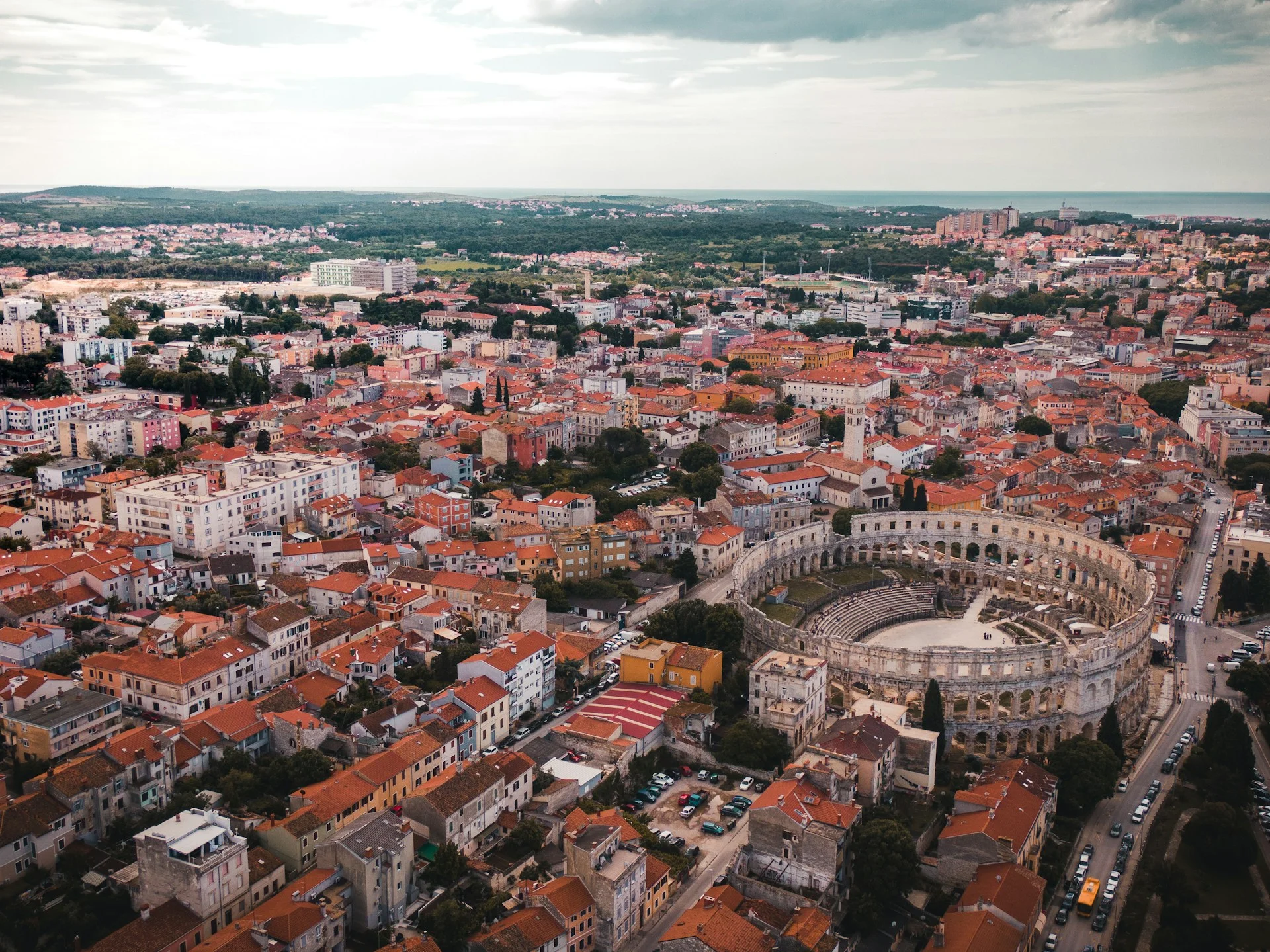
Best offers
in Istria
Benefits of investing in commercial real estate in Istria

Coastal depth
Istria combines year round service demand in its stronger coastal towns with inland administrative and operational activity, giving the region a broader commercial base than a simple seasonal tourism market
Asset match
Hospitality retail and mixed use formats often read best along the western coast, while light industrial, storage, and business premises make more sense around Pula, Pazin, and corridor connected inland nodes
Regional clarity
VelesClub Int. helps separate resort led submarkets, urban service hubs, and inland business zones, so buyers compare Istria by demand pattern and asset role instead of treating the peninsula as one market
Coastal depth
Istria combines year round service demand in its stronger coastal towns with inland administrative and operational activity, giving the region a broader commercial base than a simple seasonal tourism market
Asset match
Hospitality retail and mixed use formats often read best along the western coast, while light industrial, storage, and business premises make more sense around Pula, Pazin, and corridor connected inland nodes
Regional clarity
VelesClub Int. helps separate resort led submarkets, urban service hubs, and inland business zones, so buyers compare Istria by demand pattern and asset role instead of treating the peninsula as one market


Useful articles
and recommendations from experts
How commercial property in Istria is structured
Commercial property in Istria matters because the peninsula does not depend on one narrow economic story. It is one of the few regional markets where tourism, hospitality, local services, manufacturing, food production, maritime activity, and cross border business all sit inside the same geography. That gives buyers a wider range of commercial formats than a simple resort market would normally support.
Istria is also commercially distinct within Croatia because it works through several urban and territorial layers at once. The western coast concentrates hotels, restaurants, retail, and year round visitor infrastructure. Pula adds a stronger urban and operational profile, with port, airport, service, and industrial functions. The interior, especially around Pazin and corridor connected business zones, supports a more practical reading built around distribution, light industrial use, trade servicing, and owner occupier activity. For that reason, commercial real estate in Istria should never be approached as one uniform tourism driven market.
What makes Istria commercially distinct
The region stands out because demand is diversified by geography. In many coastal regions, nearly everything depends on a single summer cycle. Istria is different. The tourism layer is strong, but it is reinforced by local purchasing power, gastronomy, agriculture, maritime access, business travel, and a network of established towns rather than one dominant resort strip. That gives the market more continuity and makes asset selection more nuanced.
This matters for anyone planning to buy commercial property in Istria. The better opportunities are usually the ones that fit the role of their exact submarket. A hospitality asset on the west coast, a mixed service building in a stronger local town, and a light industrial unit in an inland business zone are all valid, but they belong to different commercial systems. The region rewards buyers who read those systems separately instead of assuming the entire peninsula behaves in the same way.
Across Istria demand follows coast south and interior
The strongest demand belt usually runs along the western side of the peninsula, where towns such as Umag, Novigrad, Porec, and Rovinj combine visitor flow, second home activity, retail spending, food and beverage demand, and hospitality intensity. These locations support commercial formats linked to accommodation, dining, leisure, premium services, and selective retail. In this part of Istria, visibility, footfall, and seasonal extension often matter more than raw scale.
The southern part of the region reads differently. Around Pula, commercial demand is more urban and more operational. Port activity, airport related business, local services, education, healthcare, and wider city demand create better conditions for year round commercial use. The interior introduces another layer. Pazin and corridor connected inland areas are not tourism weak spots by default; they simply function through different drivers, including administration, servicing, logistics, business zones, and trade movement across the peninsula.
The strongest asset types in Istria
The most natural formats in the region are hospitality property, service retail, mixed use buildings, food and beverage premises, selected office and business service space, and light industrial or storage units in the right inland and southern locations. This is not a market where every segment deserves equal weight. Retail space in Istria is meaningful when it serves real catchment or visitor concentration. Hospitality property works when it matches location quality and operating intensity. Light industrial space works when it sits on real business access rather than on cheap land alone.
Warehouse property in Istria exists as a practical segment, but it should be read carefully. The peninsula is not a large national distribution platform in the same way as a major inland corridor region. Storage and logistics formats usually make more sense when they support local supply chains, hospitality servicing, food and beverage operations, import linked activity, or regional business use. Smaller and medium scale operational premises often read better here than oversized speculative logistics concepts.
Retail and hospitality patterns across Istria
Hospitality is the most visible commercial theme in Istria, but the strongest buyers do not treat it as a generic resort formula. Coastal towns differ sharply in positioning. Some support premium leisure and dining better, others fit family tourism, camps, mixed service clusters, or town centre retail connected to steady pedestrian movement. A good hospitality or restaurant asset is not just near the sea. It needs a town whose demand pattern matches the concept.
Retail follows similar logic. Retail space in Istria works best where there is either dense local catchment or durable visitor spending. In stronger towns, compact retail and service units can outperform larger concepts because the market often rewards convenience, walkability, and everyday use. Mixed use property is especially relevant because one building can combine food and beverage, local retail, medical or beauty services, and short stay or office functions. That flexibility suits the region well.
Where office space in Istria works better
Office space in Istria is selective rather than universal. The region is not primarily an office market, so pure office acquisitions need tighter filters. The best locations are usually Pula, stronger municipal centres, and selected inland nodes where administration, business services, engineering, technology, or recurring professional demand is already present. In these areas, office space can fit service businesses, local headquarters, or mixed commercial use.
Outside those nodes, a hybrid approach is often better than a pure office thesis. Buildings that combine office, showroom, clinic, agency, consultancy, back office, or training functions can read more naturally than narrow office stock. That is a recurring rule in commercial property in Istria: functional flexibility usually matters more than category purity, because the region contains several smaller commercial ecosystems rather than one deep office hierarchy.
Pricing and positioning inside Istria
Commercial value in the region is shaped less by absolute size and more by local role. On the coast, pricing tends to reflect position, town quality, pedestrian flow, hospitality intensity, and the ability to operate across a longer season. In southern and inland submarkets, the key tests shift toward access, servicing practicality, parking, operational flexibility, and year round demand. A smaller asset in a strong town can be more practical than a larger building in a weaker location.
That is why comparison inside Istria must be disciplined. A restaurant unit in Rovinj, a service retail property in Porec, an office and trade building in Pula, and a storage linked asset near Pazin are not competing versions of the same product. They represent different commercial strategies. One asset becomes more practical than another when its format matches the submarket that supports it. Buyers who ignore that regional variation often overpay for atmosphere or underread operational value.
How VelesClub Int. reads commercial real estate in Istria
Istria can look deceptively simple from a distance because the tourism story is so visible. In practice, the peninsula is easier to understand when divided into coastal hospitality towns, Pula centered urban and service activity, inland administrative and business nodes, and selected industrial or storage pockets. VelesClub Int. helps structure the market in those terms, so buyers can screen assets by demand source rather than by broad regional image.
That regional reading is useful because the best opportunities in Istria are rarely the most generic ones. They are the assets whose commercial role is already clear. VelesClub Int. supports that clarity by separating lifestyle appeal from actual business function and by narrowing broad market interest into a more disciplined commercial selection process.
Questions that clarify commercial property in Istria
Why can two hospitality properties in Istria feel equally attractive but carry very different commercial logic?
Because hospitality demand depends on the town, not just the coastline. One location may support premium dining and longer season activity, while another works better for family tourism, camp linked services, or simpler summer traffic.
Is the best retail space in Istria always on the coast?
Not always. Coastal towns usually dominate visitor spending, but some inland and southern locations perform well because they serve stable local demand, administration, or everyday service needs rather than seasonal footfall.
When does warehouse property in Istria make the most sense?
It usually makes the most sense when it supports regional operations such as hospitality supply, trade servicing, food related business, or local distribution. The format is practical here when tied to use, not when treated as a generic logistics bet.
Why is Pula often easier to read commercially than smaller towns in Istria?
Pula has a broader year round base. Port, airport, education, services, and urban demand create more continuous commercial use, so mixed buildings, business premises, and selected office functions are easier to position there.
What makes one inland location in Istria more practical than another?
The stronger inland locations are usually the ones connected to movement and administration. If a town or zone sits well on the peninsula's corridor structure and supports recurring business use, asset selection becomes much more readable.
A clearer regional view of Istria
Istria rewards buyers who understand that the peninsula is not one market and not only a tourism market. It is a combination of coastal hospitality demand, urban service activity, inland business function, and selective industrial and storage use. The more clearly those layers are separated, the easier it becomes to match strategy to location.
With VelesClub Int., commercial property in Istria becomes easier to assess through role, submarket, and practical fit. That gives buyers a calmer basis for comparison and a more structured path toward commercial strategy and asset screening in the region.