
Commercial real estate for sale in DalmatiaVerified listings for regional expansion
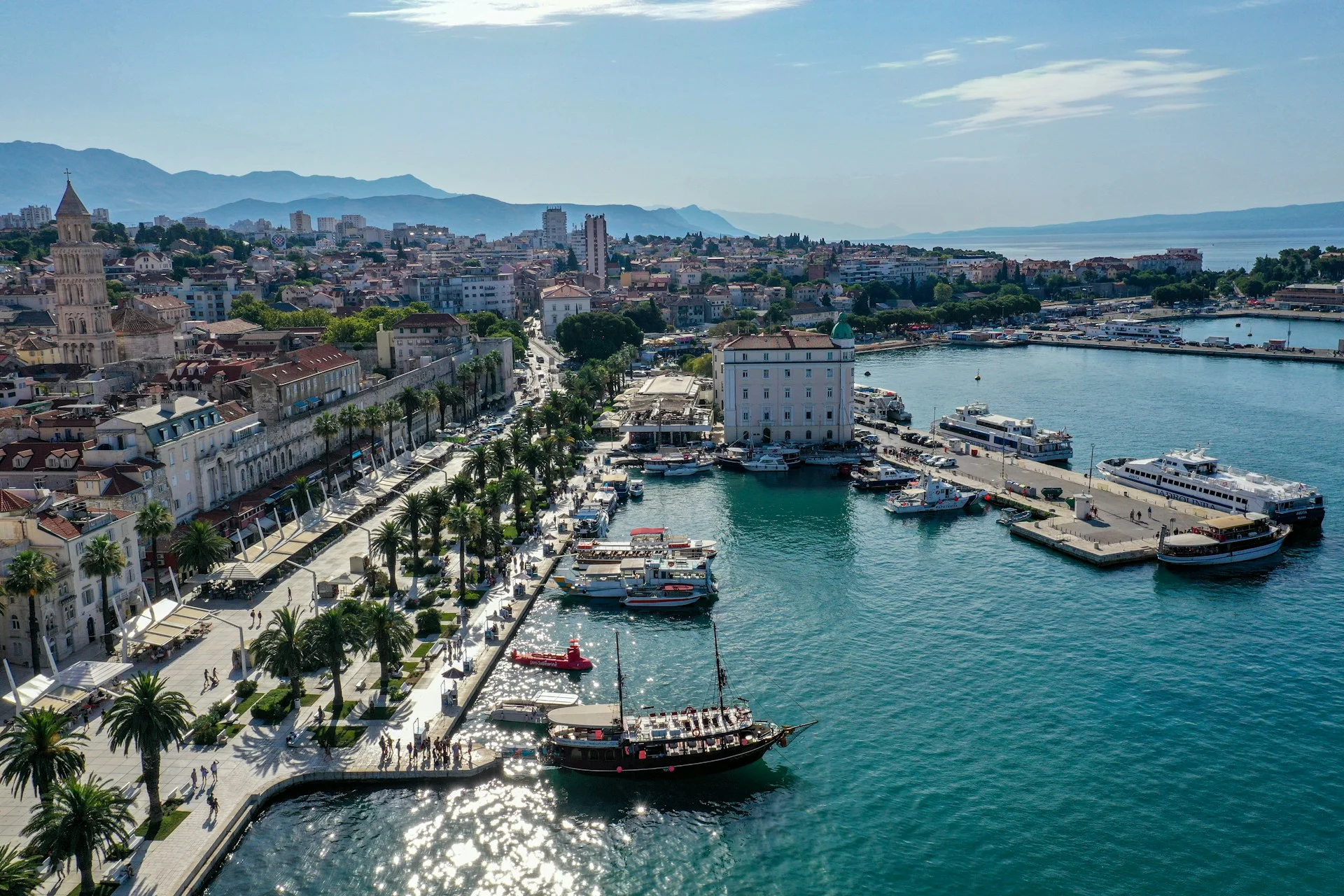
Best offers
in Dalmatia
Benefits of investing in commercial real estate in Dalmatia

Polycentric demand
Dalmatia draws commercial demand from several strong layers at once: city services, ferry and port movement, hospitality spending, island supply chains, and regional trade, which makes the market broader than a single resort economy
Format range
Hotels, food led retail, waterfront mixed use, and service property often read best in the stronger coastal towns, while storage, trade units, light industrial space, and operational premises fit the urban corridors better
Regional reading
VelesClub Int. helps separate riviera hospitality zones, Split led service depth, Zadar and Sibenik corridor utility, and the southern gateway around Dubrovnik and Ploce, so Dalmatia is screened by role not image
Polycentric demand
Dalmatia draws commercial demand from several strong layers at once: city services, ferry and port movement, hospitality spending, island supply chains, and regional trade, which makes the market broader than a single resort economy
Format range
Hotels, food led retail, waterfront mixed use, and service property often read best in the stronger coastal towns, while storage, trade units, light industrial space, and operational premises fit the urban corridors better
Regional reading
VelesClub Int. helps separate riviera hospitality zones, Split led service depth, Zadar and Sibenik corridor utility, and the southern gateway around Dubrovnik and Ploce, so Dalmatia is screened by role not image


Useful articles
and recommendations from experts
How commercial property in Dalmatia is structured
Commercial property in Dalmatia matters because this region is not one continuous tourism strip and not one city led market. It is a long coastal system made of northern gateways, central urban depth, island demand, resort belts, working ports, and southern service concentration. That creates a much more varied commercial landscape than the usual image of beaches and hotels suggests.
Dalmatia is commercially distinct within Croatia because demand is distributed through several strong nodes rather than one dominant metropolitan core. Zadar gives the north a transport and nautical layer, Sibenik adds a mixed industrial and coastal role, Split anchors the central belt with the deepest service economy, and Dubrovnik gives the south a premium hospitality and international access profile. Around these anchors sit island markets, marina linked spending, ferry movement, food and beverage supply, and a range of smaller towns whose commercial logic depends on either daily catchment or visitor intensity. This is why commercial real estate in Dalmatia should never be read as one simple coastal category.
Why Dalmatia is not one coastal market
The strongest reason is internal variation. In many coastal regions, nearly all commercial value comes from one tourism cycle and weakens quickly outside the season. Dalmatia behaves differently. Tourism is clearly important, but it is reinforced by ferry networks, port activity, education, healthcare, administration, food production, trade servicing, marine services, and urban consumption. That means the region can support hospitality and leisure property, but also retail, mixed use buildings, operational premises, selected office formats, and smaller scale logistics.
The second reason is geography. Dalmatia is long, segmented, and commercially uneven in a useful way. Some places are best read through visitor concentration. Others work through year round urban life. Others benefit from island supply chains, marina activity, or corridor access. Anyone planning to buy commercial property in Dalmatia needs to understand that a waterfront restaurant unit in a strong historic town, a mixed commercial building near Split, and a warehouse linked asset near a transport node are not variations of the same market. They belong to different demand structures and should be judged accordingly.
Commercial demand in Dalmatia follows several belts
The northern part of Dalmatia usually reads through Zadar and its wider catchment. That area combines ferry traffic, airport access, nautical tourism, business zones, and links to the A1 corridor. It is one of the clearest places in the region for service retail, mixed use assets, marine related business, and practical storage or trade property. Zadar is useful because it blends visitor demand with year round urban and transport functions instead of relying on only one of them.
The central belt shifts the story toward Split and the wider Split Trogir Kastela axis, supported by islands and a large service economy. This is where hospitality, food and beverage, retail, mixed commercial buildings, selected offices, and service premises can all make sense, but for different reasons. Split works not only as a tourism magnet, but also as a port city, business centre, education hub, and administrative anchor. Around it, commercial demand spreads into suburban and coastal nodes that support both everyday use and hospitality related activity.
Further south, Dalmatia becomes more selective and more premium. Dubrovnik and the southern arc support strong hospitality and service property, but also create supporting demand for supply, operations, and regional servicing. The Ploce and Neretva side introduces a more practical trade and gateway logic, where transport, port relevance, and agri linked movement matter more than leisure positioning. This north central south variation is what gives Dalmatia real commercial depth.
The asset mix that suits Dalmatia best
The most natural asset types in the region are hospitality property, food led and service led retail, mixed use commercial buildings, operational premises, selected office space, and smaller to mid scale warehouse or storage property in the right nodes. Dalmatia does not reward every category equally. Large pure office buildings are far less universal than in capital regions, while practical mixed use formats often outperform narrower single function concepts.
Retail space in Dalmatia is meaningful when it serves either stable local catchment or durable visitor flow. Strong seaside locations can support compact premium retail, food and beverage, and service units with high pedestrian relevance. Urban nodes can support everyday retail, health and beauty services, clinics, agencies, small professional use, and convenience led formats. Mixed use buildings deserve special weight because they reflect how the region actually works: one asset may combine hospitality, service retail, office use, and owner occupier business functions more naturally than a pure format.
Warehouse property in Dalmatia is relevant, but in a region specific way. This is not a giant inland distribution landscape. Storage and logistics units usually make sense when they support ports, ferry systems, hospitality supply, food trade, island servicing, construction, or local distribution. In many cases, practical medium scale units with real operating value read better than oversized speculative logistics schemes.
Hospitality in Dalmatia is strong but not enough
Hospitality is the most visible commercial theme in Dalmatia, but the best buyers do not stop there. The region contains premium old town markets, family holiday belts, marina linked towns, island destinations, and urban leisure centres. These are not interchangeable. A hospitality asset in Dubrovnik follows a different pricing and service logic from one in Zadar or one on a middle Dalmatian island. A waterfront site may look attractive in every case, but commercial practicality depends on season length, pedestrian intensity, local spending, and whether the concept fits the town rather than the postcard image.
This is why hospitality alone is not a full reading of the region. Dalmatia works best commercially where tourism interacts with a broader service ecosystem. Hotels, restaurants, wellness concepts, and leisure property become easier to position when the surrounding town also supports transport movement, marina activity, residential spending, or year round services. Places that rely only on summer visibility can still be interesting, but they require a narrower strategy than towns with stronger off season economic life.
Office and operational space across Dalmatia
Office space in Dalmatia works selectively, not universally. The strongest office and business service logic is usually found in Split, followed by parts of Zadar and selected Sibenik and Dubrovnik nodes where administration, education, healthcare, consultancy, maritime services, or business management functions are already present. In these submarkets, office space can support local headquarters, clinics, agencies, technology activity, and broader professional use.
Outside the stronger urban centres, hybrid formats often make more sense than pure office stock. Buildings that combine office, showroom, service, clinic, back office, or training functions usually match local commercial behaviour better. Operational premises are also important in Dalmatia because the region supports marine repair, food and beverage supply, trade servicing, port connected business, and owner occupier companies that need usable space more than prestige addresses. This gives the region a more practical commercial base than the tourism image alone would suggest.
Pricing logic inside Dalmatia changes sharply
Commercial value in the region is shaped by role, access, and local demand source more than by coastline alone. A smaller property in a strong old town or ferry connected service node can be more practical than a larger unit in a weaker resort strip. A storage or operational asset near Zadar, Split, or Ploce can carry stronger business logic than a scenic location with limited functional use. One commercial asset becomes more attractive than another when its format fits the exact mechanism that supports demand around it.
On the hospitality and retail side, pricing usually reflects pedestrian quality, service intensity, length of season, and local brand positioning. In the urban belts, value often follows year round footfall, mixed business use, parking or access practicality, and broader service depth. On the islands, accessibility and concentration matter more than size alone. This unevenness is why commercial property in Dalmatia should be compared through submarket logic rather than broad regional mood.
Reading commercial real estate in Dalmatia with VelesClub Int.
Dalmatia can look deceptively simple from a distance because tourism dominates its image. In practice, the region becomes much clearer when divided into northern transport and nautical nodes, central urban service depth around Split, mixed coastal towns with year round local demand, and the southern premium gateway with its own hospitality and support logic. VelesClub Int. helps make those differences commercially usable rather than leaving them as general geography.
That matters because the best opportunities in Dalmatia are rarely the most generic ones. They are usually the assets whose function inside the regional system is already legible. VelesClub Int. supports that clarity by screening assets through demand source, asset role, and submarket fit, which is especially valuable in a region where port movement, island servicing, urban depth, and leisure demand all overlap.
Questions that clarify commercial property in Dalmatia
Why can two hospitality properties in Dalmatia with similar sea access perform very differently in strategy terms?
Because the town matters more than the coastline alone. One location may support premium dining and longer season activity, while another depends mostly on family summer traffic and a narrower service pattern.
Is retail space in Dalmatia strongest only in the best known tourist towns?
Not always. Major tourist towns support premium and visitor led retail, but some of the most practical units sit in urban service centres where everyday residents, commuters, and business users create steadier year round demand.
When does warehouse property in Dalmatia make the most sense?
It is usually strongest when it supports ports, ferry systems, hospitality supply, food distribution, island servicing, or regional trade. The case becomes weaker when storage is treated as a generic scale play without a local operating role.
Why is Split often easier to read for mixed commercial assets than smaller coastal towns in Dalmatia?
Because Split has the broadest year round base in the region. Port traffic, education, administration, healthcare, offices, and urban consumption create more stable multi use demand than a purely leisure focused location.
What makes one island asset in Dalmatia more commercially practical than another?
The stronger island assets usually sit where access, local concentration, and repeat demand are already clear. A beautiful setting alone is not enough if servicing is thin, footfall is narrow, or the town lacks a strong supporting ecosystem.
A clearer commercial view of Dalmatia
Dalmatia rewards buyers who understand that the region is not one tourism market and not one urban market. It is a combination of transport led northern nodes, central service depth, layered coastal towns, island demand, and a southern premium gateway. The more clearly those layers are separated, the easier it becomes to choose the right format and avoid weak comparisons.
With VelesClub Int., commercial property in Dalmatia becomes easier to assess through role, submarket, and practical fit. That gives buyers a calmer basis for comparison and a more disciplined path toward regional commercial strategy and asset screening.