
Commercial property in BarranquillaVerified assets for business expansion
Best offers
in Colombia
Benefits of investing in commercial real estate in Barranquilla


Drivers of demand
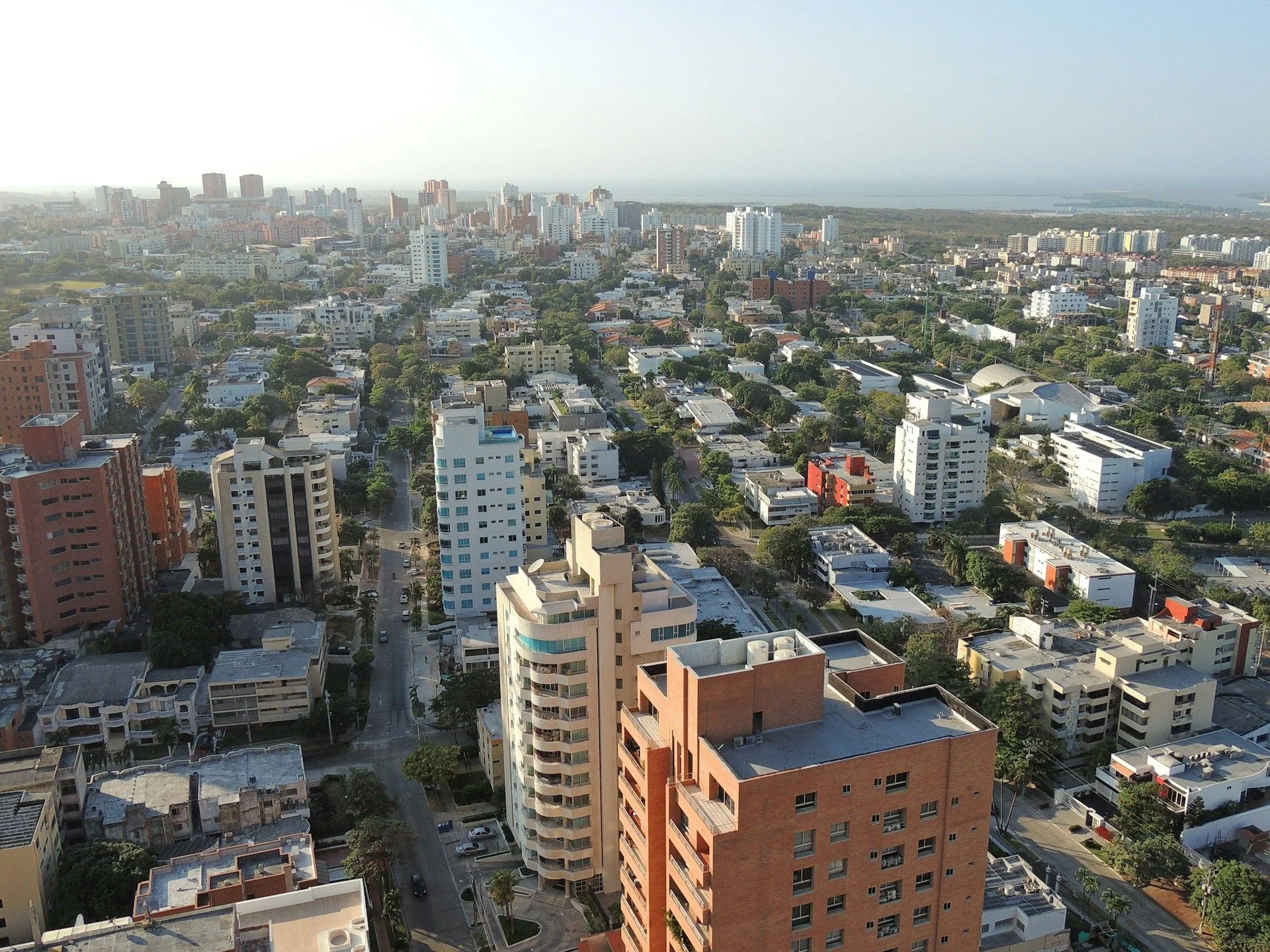
Barranquilla demand is driven by port and logistics activity, coastal tourism, manufacturing clusters and expanding professional services in central business districts, producing mix of stabilised long leases for logistics and variable short-term hospitality tenancy
Asset types and strategies
Logistics and port-oriented warehouses, light industrial, Grade B and A office buildings, coastal hotels, high-street retail and neighborhood centers are common in Barranquilla, supporting core long-term leases, value-add repositioning and single versus multi-tenant strategies
Expert selection support
VelesClub Int. experts help define strategy, shortlist assets and run screening including tenant quality checks, lease structure review, yield logic assessment, capex and fit-out assumptions, vacancy risk analysis and a focused due diligence checklist
Drivers of demand
Barranquilla demand is driven by port and logistics activity, coastal tourism, manufacturing clusters and expanding professional services in central business districts, producing mix of stabilised long leases for logistics and variable short-term hospitality tenancy
Asset types and strategies
Logistics and port-oriented warehouses, light industrial, Grade B and A office buildings, coastal hotels, high-street retail and neighborhood centers are common in Barranquilla, supporting core long-term leases, value-add repositioning and single versus multi-tenant strategies
Expert selection support
VelesClub Int. experts help define strategy, shortlist assets and run screening including tenant quality checks, lease structure review, yield logic assessment, capex and fit-out assumptions, vacancy risk analysis and a focused due diligence checklist








Useful articles
and recommendations from experts
Strategic commercial property in Barranquilla overview
Why commercial property matters in Barranquilla
Barranquilla functions as a regional commercial hub on the Caribbean coast, which shapes consistent demand for commercial property in Barranquilla across multiple sectors. The port and logistics activity sustains demand for warehouses and light industrial premises, while a diversified services economy supports office space in Barranquilla for back-office operations, professional services, and regional corporate functions. Retail demand is driven by a mix of high-street corridors and dispersed neighborhood spending, and hospitality demand rises with tourism seasonality, events, and business travel. Healthcare and education institutions also create niche demand for purpose-built facilities and medical office leases. Buyers in this market include owner-occupiers seeking single-site control, yield-focused investors targeting stable lease income, and operators who acquire assets to manage hospitality or retail portfolios. Each buyer type evaluates assets through an operational lens that reflects Barranquillas trade patterns, seasonal peaks, and industrial connectivity.
The port and intermodal links make Barranquilla attractive for investors looking at logistics-angular strategies, while the citys service sector growth supports office-based investments. Understanding which sector underpins demand is a necessary first step for any investor or occupier assessing commercial real estate in Barranquilla.
The commercial landscape – what is traded and leased
The traded and leased stock in Barranquilla typically includes concentrated business district offices, high-street retail corridors, neighborhood retail nodes, franchised and independent restaurant premises, business parks and logistics zones, and tourism-oriented hotel and short-term accommodation clusters. Lease-driven value is most common in retail and office segments where long-term contracts, tenant covenants, and indexed rent reviews determine income stability. Asset-driven value emerges where physical improvements, rezoning potential, or redevelopment can materially change net operating income and capital values—more relevant for older inventory, underutilized mixed-use buildings, and certain warehouse sites.
Lease structures in the city can vary by segment. Retail leases often focus on turnover clauses and percentage rents for premium corridors, while neighborhood leases lean on fixed rents with shorter terms. Office leases range from straightforward gross rent deals for small occupiers to multi-year net leases for corporate tenants. Warehouse leases favor long-term, indexed arrangements where clear access to road and port infrastructure matters most. Operators and investors will assess whether the primary value driver is contract durability or physical repositioning potential when comparing opportunities.
Asset types that investors and buyers target in Barranquilla
Main segments targeted in Barranquilla reflect local economic strengths. Retail space in Barranquilla attracts investors and small chains for both high-street frontage and convenience-oriented neighborhood locations. The comparison between high-street and neighborhood retail is typically a trade-off between footfall-driven premium rents and lower entry pricing with higher turnover rates. Office space in Barranquilla splits into prime buildings offering longer leases and modern services versus non-prime stock where lease re-gearing and amenity upgrades represent value-add opportunities. Serviced office models exist in the market but are often complementary to traditional office demand rather than primary drivers.
Hospitality property is priced on seasonal demand, event cycles, and corporate travel; investors in this segment need to model occupancy and average daily rate variations rather than rely solely on long-term lease income. Restaurant-cafe-bar premises are usually leased to operators with variable cashflows and require close attention to fit-out risk and lease assignability. Warehouse property in Barranquilla is assessed for floor loading, access to arterial highways and the port, and last-mile distribution efficiency. Light industrial units that support manufacturing and assembly find demand from both local manufacturers and regional distributors. Revenue houses and mixed-use properties, where residential or short-term accommodation sits above ground-floor commercial leases, offer blended cashflow profiles but increase operational complexity.
Strategy selection – income, value-add, or owner-occupier
Income-focused strategies target stabilized assets with long leases, high-quality tenants and predictable indexation. In Barranquilla this often means securing tenants linked to logistics, established retailers, or institutional service providers. Local factors that support income strategies include the consistent throughput at the port and steady regional service demand. Value-add strategies pursue assets with short leases, physical obsolescence or mis-positioned use where refurbishment, re-branding or re-leasing can increase net operating income. Such strategies are commonly applied to older office blocks, secondary retail properties and underutilized warehouses where improved building services or layout can attract higher-paying tenants.
Owner-occupier purchases are common for medium-sized businesses seeking certainty of occupation and the ability to customize premises. In Barranquilla these buyers often prioritize logistics access, proximity to labor pools and local client bases. Mixed-use optimization can deliver higher blended yields but requires active asset management and a clear regulatory and planning view. Local considerations that influence strategy selection include business cycle sensitivity in export and tourism sectors, tenant churn norms that differ by segment, seasonal tourism peaks that affect hospitality, and the local regulatory environment that can impact permitting and adaptive reuse timelines.
Areas and districts – where commercial demand concentrates in Barranquilla
Commercial demand concentrates where transport connectivity, population catchment and commercial synergies intersect. A practical district selection framework for Barranquilla separates the central business district from emerging business corridors, identifies transport nodes and commuter flows as anchors for office and retail demand, and distinguishes tourism corridors from residential catchments for hospitality and neighborhood retail. Industrial and logistics demand is concentrated near port access and main highways, forming last-mile corridors that are distinct from retail-intensive streets. Competition and oversupply risk arise where speculative development outpaces absorption, particularly in office and retail segments, so evaluating vacancy trends and pipeline is essential.
When selecting areas in Barranquilla, investors should weigh pedestrian-driven high-street locations against convenience retail in residential catchments, and compare core business areas with peripheral zones that may offer lower entry prices but higher repositioning costs. Transport nodes, such as highway interchanges and freight terminals, are primary locational factors for warehouse property in Barranquilla. The district framework should be applied to align asset choice with tenant profiles and intended strategy rather than relying solely on headline rents.
Deal structure – leases, due diligence, and operating risks
Buyers typically review lease term length, rent review mechanisms and indexation, break options and notice periods, responsibilities for fit-out and ongoing maintenance, and the structure of service charges. Understanding vacancy and reletting risk is critical, particularly for single-tenant assets or properties with short remaining lease terms. Capex planning should include building systems, structural assessments and compliance-related costs such as health and safety upgrades and fire protection. Tenant concentration risk requires stress-testing cashflows against tenant default or non-renewal scenarios.
Due diligence in Barranquilla commonly covers physical surveys, title verification, utility and access confirmations, tax and operating cost reviews, and verification of planning and use permissions. Environmental and contamination assessments are particularly relevant for industrial and warehouse assets. Operational risks include rent collection performance, subletting and assignment constraints, and local market cyclicality related to trade and tourism. Buyers should build a realistic timeline for negotiations and asset handover that reflects local administrative processes and potential regulatory checks.
Pricing logic and exit options in Barranquilla
Pricing drivers in Barranquilla include location and footfall for retail, tenant covenant strength and lease length for offices and warehouses, building quality and deferred capex for older stock, and alternative use potential for assets with redevelopment feasibility. Buyers price in the practicalities of asset management – how much capex is required to reach market rental levels, the likely vacancy period on lease expiry, and the liquidity of the submarket.
Exit options generally follow three patterns. Hold-and-refinance is suitable where stable income and improving valuations allow leverage optimization without a sale. Re-lease-then-exit is a route for assets with short-term vacancies or tenants approaching lease expiry where stabilizing income improves saleability. Reposition-then-exit applies to value-add plays where refurbishment and re-leasing materially change the asset profile. In each case, timing the exit requires a view on local demand cycles, financing availability and comparable transaction appetite in Barranquilla. Conservative valuation stress tests help avoid overpaying in thin markets.
How VelesClub Int. helps with commercial property in Barranquilla
VelesClub Int. supports investors and occupiers through a structured selection and execution process tailored to Barranquilla. The engagement begins with clarifying objectives – income stability, value creation or occupation requirements – and defining the target segment and district framework. VelesClub Int. shortlists assets based on lease profile, tenant risk, capex needs and alignment with the strategic brief, and coordinates technical and financial due diligence to surface material issues early in the process. The service includes detailed comparison of lease structures, re-letting scenarios and operating cost profiles so clients can evaluate trade-offs.
During transaction phases VelesClub Int. assists with documentation review coordination, negotiation support around key commercial terms, and transition planning for handover and asset management. The selection process is tailored to the clients goals and capabilities, whether that is acquiring warehouse property in Barranquilla for logistics expansion, buying retail space in Barranquilla for portfolio income, or assessing office space in Barranquilla for an owner-occupier requirement.
Conclusion – choosing the right commercial strategy in Barranquilla
Selecting the right commercial strategy in Barranquilla requires aligning sector dynamics, location attributes and lease mechanics with investor objectives. Income investors should prioritize lease length and tenant quality, value-add players must quantify capex and leasing upside, and owner-occupiers need to balance occupational requirements against market pricing. Warehouse, retail, office and hospitality segments each exhibit different risk profiles tied to port activity, commuter flows and tourism seasonality. For a focused, market-aware approach consult VelesClub Int. experts who can screen assets, structure due diligence and recommend strategies that reflect Barranquillas commercial realities. Engage VelesClub Int. to refine your target criteria and shortlist opportunities that match your investment or occupation goals.