
Commercial real estate in Shanghai (Municipality)Selected assets for regional growth
Best offers
in Shanghai (Municipality)
Benefits of investing in commercial real estate in Shanghai (Municipality)


District hierarchy
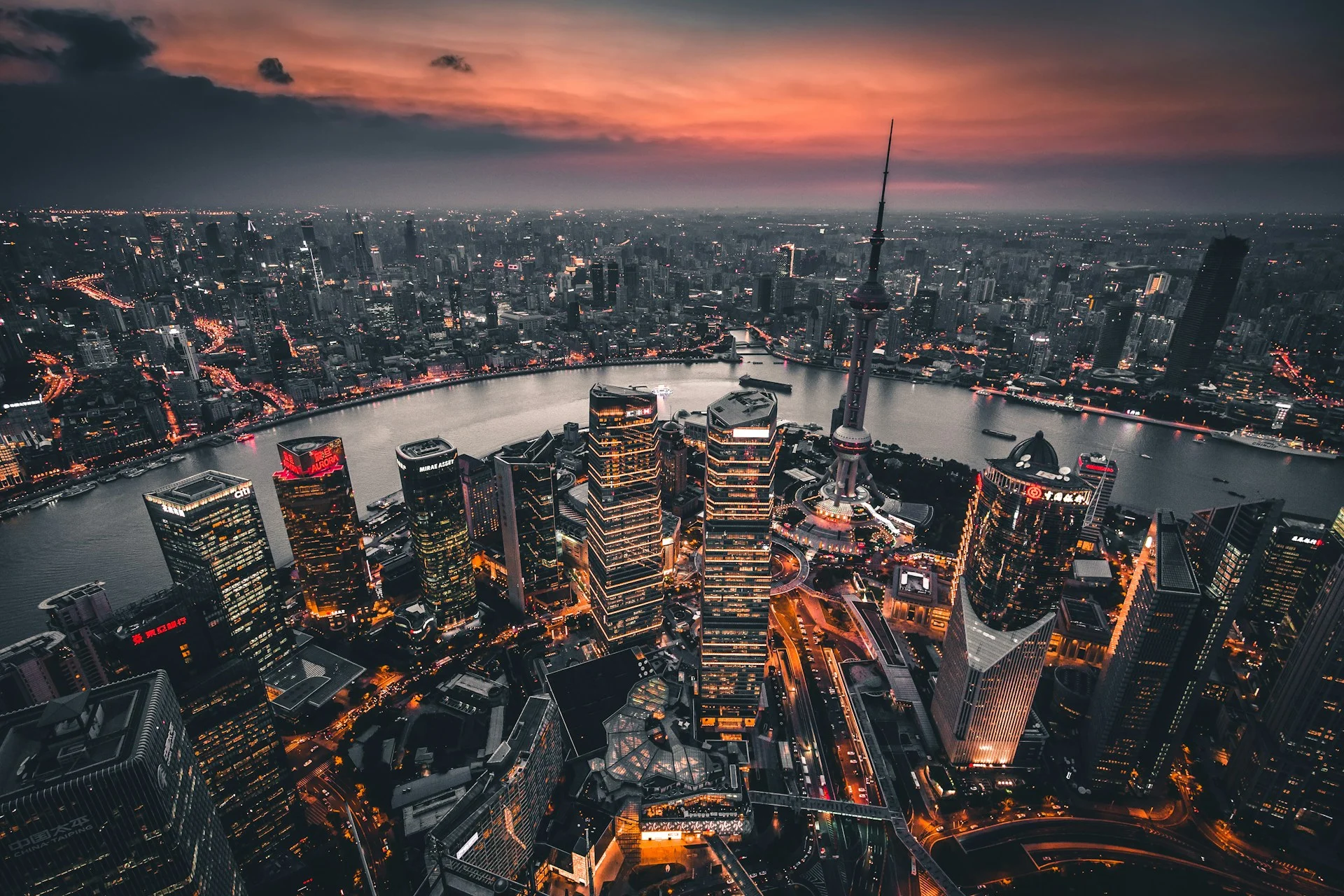
Shanghai (Municipality) matters because Lujiazui, the historic CBD, Hongqiao, Zhangjiang, Lingang, and the port zones all support different occupiers, giving buyers one municipality with finance, trade, logistics, innovation, and city-serving demand inside separate commercial lanes
Format precision
The strongest fit changes quickly in Shanghai (Municipality): premium mixed business towers in the core, trade and exhibition-linked space near Hongqiao, innovation and research buildings in Pudong clusters, and logistics or industrial assets where port and manufacturing systems already dominate
Weak benchmarks
Buyers often price Shanghai (Municipality) through headline CBD rents alone, but stronger value usually comes from a simpler test: does the building serve finance, headquarters, exhibitions, laboratories, port cargo, advanced manufacturing, neighborhood spending, or daily urban servicing
District hierarchy
Shanghai (Municipality) matters because Lujiazui, the historic CBD, Hongqiao, Zhangjiang, Lingang, and the port zones all support different occupiers, giving buyers one municipality with finance, trade, logistics, innovation, and city-serving demand inside separate commercial lanes
Format precision
The strongest fit changes quickly in Shanghai (Municipality): premium mixed business towers in the core, trade and exhibition-linked space near Hongqiao, innovation and research buildings in Pudong clusters, and logistics or industrial assets where port and manufacturing systems already dominate
Weak benchmarks
Buyers often price Shanghai (Municipality) through headline CBD rents alone, but stronger value usually comes from a simpler test: does the building serve finance, headquarters, exhibitions, laboratories, port cargo, advanced manufacturing, neighborhood spending, or daily urban servicing








Useful articles
and recommendations from experts
Commercial property in Shanghai (Municipality) by district role
Commercial property in Shanghai (Municipality) should never be read through one citywide benchmark. That is the fastest way to make weak comparisons. Shanghai is large, dense, and commercially deep, but it is not one blended office market with warehouses and shops around it. It is a municipality where several high-value commercial systems sit side by side. The central districts still carry the strongest finance and headquarters identity. Pudong adds a different lane through Lujiazui, Zhangjiang, Jinqiao, and other specialist business and innovation zones. Hongqiao works through transport, exhibitions, trade services, and a more practical regional-business logic than the core CBD. The port and logistics side creates another operating market altogether. Then the city-serving industrial, healthcare, neighborhood retail, and mixed-use districts add another layer again.
That is why the same building label can hide completely different business logic. A tower in Lujiazui is not the same product as a commercial building in Hongqiao. A research-support asset in Zhangjiang should not be compared with a logistics building in Lingang or a local mixed-use property in a dense inner district. The stronger acquisition is usually the one whose district role is already obvious before the brochure starts selling Shanghai as a whole. VelesClub Int. reads the municipality through those district roles first, because that is what turns broad market interest into disciplined asset screening.
Central Shanghai (Municipality) still sets the premium mixed-business benchmark
The core districts remain the clearest premium commercial market because they combine finance, headquarters, legal services, consulting, premium hospitality, luxury retail, and a dense cluster of high-value business users. This is where mixed-business towers and stronger core offices can most credibly justify premium pricing. But even here the market is not flat. A true core building in a strong finance and headquarters district is a different product from an older office in a less relevant submarket, even if both sit inside central Shanghai.
The stronger core acquisition usually has a very clear occupier profile. It may serve banks, asset managers, legal firms, advisory groups, or higher-end business users who need a genuine central address and a building that still meets their image and operational expectations. A weaker asset often borrows the right location story without the same quality, floorplate, or tenant fit. In Shanghai, premium office value is real, but it is selective and district-specific rather than automatic across the whole centre.
Hongqiao in Shanghai (Municipality) changes the office and trade logic
Hongqiao should not be screened as a cheaper version of the CBD. It is a different commercial lane. The district works through exhibition activity, transport connectivity, regional business travel, imported-goods trade, business parks, and companies that care more about practical access and event-linked business flow than about a riverfront finance address. That makes Hongqiao one of the clearest examples of why office space in Shanghai (Municipality) should not be treated as one category.
The better asset in Hongqiao usually fits this trade-and-business environment directly. A building serving conference activity, regional headquarters, service firms, trade offices, or corporate occupiers that rely on the district’s gateway function can be more practical than a more famous building elsewhere with weaker district fit. The stronger Hongqiao acquisition is usually defined by commercial usefulness rather than prestige alone.
Pudong gives Shanghai (Municipality) more than one premium lane
Pudong is one of the main reasons Shanghai needs district-level comparison. It is not one district with one tenant system. Lujiazui serves high-value finance and headquarters demand. Zhangjiang serves innovation, research, life sciences, and specialist business activity. Jinqiao and other parts of Pudong add a more industrial, advanced-manufacturing, and business-park logic. That means Pudong contains several distinct acquisition lanes inside one administrative side of the city.
This matters because buildings in these submarkets should not be compared through one Pudong average. A headquarters tower, a laboratory-support building, a technology campus asset, and an advanced-manufacturing facility may all sit in Pudong while serving completely different occupiers. The stronger property is usually the one whose format already matches the submarket around it, not the one that merely benefits from the Pudong name.
Innovation Shanghai (Municipality) rewards specialist buildings, not generic ones
One of the clearest distinctions inside the municipality is between generic office and specialist innovation property. Shanghai supports deep demand from technology, life sciences, engineering, advanced manufacturing, and corporate research functions, but those occupiers usually need very specific space. A building that works for laboratories, clean production, technical research, or specialist support functions can be commercially stronger than a more polished office asset if it sits inside the right innovation cluster and solves a real operational problem.
This is where buyers often improve their underwriting quickly. Instead of asking whether a building looks premium, the better question is whether it actually belongs to a cluster with real technical occupiers. In the stronger innovation districts of Shanghai, that fit can explain value much faster than broad office comparisons or simple rent averages.
Port and logistics Shanghai (Municipality) is a separate market again
One of the biggest pricing mistakes in the municipality is to treat all industrial and warehouse property as one outer-district category. Shanghai’s port and logistics system creates a separate market. Waigaoqiao, Yangshan-linked logistics, Lingang, and the broader logistics belt support container trade, bonded and cross-border activity, advanced manufacturing supply chains, storage, distribution, and industrial servicing at a scale that most city office buyers do not naturally understand. These assets should not be screened through central-city office logic or through generic low-cost warehouse assumptions.
The stronger property in this lane usually solves a clear operating task. It may support port cargo, export-import movement, high-value manufacturing, automotive logistics, e-commerce fulfillment, or industrial servicing. A large building is not automatically strong if the location and building form do not match the actual logistics pattern around it. In this part of Shanghai, value usually follows utility, proximity to real flows, and replacement difficulty before it follows simple scale.
City-serving industrial and service space in Shanghai (Municipality) is scarcer than it looks
Shanghai is often discussed through towers, malls, and logistics parks, but a municipality of this size cannot function without local service-industrial and trade space. Workshops, repair premises, food and beverage supply buildings, contractor yards, urban storage, maintenance facilities, printing, local distribution, and small industrial units still matter because they keep the dense city economy running. These assets do not carry the status of a premium office tower, yet they can be commercially important precisely because they are difficult to replace in the right inner and mid-ring districts.
The stronger city-serving asset usually has a very plain advantage. It is needed. It supports a live urban function and can be used efficiently by real operators every day. In Shanghai, smaller industrial and service buildings often hold value because they solve city problems, not because they look institutionally attractive on paper.
Retail and mixed-use Shanghai (Municipality) depend on density, not image alone
Retail and mixed-use property in Shanghai are highly visible, but the stronger assets are rarely the ones bought through citywide reputation alone. The municipality supports residents, workers, students, patients, tourists, and business travelers at enormous scale, so the best properties usually benefit from overlapping demand streams rather than one narrow customer type. A central retail corridor, a neighborhood commercial building, a food-and-service strip near hospitals or schools, and a mixed-use asset in a dense residential district may all be valid acquisitions, but only when the daily spending base is visible.
This is why retail space in Shanghai (Municipality) should never be screened as one category. The stronger property usually works on an ordinary day, not only on a strong one. In this market, repeat demand is often a better sign of quality than dramatic frontage or broad district fame.
Questions buyers ask about commercial property in Shanghai (Municipality)
Is the CBD always the best place to buy commercial property in Shanghai (Municipality)?
No. The CBD is the strongest premium mixed-business market, but innovation, trade, logistics, city-serving industrial, and district-service strategies can fit other parts of Shanghai more naturally.
Why can Hongqiao or Zhangjiang assets be stronger than central office space?
Because they serve different occupiers. Trade, exhibitions, research, life sciences, and technology users often value district function more than a pure finance address.
Where does warehouse property in Shanghai (Municipality) feel strongest?
Usually where the building supports a real task, especially port cargo, advanced manufacturing supply chains, bonded trade, or dense urban distribution rather than generic storage alone.
Should office space in Shanghai (Municipality) be screened the same way across all districts?
No. Premium CBD towers, trade-linked business parks, innovation buildings, and local service offices depend on different occupiers and need different benchmarks.
What usually separates a better Shanghai (Municipality) acquisition from a weaker one?
The better property already fits its district role. The weaker one usually depends on a broad Shanghai premium that the local occupier base cannot fully support.
A tighter acquisition view of Shanghai (Municipality)
The practical way to read Shanghai is to stop treating it as one giant premium office city and start separating its commercial lanes. The core districts are the finance and headquarters market. Hongqiao is the trade, exhibition, and gateway business lane. Pudong contains both premium finance and innovation-manufacturing districts. The port and logistics belt forms a separate operating market. Dense urban districts create another layer through retail, healthcare, and city-serving industrial demand. Once those lanes are separated, pricing becomes much more rational.
A stronger acquisition in Shanghai (Municipality) is rarely the one with the broadest city headline. It is the one whose format, tenant base, and daily commercial role already work together in the right district. VelesClub Int. helps buyers keep that distinction exact, so Shanghai can be judged as a structured commercial municipality instead of one blurred premium benchmark.