
Buy commercial property in ShenzhenBusiness assets across active districts
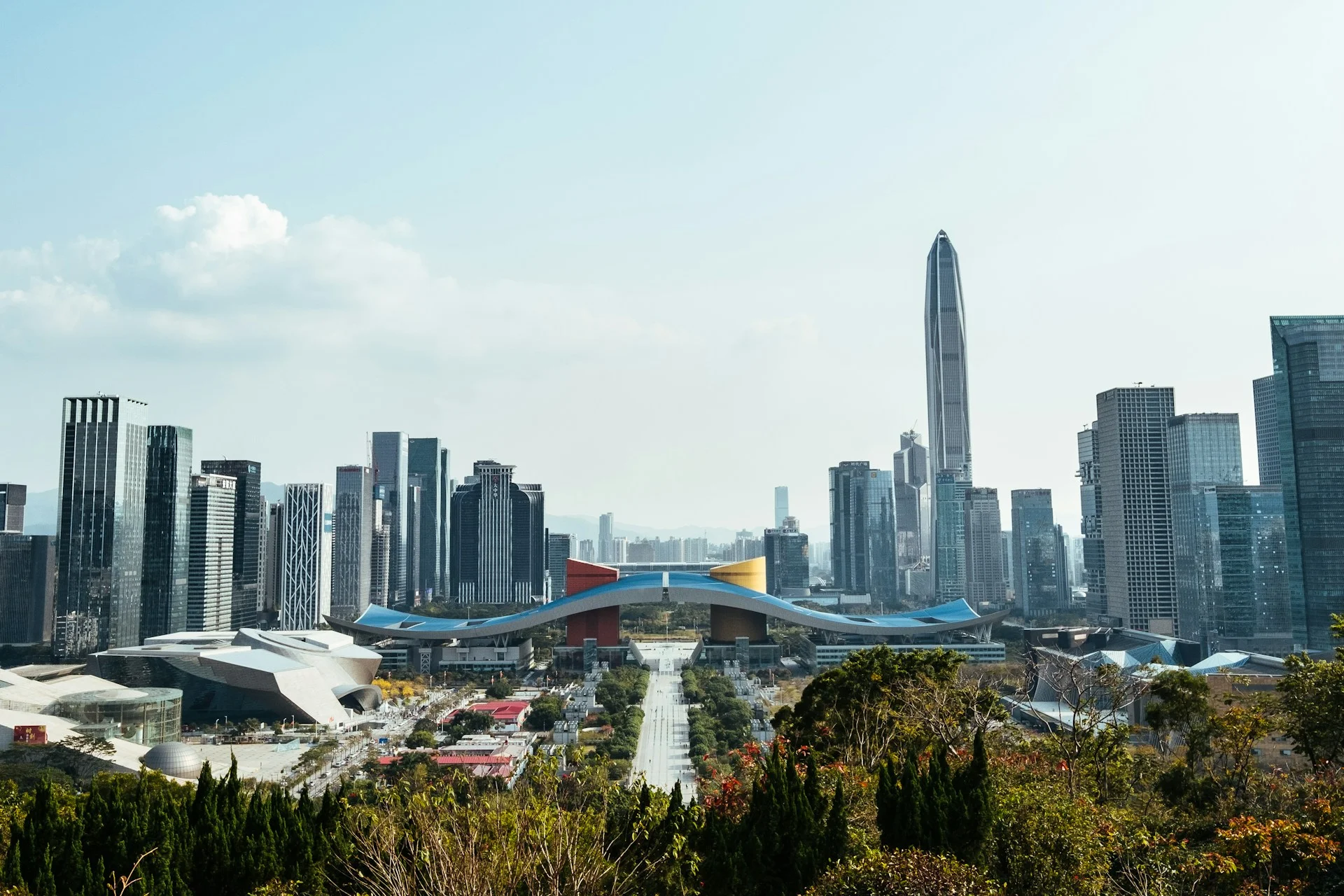
Best offers
in Guangdong
Benefits of investing in commercial real estate in Shenzhen


Local demand drivers
Shenzhen's tech clusters in Nanshan and finance hubs in Futian drive office demand, while logistics, trade corridors and advanced manufacturing sustain industrial leasing and imply mixed tenant stability with varied lease profiles
Asset types and strategies
Shenzhen demand centers favor Grade A and flexible offices, logistics warehouses near ports and the Shenzhen–Hong Kong corridor, urban high‑street retail, plus hospitality and mixed‑use options, supporting core leases, value‑add and tenant diversification strategies
Expert selection support
VelesClub Int. experts define strategy, shortlist Shenzhen assets and run screening including tenant quality checks, lease structure review, yield logic, capex and fit‑out assumptions, vacancy risk assessment and a targeted due diligence checklist
Local demand drivers
Shenzhen's tech clusters in Nanshan and finance hubs in Futian drive office demand, while logistics, trade corridors and advanced manufacturing sustain industrial leasing and imply mixed tenant stability with varied lease profiles
Asset types and strategies
Shenzhen demand centers favor Grade A and flexible offices, logistics warehouses near ports and the Shenzhen–Hong Kong corridor, urban high‑street retail, plus hospitality and mixed‑use options, supporting core leases, value‑add and tenant diversification strategies
Expert selection support
VelesClub Int. experts define strategy, shortlist Shenzhen assets and run screening including tenant quality checks, lease structure review, yield logic, capex and fit‑out assumptions, vacancy risk assessment and a targeted due diligence checklist








Useful articles
and recommendations from experts
Practical guide to commercial property in Shenzhen
Why commercial property matters in Shenzhen
Shenzhen's economy is a concentration of technology manufacturing, services, trade and logistics, creating sustained demand across multiple commercial segments. High-growth sectors such as technology firms, design and R&D operations, corporate services and export-oriented trade firms drive demand for modern offices, while a large domestic consumer base and worker population sustain retail and hospitality needs. Healthcare, education and specialised commercial services create secondary demand nodes for leased space. Buyers of commercial property in Shenzhen include owner-occupiers seeking location control, investors seeking rental income or capital growth, and operators that run hotels, serviced offices or logistics platforms. Understanding how these buyers interact with sector-specific demand is essential when evaluating prospects in the city.
Commercial real estate in Shenzhen is sensitive to macroeconomic cycles that influence manufacturing output, export volumes and local consumption. At the same time, municipal planning and transport investments shape long-term demand corridors. For investors and occupiers, the value of a commercial asset often depends more on tenant stability, lease structure and adaptability of the building than on superficial attributes alone.
The commercial landscape – what is traded and leased
The traded and leased stock in Shenzhen spans a spectrum from central business district towers to suburban business parks and logistics zones. Office leases dominate in central and new-business districts, while high street corridors and neighbourhood retail serve daily consumption and convenience needs. Business parks and light industrial zones accommodate small-to-medium manufacturers, design studios and shared logistics operations. Logistics and warehousing clusters serve export and e-commerce distribution, concentrated near major highways, ports and freight nodes. Tourism clusters and hotel stock respond to business travel and regional connectivity.
In Shenzhen, lease-driven value typically applies where tenant income streams can be underwritten and traded – for example in long-let office blocks or stabilized retail assets with national tenants. Asset-driven value emerges where repositioning, redevelopment or a change of permitted use can materially increase revenue – for instance converting older light-industrial stock into flexible office or logistics facilities near transport nodes. Recognising which value driver applies to a specific asset class is a primary step in underwriting deals.
Asset types that investors and buyers target in Shenzhen
Retail space in Shenzhen ranges from prime high street units in busy commercial corridors to small neighbourhood retail designed for daily services. High street retail competes on footfall and visibility and is priced on turnover potential, while neighbourhood retail is evaluated on catchment demographics and tenancy stability. Office space in Shenzhen includes prime central towers, secondary suburban offices and serviced office models that appeal to flexible tenants. Prime offices command premiums for location, grade and transport links; non-prime offices depend on lower rents and higher yield prospects.
Hospitality assets cater to both business travel and domestic tourism, and site selection hinges on proximity to conference centres, transport hubs and major corporate clusters. Restaurant, cafe and bar premises are typically leased with tenant-specific fit-out responsibilities and short to medium lease terms; their value depends on neighbourhood dynamics and licensing overlays. Warehouse property in Shenzhen encompasses last-mile urban logistics, larger regional distribution centres and light industrial units used for assembly and fulfilment. E-commerce growth increases demand for small to medium warehouses near arterial routes and multimodal connectors.
Revenue houses and mixed-use assets combine residential, retail and office elements; investors targeting these assets must model cross-subsidy between uses and account for management complexity. Serviced offices and flexible workspace present a hybrid between operator-led leasing and asset management, requiring active operational oversight. For each class, investors should compare capex needs, tenancy turnover norms and alternative use potential when forming a target list.
Strategy selection – income, value-add, or owner-occupier
Income-focused strategies concentrate on assets with stable, long-term leases and high-credit tenants. In Shenzhen this approach suits high-grade office towers in established business districts or anchored retail assets with national chains. Local factors favouring an income strategy include tenant demand from large corporates, relatively deep leasing markets in core districts and predictable rent indexation mechanisms.
Value-add strategies pursue refurbishment, re-leasing or modest redevelopment to lift net operating income. In Shenzhen, opportunities for value-add appear in older office blocks near transport upgrades, light industrial stock convertible to logistics use, or retail units that can be repositioned to capture changing consumer patterns. Value-add approaches carry higher execution and timing risk, and in this market they require precise knowledge of permitting, construction timelines and tenant reletting dynamics.
Mixed-use optimization targets assets where complementary revenue streams can be enhanced through programming or management – for example integrating ground-floor retail with office lobbies or improving ancillaries to boost overall yield. Owner-occupier purchases are driven by companies seeking lease certainty and location control; when a firm chooses to buy commercial property in Shenzhen, considerations include scale needs, workforce commuting patterns and long-term cost control versus leasing. Choice among these strategies should reflect business cycle sensitivity, tenant churn norms and regulatory intensity in the local context.
Areas and districts – where commercial demand concentrates in Shenzhen
District selection should be driven by demand density, transport connectivity and the type of commercial use targeted. Central business districts offer concentration of corporate tenants and readily monetisable office rents, while emerging business areas can offer lower cost basis and upside if infrastructure and corporate migration trends continue. Transport nodes such as major metro interchanges and highway junctions concentrate commuter flows and last-mile logistics activity and are often primary candidates for office and warehouse investments respectively.
Tourism corridors and waterfront areas can sustain hospitality and high-end retail, whereas residential catchments support neighbourhood retail and service-oriented leasing. Industrial access and proximity to port and airport facilities are decisive for larger warehouse property in Shenzhen and for light industrial operations dependent on inbound/outbound freight. Careful analysis is needed to identify corridors at risk of oversupply – new development waves can create short-term vacancy pressure that affects rental growth.
Practical district examples for initial screening include Futian, which is a core commercial and administrative area with concentrated office demand; Nanshan, noted for technology and R&D clusters with strong office and serviced workspace need; Luohu, with traditional retail and cross-border commerce influences; Bao'an, which has manufacturing and logistics corridors and growing mixed-use developments; Longgang, where industrial and new business parks provide opportunities for light industrial conversion and logistics; Yantian, which ties to port-related logistics and specialized warehousing; and Longhua, offering a mix of residential catchment and secondary office/retail nodes. Each district presents distinct leasing profiles, tenant mixes and planning considerations.
Deal structure – leases, due diligence, and operating risks
Buyers in Shenzhen routinely review lease frameworks for term length, renewal and break options, indexation or rent review clauses, tenant fit-out responsibilities and service charge allocation. Shorter leases increase exposure to vacancy and reletting risk; longer leases with credible tenants reduce near-term volatility but may limit revaluation upside. Service charges, management contracts and caps on recoverable expenses materially affect net operating income and should be scrutinized in financial modelling.
Due diligence should cover tenancy schedules, historical vacancy, rent roll verification, capex history and near-term capital requirements. Operational risks include tenant concentration where a single occupant contributes a large share of income, compliance costs relating to building codes and fire safety, and environmental issues in mixed industrial areas. Planning and permitting history is relevant where repositioning or change of use is contemplated. Buyers should also model capex timing and contingency for refits required by prospective tenants or regulators. These reviews inform pricing assumptions and hedging of cashflow risk.
Pricing logic and exit options in Shenzhen
Pricing drivers for commercial assets in Shenzhen include micro-location and footfall, tenant quality and remaining lease term, physical building grade and backlog of capex, and alternative use potential determined by zoning and market demand. A property with strong transport links and long-term tenants will command a premium, while an asset with substantial refurbishment needs or short lease rolls will trade at a discount reflecting repositioning risk.
Exit options should be considered when underwriting. Common strategies include holding for income and refinancing once cashflows stabilise, re-leasing parts of the asset to improve running yields before sale, or repositioning the asset through refurbishment or partial redevelopment to reach a different buyer pool. Timing exits to coincide with improved market liquidity and tenant performance is a standard approach. Investors should avoid fixed assumptions about sale timing and incorporate sensitivity to market cycles and interest-rate environments in their exit modelling.
How VelesClub Int. helps with commercial property in Shenzhen
VelesClub Int. supports clients through a structured, market-aware process tailored to Shenzhen. The engagement begins with clarifying investment objectives and operational constraints, then defining target segments and preferred districts. VelesClub Int. uses lease and risk profiles to shortlist assets that match the client’s return horizon and capability to manage or outsource operations.
For shortlisted opportunities, VelesClub Int. coordinates commercial due diligence including lease verification, tenant covenant analysis and capex scoping. The firm assists in technical and financial review coordination and prepares a transaction-ready summary that highlights key risks and potential mitigants. During negotiation and transaction steps VelesClub Int. supports commercial terms alignment and helps coordinate counterparties so that structure, timing and operating handover are practical for both investors and owner-occupiers. The selection and execution are tailored to the client’s goals and capacity to hold, reposition or operate assets in Shenzhen.
Conclusion – choosing the right commercial strategy in Shenzhen
Selecting the right commercial strategy in Shenzhen requires aligning asset type, district dynamics and lease risk with investor objectives. Income strategies suit core offices and stabilized retail; value-add approaches can work where transport upgrades or demand shifts enable repositioning; owner-occupier purchases are driven by long-term operational needs and location priorities. A disciplined due diligence process that inspects leases, capex obligations and tenant concentration is essential to manage downside. For a pragmatic, market-aware screening and selection process, consult VelesClub Int. experts to define targets, shortlist assets and coordinate due diligence so you can evaluate whether to buy commercial property in Shenzhen or pursue alternative routes such as leasing or redevelopment. Contact VelesClub Int. for a confidential discussion of strategy and asset screening tailored to your objectives.